

Is that persistent, earthy scent in your Weston living room just a side effect of South Florida’s humidity, or is it a warning that something is colonizing your drywall? It’s a question many homeowners in Miramar and Pembroke Pines face after a heavy storm or a hidden pipe leak. Identifying the signs you need professional mold testing is the first step in reclaiming your home’s air quality before a small patch of spores turns into a full scale structural crisis. You probably already suspect that a simple DIY kit won’t give you the peace of mind you need, especially when your family’s respiratory health is on the line.
We understand the stress that comes with unexplained allergies and the fear of hidden water damage. You’ll learn how to identify the hidden indicators of mold growth and when to call in the experts to protect your property and health. This article provides a clear roadmap for restoration, starting with a definitive answer on your indoor air quality and a precise identification of the moisture source. We’ll move from the immediate red flags to the technical diagnostics required to ensure your home remains a safe, dry sanctuary.
Key Takeaways
- Recognize how South Florida’s constant humidity creates a high-stakes environment where hidden mold can compromise your home’s structural integrity.
- Identify the specific earthy odors and wall ghosting patterns that act as primary signs you need professional mold testing.
- Understand the direct link between aging copper plumbing leaks and the long-term, slow-growth mold colonies common in Broward County homes.
- Differentiate between persistent respiratory issues and seasonal allergies to determine if your body is reacting to indoor air contaminants.
- Learn why professional lab-certified testing is essential for creating a valid restoration roadmap and avoiding the inaccuracies of retail DIY kits.
Why Mold Testing is a High-Stakes Priority in Broward County
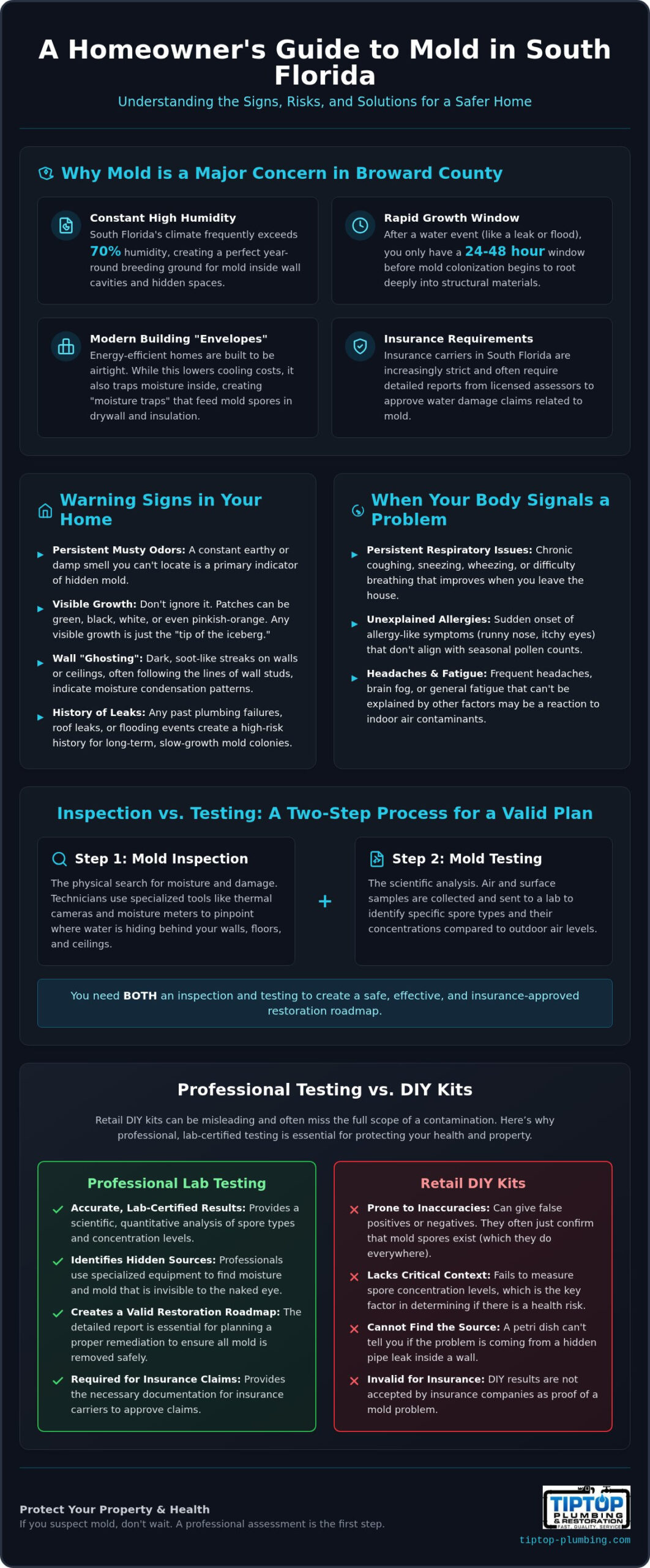
South Florida’s climate presents a unique challenge for property owners. Because our local humidity frequently remains above 70 percent, the environment inside your home’s wall cavities often stays damp enough to support fungal life year-round. Understanding the signs you need professional mold testing is essential for any resident in Broward County. Professional mold testing isn’t just a guess; it’s a scientific assessment of fungal spores and moisture levels within your specific microclimate. If you’ve experienced a water event, such as a localized flood or a pipe failure, you only have a 24 to 48 hour window before mold colonization begins. Waiting longer allows the problem to root deeply into your structural materials.
Many homeowners rely on a quick look-around to judge their home’s health. This is a mistake. Visual-only inspections are often insufficient for modern Florida homes because spores are frequently hidden behind cabinetry, under floorboards, or deep inside insulation. Recognizing the early signs you need professional mold testing allows you to catch these invisible threats before they become a massive remediation project. Leak detection is often the first step in this process, as identifying the moisture source is the only way to stop the growth cycle permanently. Additionally, insurance carriers in South Florida are increasingly strict; they typically require detailed reports from independent licensed assessors before they will approve a water damage claim.
The Difference Between Mold Inspection and Mold Testing
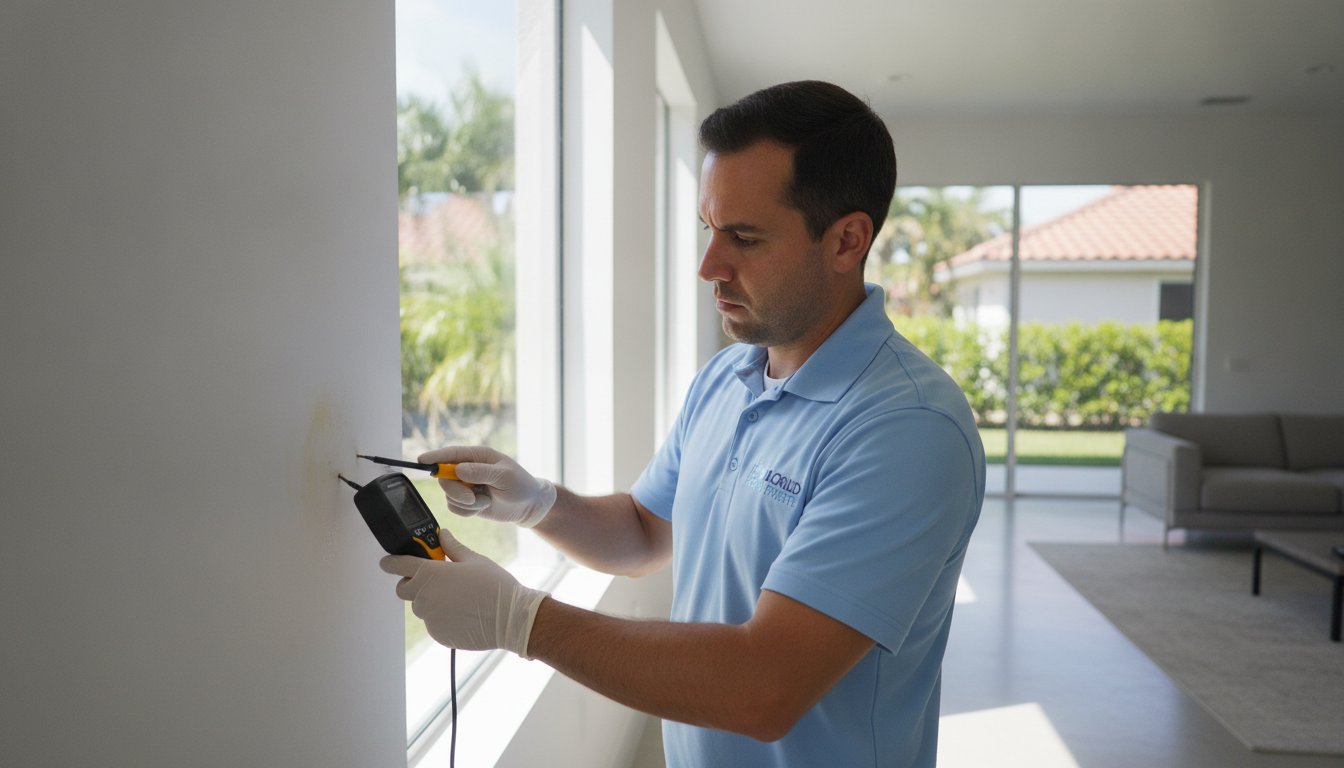
A professional inspection is the physical search for moisture and damage. Technicians use specialized tools like thermal cameras and moisture meters to find where water is hiding behind your walls. Testing is the next level of precision. It involves taking air and surface samples to identify specific spore types and their concentrations compared to the air outside. You need both to create a valid restoration plan. Without testing, you don’t know if the Indoor mold in your air is a common variety or a strain that requires specialized containment and high-level PPE for removal.
Florida Building Standards and Moisture Traps
Modern homes in Weston and Miramar are built with tight “envelopes” to maximize energy efficiency and keep cooling costs down. While this keeps your electric bill lower, it also traps moisture indoors if your ventilation isn’t perfect. Materials like insulation and drywall act as organic food for spores once they become damp. The dew point in a Florida home is the specific temperature at which indoor air becomes saturated and sheds its moisture as liquid condensation on surfaces, effectively watering any mold spores present on your walls or ceiling. This trapped moisture, combined with common building materials, creates a perfect storm for rapid fungal growth even if you don’t see a standing puddle.
The Clear Red Flags: Visible Growth and Musty Odors
Visible indicators are the most obvious signs you need professional mold testing. While some might suggest that seeing mold is enough to skip the diagnostic phase, that approach is risky. Visible patches are frequently just the “tip of the iceberg.” For every square inch of growth on your drywall, there could be square feet of hidden colonies thriving in the dark, damp space behind it. Look for “ghosting,” which appears as dark, soot-like streaks on your walls or ceilings. These marks often follow the lines of your wall studs and indicate that moisture is condensing in specific patterns, creating a feeding ground for spores.
If you notice mold returning shortly after you’ve scrubbed it away, you’re dealing with a deep-seated moisture issue. Surface cleaning doesn’t kill the “roots” of the mold if the drywall is saturated. You might also spot orange or pinkish slime in your shower. While this is often a bacterium called Serratia marcescens, its presence proves your bathroom ventilation is failing, which is one of the key signs you need professional mold testing to check for actual fungal growth elsewhere. If you’re concerned about what’s hiding in your walls, you can schedule an expert assessment to get a clear picture of your home’s health.
Decoding Mold Colors and Textures
Mold isn’t always the stereotypical “black mold.” It can appear as fuzzy green patches or even a white, powdery substance that looks like dust. Black mold often indicates a severe, long-term water leak, while green varieties like Aspergillus are common in high-humidity areas. Regardless of the hue, the health risks associated with mold exposure are significant. Velvety textures usually mean the mold is actively releasing spores into your air; slimy textures suggest a very high moisture content. Never touch these patches without protection. Disturbing them can send millions of spores into your lungs instantly.
The Mystery of the Lingering Odor
Your nose is a powerful diagnostic tool. Active mold growth produces microbial volatile organic compounds (mVOCs), which create that unmistakable “wet sock” or earthy smell. These odors often intensify when your AC runs or during humid afternoons in Pembroke Pines. Because mold off-gasses as it feeds, a smell coming from your baseboards or behind wallpaper is a definitive red flag. Professional air sampling “sniffs” out these problems by measuring spore counts that human senses simply cannot detect.
The Invisible Culprit: Plumbing Leaks and Moisture History
Hidden plumbing failures are the primary drivers of long-term, slow-growth mold colonies that thrive in dark, unventilated spaces. In older Broward County neighborhoods, pinhole leaks in copper piping are a frequent culprit. These tiny breaches often go unnoticed for months, steadily saturating the drywall behind cabinets or bathroom vanities until the damage is extensive. Utilizing leak detection services in Broward County is a critical preventative measure for every homeowner. If you have a history of “ghost” leaks or mysterious water bill spikes, these are major signs you need professional mold testing to ensure your home’s structure hasn’t become a breeding ground for fungi.
Moisture doesn’t stay localized. It travels through porous materials, often moving far from the original leak site. This “moisture history” creates a complex map that only professional diagnostics can decode. While the EPA’s overview of Mold Testing or Sampling suggests that visible mold often makes sampling unnecessary for simple cleanup, hidden leaks require a scientific approach to find the moisture source. Without identifying the “why” behind the growth, any cleaning efforts will be temporary.
Slab Leaks and Sub-Floor Moisture
A slab leak occurs when the pipes under your home’s foundation fail, pushing moisture upward through the concrete. You might notice warm spots on your tile or a damp patch on your carpet that never seems to dry. This moisture wicks up through your drywall via capillary action, feeding mold colonies that remain hidden behind your baseboards. If you suspect your foundation is compromised, review our guide on the signs of a slab leak. Because this moisture is trapped beneath the floor, it provides a perfect, undisturbed environment for mold to thrive for years before it’s finally detected.
AC Condensation and Drain Line Failures
In Florida, your air conditioning system is your primary defense against humidity, but it can also be a significant source of moisture. Clogged AC drain lines are the leading cause of hidden mold in bedroom and hallway closets. When the line backs up, water overflows directly onto the floor, often soaking the base of the wall. Mold can also grow inside your ductwork, where it remains invisible while blowing spores into every room of the house. If you see “sweating” vents or water droplets forming on your AC registers, your indoor humidity is likely too high. These environmental failures are clear signs you need professional mold testing to verify that your air distribution system hasn’t been contaminated.
Health Symptoms: When Your Body Signals a Problem
Sometimes the most reliable sensor in your home isn’t a moisture meter but your own immune system. Chronic respiratory issues that seem like seasonal allergies but never actually subside are among the most frequent signs you need professional mold testing. While many residents in Davie and Weston attribute sneezing, runny noses, and red eyes to local pollen, mold-related allergic rhinitis persists regardless of the season. If your symptoms are localized to your home or a specific room, your body is likely reacting to an elevated concentration of indoor fungal spores.
The stakes are significantly higher for households with infants, seniors, or immunocompromised individuals. These groups are more susceptible to the effects of Mycotoxins, which are toxic secondary metabolites produced by certain fungal species that can severely degrade indoor air quality. Long-term exposure to these toxins can lead to chronic inflammatory responses that go far beyond simple congestion. When these vulnerable residents begin showing persistent symptoms, identifying the environmental cause becomes an emergency rather than a routine maintenance task.
The ‘Vacation Effect’ and Behavioral Clues
Pay close attention to how your family feels when they are away from the property. Does a weekend trip or even a long day at the office provide relief from headaches or coughing? This “vacation effect” is a strong indicator that the building itself is the source of the irritation. You might also notice increased asthma attacks or significant breathing difficulties specifically at night when you are stationary in a bedroom for several hours. When inhaled, these microscopic fungal spores trigger an inflammatory response in the nasal passages and lungs as the immune system attempts to neutralize the foreign particles.
Dermatological and Neurological Indicators
Mold exposure doesn’t always manifest as a cough. Some residents experience unexplained skin rashes, hives, or persistent itching that doesn’t respond to standard topical treatments. These dermatological reactions occur when the body becomes sensitized to the spores in the air. Neurological symptoms such as “brain fog,” chronic headaches, and unusual fatigue are also common in environments with high spore counts. If a visit to your doctor rules out typical viral infections but your symptoms persist, it is time to transition from medical diagnostics to an environmental assessment. Recognizing these physical signs you need professional mold testing can prevent years of unnecessary health struggles.
Professional Mold Testing vs. DIY Kits: Ensuring a Safe Restoration
When residents notice the first signs you need professional mold testing, many head to the local hardware store for a DIY “petri dish” kit. These retail kits are often misleading and technically insufficient for a proper home assessment. Because mold spores exist naturally in almost every environment, a DIY kit will almost always grow a fungal colony, regardless of whether you have a dangerous infestation. This leads to unnecessary panic or a false sense of security that misses hidden, high-concentration growth behind your walls. Professional testing provides a documented “Chain of Custody” and utilizes third-party lab analysis to ensure that every sample is handled with legal and scientific precision.
We serve as the local authority for mold testing in Pembroke Pines and the surrounding Broward areas. Our team doesn’t just look for spots; we investigate the atmospheric conditions of your entire property. Once a test confirms an elevated spore count, the next steps are critical. We prioritize immediate containment to prevent cross-contamination, followed by a thorough dry out service to remove the moisture that fueled the growth. This methodical approach ensures that the remediation is permanent rather than a temporary surface fix.
The Professional Testing Toolkit
Our diagnostic process utilizes advanced technology to see what the human eye cannot. We use Air Spore Traps to measure the exact concentration of spores per cubic meter, comparing your indoor air to the natural baseline outside. If we find visible growth, we use surface swabbing and tape lifts to identify the specific fungal species present on your building materials. Finally, we employ moisture mapping with infrared cameras and pin-less meters. These tools allow us to find the exact plumbing leak or condensation point without unnecessarily tearing into your drywall.
Creating a Protocol for Remediation
A professional mold test is more than just a “yes or no” answer; it’s a technical blueprint for your restoration contractor. This document, known as a remediation protocol, outlines exactly which materials need removal and which can be salvaged through specialized cleaning. After the work is finished, we conduct post-remediation “clearance testing” to verify that the spore counts have returned to safe, normal levels. This final step provides the definitive peace of mind that your home is once again a healthy environment for your family. If you’ve noticed any signs you need professional mold testing, don’t wait for the damage to spread.
Contact Tip Top Plumbing & Restoration
Protecting Your Florida Home and Health
Your property should be a safe haven, not a source of environmental stress. We’ve explored how hidden moisture from slab leaks and failed AC drain lines creates a perfect breeding ground for fungal growth in South Florida’s humidity. Recognizing the specific physical and environmental signs you need professional mold testing allows you to act before structural damage becomes irreversible. Our certified mold inspectors provide the definitive answers you need to restore your property’s air quality and your family’s peace of mind. We’ve served Weston, Davie, and the broader Broward County area since 2026 with a commitment to precision and rapid response. Professional diagnostics are the only way to move from uncertainty to a clear, actionable restoration protocol. Don’t let a small leak turn into a major restoration crisis. Our 24/7 emergency restoration response team is ready to help you identify the moisture source and protect your investment.
Take the first step toward a drier, healthier home today. We’re here to guide you through every stage of the recovery process with the local expertise you can trust.
Frequently Asked Questions
Is mold testing really necessary if I can already see the mold?
Yes, because visible growth is often only the tip of the iceberg. Testing identifies the exact spore concentration in your air and the specific species present throughout the property. This data provides one of the key signs you need professional mold testing to create a scientific remediation protocol. Without lab results, you cannot determine if the air is safe in other rooms or if the colonies have successfully migrated into your home’s ventilation system.
How much does professional mold testing cost in Florida?
The cost of professional mold testing in Florida depends on the square footage of your home and the number of air or surface samples required for a complete diagnostic. A thorough assessment includes a visual assessment, moisture mapping with infrared technology, and laboratory analysis from an independent facility. While we cannot provide a flat rate without seeing the property, investing in professional diagnostics prevents the much higher costs associated with failed DIY cleanups or long-term structural damage.
Can I stay in my house while mold testing is being performed?
You can typically remain in your home during the testing process because it is a non-invasive procedure. Our technicians use quiet air spore traps and surface swabs that do not disturb the environment or release additional spores into your living space. However, if the inspector identifies a severe infestation that significantly compromises air quality, they may recommend temporary relocation. Staying in the home allows you to witness the moisture mapping process firsthand as we identify leaks.
How long does it take to get mold test results back from the lab?
Standard laboratory analysis usually takes between 24 and 72 hours to produce a final report. This timeline ensures that the mycologists have sufficient time to identify specific fungal species and calculate spore concentrations per cubic meter. Once the results are ready, we provide a detailed document that serves as a blueprint for any necessary dry out or restoration services. Speed is a priority because mold colonies can expand significantly within just 48 hours of a water event.
What is the most dangerous type of mold found in Florida homes?
Stachybotrys chartarum, commonly known as “black mold,” is often considered the most dangerous due to its production of mycotoxins. However, high concentrations of more common species like Aspergillus or Penicillium can also cause severe respiratory issues for vulnerable residents. Identifying these specific species is one of the primary signs you need professional mold testing. Every fungal variety requires a different approach for safe containment and removal to protect your household’s long-term health and safety.
Will my homeowners insurance cover the cost of mold testing?
Coverage depends on the specific language of your policy and the underlying cause of the moisture. Insurance carriers in Weston and across Florida often cover testing and remediation if the mold resulted from a “sudden and accidental” event, such as a burst pipe. However, growth caused by long-term maintenance issues or high humidity might be excluded. We recommend reviewing your policy’s mold endorsement and providing our laboratory report to your adjuster to support your specific claim.
What happens if the mold test comes back positive?
A positive test result triggers the creation of a formal remediation protocol. This document outlines the necessary steps for containment, air filtration, and the removal of contaminated materials like drywall or insulation. We prioritize stopping the moisture source first to ensure the mold does not return after cleaning. Following the restoration, a second round of “clearance testing” is performed to verify that the spore counts have returned to safe, natural levels for your specific environment.
Can a plumbing leak cause mold to grow inside my walls?
Plumbing failures are the leading cause of hidden mold growth because they provide a constant source of moisture in unventilated wall cavities. Pinhole leaks in copper pipes or slab leaks under your foundation can saturate building materials for weeks before you notice a stain. This moisture wicks up through the drywall via capillary action, creating a perfect environment for spores to colonize. Professional leak detection is essential to stop this invisible cycle and protect your structure.
Disclaimer
The information provided in this article is for general educational and informational purposes only and should not be considered professional plumbing, restoration, mold remediation, or legal advice. Every plumbing system, property, and situation is unique, and the recommendations discussed may not apply to your specific circumstances.
While Tip Top Plumbing & Restoration strives to provide accurate and up-to-date information, we make no warranties regarding the completeness, accuracy, or reliability of the content. Any actions you take based on this information are at your own risk.
Plumbing repairs, water damage restoration, and mold remediation should be performed by qualified professionals and in accordance with applicable local building codes and regulations. If you are experiencing a plumbing emergency, water leak, or property damage, contact a licensed professional for an on-site evaluation.
Tip Top Plumbing & Restoration is licensed and insured to provide plumbing and restoration services throughout Broward County, Florida.