

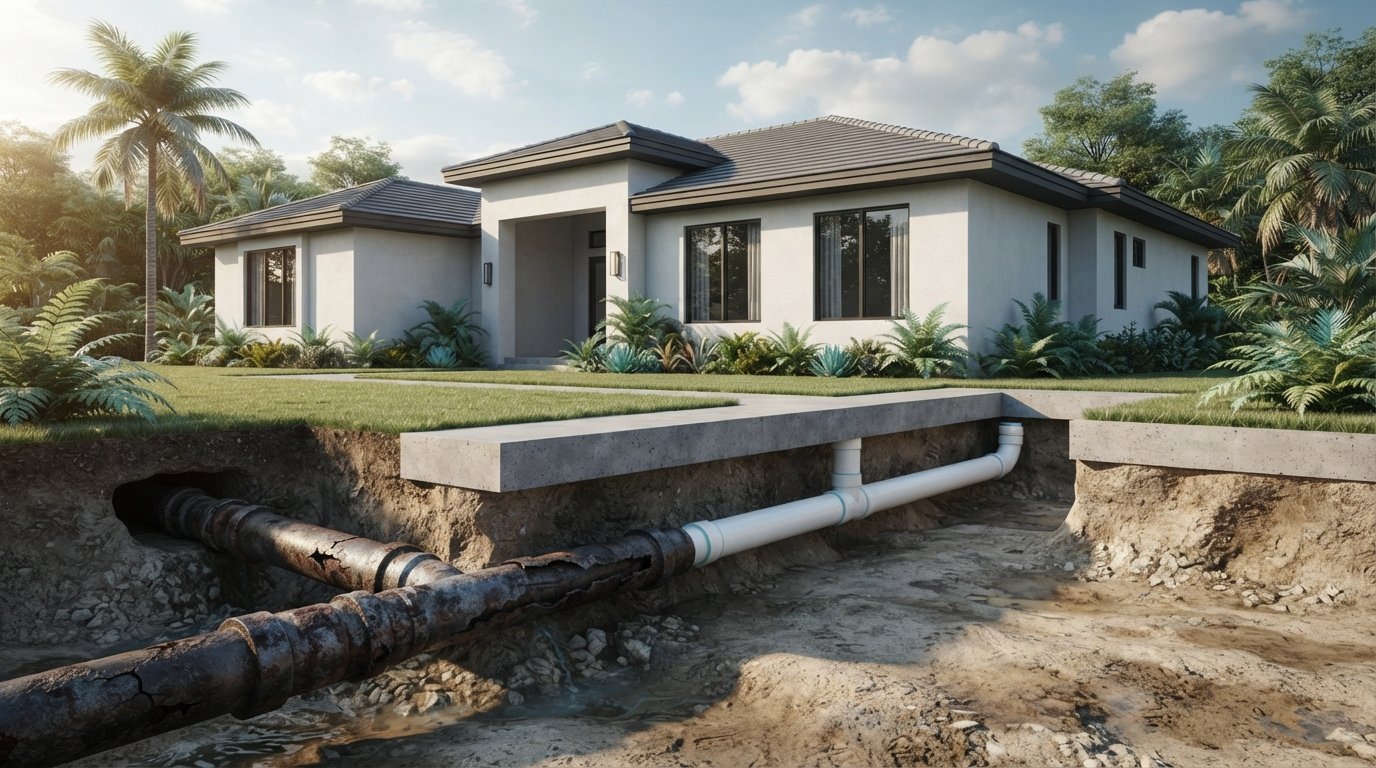
In 2026, your home’s greatest threat isn’t a hurricane on the horizon, but the deteriorating cast iron plumbing hidden beneath your foundation. Roughly 2.5 million Florida homes built before 1975 are currently sitting on a network of pipes that have already exceeded their engineered lifespan. You likely already suspect something is wrong when the drains slow down or a faint, foul odor lingers in the bathroom. It’s a stressful realization, especially when insurance carriers start demanding 4-point inspections and threatening non-renewal for homes over thirty years old.
This guide will show you how to identify the warning signs of pipe failure and the steps you can take to protect your property before a catastrophic slab leak occurs. We’ll explore the unique environmental factors that cause Florida pipes to fail, the reality of insurance sub-limits, and why modern solutions like trenchless relining are changing the way we save local homes. Understanding the condition of your waste lines today is the only way to avoid a total property disaster tomorrow.
Key Takeaways
- Identify why homes in Broward County built before 1975 face an immediate risk of system failure due to the age of original materials.
- Understand the “channeling” effect and how Florida’s high water table accelerates the corrosion of cast iron plumbing beneath your slab.
- Learn how to navigate 4-point inspections to ensure your property remains insurable as carriers tighten requirements for aging homes.
- Recognize the early warning signs of a failing waste line, including recurring backups and persistent odors, before they turn into expensive water damage.
- Compare modern replacement standards like Schedule 40 PVC to help you make an informed decision on permanent property restoration.
The History and Hidden Presence of Cast Iron Plumbing in Florida
For decades, cast iron plumbing served as the heavy-duty foundation for residential sewer systems across the United States. In Florida, this was the industry standard for waste lines until roughly 1975, when modern plastics like PVC became the preferred choice. Thousands of homes in communities like Weston, Davie, and Plantation still rely on these original systems. While these pipes were once praised for their strength, they’re now reaching a critical point of failure.
While national textbooks often suggest a lifespan of up to a century, the reality for Florida homeowners is much shorter. Our high water table and porous, sandy soil create a corrosive environment that attacks metal from both the inside and outside. Most systems installed in the 1960s are now fifty to sixty years old. This puts them well past their reliable service life in a subtropical climate.
Why Cast Iron Was the Gold Standard
Builders originally chose this material for its incredible density and fire resistance. It provided a level of soundproofing that modern thin-walled plastics simply can’t match, preventing the sound of rushing water from echoing through the walls. To understand the full scope of its metallurgical properties, you can review the cast iron pipe history and standards that governed construction for over a century. During the mid-century building boom, the “out of sight, out of mind” mentality prevailed. Few expected the soil to be so aggressive toward the iron.
Identifying Cast Iron in Your Broward County Home
Determining if your home uses these aging pipes starts with a simple check of your build date. If your home was constructed before 1975, there is a high probability that your main waste lines are original iron. You can often verify this by looking in your attic or crawlspace for black, metallic vent stacks protruding through the roof. If you see thick, rusted metal instead of white or gray plastic, your system is likely original. Reviewing original blueprints or contacting a professional for a leak detection specialist to perform a camera inspection is the only way to be certain.
The Anatomy of Failure: How Florida Soils Destroy Cast Iron
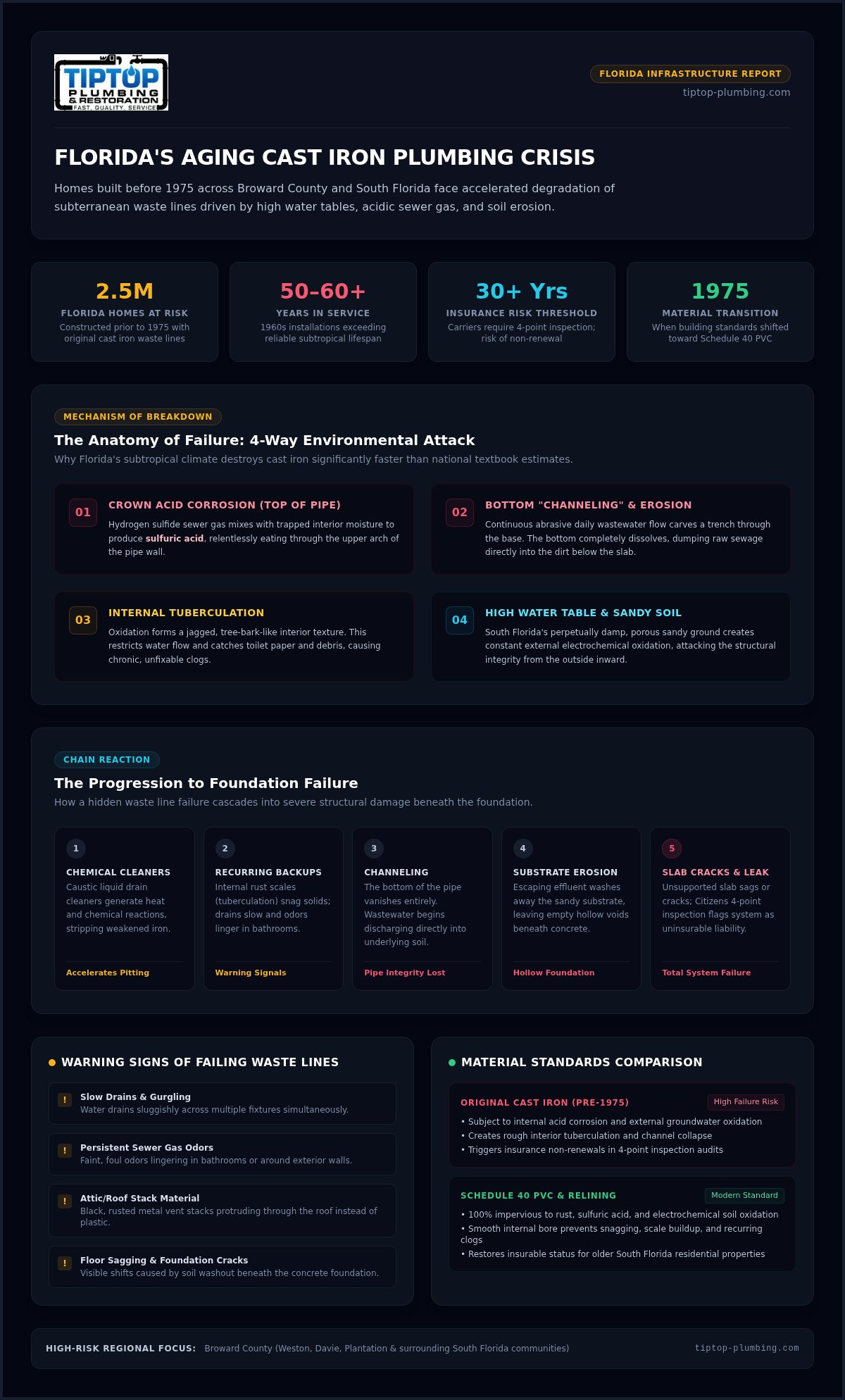
Florida’s environment is uniquely hostile to metal infrastructure. While cast iron is incredibly strong, it’s highly susceptible to galvanic and electrochemical oxidation when buried in our sandy, porous soil. High groundwater tables in South Florida keep the earth surrounding your pipes perpetually damp, creating a constant state of external corrosion. Inside the pipe, the situation is often worse. Sewer gases, specifically hydrogen sulfide, react with moisture to create sulfuric acid. This acid eats away at the top of the pipe, while the daily flow of wastewater erodes the bottom. This dual-sided attack ensures that cast iron plumbing eventually loses its structural integrity, regardless of how well it was manufactured.
Homeowners often try to solve slow drains with store-bought chemical cleaners, but these are a silent killer for aging metal. These caustic liquids generate heat and chemical reactions that aggressively strip away the remaining iron, turning small pits into gaping holes. Over time, internal rust builds up in a process called tuberculation. This creates a jagged, bark-like texture inside the pipe that snags toilet paper and debris, leading to chronic, recurring backups that no amount of plunging can fix. If you’re experiencing these symptoms, scheduling a professional camera inspection is the most reliable way to assess the damage before a total collapse occurs.
Channeling and Structural Collapse
Internal corrosion often manifests as “channeling,” where the bottom of the pipe completely wears away. This leaves the wastewater to flow directly onto the soil beneath your home. As the pipe bottom vanishes, escaping wastewater washes away the sandy substrate, creating “hollow” ground that leaves your foundation unsupported. This erosion can lead to foundation cracks, floor sagging, and expensive slab leaks. Because these failures are hidden, they often go unnoticed until a Citizens Property Insurance four-point inspection guidelines report flags the system as a high-risk liability during a policy renewal.
Root Intrusion and Florida Vegetation
Florida’s aggressive tropical vegetation poses a significant threat to weakened iron lines. In cities like Miramar and Pembroke Pines, thirsty tree roots can sense the moisture escaping from hairline cracks or rusted seams in your pipes. Once a root find a way in, it expands rapidly, acting like a wedge that splits the pipe further. This creates a destructive feedback loop: the leak attracts more roots, and the roots widen the crack, leading to total blockages and sewage overflows. Managing your landscaping is helpful, but it won’t stop roots from targeting a pipe that’s already reached its breaking point.
The Florida Insurance Crisis: Cast Iron and 4-Point Inspections
Florida’s property insurance market has reached a tipping point where carriers no longer view cast iron plumbing as a simple age-related quirk. Instead, they see it as a catastrophic financial liability. For homeowners in Broward County, the 4-Point Inspection is the primary mechanism insurers use to evaluate this risk. If your home was built thirty years ago or more, you will likely be required to provide this report before a policy can be renewed or bound. A single note of “visible corrosion” or “prior patch repairs” on the plumbing section can trigger an immediate non-renewal notice or a staggering premium increase.
Insurers are increasingly wary because of the “ensuing damage” that follows a pipe failure. While a policy might cover the initial dry-out service, many private-market carriers now impose a strict $10,000 sub-limit on water damage claims resulting from plumbing degradation. To navigate this crisis, you must be proactive. Providing a high-definition sewer camera inspection report can sometimes buy you time, but only if the pipes show no signs of the channeling or structural thinning that occurs when systems deviate from the Cast Iron Soil Pipe Institute underground installation standards. These standards highlight how subterranean soil dynamics and moisture impact metal longevity, a reality that Florida’s environment accelerates.
The Financial Impact of “End-of-Life” Plumbing
The presence of original iron pipes doesn’t just affect your monthly premiums; it fundamentally changes your home’s marketability. Most buyers today are well-educated on the risks of slab leaks and the extreme difficulty of securing a mortgage on a property with uncertified plumbing. If a buyer’s lender requires a 4-point inspection and the home fails, the deal often collapses unless the seller agrees to a significant price reduction. Consulting a Repiping Services in Broward County guide is now a standard step for any homeowner planning to sell a property built before 1975.
Passing the Inspection: What Carriers Look For
Inspectors are trained to look for specific red flags that indicate a system is at the end of its functional life. They aren’t just checking if your toilets flush. They are looking for evidence of the following:
- Active leaks or moisture near visible cleanouts and stacks.
- Prior “band-aid” repairs using rubber couplings or epoxy patches.
- Heavy rust or “flaking” on the vent stacks located in the attic.
- Documented history of sewage backups in the home’s claims record.
For modern underwriting, “functional” is no longer the standard. Carriers want proof of “remaining serviceable life.” This often requires a professional camera scope to document that the pipe walls are still thick enough to prevent an imminent collapse. If your system is original, the burden of proof is on you to show it isn’t a ticking time bomb.
Detecting the Invisible: Signs Your Cast Iron System is Failing
Because your waste lines are buried deep beneath a concrete slab, identifying failure requires a keen eye for subtle, house-wide symptoms. Many homeowners mistake a systemic collapse for a simple clog that a plunger can fix. However, when cast iron plumbing begins to fail, the issues aren’t localized to a single sink or toilet. You’ll notice slow drainage across multiple fixtures simultaneously, often accompanied by a distinct gurgling sound as air struggles to move through restricted, tuberculated pipes. This isn’t just an inconvenience; it’s a signal that the structural integrity of your main line is compromised.
Beyond the drains, keep a close watch on the following “invisible” indicators:
- Persistent Sewage Odors: A “rotten egg” smell near drains or in the yard indicates escaping hydrogen sulfide gas.
- Unexplained Green Patches: If a specific area of your lawn is suddenly lush or sinking, wastewater may be fertilizing the soil through a broken underground pipe.
- Pest Infestations: Drain flies and roaches are attracted to the organic sludge that collects in the jagged crevices of rusted iron.
- Dark Flakes in Water: Seeing metallic flakes or discolored water in your tubs often points to advanced internal corrosion.
The appearance of sinkhole-like voids near your foundation is perhaps the most alarming sign. When the bottom of a pipe erodes completely, escaping water washes away the sandy substrate that supports your home. This can lead to foundation cracks or floor heaving that requires extensive structural restoration alongside plumbing repairs.
The Role of Professional Camera Inspections
Visual confirmation is the only way to move past guesswork. High-definition sewer cameras allow technicians to navigate the entire system, revealing internal channeling, root intrusion, and cracks that are invisible from the surface. A professional video inspection in Florida typically ranges from $150 to $400. This small investment provides an objective look at the pipe’s remaining wall thickness and determines if the system is a candidate for relining or requires a full replacement. For homeowners in Weston or Miramar, these reports are also essential for satisfying insurance underwriters during a 4-point inspection. You can learn more about our specialized Leak Detection Services Broward County to see how we pinpoint these hidden failures.
Visual and Olfactory Warning Signs
The “rotten egg” scent of sewer gas is more than a nuisance; it’s a health hazard that indicates a breach in your sanitary system. Distinguishing between a simple clog and systemic failure comes down to scope: a clog affects one drain, while a failing main line causes house-wide backups and persistent odors that don’t dissipate after cleaning. If you notice wall cracks or floor tiles lifting near your primary plumbing stacks, the ground beneath you may already be shifting due to long-term saturation.
Modern Solutions: Transitioning from Iron to PVC
Transitioning away from original cast iron plumbing is the only permanent way to secure your home’s future and eliminate the risk of a sudden structural failure. Under the Florida Building Code, Plumbing, 8th Edition (2023), Schedule 40 PVC has become the certified standard for sanitary drainage and waste retrofits. Unlike metal, PVC is chemically inert. It remains entirely impervious to the hydrogen sulfide gases and sandy, alkaline soils that aggressively destroy iron over time. By switching to modern materials, you ensure a smooth interior flow coefficient that prevents debris accumulation and eliminates the threat of internal corrosion.
Many homeowners attempt to “patch” leaks as they appear, but this is a losing battle in a system that is thinning from the inside out. A single patch is a temporary bandage. It doesn’t address the widespread degradation occurring throughout the rest of the line. True peace of mind requires a comprehensive solution that addresses both the failed pipe and the resulting structural impact. You need a “fixer” who understands the technical complexities of sewer repiping while also possessing the expertise to manage the necessary drywall and flooring restoration. This dual approach ensures the job is done right without leaving your home in a state of permanent construction. For homeowners looking for similar high-end remodeling and general contracting services in other regions, you can visit River City Construction Inc to see how professional restoration is handled.
A professional repipe is a methodical, multi-step operation designed to minimize disruption to your daily life. The process typically follows a disciplined sequence:
- Step 1: Diagnostic camera inspection and layout mapping. We identify the exact path of your waste lines and the specific points of failure.
- Step 2: Strategic access points and old pipe bypass. We create a plan to install new lines with the least amount of invasive cutting possible.
- Step 3: Installation of modern, corrosion-proof materials. We replace failed iron with durable Schedule 40 PVC.
- Step 4: Professional restoration of walls and floors. We handle the dry out and repair of all surfaces affected during the plumbing phase.
Why Proactive Replacement Wins Over Emergency Repair
Waiting for a pipe to fail completely often leads to secondary disasters that are far more expensive than a planned replacement. A 2:00 AM sewage backup doesn’t just damage your pipes. It forces you into an immediate, high-stakes need for Water Damage Restoration. A planned project allows you to control the timeline and the budget. You avoid the high-stress environment of a household crisis while ensuring your property remains fully insurable and marketable in Florida’s competitive real estate landscape. Don’t wait for a flood. Schedule your professional pipe inspection today.
Securing Your Home’s Foundation and Future
Aging cast iron plumbing is no longer a risk you can afford to ignore. Between the tightening 4-point inspection requirements from Florida insurers and the aggressive electrochemical oxidation caused by our local soil, proactive management is the only way to prevent a catastrophic slab leak. By identifying early warning signs like persistent odors and slow drains, you can transition to modern Schedule 40 PVC before a disaster strikes. This not only preserves your property value but ensures your home remains fully insurable.
As local Broward County experts, Tip Top Plumbing & Restoration serves as your stabilizing force in a crisis. We utilize advanced diagnostic technology to map your system and act as emergency response and restoration specialists to handle both the pipe replacement and the final dry out. Our “fixer” approach ensures that your home is returned to professional standards with no shortcuts taken.
You don’t have to wait for a sewage backup to take control of your home’s health. Schedule an inspection today and gain the peace of mind that comes with a permanent, professional solution.
Frequently Asked Questions
How long does cast iron plumbing typically last in Florida?
In Florida’s unique environment, cast iron plumbing generally has a functional lifespan of 30 to 50 years. While national textbooks might suggest a century of service, our high water table and sandy, acidic soil create a much more corrosive environment. If your home in Weston or Pembroke Pines was built before 1975, your system has likely reached the end of its reliable design life and requires a professional assessment.
Will my homeowners insurance cover the replacement of cast iron pipes?
Most Florida homeowners insurance policies don’t cover the cost of replacing the failed pipe itself, as they view it as gradual wear and tear. However, policies often cover the “ensuing damage” and the cost of tearing out the slab to reach the leak, subject to specific sub-limits. Many carriers now impose a $10,000 cap on water damage claims unless you utilize their managed repair programs or have documented a full repipe.
Can I just line my cast iron pipes instead of replacing them?
Trenchless epoxy lining is a viable alternative if the host pipe still has enough structural integrity to support the liner. This process creates a “pipe within a pipe” without the need for slab excavation. However, if your lines have suffered total bottom collapse or severe “channeling,” a full replacement with Schedule 40 PVC is the only permanent solution. A professional camera inspection is required to determine if your system is a candidate for relining.
What are the most common signs of a cast iron pipe failure under a slab?
The most frequent indicators include slow drainage across multiple fixtures and persistent sewage odors near your drains. You might also notice unexplained “green patches” in your lawn or actual sinkholes forming near the foundation where wastewater has washed away the sandy substrate. In some cases, the sudden appearance of drain flies or roaches originating from the waste lines suggests that the interior of the pipe has become jagged and trapped organic debris.
Is cast iron plumbing dangerous for my family’s health?
Failing pipes can pose health risks primarily through the release of hydrogen sulfide gas into your living spaces. This “rotten egg” smell indicates a breach in your sanitary system that allows sewer gases to bypass your traps. Additionally, chronic leaks beneath the slab can lead to moisture buildup, which fosters mold growth within your walls and flooring. Addressing these failures quickly is vital to maintaining a safe and healthy indoor environment for your family.
How much does a sewer camera inspection cost in Broward County?
The cost of a sewer camera inspection in Broward County depends on the size of your home and the accessibility of your plumbing cleanouts. While we don’t provide fixed pricing without an initial assessment, this diagnostic service is a critical investment for satisfying insurance 4-point inspections. It provides the high-definition video evidence needed to document the condition of your pipes for carriers in cities like Davie and Plantation.
What happens if I fail a 4-point inspection due to cast iron pipes?
Failing a 4-point inspection due to aging plumbing often results in a non-renewal notice from your insurance carrier. Carriers view original iron as a high-risk liability and may require a documented camera scope or a full repipe before they agree to bind or renew your policy. If you’re in the middle of a home sale in Miramar, a failed inspection can also cause the buyer’s mortgage approval to be denied or delayed.
Can I replace just a section of my cast iron plumbing?
While you can replace a single section of pipe, it’s often a “band-aid” fix that leads to “chasing the leak.” When one section of cast iron plumbing fails, the rest of the system is likely in a similar state of decay. Connecting new PVC to old, brittle iron can also create weak points that fail under pressure. For long-term reliability and to satisfy insurance requirements, a whole-house repipe is generally the most cost-effective and permanent solution.
Disclaimer
The information provided in this article is for general educational and informational purposes only and should not be considered professional plumbing, restoration, mold remediation, or legal advice. Every plumbing system, property, and situation is unique, and the recommendations discussed may not apply to your specific circumstances.
While Tip Top Plumbing & Restoration strives to provide accurate and up-to-date information, we make no warranties regarding the completeness, accuracy, or reliability of the content. Any actions you take based on this information are at your own risk.
Plumbing repairs, water damage restoration, and mold remediation should be performed by qualified professionals and in accordance with applicable local building codes and regulations. If you are experiencing a plumbing emergency, water leak, or property damage, contact a licensed professional for an on-site evaluation.
Tip Top Plumbing & Restoration is licensed and insured to provide plumbing and restoration services throughout Broward County, Florida.