

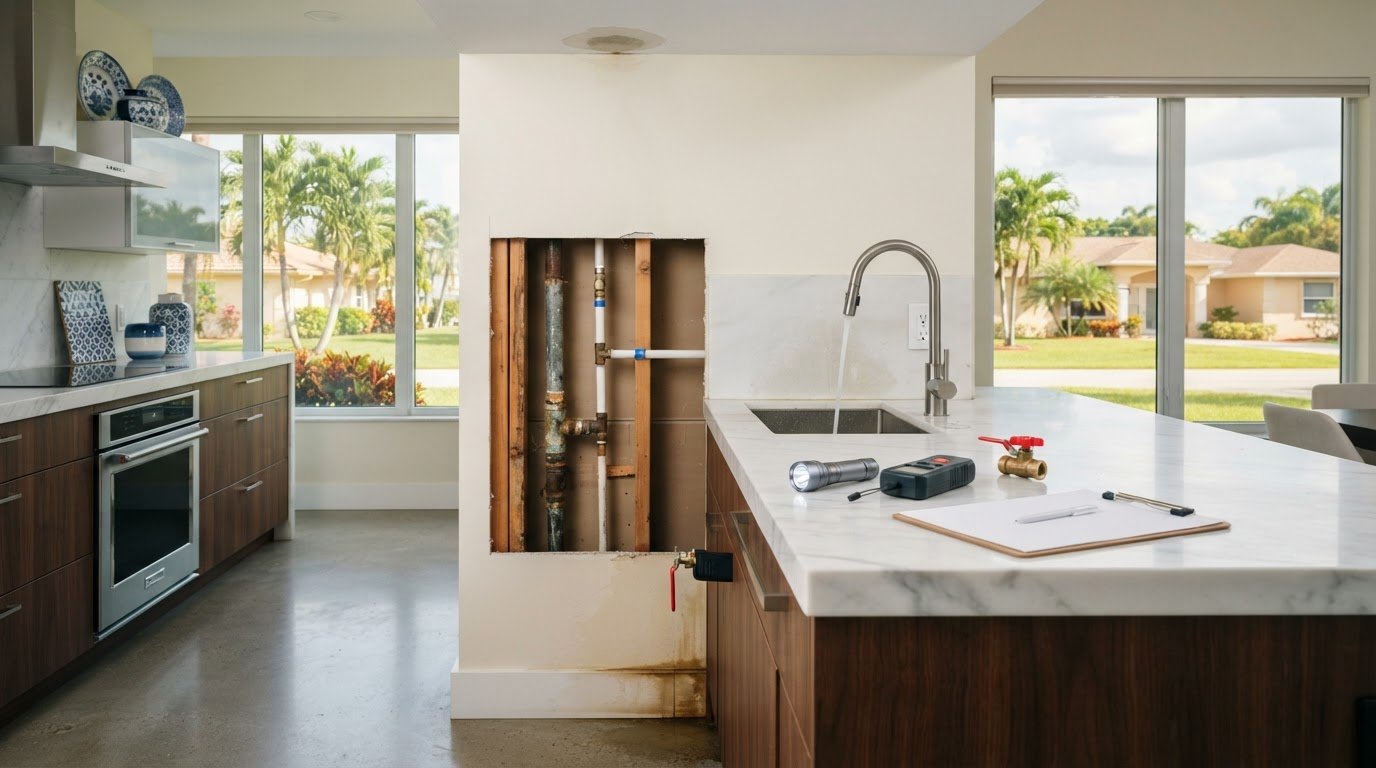
What if the latest leak isn’t an isolated plumbing problem, but a warning that several pipes are wearing out? Repeated leaks, unexplained moisture, low pressure, or discolored water can make it hard to know where the trouble starts. These are some of the signs you need to repipe your house in Florida, but none proves on its own that a whole-house replacement is necessary.
If you’re frustrated by recurring repairs or worried about hidden water damage, look for a pattern. The age and material of your pipes, where symptoms appear, and what an inspection finds all help distinguish a localized issue from a problem affecting more of the system.
This checklist explains how to track recurring symptoms, what pipe material and location can tell you, and what to share during an assessment. You’ll also find practical questions to ask about leak detection and whole-house repiping, so you can compare a targeted repair with broader work. For homeowners in Broward County, including Weston, Miramar, Pembroke Pines, Davie, Sunrise, Southwest Ranches, Copper City, and Plantation, a local plumbing assessment can help clarify whether a problem is limited to one area or involves more of the system.
Key Takeaways
- Track recurring leaks, pressure changes, discoloration, damp areas, and visible pipe material without opening walls.
- The signs you need to repipe your house in Florida depend on the pattern. Symptoms across multiple areas call for a broader assessment than one isolated fixture issue.
- Note affected fixtures, when symptoms occur, and previous repairs to help a plumber investigate the cause and recommend an appropriate next step.
- Leak detection and whole-house repiping can help Broward County homeowners investigate recurring plumbing concerns.
Signs You May Need to Repipe Your Florida House: Start With the Pattern
One leak or a slow faucet doesn’t automatically mean your home needs a whole-house repipe. A worn washer, clogged fixture, or failed connection can cause a localized problem. Pay closer attention when symptoms recur in different rooms or affect several fixtures. That pattern may point to an issue beyond one faucet or pipe joint.
Repiping replaces plumbing pipes across a broader area, either in a section of the system or throughout the house. The right scope depends on inspection findings, pipe condition, and where problems occur. Because modern plumbing systems use different materials and components, a symptom alone can’t identify the cause or determine how much pipe needs attention.
Start by noting whether you’re seeing:
- Leaks that return or appear in separate locations
- Pressure changes affecting multiple fixtures
- Discoloration that persists or occurs at more than one tap
These may be signs you need to repipe your house in Florida, but they’re reasons to investigate, not a diagnosis. Several recurring symptoms warrant an inspection, but they don’t prove that repiping is necessary.
When do recurring leaks suggest a larger pipe problem?
One failed connection is different from leaks that keep appearing in separate parts of the home, especially when repairs solve each issue only temporarily. Track the date, location, repair performed, and whether moisture returned. Note staining or damp areas, too. Visible moisture needs prompt investigation because water can damage nearby materials even when the source isn’t obvious.
What can low pressure or discolored water tell you?
If pressure drops at several fixtures, the cause may involve more than one faucet. A pressure problem limited to a single tap may be local. Rusty or brown water is also a reason to investigate, not proof of corrosion or a particular pipe material. Record whether it affects hot water, cold water, or both, and which fixtures show the change.
These details make a plumbing assessment more useful. Share what you’ve observed and any repair history, then ask what testing or inspection can clarify the cause before deciding between a targeted repair and broader pipe replacement.
Five Pipe Warning Signs to Check Throughout Your Florida Home
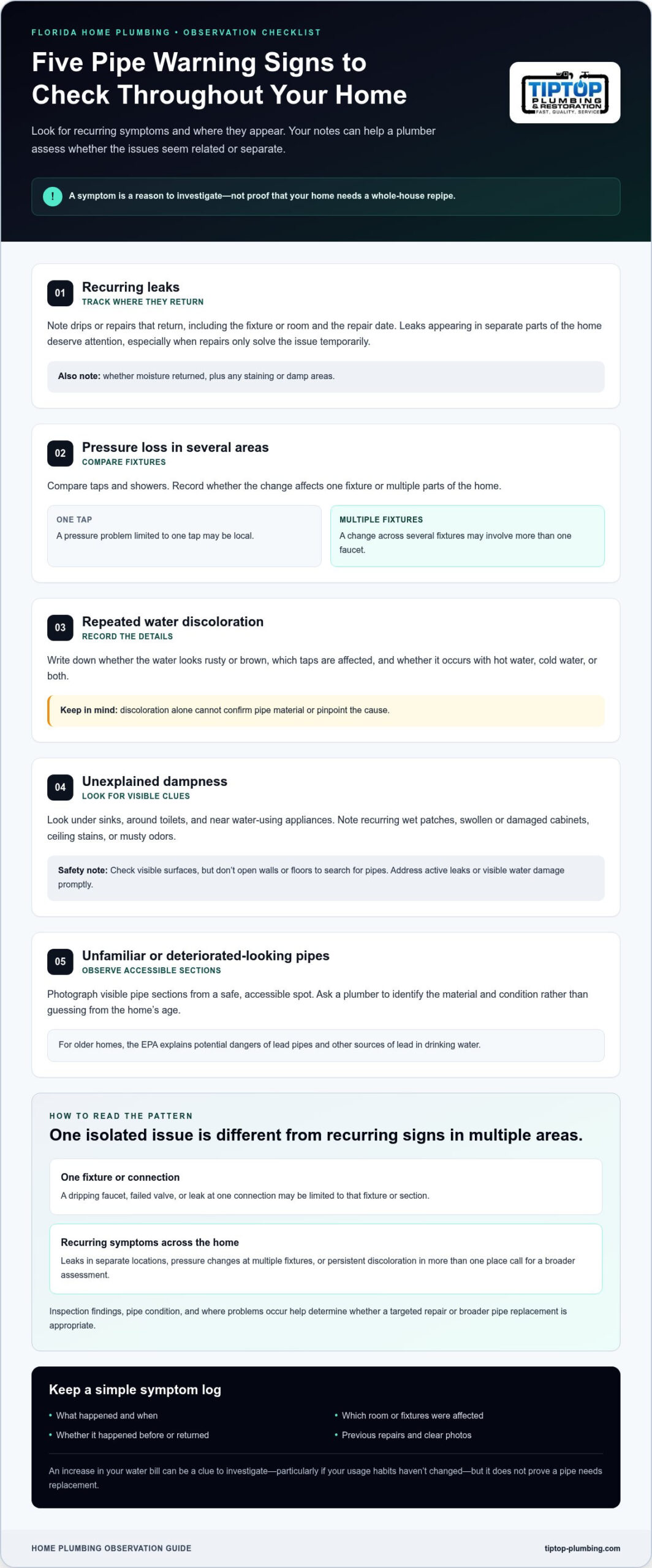
Use this checklist to record what you can observe, not to diagnose pipes or take apart walls. A single symptom may have a local cause. Several recurring signs in different areas provide a stronger reason to arrange an assessment. Note when each issue happens and which fixtures are affected.
- Recurring leaks: Record drips or repairs that return, including the fixture or room and repair date.
- Pressure loss in several areas: Compare taps and showers. Note whether the change affects one fixture or multiple parts of the home.
- Repeated discoloration: Write down whether water looks rusty or brown, which taps are affected, and whether it occurs with hot water, cold water, or both.
- Unexplained dampness: Look for recurring wet patches, swollen or damaged cabinets, ceiling stains, or musty odors.
- Unfamiliar or deteriorated-looking pipes: Photograph visible, accessible sections and ask a plumber to identify the material and condition. Don’t assume pipe material based only on the home’s age.
An increase in your water bill can be a clue to investigate, particularly if your usage habits haven’t changed, but it doesn’t prove a pipe needs replacement. A leak, fixture issue, or another cause may be involved. Keep a simple symptom log and take clear photos from a safe, accessible spot. Together, those details can help a plumber assess whether the problems appear related or separate.
How to check for recurring leaks and unexplained moisture
Look under sinks, around toilets, and near water-using appliances for visible dampness or damage. Check ceilings and walls for stains, but don’t open walls or floors to search for pipes. If you suspect a hidden leak but can’t see its source, professional leak detection in Broward County can help investigate. Address active leaks or visible water damage promptly.
How pipe material, pressure, and water color fit the checklist
Have a plumber identify accessible pipe material rather than guessing from the house’s age. Discoloration alone can’t confirm what a pipe is made of or pinpoint the cause. For older homes, the EPA explains potential dangers of lead pipes and other sources of lead in drinking water. Persistent pressure or color changes across multiple fixtures deserve assessment, but they aren’t a homeowner’s diagnosis.
If your notes point to a possible hidden leak, you can request a plumbing assessment to clarify what’s happening before considering broader work.
Whole-House Repipe or Local Repair? How to Tell the Difference
A leak doesn’t automatically call for replacing every water line. A professional assessment can determine whether a targeted repair is reasonable or whether the evidence points to a wider pipe problem. The recommendation should be based on inspection findings, not one symptom or the assumption that recurring plumbing trouble always means a repipe.
| Pattern | What it may suggest | What to assess |
|---|---|---|
| One isolated fault | A dripping faucet, failed valve, or leak at one connection may be limited to that fixture or section. | Check the specific component and nearby pipe condition. |
| Recurring problem in one area | A leak that returns in the same location may involve an unresolved local cause or a repeatedly affected section. | Review prior repairs and inspect the affected pipe and connections. |
| Symptoms in multiple areas | Leaks at different locations, especially alongside other changes, may warrant a wider system assessment. | Consider pipe material, condition, leak locations, and repair history together. |
Which symptoms point to one fixture or pipe section?
A single dripping faucet or failed valve may point to a localized issue, while low pressure at only one fixture may relate to that fixture rather than the home’s supply piping. That’s a clue, not a diagnosis. A plumber needs to assess the cause and surrounding pipe condition before recommending work. For localized copper-pipe concerns, see our article on Copper Pipe Leak Repair in Broward County.
When do repeated problems justify a whole-system assessment?
Leaks that appear in different parts of the home deserve a closer look, particularly if repairs are becoming frequent or pressure and water appearance have changed. Note whether leaks are in separate locations, whether other symptoms occur, and what repairs have already been made. Those details help a plumber decide whether to investigate one section or evaluate more of the system. The signs you need to repipe your house in Florida can’t be confirmed remotely. Repiping scope should follow an inspection.
Separate water-supply symptoms from drain or sewer trouble. Backups or sewer odors may need a drain or sewer evaluation, not water-line repiping. The University of Florida IFAS Extension’s water-resources page is hosted for Sarasota County, so treat it as a regional educational reference rather than guidance specific to Broward County. If a leak’s source isn’t visible, professional leak detection can help clarify whether the issue is localized before broader work is considered.
What to Do When You Notice Repiping Warning Signs in Florida
Once you notice a possible pattern, focus on limiting further damage and giving the plumber useful information. Active leaks and visible water damage need prompt attention, but a symptom doesn’t automatically mean your home requires repiping. A clear record and a professional assessment can help distinguish a localized fault from a wider plumbing concern.
What should you document before a plumber evaluates the pipes?
Make a short log before details blur together. Note when each symptom began, where it appears, whether it returned after a repair, and which fixtures are affected. Record changes in pressure or water appearance, including whether they affect hot water, cold water, or both. Take photos of visible stains or moisture from a safe, accessible spot. Keep relevant repair notes or bills together, too.
Don’t open walls or floors to search for pipes. If water is actively leaking or you can see damage, arrange prompt attention rather than waiting to build a complete history. Share what you’ve already observed, even if the source isn’t visible.
What questions help clarify the recommended work?
Ask the plumber to explain what was inspected and what the findings show. Confirm whether the concern involves water-supply lines, drains, sewer piping, or a specific fixture, since different systems call for different evaluations. If a hidden leak is suspected, ask how its location was investigated and which pipe sections appear affected.
Before agreeing to broad work, ask why the proposed scope fits the evidence and whether a targeted repair remains reasonable. You can also ask how the recommendation addresses the underlying cause, rather than only the symptom that first caught your attention. The signs you need to repipe your house in Florida should prompt questions, not a remote diagnosis. A sound recommendation connects inspection findings, pipe condition, and repair history to the proposed work.
Use this quick sequence to prepare:
- Document each symptom, its location, and when it occurs.
- Gather photos and previous repair records.
- Arrange an assessment, especially for active leaks or visible water damage.
- Ask what was inspected, what alternatives exist, and why the proposed scope is appropriate.
Clear answers help you understand whether a local repair or broader evaluation is the next step. Tip Top Plumbing & Restoration provides leak detection and whole-house repiping for homeowners in Weston, Miramar, Pembroke Pines, Davie, Sunrise, Southwest Ranches, Copper City, and Plantation.
Plan Your Next Step With a Broward County Repiping Professional
A single symptom can have a local cause. A pattern of trouble across different areas deserves closer attention, but inspection findings matter more than any one warning sign. A professional evaluation should clarify which pipe system is affected, what evidence supports that finding, and whether targeted work or broader repiping is appropriate.
What should a professional repiping evaluation establish?
Ask which sections were inspected and whether the concern involves water-supply lines, drains, or sewer piping. If the leak isn’t visible, leak detection can help locate it before anyone defines a larger project scope. Request a clear explanation of the recommended work, the condition of the affected pipes, and any alternatives identified. These details help you understand why the proposed solution fits the diagnosis and what options remain.
A useful discussion should also clarify what is known, what still needs investigation, and how the suggested work addresses the cause rather than just the visible symptom.
How can Broward homeowners choose a relevant local next step?
Tip Top Plumbing & Restoration provides whole-house repiping and leak detection for homeowners evaluating recurring plumbing concerns in Weston, Miramar, Pembroke Pines, Davie, Sunrise, Southwest Ranches, Copper City, and Plantation. Learn more about the Broward County service area.
If a leak is active or water damage is visible, treat it as an immediate plumbing concern rather than routine repiping planning. Tip Top Plumbing & Restoration provides emergency plumbing, water remediation, and dry out services. For non-urgent concerns, bring your notes and repair history to the assessment and ask for a clear explanation before deciding on the scope of work.
Patterns help shape the right questions. Inspection findings guide the recommendation, so you can consider a localized repair or broader repiping with a clearer understanding of the evidence.
Take the Next Step With a Clear Assessment
One slow faucet or isolated leak doesn’t automatically mean your home needs new pipes. The signs you need to repipe your house in Florida are more meaningful when symptoms recur, affect separate areas, or align with concerns found during an inspection. Keep a record of what’s happening, and ask a plumber to explain which pipes are involved and why the recommended scope fits.
Tip Top Plumbing & Restoration provides whole-house repiping, leak detection, and slab leak repair for homeowners in Weston, Miramar, Pembroke Pines, Davie, Sunrise, Southwest Ranches, Copper City, and Plantation. A professional evaluation can investigate a suspected hidden leak and clarify whether localized work or broader repiping may be appropriate.
With the right information and a careful assessment, you can make your next decision with greater confidence.
Frequently Asked Questions
Is low water pressure a sign I need to repipe my Florida house?
Low water pressure can be one of the signs you need to repipe your house in Florida when it affects several fixtures, especially alongside recurring leaks or discolored water. A single weak faucet may instead have a clogged aerator, shutoff issue, or localized fault. Note which fixtures are affected and whether the change involves hot water, cold water, or both. A plumber can investigate before recommending repairs or repiping.
Can rusty or brown water mean my pipes need replacement?
Rusty or brown water can be a reason to investigate your plumbing, but it doesn’t prove every pipe needs replacement. The source may be limited to one fixture, a section of piping, or another component. If discoloration appears only with hot water, the water heater may also need to be checked. Note which taps are affected and whether the color clears, then ask a plumber to identify the source before deciding on work.
How old does a house have to be before it needs repiping?
There’s no single home-age cutoff that proves repiping is necessary. Pipe material, installation history, visible condition, previous repairs, and current symptoms all matter. An older house may still have serviceable pipes, while plumbing problems can develop in a newer system. If you know the pipe material or have had repeated issues, share those details with a plumber. An assessment can help determine whether a repair or broader replacement is appropriate.
What happens if I keep repairing individual pipe leaks?
A targeted repair may be appropriate when a leak is isolated. If leaks keep appearing in different locations, repeated patches may not address a wider piping problem. Ongoing leaks can also contribute to water damage, so keep a record of where they occur and whether they return after repairs. Arrange an assessment to understand the findings and options. Neither repeated repair nor whole-house repiping is automatically the right answer without a diagnosis.
Do frequent drain backups mean my house needs new water pipes?
Not necessarily. Drain and sewer backups involve a different part of the plumbing system from household water-supply lines, so they don’t automatically show that water pipes need repiping. Repeated backups may call for a separate drain or sewer evaluation. Note where backups occur and how often, then ask a plumber to identify which system is causing the problem. That distinction helps ensure the recommended work addresses the source rather than an unrelated pipe system.
Should I repipe my house if it has old or polybutylene pipes?
Pipe material matters, but identifying a material alone doesn’t establish the right scope of work. Ask a plumber to confirm the type of accessible piping, assess its condition, and consider your leak history and other symptoms. Don’t base the decision only on the home’s age or a visual guess. Ask what inspection findings support a targeted repair, partial replacement, or a broader repipe, and have the recommendation explained before deciding.
When should I call a plumber about possible repiping in Broward County?
Contact a plumber if leaks recur, pressure changes affect several fixtures, discoloration persists, or unexplained moisture appears. Active leaks and visible water damage deserve prompt attention. Before the visit, note affected rooms, fixtures, symptom timing, and past repairs. Tip Top Plumbing & Restoration provides leak detection, slab leak repair, and whole-house repiping in Weston, Miramar, Pembroke Pines, Davie, Sunrise, Southwest Ranches, Copper City, and Plantation.
Disclaimer
The information provided in this article is for general educational and informational purposes only and should not be considered professional plumbing, restoration, mold remediation, or legal advice. Every plumbing system, property, and situation is unique, and the recommendations discussed may not apply to your specific circumstances.
While Tip Top Plumbing & Restoration strives to provide accurate and up-to-date information, we make no warranties regarding the completeness, accuracy, or reliability of the content. Any actions you take based on this information are at your own risk.
Plumbing repairs, water damage restoration, and mold remediation should be performed by qualified professionals and in accordance with applicable local building codes and regulations. If you are experiencing a plumbing emergency, water leak, or property damage, contact a licensed professional for an on-site evaluation.
Tip Top Plumbing & Restoration is licensed and insured to provide plumbing and restoration services throughout Broward County, Florida.