
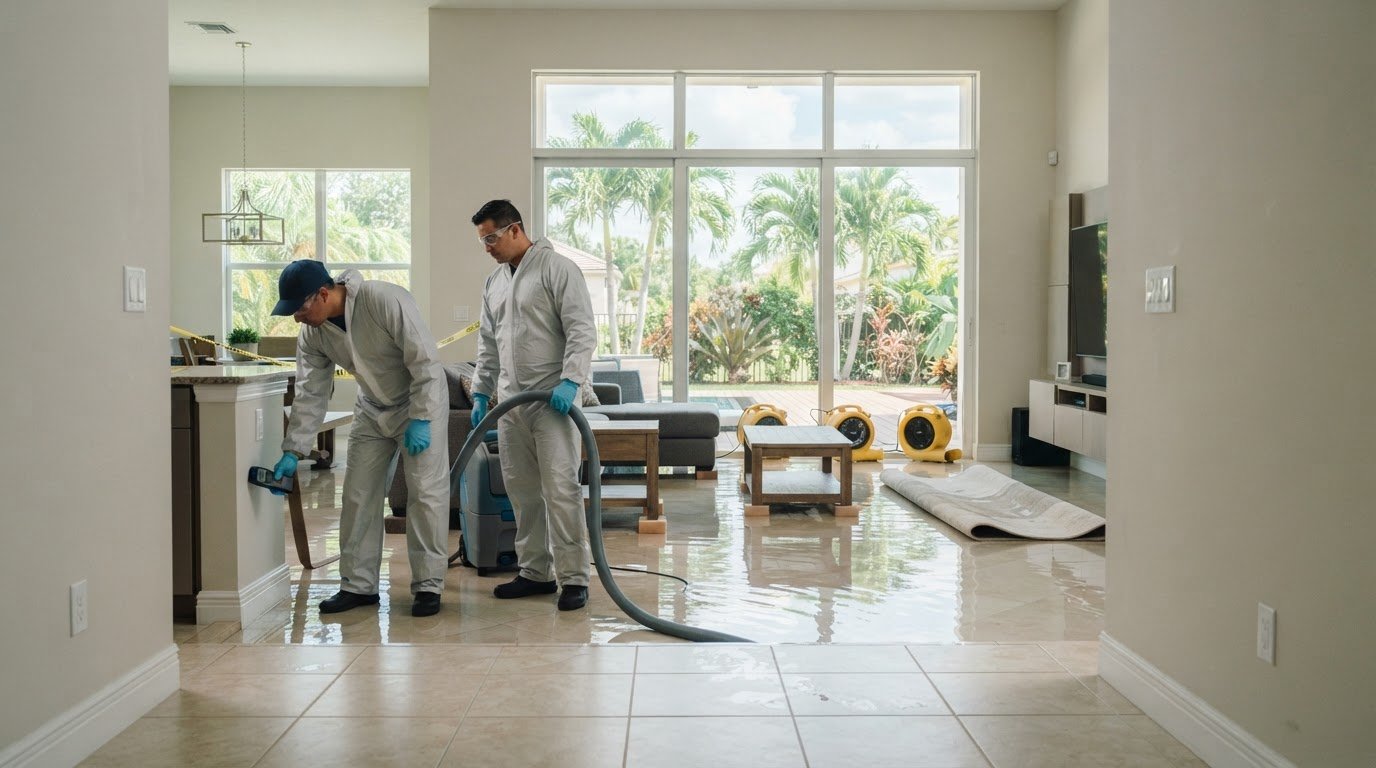
What if the safest first step after flooding isn’t reaching for a pump? Standing water can damage floors, walls, and belongings, but entering a wet area may be dangerous if electricity is involved or the water is contaminated. Flood water extraction Davie homeowners need starts with careful triage, not guesswork. Keep people and pets away from unsafe areas, and arrange professional help before attempting to remove water yourself.
Extraction removes pooled water, but it’s only the beginning of recovery. Moisture can remain inside flooring, walls, and other materials after the surface looks dry, so follow-up drying and moisture assessment matter too. This guide explains what to do safely while help is arranged, how extraction fits into water remediation and dry out, and what to expect next. Tip Top Plumbing & Restoration serves Davie with water remediation, dry out services, and water damage restoration for residential and commercial properties.
Key Takeaways
- Flood water extraction Davie starts with assessing affected areas and choosing a suitable way to remove standing water.
- Water removal is an early step. Moisture checks and appropriate drying help address dampness that may remain out of sight.
- A small, contained spill may be manageable, but widespread or uncertain floodwater calls for caution and professional assessment.
- Before help arrives, note the suspected water source, affected rooms, and any hazards. Move belongings only when it’s safe.
- Tip Top Plumbing & Restoration provides water remediation and dry out services in Davie, with the response guided by the affected areas and observed moisture conditions.
Flood Water Extraction in Davie: What It Removes and Why Timing Matters
Finding standing water inside your home or business can be unsettling. First, stay away from areas that may be unsafe. Then, from a safe location, note what’s wet and where the water may have come from. For flood water extraction Davie property owners need, it helps to understand the difference between removing standing water and addressing moisture left behind.
Flood water extraction removes standing water from affected areas using equipment suited to the amount of water and the property’s conditions. This clears accessible floors and surfaces so the next steps in water remediation and dry out can proceed. Extraction removes standing water; drying and restoration address remaining moisture and its effects on the property.
What counts as flood water in a Davie property?
Water can enter a property through a plumbing or appliance leak, a drain or sewer issue, or outdoor flooding during severe weather. The source and the water’s path matter because they affect different rooms and materials. A contained plumbing leak in one small area is not the same as water that has spread across rooms, reached floor coverings, or entered walls.
Don’t assume water is safe because it looks clear. If the source is unknown, or the water may have contacted sewage, soil, or other contaminants, avoid touching it and keep people and pets away. Water damage restoration can involve more than removing water, including attention to potential hazards. The overview of Water Damage Restoration explains how removal fits into the wider process. Share what you know about the source with the team assessing the damage.
Why removing visible water is only the first step
Water can remain in porous materials after the puddle is gone. Carpet and padding, drywall, insulation, and some wood products can absorb or hold moisture. Water may also move beneath flooring or into concealed spaces, so a room can look much better before its materials are dry.
Extraction should lead into moisture assessment and appropriate drying, rather than being treated as the finish line. The amount of water, how long materials were wet, and the types of surfaces affected all influence what needs attention. There’s no single timeline for every property, and a visual check alone can’t establish whether concealed materials are dry. Tip Top Plumbing & Restoration provides water remediation and dry out services in Davie, with the response guided by the affected areas and observed moisture conditions.
How Professional Flood Water Extraction Works in Davie
A measured response starts with understanding where water has traveled, not just where it has pooled. For flood water extraction Davie professionals consider the source, affected rooms, property layout, and materials before choosing how to remove standing water. These details help shape the work plan and identify areas that may need attention even if they don’t look wet.
Extraction removes pooled water; drying addresses moisture that remains in affected materials. Both steps matter, but they aren’t interchangeable.
Assessment before water removal begins
Before work begins, technicians assess visible water, affected surfaces, the likely source, and conditions that could make an area unsafe. They may document visible damage and look beyond the obvious pool, including adjoining rooms and flooring edges. This assessment helps determine suitable equipment and priorities. If you know where the water came from, share that information.
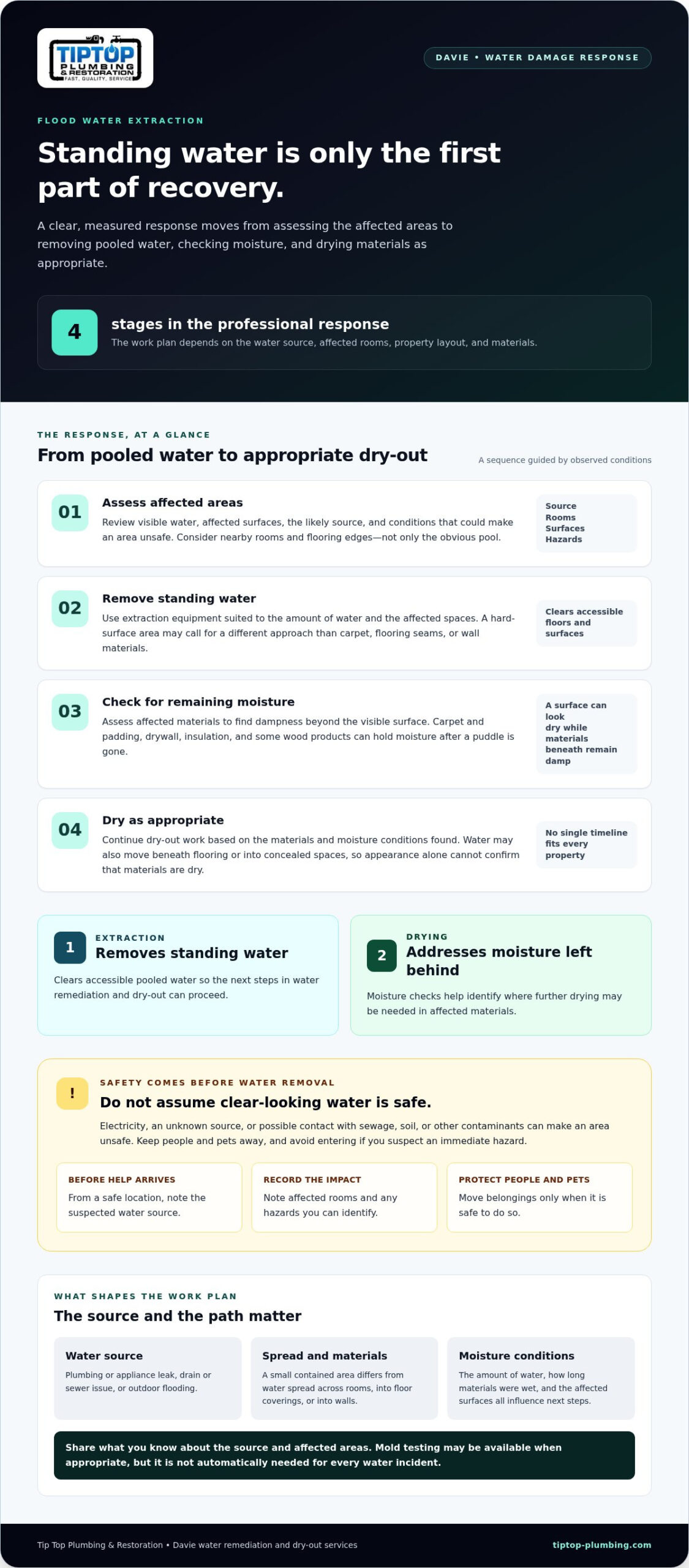
The work generally follows a practical sequence:
- Assess: Map visible water and consider how it may have reached nearby rooms or materials.
- Remove standing water: Use suitable extraction equipment for the amount of water and the affected spaces.
- Check moisture: Assess affected materials to determine whether dampness remains beyond the visible surface.
- Dry as appropriate: Continue with dry out work based on the materials and moisture conditions found.
The method can vary. An open area with a hard surface may call for a different approach than water affecting carpet, flooring seams, or wall materials. The water’s condition matters too, especially if its source is uncertain or contamination is possible. The EPA guidance for flooded homes offers safety information for flood-affected spaces. Avoid entering an area if you suspect an immediate hazard.
Extraction, drying, and moisture checks
Professional equipment removes accessible standing water, while follow-up dry out work targets lingering moisture in affected materials. Moisture checks help show where further drying may be needed. A surface can feel dry while the material beneath it remains damp, so the approach depends on the water, property layout, and materials involved.
Mold testing is also available when appropriate, but it isn’t automatically needed for every water incident. Tip Top Plumbing & Restoration provides water remediation and dry out services in Davie. To arrange support, request water remediation support and describe the affected areas.
Can You Extract Flood Water Yourself? Safety and Limits in Davie
A small spill can sometimes be handled with basic cleanup. But a shallow pool doesn’t show how far moisture has traveled, and the right response depends on the source, affected materials, and whether the area is safe to enter. For flood water extraction Davie property owners should put safety first, then decide whether the water is truly contained or needs professional assessment. If you’re unsure, don’t enter just to investigate.
When is limited cleanup reasonable?
Cleanup may be reasonable for a minor, contained spill when the source is known, there are no electrical hazards, and there’s no reason to suspect contamination. A small amount of clean water on an accessible hard floor is different from water spreading under flooring or into another room. Stop if the affected area grows or conditions feel unsafe.
- Keep children and pets away from the wet area.
- Move unaffected belongings only if you can reach them safely without stepping into questionable water.
- Watch for water that returns or spreads, or nearby materials that remain damp.
If water persists or materials remain damp after surface cleanup, arrange a professional assessment. Household cleanup may not reach moisture beneath flooring or inside other building materials.
When to avoid entering or pumping the area
Stay clear if water may have reached outlets, cords, appliances, or other electrical equipment. Don’t touch wet electrical items or step into standing water to reach a switch. Also avoid handling water if its source is unknown or it may contain sewage or other contaminants. Ready.gov’s flood safety guidelines provide broader advice for staying safe before, during, and after a flood.
- Possible electrical hazard: Keep people out and seek appropriate help instead of entering to inspect.
- Unknown water: Don’t wade in, scoop it by hand, or use household equipment on it.
- Widespread flooding: Avoid pumping until the affected area and conditions have been assessed.
Removing water without understanding where it traveled can leave damp materials or concealed affected areas unaddressed. A professional assessment helps determine the extent of the wet area and whether water remediation and dry out services are appropriate. The goal isn’t to treat every spill as a major emergency. It’s to avoid unnecessary risks when the source or extent is uncertain. Leave questionable areas undisturbed until they can be assessed.
What to Do Before Flood Water Extraction Arrives in Davie
While help is being arranged, focus on safety and information that will make the initial assessment clearer. Don’t inspect a room if standing water may conceal an electrical hazard, and don’t delay urgent safety actions to take pictures. Observations made from a safe location can help explain what happened and which parts of the property may need attention.
Safe steps to take before the team arrives
Keep people and pets away from standing water if its source or safety is uncertain. Avoid entering wet areas where outlets, appliances, cords, or other electrical equipment could be affected. Don’t use electrical devices in or near the water. If the route is dry and safe, move unaffected belongings away from the affected area. Leave them in place if reaching them means crossing water or entering an unsafe space.
- Keep clear: Block access to wet areas so children, pets, and visitors don’t wander in.
- Protect what’s dry: Move nearby belongings only when you can do so without entering the affected area.
- Observe from safety: Note visible water and hazards without touching wet materials or equipment.
Information that helps the extraction assessment
Note when you discovered the water, which rooms appear affected, and whether the water level has changed. If you know the suspected source, such as a plumbing leak or water entering from outdoors, share it. Report immediate hazards, including wet electrical equipment, and mention whether water has spread into adjoining spaces.
- Record the affected rooms and any visible changes in water level.
- Take photographs from a safe, dry location for personal records and insurer communication.
- Keep notes about when the issue began and what you observed.
Photos can document visible conditions, but they don’t replace an assessment of affected materials. Don’t step into water or approach a hazard to get a better image. Tip Top Plumbing & Restoration provides water remediation and dry out services in Davie. Its Davie service area information reflects its local coverage. When arranging flood water extraction Davie residents can share the suspected source, affected rooms, and any immediate safety concerns.
Arrange Flood Water Extraction in Davie with Tip Top Plumbing & Restoration
After flooding, the next step is to understand what the property needs, not just remove the water you can see. Tip Top Plumbing & Restoration serves Davie with water remediation and dry out services for residential and commercial properties. The work is guided by the affected areas and observed moisture conditions, so the response addresses the situation rather than assuming every water event is the same.
What water remediation and dry out address
Water removal is an early part of addressing a water-damaged property. Once standing water is extracted, dry out work focuses on moisture that may remain in affected areas and materials. A cleared floor doesn’t necessarily mean surrounding materials are dry. The appropriate next steps depend on the water conditions, property layout, and assessment findings.
Mold testing is also available as a separate service when concerns about mold warrant further assessment. It isn’t a substitute for water removal or drying, and not every water incident calls for testing. Keeping these steps distinct helps property owners understand what each service addresses.
How to arrange help for a Davie property
When you arrange flood water extraction Davie support, share practical details so the situation is clear from the start. Provide the property location, the suspected source if known, and which rooms or materials appear affected. Mention immediate hazards and whether the water level has changed. Photos taken from a safe location can help describe visible conditions.
Tip Top’s Davie service area includes local plumbing and restoration support. Restoration may involve follow-up steps beyond extraction, depending on the conditions found at the property. Clear information helps focus the initial response on the areas that need attention and the next appropriate step.
Keep people away from unsafe areas while arranging service. You don’t need to enter standing water or investigate a possible hazard to provide useful information. Share what you can observe safely, then let the assessment guide the response.
For a Davie property affected by flooding, arrange water remediation and dry out support with Tip Top Plumbing & Restoration.
Take the Next Step Toward Recovery
Once the immediate situation is under control, keep track of the affected areas and any changes you notice as the property dries. This record can help clarify next steps, including whether further moisture assessment or related mold testing is appropriate.
For flood water extraction Davie property owners can turn to Tip Top Plumbing & Restoration for water remediation and dry out services guided by the property’s observed conditions. A clear, practical next step can make a stressful situation easier to manage.
Take it one step at a time. A professional assessment can help clarify the work ahead.
Frequently Asked Questions
How quickly should flood water be extracted from a home?
Arrange an assessment as soon as it’s safe to do so instead of waiting to see whether standing water disappears on its own. Water can continue affecting nearby materials while it remains, and dampness may persist after a puddle is gone. If you’re waiting for help, note any changes from a dry location. Don’t enter an area with electrical hazards or unknown water to speed up removal.
Does flood water extraction also dry walls and floors?
No. Extraction removes standing water, but it doesn’t establish that walls, flooring, or other materials are dry. Water may travel beneath a floor covering or soak into a wall near the floor. Dry out work addresses moisture remaining in affected areas, with the approach guided by the materials and conditions. The assessment helps identify which areas need follow-up drying.
Can I use a shop vacuum to remove flood water?
Use a shop vacuum only for a small, clean spill if its manufacturer specifically rates it for wet pickup and the area is safe. Never use an ordinary household vacuum on water. Don’t plug in or operate any vacuum where water may have reached outlets, cords, or appliances, and don’t handle unknown or potentially contaminated water. A shop vacuum also won’t show whether water has spread beneath flooring or into other materials.
Is flood water in a home dangerous to touch?
It can be. The risk depends on the water’s source and what it may have contacted, so avoid touching it if you don’t know where it came from or suspect sewage or other contamination. Standing water near electrical equipment creates another serious concern. Keep children and pets away, and don’t wade in to retrieve belongings. Even with a minor clean spill, avoid contact with electrical devices and wet outlets.
Will homeowners insurance cover flood water extraction?
Coverage depends on your specific policy, the source of the water, and the circumstances of the damage, so there isn’t a reliable yes-or-no answer for every home. Contact your insurer or agent to ask how your policy applies. If it’s safe, keep notes and photographs of visible damage for your records. Don’t put yourself at risk or delay urgent safety measures to document the area or resolve a coverage question.
How can I tell whether water has reached behind walls or under flooring?
You may notice clues such as swollen baseboards, buckling flooring, discoloration, or a damp smell, but these signs can’t confirm how far moisture has traveled. A wall or floor can look normal while materials beneath the surface remain affected. Avoid pulling up flooring or opening walls to investigate without knowing what’s behind them. A moisture assessment can help identify areas that need attention beyond what you can see.
Can flood water extraction prevent mold?
Prompt water removal followed by appropriate drying can reduce lingering dampness, but extraction alone can’t guarantee mold won’t develop. The outcome depends on factors such as the materials affected and how much moisture remains. If you see suspected mold or have concerns about a previously wet area, mold testing is available as a related service. Testing can help assess concerns, but it doesn’t remove mold or replace drying work.
What information should I have ready when booking flood water extraction in Davie?
Share the property address, when you discovered the water, which rooms seem affected, and the suspected source if you know it. Mention immediate hazards, whether the water level has changed, and whether it has spread to adjoining areas. Tip Top Plumbing & Restoration serves Davie and nearby Weston, Miramar, Pembroke Pines, Sunrise, Southwest Ranches, Copper City, and Plantation, Florida. Share only what you can observe safely; don’t enter standing water to investigate.
Disclaimer
The information provided in this article is for general educational and informational purposes only and should not be considered professional plumbing, restoration, mold remediation, or legal advice. Every plumbing system, property, and situation is unique, and the recommendations discussed may not apply to your specific circumstances.
While Tip Top Plumbing & Restoration strives to provide accurate and up-to-date information, we make no warranties regarding the completeness, accuracy, or reliability of the content. Any actions you take based on this information are at your own risk.
Plumbing repairs, water damage restoration, and mold remediation should be performed by qualified professionals and in accordance with applicable local building codes and regulations. If you are experiencing a plumbing emergency, water leak, or property damage, contact a licensed professional for an on-site evaluation.
Tip Top Plumbing & Restoration is licensed and insured to provide plumbing and restoration services throughout Broward County, Florida.