

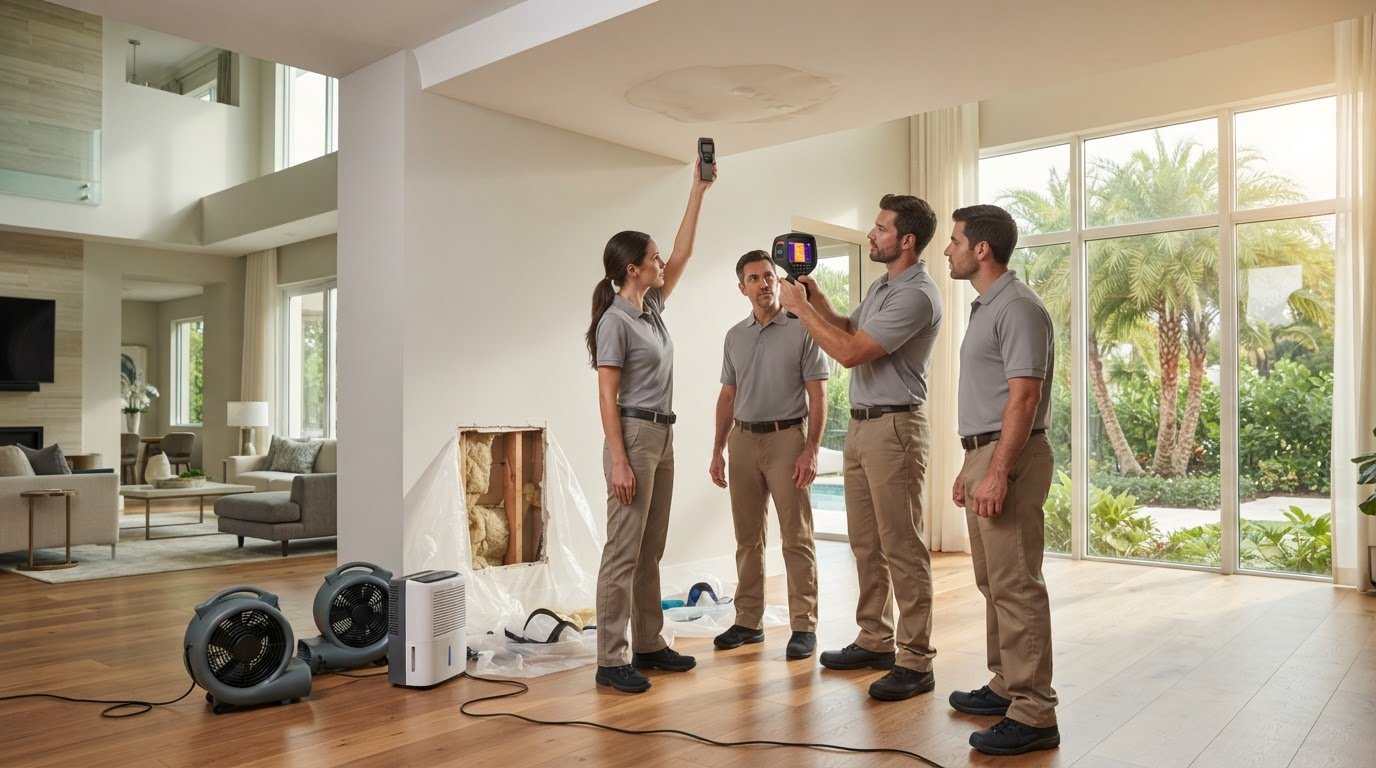
What if the damp patch on your ceiling is only the visible edge of the problem? Water can travel behind drywall or into adjoining areas, so deciding whether to dry or replace a section starts with understanding where the moisture came from and how far it spread. Drywall water damage restoration Weston begins with addressing the water source and assessing affected materials before planning the next steps.
It’s understandable to worry that wet drywall may need to be removed, or that hidden moisture could lead to mold or recurring damage. The right response depends on the extent of the water intrusion and the condition of the materials. Drying or patching the visible spot without resolving the source may leave the underlying issue unaddressed.
This guide explains what to do when drywall gets wet, how professionals assess walls and ceilings, and what restoration may involve. You’ll also learn how Tip Top Plumbing & Restoration connects water remediation and dry-out services with leak detection, and when mold testing may help clarify next steps. The goal is a clear, informed path for protecting your Weston property.
Key Takeaways
- A ceiling stain, bubbling paint, or soft wall can signal moisture, but appearance alone can’t show how far it has spread.
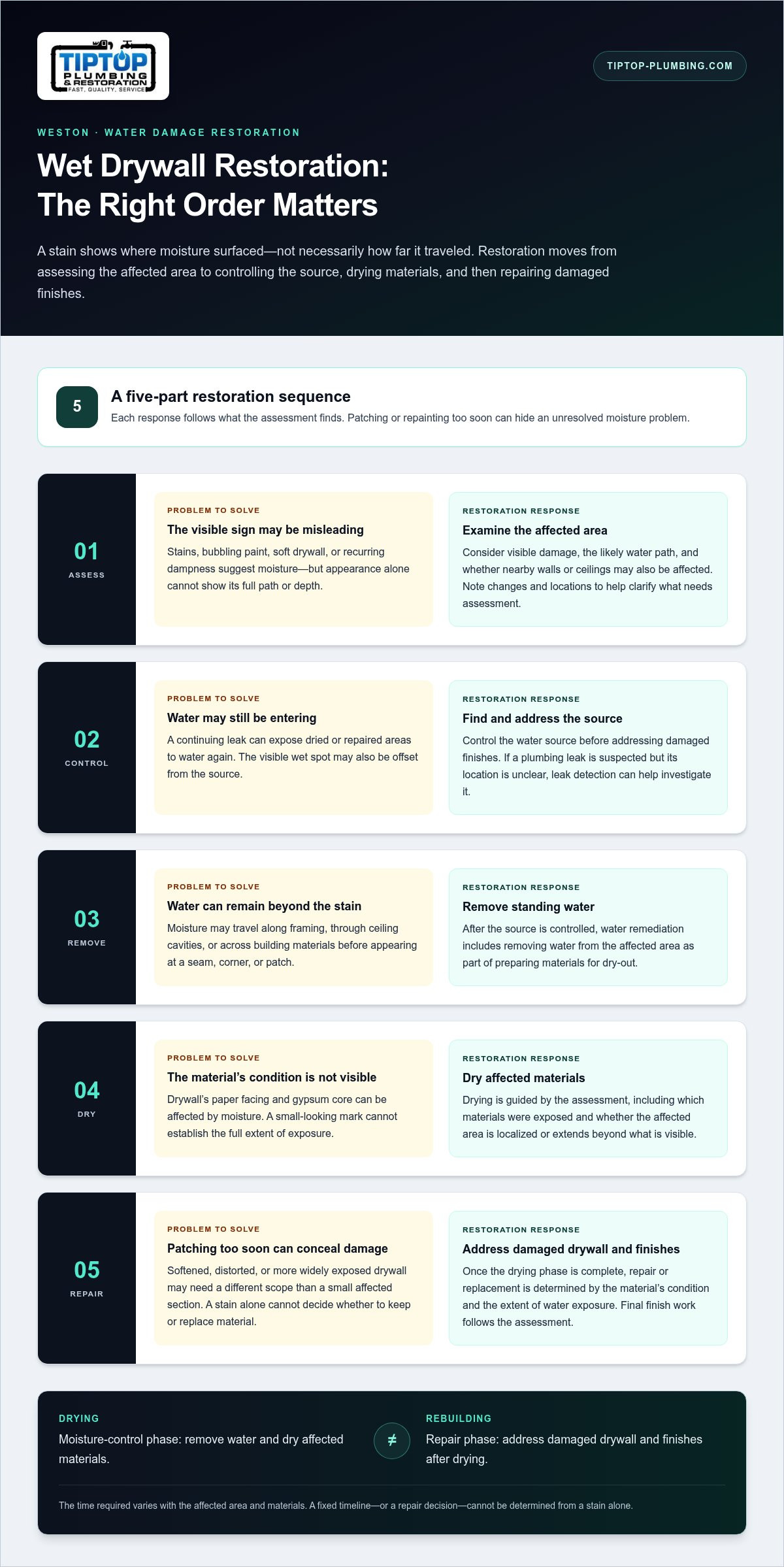
- Drywall water damage restoration in Weston follows a sequence: assess the affected area, control the water source, remove water, dry materials, and then address damaged finishes.
- Drying, localized repair, or replacement depends on the material’s condition and water exposure. No single visible sign determines the right choice.
- Questions about affected areas, source control, drying, repairs, and documentation can help you understand the restoration plan.
- Tip Top Plumbing & Restoration provides water remediation and dry-out services, along with leak detection and mold testing for related restoration needs.
Drywall Water Damage in Weston: What the Signs Can Tell You
A ceiling stain, bubbling paint, or wall that feels soft can be unsettling. These signs suggest moisture may be present, but they don’t show how deeply water has traveled or whether the drywall can be dried and kept. A small-looking stain may be the first visible clue to a larger issue, while an old mark may remain after the original leak has stopped.
Drywall’s paper facing and gypsum core can be affected by moisture. The general overview of Drywall: Water Damage and Molding explains why water exposure deserves attention. Visible drywall damage shows where moisture surfaced, not necessarily the full area it affected. Note whether signs change over time and what was happening nearby, such as plumbing use or rainfall, but don’t treat appearance alone as a diagnosis.
Which drywall water damage signs need prompt attention?
Pay attention to symptoms that spread, return, or change. A growing stain, paint that keeps peeling, a swollen or soft surface, and recurring dampness can all indicate that moisture is still affecting the area. A musty odor is another reason to investigate, but smell alone can’t confirm mold or show where moisture is located.
- Spreading stains or recurring dampness: Note when they appear and whether they worsen after water use or rainfall.
- Soft or swollen drywall: Avoid pressing or puncturing the surface, as its condition may be compromised.
- Sagging ceilings: Keep clear of the area and seek prompt professional assessment. A sagging panel may be weakened, and its appearance can’t establish how much water is present.
- Active water entry: Treat a continuing leak as urgent. The water source needs attention alongside the visible finish.
These clues can help you recognize the need for an assessment, but they don’t determine whether drywall can be dried, needs localized repair, or should be replaced. That decision depends on the material’s condition and the extent of water exposure.
Why might the wet spot appear far from the leak?
Water doesn’t always drip straight down from its source. It can move along framing, pass through ceiling cavities, or travel across other building materials before appearing at a seam, wall corner, or light-colored patch. A stain below a bathroom, for example, may be offset from the plumbing leak above it. Building layouts and assemblies vary, so the path of water in one home won’t predict what happens in another.
That distance matters: repairing only the visible spot can leave moisture or an active leak unaddressed. Don’t cut into a wall or ceiling to trace water yourself, especially if a ceiling is sagging. Tip Top Plumbing & Restoration serves Weston with leak detection and water damage restoration. Learn more about the Weston plumbing service area and local help with related water damage concerns.
How Drywall Water Damage Restoration Works in Weston
Effective restoration follows a clear order: assess the damage, control the water source, remove standing water, dry affected materials, and then address damaged drywall and finishes. Skipping ahead to patching or repainting can hide a problem rather than resolve it. Drywall water damage restoration is a moisture-control and repair process, not simply repainting a stain.
For Weston properties, drywall water damage restoration should account for both the visible finish and conditions behind it. The appropriate scope depends on the drywall’s condition, how it was exposed to water, and what an assessment finds. Drying and rebuilding are separate phases, and the time required varies with the area and materials involved. A fixed timeline can’t be determined from a stain alone.
Assessment and water-source control come first
The first step is to understand what happened and identify areas that may be affected. An assessment considers visible damage, the likely path of water, and whether nearby walls or ceilings may also need attention. Documenting affected locations and changes you’ve noticed can help clarify what needs to be examined.
Next, the water source must be controlled. If a plumbing leak is suspected but its location isn’t clear, leak detection can help investigate the source before damaged finishes are addressed. Tip Top Plumbing & Restoration provides Broward County leak detection services as part of addressing water damage and its plumbing source. Stopping ongoing water entry helps prevent newly dried or repaired areas from being exposed again.
Drying, repair, and final checks
Once the source is controlled, water remediation focuses on removing water and drying affected materials. The work is guided by the conditions found during assessment, including which materials were exposed and whether the damage is localized or extends beyond the visible area. Drying is not the same as rebuilding. Any drywall or finish work follows assessment of the affected materials and completion of the drying phase.
This order keeps the plan grounded in the property’s actual condition. A small affected section may call for a different scope than drywall that has softened, become distorted, or been exposed to water over a wider area. No single appearance or predetermined schedule should replace an assessment of the materials and moisture conditions.
Mold testing is a separate assessment option when there are concerns about possible mold. It doesn’t replace moisture control or establish that an area is mold-free. The U.S. Environmental Protection Agency’s EPA Guide to Mold, Moisture, and Your Home also emphasizes addressing moisture as part of managing mold concerns.
Tip Top Plumbing & Restoration provides water remediation, dry-out services, and leak detection for Weston homes and businesses. To discuss the affected area and a practical next step, arrange a restoration appointment.
Drying or Replacing Wet Drywall: How the Restoration Scope Is Decided
Wet drywall doesn’t always need to be removed, but a surface that looks intact isn’t proof that it’s dry underneath. The restoration decision depends on how the water reached the material, the extent of exposure, the drywall’s condition, and the moisture findings from an assessment. No single visible sign determines the right option in every case.
Use this comparison as a guide to the questions an assessment helps answer, not as a substitute for inspecting the affected area.
| assessment considerations | possible direction | |
|---|---|---|
| Drying | Whether the drywall remains sound, how broadly it was exposed, and whether moisture conditions support drying in place. | Dry affected materials, then reassess before deciding on finish work. |
| Localized repair | Whether damage is limited to a defined area and nearby drywall appears suitable to retain. | Address the affected section while preserving material the assessment finds unaffected. |
| Replacement | Whether drywall is severely deteriorated, remains wet, or has been affected by water that raises contamination concerns. | Remove and replace material as needed to reach and restore affected areas. |
These options can lead to different scopes of work, and findings may show that more than one approach is appropriate in different parts of the same room. For example, an affected section might need replacement while adjacent material can be retained after drying and assessment. For drywall water damage restoration in Weston, the goal is to base the scope on actual conditions rather than assume every stain calls for the same repair.
Painting over a stain doesn’t establish that the underlying moisture has been resolved. Paint may cover discoloration, but it doesn’t stop a leak or demonstrate that affected materials have dried. If the water source is still active or moisture remains in the assembly, a fresh finish may conceal the symptom without addressing the cause.
When might drying and localized repair be considered?
Professionals assess the affected drywall’s condition and the extent of exposure before recommending whether material can remain. If findings support retaining sound, unaffected sections, the work may focus on drying and repairing a limited area rather than replacing an entire wall or ceiling. A homeowner’s moisture reading from a handheld device can’t substitute for a full assessment of the damage, its source, and the surrounding materials.
When might drywall replacement be part of restoration?
Severe deterioration, persistent wetness, or concerns about water contamination can influence whether removal is appropriate. Opening or removing drywall may also be needed to access affected areas that can’t otherwise be assessed or addressed. These decisions depend on findings in that property, not a universal moisture threshold or a fixed number of hours. A professional can explain what needs removal and why before work proceeds.
Ask how the proposed scope accounts for the water source, affected materials, and moisture findings. A clear explanation connects those details to the choice between drying, localized repair, and replacement, helping you understand what the work is intended to resolve. In situations where significant drywall replacement evolves into broader commercial interior reconstruction, commercial contractors like Octopus Renovation Group specialize in rebuilding and complete facility renovations.
Choosing Drywall Water Damage Restoration in Weston: What to Expect
After water affects a wall or ceiling, it helps to know what the restoration plan covers and how decisions will be explained. For drywall water damage restoration in Weston, the plan should reflect the property, the water source, and the assessment findings, not a one-size-fits-all promise. Clear communication also helps you distinguish moisture removal from the work needed to restore the room’s finishes.
What should a clear restoration plan explain?
A useful plan identifies the areas considered affected, describes the likely source of water and whether it has been addressed, and outlines the proposed work. Ask for plain-language explanations of what will be dried, what may need repair or replacement, and what finish work is included in the scope. These are separate stages, so understanding how they fit together makes it easier to follow progress and know what comes next.
- Affected areas: Which walls, ceilings, or adjoining spaces are included in the assessment?
- Source control: What is understood about where the water came from, and what steps address continued water entry?
- Drying: Which affected materials need drying, and how will the team assess their condition?
- Repairs and finishes: What drywall work is proposed, and what remains after drying is complete?
- Documentation: What observations and completed work are recorded for your project?
Project notes, photographs, or other available records can help you track observed conditions and completed work. Keep copies with your property records, especially if you need to revisit the timeline or understand how the restoration scope changed as work progressed. Documentation supports clear communication, but it doesn’t replace an assessment of affected materials.
How does Weston’s local setting affect the discussion?
South Florida’s warm, humid conditions make timely moisture assessment relevant after water intrusion. Humidity alone can’t tell you whether a specific section of drywall is wet; the property and affected materials still need to be assessed. Homes and commercial buildings in Weston can differ in age, layout, materials, and construction, so a finding in one property shouldn’t be assumed to apply to another.
Tip Top Plumbing & Restoration serves Weston, Miramar, Pembroke Pines, Davie, Sunrise, Southwest Ranches, Cooper City, and Plantation. Across these Broward County communities, the restoration discussion should connect observed damage with the suspected source and the condition of each affected area. A stain near a ceiling joint, for example, may call for a different scope than a section of wall that remains soft after a leak has stopped. Tip Top Plumbing & Restoration provides water remediation, dry-out services, and leak detection for local properties, with the plan guided by the damage findings.
Book Drywall Water Damage Restoration in Weston
A sound next step begins with a clear picture of what happened: identify the visible damage, note whether water may still be entering, assess affected materials, and plan the appropriate restoration. Tip Top Plumbing & Restoration serves Weston with water remediation, dry-out services, leak detection, and mold testing. The work plan is guided by the property and assessment findings, so the scope can be explained without assuming every damp wall needs the same treatment.
What information should homeowners have ready?
A few observations can help explain the problem and focus the initial discussion. You don’t need to determine the cause or repair scope yourself. Share what you’ve noticed and leave assessment of the affected materials to the restoration team.
- Timing: Note when you first saw the stain, bubbling, or dampness.
- Ongoing water: Mention whether water appears to still be entering or the area becomes damp again.
- Location and changes: Identify affected rooms and describe whether marks are spreading, finishes are peeling, or surfaces are softening.
- Safety concerns: Keep clear of sagging ceilings. If water is near electrical fixtures or wiring, avoid the area and prioritize safety rather than touching wet materials.
These details help distinguish a one-time observation from a changing condition. If you have photos that show how the damage has developed, keep them available to help describe what you’ve seen.
What happens after scheduling restoration?
The next step is an assessment of the reported damage and the restoration needs at the property. The discussion should connect affected rooms and observed conditions with the suspected water source, then clarify whether source control, drying, drywall work, or finish restoration is included in the proposed scope.
The plan should follow the findings rather than a fixed promise. Leak detection may be relevant if a plumbing source is suspected. Water remediation and dry-out address related moisture concerns, while mold testing provides a separate assessment when appropriate. Ask for an explanation of what each stage covers, what has been observed, and what work remains. That makes it easier to track progress without assuming a particular arrival time, cost, or repair duration.
For drywall water damage restoration in Weston, Tip Top Plumbing & Restoration brings related plumbing and restoration services together around the property’s needs. Start with the observations you have, keep away from unsafe areas, and let the assessment guide the next steps.
Take the Next Step Toward a Clear Restoration Plan
Uncertainty about wet drywall can make it tempting to wait for a stain to fade or cover it with paint. Instead, use what you’ve observed to start a focused assessment. Understanding the affected area and the property’s needs can help you make informed decisions without guessing whether drywall should be dried, repaired, or replaced.
With drywall water damage restoration in Weston, the goal is to move from visible symptoms to a practical plan based on the findings. Tip Top Plumbing & Restoration serves Weston and can help you take that next step. Share what you’ve noticed, including whether the damage is changing, so the conversation can begin with useful details about your property.
You don’t have to determine the full repair scope on your own. Start with an assessment, get a clear explanation of the findings, and move forward with greater confidence.
Frequently Asked Questions
Can water-damaged drywall be dried instead of replaced?
Yes, drying may be an option if an assessment finds the drywall can be retained and the water exposure is manageable. For example, a limited area that remains structurally sound may have a different repair scope than material that is swollen, crumbling, or persistently wet. The decision depends on the specific materials and conditions, so don’t rely on a quick surface check to decide whether the wall is salvageable.
How quickly should I arrange an assessment for wet drywall in Weston?
Arrange an assessment promptly, especially if water is still entering, a stain is spreading, or a ceiling is sagging. Don’t wait for the area to dry on its own before reporting a continuing leak, since moisture may keep affecting materials out of sight. For drywall water damage restoration in Weston, sharing when the issue began and whether it changes after rain or plumbing use can help clarify the situation.
Does a small drywall water stain mean there is hidden damage?
Not necessarily, but a small stain can’t rule out moisture beyond the visible mark. Water may follow a seam or building material before appearing on a wall, and a stain may also remain after the original event. Note whether its edges grow, the finish changes, or it reappears after water use. Those observations help guide assessment, but they can’t establish the full extent by themselves.
What happens if water is still leaking behind the drywall?
If water is continuing to leak, the source needs attention before damaged finishes can be reliably restored. Ongoing water can affect more material and undermine repairs made too soon. Avoid cutting into the wall to search for the leak, particularly near wiring or plumbing. Tip Top Plumbing & Restoration provides leak detection alongside water damage restoration, helping address a suspected plumbing source as part of the overall response.
Can wet drywall develop mold in Florida’s humid climate?
Wet materials can create conditions that support mold growth, and Florida’s humidity makes moisture control an important concern. That doesn’t mean every damp wall has mold, and a stain or musty odor alone can’t confirm it. Focus first on addressing water entry and assessing affected materials. Tip Top Plumbing & Restoration provides mold testing when there’s a concern that warrants further assessment; testing is distinct from drying or repairing drywall.
Does drywall water damage restoration include finding the leak?
Leak detection can investigate a suspected plumbing source, but the restoration needs depend on what caused the water intrusion. A roof or other non-plumbing source may require a different source-control plan. During assessment, describe where and when the water appeared, along with any plumbing use or weather conditions you noticed. That context helps connect visible drywall damage with the likely cause and appropriate next steps.
How long does drywall water damage restoration take?
There isn’t one reliable duration for every restoration project. The schedule depends on how much material is affected, the water exposure, the drying needs, and whether drywall or finishes require repair or replacement. Drying and rebuilding are separate parts of the work, so the overall project may continue after moisture concerns are addressed. An assessment of the property is needed to outline a project-specific plan and expectations.
Disclaimer
The information provided in this article is for general educational and informational purposes only and should not be considered professional plumbing, restoration, mold remediation, or legal advice. Every plumbing system, property, and situation is unique, and the recommendations discussed may not apply to your specific circumstances.
While Tip Top Plumbing & Restoration strives to provide accurate and up-to-date information, we make no warranties regarding the completeness, accuracy, or reliability of the content. Any actions you take based on this information are at your own risk.
Plumbing repairs, water damage restoration, and mold remediation should be performed by qualified professionals and in accordance with applicable local building codes and regulations. If you are experiencing a plumbing emergency, water leak, or property damage, contact a licensed professional for an on-site evaluation.
Tip Top Plumbing & Restoration is licensed and insured to provide plumbing and restoration services throughout Broward County, Florida.