

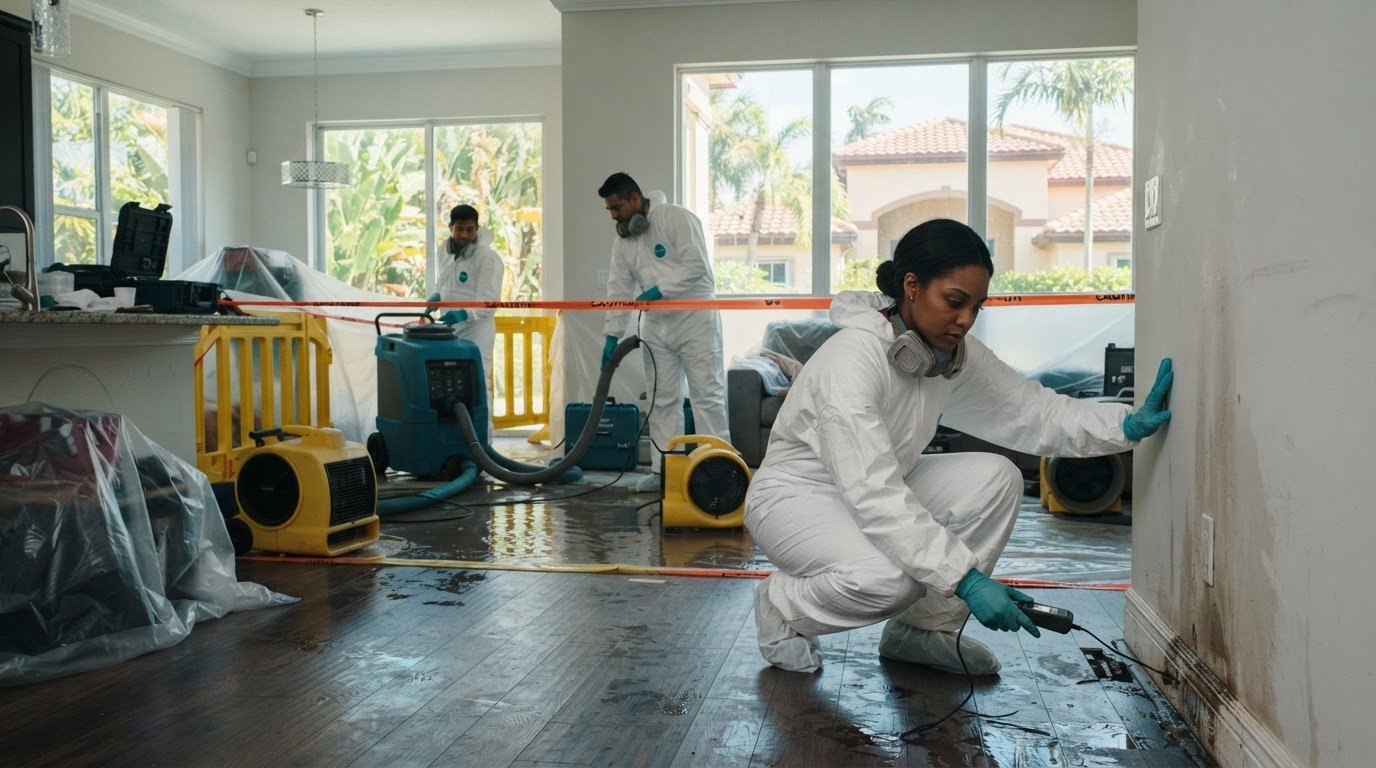
After contaminated water enters your Miramar property, the most important first step may be staying away from it. Category 3 water, often called black water, may contain sewage, bacteria, and other harmful contaminants. If you suspect this kind of damage, don’t touch the water or try to clean it yourself. Keep people and pets out of the affected area, and arrange professional category 3 water damage cleanup in Miramar.
It’s understandable to worry about what can be saved and whether water has spread beyond what you can see. A safer response starts by limiting exposure, then identifying the source and the materials it has reached. Removing visible water alone may not address moisture trapped inside walls, floors, or other building materials.
This guide explains what Category 3 water damage means, what to do first, and how professional cleanup can help protect your property. You’ll learn which immediate steps are safer, why belongings and materials may need careful assessment, and how water remediation and dry-out services can support a thorough cleanup. You’ll also see why checking for hidden moisture matters, especially before repairs begin.
Key Takeaways
- Category 3 water carries serious contamination concerns, so keep people and pets away from affected areas.
- Water can spread beyond visible wet spots. Porous belongings and building materials may need professional assessment.
- Once immediate hazards are addressed, document the damage and arrange an assessment before cleanup begins.
- Professional category 3 water damage cleanup in Miramar can combine remediation and dry-out services to address contamination and hidden moisture.
- Water damage restoration and mold testing can support a more complete recovery for your home or business.
Category 3 Water Damage in Miramar: Why Contamination Changes the Response
Water damage isn’t all the same. Under IICRC water damage categories, Category 3 describes water that is grossly contaminated and may contain harmful pathogens or other hazardous materials. The source matters. A sewage backup is a clear contamination concern, while floodwater can pick up pollutants as it moves across streets, soil, and building surfaces. Each incident needs assessment based on where the water came from and what it contacted.
That distinction changes more than the cleanup method. Water that looks clear may still be contaminated, and an unpleasant smell can’t reliably identify every hazard. Judging water by appearance alone can expose people to risks and spread contamination to other parts of a property. The Water damage overview provides general background on common categories and types of water-related losses. A professional assessment considers the specific source and conditions at the property.
What makes water damage Category 3?
Category 3 water is heavily contaminated. Examples can include sewage from a backup and floodwater that has contacted contaminants, though flood events can differ in source and risk. Contaminated water may affect floors, furnishings, and porous materials it touches. Don’t rely on color or odor to decide whether an area is safe. Hazards may not be visible or detectable by smell.
Category describes contamination, not how much water entered the property or how deeply materials became wet. Those conditions also shape the work required. Water may soak into porous contents or move behind baseboards, beneath flooring, and into wall cavities, leaving affected areas beyond the visible waterline. Removing standing water alone may not resolve contamination or moisture concerns.
Why Miramar storm-related water needs careful assessment
Miramar’s South Florida location brings heavy rain and hurricane-related weather that can create different water-intrusion scenarios, from roof or window leaks to flooding that enters from outside. Stormwater isn’t automatically Category 3. Its contamination risk depends on its source and what it encounters. A rain leak and water mixed with sewage or other contaminants call for different responses.
Duration and building materials matter, too. The longer water remains, the more opportunity it has to spread through contents and concealed spaces. Concrete block, stucco, and other materials can retain moisture, so a surface that appears dry may not tell the full story. A careful assessment considers the water source, when and how it entered, affected materials, and visible or hidden areas of impact before determining appropriate cleanup and drying.
For property owners, the practical takeaway is simple: don’t guess at the category or handle potentially contaminated materials. If the source is uncertain, keep people away from the affected area while arranging a professional assessment. Proper category 3 water damage cleanup in Miramar starts by identifying the contamination concern, then matching remediation and drying to the conditions found on site.
How Category 3 Contamination Can Affect Miramar Homes and Businesses
Contaminated water can travel farther than a puddle suggests. It may pass through flooring seams, collect beneath cabinets, wick into drywall, or move along framing and utility openings. Foot traffic and handling can also transfer contamination from a wet area to nearby surfaces. In a business, that spread may reach storage areas or shared hallways. At home, it can affect rooms beyond the initial leak or backup.
A dry-looking surface doesn’t prove the area beneath it is dry. Water can remain inside a wall cavity or under finished flooring after visible water has been removed. Professional dry-out service uses moisture checks across affected materials and nearby comparison areas, rather than touch or appearance alone, to guide drying decisions.
Which materials and belongings may need assessment?
Porous materials, including drywall, insulation, carpet, upholstered furniture, and some household contents, can absorb contaminated water. Hard, nonporous surfaces such as certain tile or metal may be easier to clean, but seams, joints, or attached materials can still hold moisture or contamination. Neither type of material guarantees a salvage outcome. The water source, exposure, material condition, and ability to clean and dry it all matter.
Keep potentially affected belongings separate from clean items, and avoid handling them if doing so could expose you to contaminated water. A professional assessment can help determine which materials may be cleaned, which need further drying, and which may require removal. This avoids assuming every wet item is either safe to keep or beyond saving.
Why hidden moisture matters after water removal
Moisture may remain behind baseboards, beneath flooring, inside wall cavities, or within porous materials after extraction. Closing up a damp cavity or replacing a floor too soon can leave a problem concealed. Drying decisions should reflect measured conditions in affected areas, not just a surface that feels dry.
Assessment also helps distinguish visible damage from less obvious impact. In a multi-room property, a wet threshold or shared wall may warrant checking adjacent areas, while an unaffected space can provide a useful comparison. Florida’s environmental health work includes concerns such as water quality and onsite sewage disposal. The Florida Department of Health Environmental Public Health page explains that broader public-health context.
Tip Top Plumbing & Restoration provides water remediation and dry-out services for Miramar homes and businesses. If contaminated water may have reached concealed materials, arrange a professional water damage assessment to clarify affected areas and plan the next steps for cleanup and drying.
Category 3 vs. Other Water Damage: What Miramar Property Owners Should Know
Water damage categories describe contamination concerns, not how dramatic the damage looks. A small amount of water from a contaminated source can call for more caution than a larger leak from a clean supply. Under IICRC guidance, the three categories provide a framework for understanding potential contamination and informing the response. They don’t replace an assessment of the source, affected materials, and site conditions.
In general, the categories are:
- Category 1: Water from a sanitary source that doesn’t initially pose a substantial contamination risk.
- Category 2: Water with significant contamination that may cause discomfort or illness through contact or exposure.
- Category 3: Grossly contaminated water that may contain pathogens or other harmful substances.
These descriptions aren’t labels homeowners should assign by looking at a puddle. Color and odor can offer clues, but neither reliably establishes the water’s category. A clear-looking leak could still have contacted contaminated materials, while storm-related intrusion can vary in risk depending on its path and source. Don’t downgrade the concern based on appearance or a quick home inspection.
How contamination level affects the cleanup approach
Category identification helps inform how affected contents and materials are handled, what may need removal, and which cleaning and drying steps are appropriate. A clean-water leak and a sewage-contaminated backup aren’t interchangeable jobs. Using the same handling and cleanup approach for both can leave contamination unaddressed or expose occupants during work. Water remediation needs to account for both contamination and the extent of moisture impact.
Category and damage severity are related but distinct considerations. The category describes contamination. The amount of water and how far it has penetrated materials also affect restoration needs. A limited wet area can still present a serious contamination concern, and widespread water damage doesn’t automatically mean the water is Category 3. As disaster recovery and remediation specialists like Fire Industry Restoration Experts emphasize, a professional assessment connects these factors before a cleanup plan is set.
When the water source is uncertain
If you can’t identify where water came from, treat it cautiously. Avoid direct contact and keep others away while the source and affected area are assessed. This is especially important when a plumbing leak, drain issue, or backup could be involved. Finding the source helps determine the right response and whether water is continuing to enter the property.
For an unresolved plumbing source, Broward County leak detection services can help locate leaks that aren’t obvious at the surface. Once the source is understood, the cleanup plan can address the specific contamination concern and materials the water reached. That’s the purpose of category 3 water damage cleanup in Miramar: match remediation and drying to the conditions instead of assuming every water-damage event needs the same treatment.
What to Do After Category 3 Water Damage in Miramar
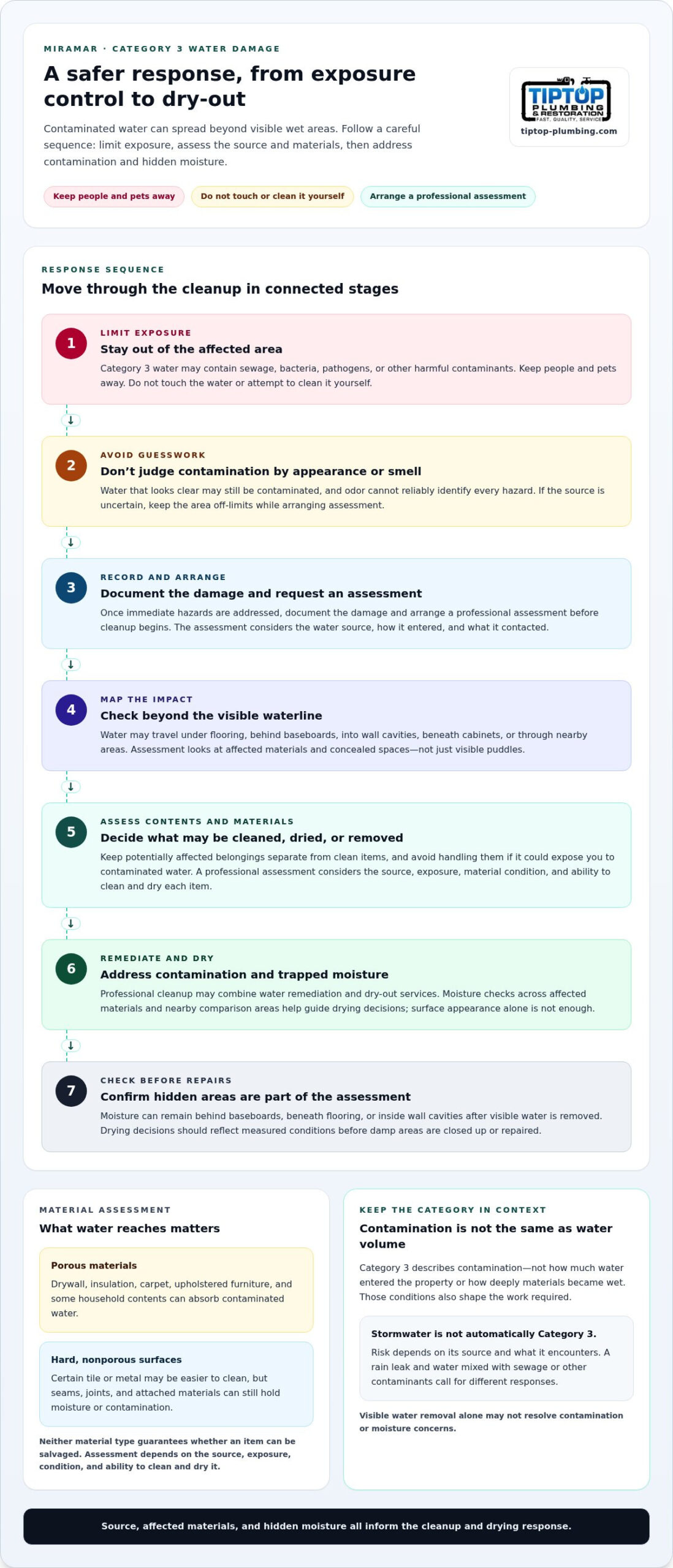
Take the safest steps first. If sewage, contaminated floodwater, or another hazardous source may be involved, don’t start removing water or belongings yourself. Keep people and pets away, and don’t enter a space with electrical hazards or unstable conditions. Once it’s safe to do so, document the damage and arrange a professional assessment.
- Avoid contact. Stay out of the affected area and keep others away from standing water, wet contents, and materials that may be contaminated. Don’t touch or move items to inspect what’s underneath. Avoid ordinary household fans, which can circulate air and potentially spread contamination from affected surfaces. Leave removal and cleanup to professionals.
- Address immediate hazards without entering the area. Don’t touch electrical equipment, outlets, or appliances if they’re wet or near standing water. Don’t walk through water to reach a breaker or shutoff. If you can safely stop a plumbing leak from an unaffected, dry location, do so. Otherwise, stay clear and get help. For an ongoing plumbing emergency, emergency plumbing services in Broward County can help address the source.
- Document damage when it’s safe. Take photos or video from a safe, dry location before cleanup begins, if doing so won’t bring you near contaminated water or hazards. Record affected rooms, visible damage, the water level if apparent, and any details you know about the source and when you noticed it. Don’t delay leaving or addressing immediate danger to gather images. A written note can capture details you can’t safely photograph.
- Arrange an assessment. Share what you know about the water source, how it entered, and which spaces or contents appear affected. Mention any plumbing backup or leak, and point out areas where water may have reached behind finishes. This information helps guide decisions about safe handling, cleanup, and drying. For category 3 water damage cleanup in Miramar, professional remediation can assess conditions and determine appropriate next steps.
Tip Top Plumbing & Restoration provides water remediation, dry-out service, and water damage restoration for residential and commercial properties. The recent restoration project examples offer context on restoration work. Each response depends on the source and damage at the property.
Category 3 Water Damage Cleanup in Miramar: How Tip Top Supports Recovery
Recovering from contaminated water damage takes more than removing what’s visible. The response needs to account for the source, the materials affected, and moisture that may remain out of sight. Tip Top Plumbing & Restoration supports homes and businesses in Miramar with water remediation, dry-out service, and water damage restoration. The work is guided by conditions at the property, so the approach can reflect assessment findings instead of assuming every incident follows the same path.
From water remediation to professional dry-out
Water remediation addresses water-damage conditions in affected areas, including contamination concerns and materials identified during assessment. Dry-out service focuses on managing remaining moisture in affected building materials. These services address related but distinct needs: cleanup alone may leave damp materials, while drying without addressing contamination may not resolve the underlying concern.
Assessment and cleanup planning clarify which areas and materials need attention. Moisture management then focuses on conditions in affected spaces, including places that may not be obvious from a quick visual check. As work progresses, the response can be adjusted to findings and changing conditions. There isn’t a reliable one-size-fits-all sequence or completion time for every property.
Arrange a local assessment and next steps
For a Miramar property owner, a useful next step is to share what’s known about the water source, where it traveled, and which rooms or contents are affected. Tip Top’s plumbing and restoration services support the response, from addressing water-damage conditions to dry-out and broader restoration needs. Clear communication helps connect the observed damage with the work that may be needed.
Tip Top Plumbing & Restoration serves customers in Miramar and nearby Broward County communities, including Weston, Pembroke Pines, Davie, Sunrise, Southwest Ranches, Cooper City, and Plantation. If concerns remain about possible mold, professional mold testing is a separate service that can help assess those concerns. Testing isn’t the same as water remediation or drying. It can provide additional information to inform next steps, which depend on the property and the conditions found.
Tip Top also provides water damage restoration for residential and commercial properties. Property owners looking for broader regional context can learn about Tip Top’s restoration services and how restoration fits into recovery planning. For Category 3 concerns, keep people away from affected areas until they can be assessed, and share any known information about the source when arranging service.
Move Forward With a Clear Recovery Plan
The next step after water damage is turning uncertainty into informed decisions. Before belongings are moved back or repairs cover affected areas, use the assessment findings to understand what still needs attention. Keep notes about decisions, outstanding concerns, and any changes you observe. At home or work, a clear record can help everyone involved stay aligned as recovery progresses.
Choosing category 3 water damage cleanup in Miramar means treating the property’s specific conditions as the guide, rather than rushing toward a cosmetic fix. Take time to understand the recommended next steps. You don’t have to make every recovery decision at once. Focus first on a safe, well-informed path forward.
A steady plan can make a difficult situation feel more manageable. Arrange an assessment with Tip Top Plumbing & Restoration to plan your next steps.
Frequently Asked Questions
Is Category 3 water damage the same as black water?
Often, yes. “Black water” is commonly used to describe grossly contaminated water. Don’t decide whether water is Category 3 by its color, clarity, or smell. A plumbing backup, for example, may raise different concerns than water from another source. The source and site conditions matter, and suspected contamination warrants professional assessment.
Can I clean up Category 3 water damage myself?
It’s safest not to handle suspected sewage or contaminated floodwater yourself. Contact can create exposure risks, and contamination may affect materials beyond the visible wet spot, such as items stored in a nearby closet. Keep people and pets away, and don’t enter areas with electrical hazards. Arrange a professional assessment instead of trying to remove or disinfect materials yourself. For category 3 water damage cleanup in Miramar, an evaluation of the property helps guide safer next steps.
How long does Category 3 water damage cleanup take?
There’s no standard duration. Timing depends on the water volume, contamination, affected materials, and drying conditions. Water removal and remediation address different needs than drying and monitoring, so completing one doesn’t necessarily mean the property is ready for repairs or normal use. After assessing the site, the restoration team can explain the expected work sequence and what conditions will inform follow-up.
Does homeowners insurance cover Category 3 water damage?
Coverage depends on your policy, the cause of loss, applicable exclusions, and the circumstances of the claim. A plumbing backup and rising floodwater, for example, may be treated differently under your coverage. If it’s safe, document the damage and keep notes about when you discovered it. Contact your insurer or agent to ask about claim requirements and documentation. Coverage decisions are separate from immediate safety steps and the property’s cleanup needs.
Can Category 3 water damage cause mold?
Lingering moisture can contribute to mold growth, but mold doesn’t inevitably develop after every water event. Conditions vary by material, location, and how well affected areas are dried. As remediation specialists like MouldMen point out, lingering dampness in porous structures creates ideal conditions for spores to establish. A professional assessment can help identify moisture concerns and inform appropriate follow-up. Tip Top Plumbing & Restoration provides professional mold testing as a separate service. Testing may help assess a concern, but it isn’t automatically necessary after every incident and can’t guarantee a particular outcome.
Should I stay in my Miramar home during Category 3 cleanup?
Whether you can remain at home depends on which areas are affected, any safety hazards, the contamination concern, and the work underway. You may need to avoid particular rooms even if other parts of the property aren’t affected. Follow site-specific guidance from restoration professionals, and follow relevant emergency authorities if there’s an immediate hazard, such as electrical danger or structural instability. Don’t enter a restricted or unsafe area to retrieve belongings.
Disclaimer
The information provided in this article is for general educational and informational purposes only and should not be considered professional plumbing, restoration, mold remediation, or legal advice. Every plumbing system, property, and situation is unique, and the recommendations discussed may not apply to your specific circumstances.
While Tip Top Plumbing & Restoration strives to provide accurate and up-to-date information, we make no warranties regarding the completeness, accuracy, or reliability of the content. Any actions you take based on this information are at your own risk.
Plumbing repairs, water damage restoration, and mold remediation should be performed by qualified professionals and in accordance with applicable local building codes and regulations. If you are experiencing a plumbing emergency, water leak, or property damage, contact a licensed professional for an on-site evaluation.
Tip Top Plumbing & Restoration is licensed and insured to provide plumbing and restoration services throughout Broward County, Florida.