

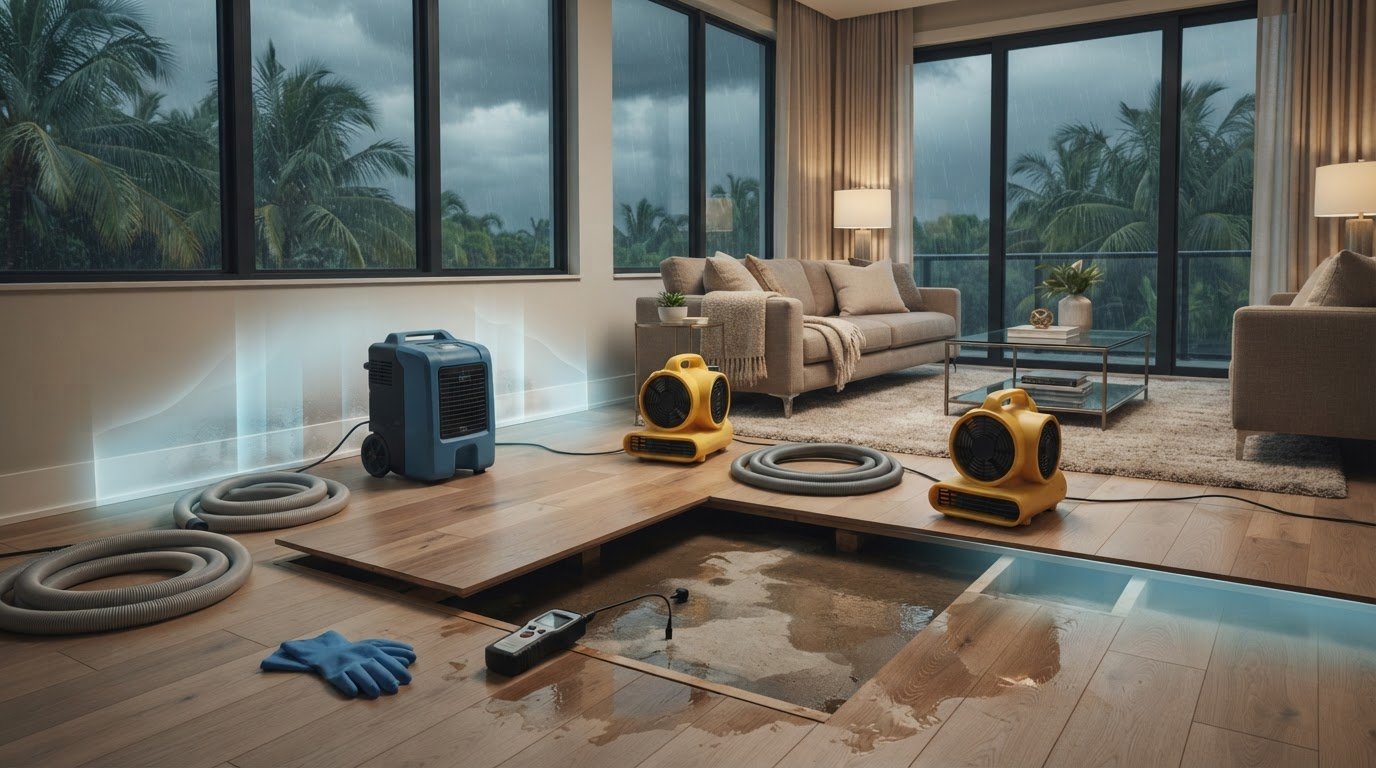
What if the water you can’t see is putting your property at greatest risk? After a leak, appliance failure, or storm-related intrusion, visible water is only part of the problem. Moisture can remain inside walls, beneath flooring, or in other concealed areas. Water damage restoration Broward County property owners need should trace the moisture from its source through affected materials and include a careful dry-out.
It’s understandable to feel unsure what to do first when you’re worried about safety, mold, and damage spreading. This guide covers immediate steps to take when it’s safe, then explains how assessment, water removal, drying, and follow-up fit into recovery. You’ll also learn why finding and addressing a plumbing leak can be an important part of remediation and when professional mold testing may be appropriate. A clear process helps you make practical decisions for your Broward County home or business.
Key Takeaways
- Prioritize personal safety. Don’t enter areas with electrical or structural hazards, and limit further exposure only when it’s safe.
- A thorough water damage restoration Broward County plan follows the moisture from its source through water removal, drying, and reassessment.
- The right response depends on the source, how far water spread, how long materials were wet, and which materials were affected.
- Record visible damage and affected rooms, but don’t disturb unsafe areas to document them.
- When plumbing is involved, emergency plumbing or leak detection can address the source alongside water remediation and dry-out. Professional mold testing may also be appropriate.
Water Damage in Broward County: What to Do First
Stopping the water source and recovering the property are related, but separate, steps. If a pipe is leaking, stopping the flow can limit additional water. It won’t remove moisture already absorbed by flooring, walls, or belongings. Water damage restoration Broward County property owners need starts with a safe assessment of what happened and which areas may be affected, followed by water removal, drying, and appropriate follow-up.
Water damage restoration involves assessing affected areas, removing water, drying materials, and completing appropriate follow-up. Standing water and wet materials can worsen damage if left unaddressed, and moisture may extend beyond the visible wet spot. For a general overview of understanding water damage, see how water can affect a building and its contents.
What counts as water damage in a Broward County property?
Warning signs include pooling water, damp carpet or other flooring, stains or bubbling on a wall, and belongings that feel wet or smell musty. The visible area may not show the full extent: water can travel behind baseboards, beneath flooring, or into other concealed spaces. Homes and commercial properties throughout Broward County can be affected. The source, building layout, materials, and water’s path vary from one property to another.
What should you do immediately after water intrusion?
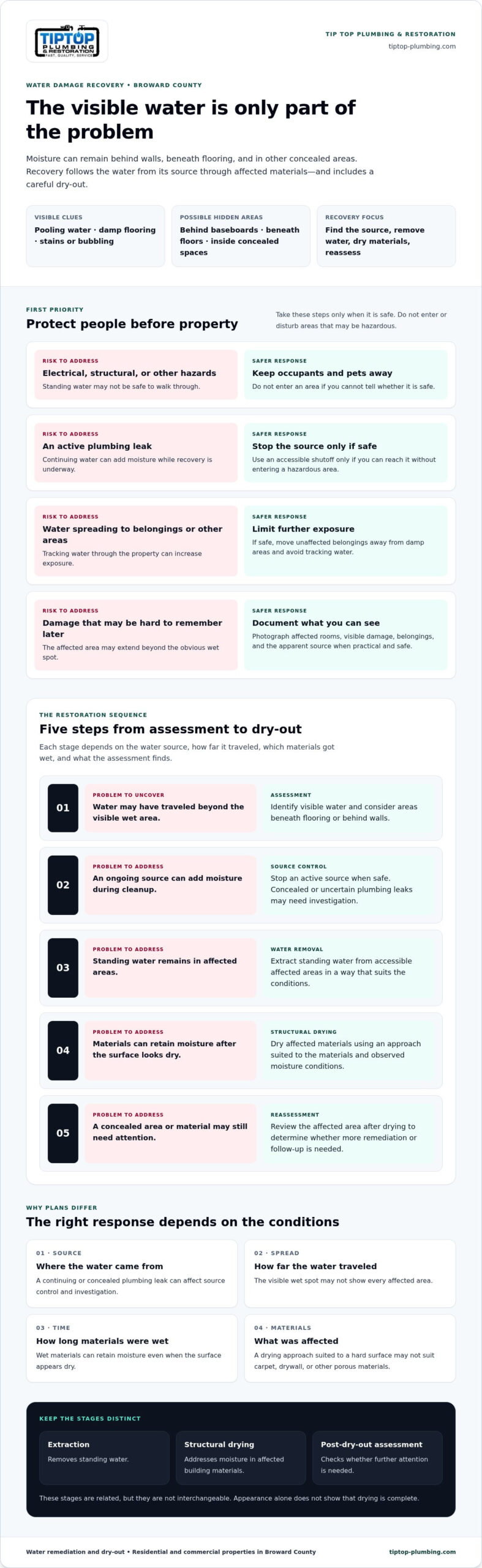
Take these steps in order, but only if it’s safe to do so:
- Protect people first. Keep occupants and pets away if there may be electrical, structural, or other hazards. Don’t walk through standing water if you can’t tell whether it’s safe.
- Stop the source if safe. For a plumbing leak, use an accessible shutoff only if you can reach it without entering a hazardous area. Don’t risk injury trying to locate or operate a valve.
- Limit further exposure. If it’s safe, move unaffected belongings away from damp areas and avoid tracking water through the property. Don’t disturb materials or enter spaces that appear unsafe.
- Document what you see. Photograph visible damage and affected belongings before cleanup when practical and safe. Capture each affected room and the apparent source, but don’t approach hazards or move items just to get a picture.
Prompt assessment matters because standing water can spread, and wet materials may retain moisture after the surface looks dry. A careful review helps identify which areas need attention and whether the source is still active. If a plumbing problem is involved, emergency plumbing in Broward County can address the source as part of the response. Keep the immediate goal simple: protect people, avoid hazards, and limit additional exposure without attempting unsafe cleanup.
How Water Damage Restoration Works: Assessment Through Dry-Out
A careful recovery follows the water from its source through affected materials. The sequence is straightforward, but the work at each stage depends on what caused the intrusion, how far water traveled, which materials got wet, and what the assessment finds. Water damage restoration Broward County property owners may need involves more than removing visible water. Moisture in concealed areas can affect both the drying plan and the follow-up.
Water extraction removes standing water, structural drying addresses moisture in affected building materials, and post-dry-out assessment checks whether further attention is needed. These stages are related, but they are not interchangeable.
- Assess affected areas. Identify visible water and consider where it may have traveled, including under flooring or behind walls.
- Address the source. Stop an active source when safe so additional water doesn’t undermine recovery.
- Remove standing water. Extract water from accessible affected areas in a way that suits the conditions.
- Dry affected materials. Choose a drying approach based on the materials and observed moisture conditions.
- Reassess. Review the affected area after drying to determine whether more remediation or follow-up is needed.
Assessment and water-source control
The source matters because a continuing leak can add moisture while cleanup is underway. A visible plumbing leak may reveal an immediate source, but water can appear some distance from where it entered, and the cause may not be obvious. If plumbing leakage is concealed or uncertain, Broward County leak detection services can help investigate and address the plumbing issue. Assessment then guides the next steps instead of assuming every wet area needs the same response.
Water removal, drying, and follow-up
Water removal and dry-out have different jobs. Extraction clears standing water; drying addresses moisture remaining in affected materials. A floor’s surface may look dry while moisture remains beneath it, so appearance alone doesn’t show that drying is complete. The materials and moisture conditions help determine the work needed. An approach suited to a hard surface may not be appropriate for carpet, drywall, or other porous materials.
Reassessment helps determine whether conditions have improved as intended or whether a concealed area or material still needs attention. If mold concerns arise during recovery, the EPA guidelines on mold remediation offer reference information for schools and commercial buildings. Tip Top Plumbing & Restoration provides water remediation and dry-out services for residential and commercial properties in Broward County. If a plumbing leak is part of the problem, you can schedule service for leak-related restoration needs.
What Changes the Water Damage Restoration Plan?
Two wet rooms can call for different responses, even when the visible water looks similar. A plumbing leak, appliance release, and storm-related intrusion may affect different areas and materials. How far the water spread and how long it has been present also shape the assessment. For water damage restoration Broward County properties need, the plan should follow the conditions at the property, not assumptions based on the apparent source or wettest spot.
How does the water source affect the response?
A visible pipe leak may point to a plumbing source, while water near a window, ceiling, or floor may have a less obvious entry point. In cases where storm damage or compromised roofing causes water intrusion from above, professional contractors like Heroic Roofing can help secure and repair the exterior envelope. An appliance release can spread beyond the appliance’s immediate area. Investigate the source rather than inferring it from where water collects: the wettest spot may not be where water entered. A professional assessment helps establish relevant conditions without guessing about the cause or safety of affected materials.
| Scenario | Possible affected areas | Assessment question |
|---|---|---|
| Plumbing leak | Cabinet interiors, nearby flooring, or concealed spaces | Is the leak active, and where has moisture traveled? |
| Appliance-related release | Flooring and materials around or below the appliance | What area was exposed, and for how long? |
| Storm-related intrusion | Areas near openings, ceilings, or other apparent entry points | Where did water enter, and what materials were affected? |
This comparison is a starting point, not a diagnosis. Water can travel beyond the place it first appears, so assessment considers the source, spread, duration, and observed conditions together. A small visible patch, for example, doesn’t establish how much nearby material was exposed.
Why do flooring, walls, and contents need different attention?
Materials don’t absorb or retain moisture in the same way. Water may sit on a hard surface, soak into carpet or other porous flooring, or affect wall materials. Concealed spaces behind a baseboard or beneath a floor may need assessment, but don’t assume they’re affected without evidence. Belongings also need separate consideration. Deciding whether to keep a wet item is different from deciding how to address a building material.
Duration matters, too. Materials exposed for different lengths of time may have different drying and remediation needs, even in the same room. The appropriate scope depends on the conditions found, not a fixed response for every leak or intrusion. A city-specific companion guide covers related considerations for water damage restoration in Fort Lauderdale. Across property types, the same practical steps apply: investigate the source, consider where moisture could have traveled, and tailor attention to the materials and conditions observed.
Broward County Homeowner Checklist for a Safer Recovery
A clear record and careful assessment can make a stressful recovery easier to manage. Focus on protecting people, documenting what you can safely see, gathering information about the likely source, and arranging a professional assessment. This checklist helps you organize useful details without taking risks or assuming what repairs or insurance decisions may follow.
- Keep people away from hazards. Don’t enter an area if water, damaged building materials, or nearby electrical equipment could make it unsafe. Avoid moving items or attempting cleanup in a hazardous space. Safety comes before photographs or belongings.
- Record the visible impact. Note which rooms and areas appear affected, what you observed, and when you discovered the damage. Take clear photos of visible conditions and belongings only if it’s safe. Don’t disturb a wet surface or move heavy items just to document what’s underneath.
- Gather source details. Write down what you know about a possible plumbing leak, appliance release, or water entry point, along with any changes you notice. Mark uncertain details as uncertain. The wettest area doesn’t necessarily show where the water began.
- Arrange a professional assessment. Share your notes and observations so the source, visible spread, and affected materials can be considered together. Professional water damage restoration Broward County property owners rely on should be guided by observed conditions, not guesswork.
What information should you document?
Keep a simple timeline of when you first noticed the issue, what you saw, and which areas appeared affected. Save photographs in one folder and label them by room or date if helpful. Keep relevant service records, receipts, and insurer communications together for reference. Organized records make details easier to recall, but they don’t guarantee any particular insurance decision.
Include follow-up observations. If a stain changes, dampness appears in another area, or a plumbing source is identified, note what you observed and when. Stick to facts rather than trying to diagnose the cause. A clear record helps explain how the situation developed during an assessment.
When should mold testing enter the conversation?
Damp conditions or suspected mold may warrant professional evaluation, particularly if concerns remain during recovery. Mold testing is distinct from water removal and dry-out: testing evaluates mold-related concerns, while remediation and drying address water and moisture conditions. Testing doesn’t replace correcting a water source or assessing wet materials, and its findings shouldn’t be treated as a predetermined diagnosis or outcome.
Tip Top Plumbing & Restoration serves residential and commercial properties in Weston, Miramar, Pembroke Pines, Davie, Sunrise, Southwest Ranches, Cooper City, and Plantation. See the Broward County service area information for local coverage. When arranging an assessment, share your notes and any concerns about dampness or suspected mold so the right next steps can be considered.
Water Damage Restoration in Broward County: How Tip Top Helps
Recovering from water intrusion can involve more than one service. Tip Top Plumbing & Restoration provides water remediation, dry-out, professional mold testing, emergency plumbing, and leak detection for residential and commercial properties in Broward County. These services address different parts of the problem: plumbing support can address a suspected source, while remediation and dry-out focus on the property’s water and moisture conditions. The right response depends on what happened and what the assessment finds.
- Water remediation addresses water-related impacts to the property.
- Dry-out service focuses on drying affected areas and materials.
- Professional mold testing evaluates mold-related concerns when they need assessment.
When water remediation and plumbing support overlap
Stopping a plumbing leak and addressing water already affecting a property are distinct needs. If a pipe or another plumbing issue is suspected, emergency plumbing or leak detection can help investigate and address the source. Water remediation and dry-out focus on the resulting water and moisture conditions. These services can relate to the same incident, but the appropriate scope and sequence depend on what’s found during assessment.
An active plumbing problem needs attention so it doesn’t continue adding water while property recovery is underway. Tip Top provides emergency plumbing in Broward County, alongside water remediation and dry-out services. If the leak isn’t visible, leak detection can help investigate a suspected plumbing source. Addressing the source complements remediation, but doesn’t replace assessing affected materials or determining the right drying and follow-up.
How to take the next step
Have a few details ready when arranging service: whether the property is residential or commercial, which rooms or areas appear affected, what you can see, and whether you suspect water is still entering. Describe the likely source if you know it. If you’re unsure, say so rather than guessing. Mention any visible dampness or mold concerns as well. These details help frame a practical discussion about plumbing, remediation, dry-out, or testing.
Tip Top Plumbing & Restoration supports property owners across Broward County with water damage restoration, including remediation and dry-out, and professional mold testing. Services are available to property owners in Weston, Miramar, Pembroke Pines, Davie, Sunrise, Southwest Ranches, Cooper City, and Plantation. Share what you’ve observed and any suspected active leak to get the recovery process moving.
Move Forward With a Clear Recovery Plan
Water intrusion can leave questions even after the immediate disruption has passed. Turn what you’ve observed into a clear discussion about your property’s needs. Share which areas are affected, whether you suspect an active plumbing leak, and any concerns about lingering dampness. You don’t need to diagnose the problem yourself to help frame an assessment.
For water damage restoration Broward County property owners can turn to Tip Top Plumbing & Restoration for residential and commercial support, including water remediation, dry-out services, and professional mold testing. A thoughtful recovery plan starts with the conditions at your property and the concerns you raise, so you can take the next step with greater clarity.
Take it one step at a time. Start by booking service and sharing what you’ve observed.
Frequently Asked Questions
Does homeowners insurance cover water damage restoration?
Coverage depends on your policy and what caused the damage, so don’t assume every water source is treated the same. A sudden plumbing leak may be handled differently from flood water entering from outside; standard homeowners policies generally exclude flood damage, which typically requires separate coverage. Review your policy documents and ask your insurer how your specific loss is addressed. Keep copies of claim communications for your records, since coverage decisions depend on policy terms.
Can I stay in my home during water damage restoration?
Possibly, but it depends on whether the affected areas are safe and usable during the work. Consider staying elsewhere if there are electrical or structural concerns, contaminated water, or essential rooms you can’t safely access. Have the conditions assessed and follow any safety guidance for affected areas. Don’t assume a room is ready to use just because standing water is gone.
What should I do with furniture and belongings after water damage?
Move belongings only if you can reach them safely and doing so won’t spread water or expose you to a hazard. Place unaffected items in a dry area, separate from wet contents. Don’t plug in electronics that may have gotten wet, and avoid handling items affected by sewage or other potentially contaminated water. Photograph damaged belongings before moving them when practical, and make a separate list of items that need assessment.
Can water damage be hidden behind walls or under flooring?
Yes. Water may pass behind baseboards, beneath flooring, or into wall cavities, so a surface that looks dry doesn’t prove surrounding materials are dry. Signs such as paint blistering, a new musty odor, or flooring that begins to lift can point to areas worth assessing, but they don’t establish the full extent of moisture. Water damage restoration professionals in Broward County can assess suspected concealed moisture and determine what needs attention.
Is it safe to clean up water from a sewage backup myself?
Don’t handle sewage-contaminated water as an ordinary spill. Keep children and pets away, avoid direct contact, and don’t use household equipment that could spread contaminated water through the property. If the backup is ongoing, don’t enter the affected area to reach a drain or appliance. Contact a qualified service for help with the plumbing issue and water remediation. If anyone has been exposed, seek appropriate medical advice.
Will water-damaged drywall always need to be replaced?
No. Replacement depends on the drywall’s condition, how it was affected, and the moisture or contamination conditions found during assessment. A small surface mark doesn’t automatically mean a whole wall must come out, but softened, swollen, or damaged material may need closer evaluation. Don’t cut into a wall yourself if wiring, plumbing, or other hazards may be present. Assessment helps determine whether drying, removal, or another response is appropriate.
How can I reduce the chance of more water damage while waiting for an assessment?
If a plumbing leak is suspected, shut off the water only if the valve is accessible and safe to operate. Keep people away from wet electrical areas, don’t use affected outlets or appliances, and move dry belongings out of the path of water only when it’s safe. Tip Top Plumbing & Restoration serves properties in Weston, Miramar, Pembroke Pines, Davie, Sunrise, Southwest Ranches, Cooper City, and Plantation.
Disclaimer
The information provided in this article is for general educational and informational purposes only and should not be considered professional plumbing, restoration, mold remediation, or legal advice. Every plumbing system, property, and situation is unique, and the recommendations discussed may not apply to your specific circumstances.
While Tip Top Plumbing & Restoration strives to provide accurate and up-to-date information, we make no warranties regarding the completeness, accuracy, or reliability of the content. Any actions you take based on this information are at your own risk.
Plumbing repairs, water damage restoration, and mold remediation should be performed by qualified professionals and in accordance with applicable local building codes and regulations. If you are experiencing a plumbing emergency, water leak, or property damage, contact a licensed professional for an on-site evaluation.
Tip Top Plumbing & Restoration is licensed and insured to provide plumbing and restoration services throughout Broward County, Florida.