

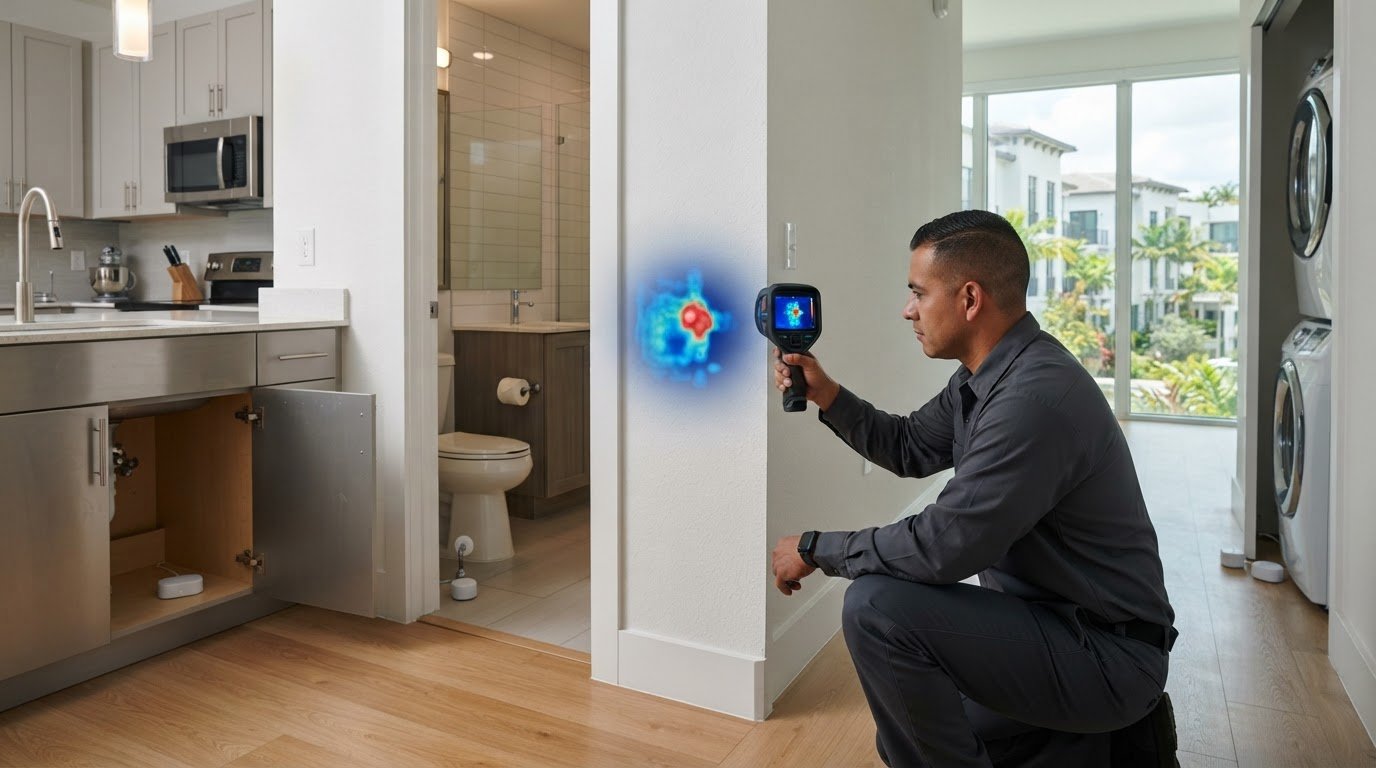
A leak in one apartment can damage neighboring units or shared areas. Apartment building leak detection in Weston starts with noticing signs such as unexplained dampness or unusual water use, then tracing them to a unit, fixture, or shared pipe. Checking affected areas promptly helps narrow down the source before the damage spreads.
A leak may not announce itself with a steady drip. Hidden plumbing problems can first show up as unexplained moisture, unusual water use, or changes around fixtures. Common causes include aging valves, supply lines, and gaskets. Detection may focus on one apartment or investigate plumbing across the building.
Routine inspections and building-wide monitoring can help identify patterns, while professional leak detection can investigate a suspected plumbing problem. The right next step depends on whether the signs point to one unit, a shared area, or a line serving multiple apartments.
Key Takeaways
- Compare water-use patterns and watch for damp walls or ceilings to catch signs of hidden leaks early.
- Place leak sensors near vulnerable plumbing, such as under sinks, around toilets, and by washing machines.
- Combine unit-level checks with building-wide monitoring to help pinpoint whether a leak is isolated or affecting shared plumbing.
- Routine inspections can reveal pipe corrosion, pressure imbalances, and stress fractures before they worsen.
- Know how your building responds to moisture reports, and address suspected leaks promptly to limit water damage and mold risks.
Early signs of hidden leaks
Hidden leaks often leave clues before water collects on the floor. Look for a damp ceiling beneath an upstairs bathroom, bubbling paint beside a kitchen sink, or a musty cabinet under a bathroom vanity. Discoloration, soft drywall, lifting flooring, and persistent moisture around a fixture can indicate water escaping behind a wall or beneath a floor. A single clue may have another cause, but recurring or spreading signs deserve prompt attention.
Managers can compare water-use patterns to catch changes a room-by-room walkthrough might miss. Review building or unit meter readings, where available, and note unexplained increases when occupancy and normal use have not changed. Pair that review with checks of ceilings, shared walls, and plumbing access areas. When a resident reports dampness or a new dripping sound, record the unit, room, and time noticed to guide inspection.
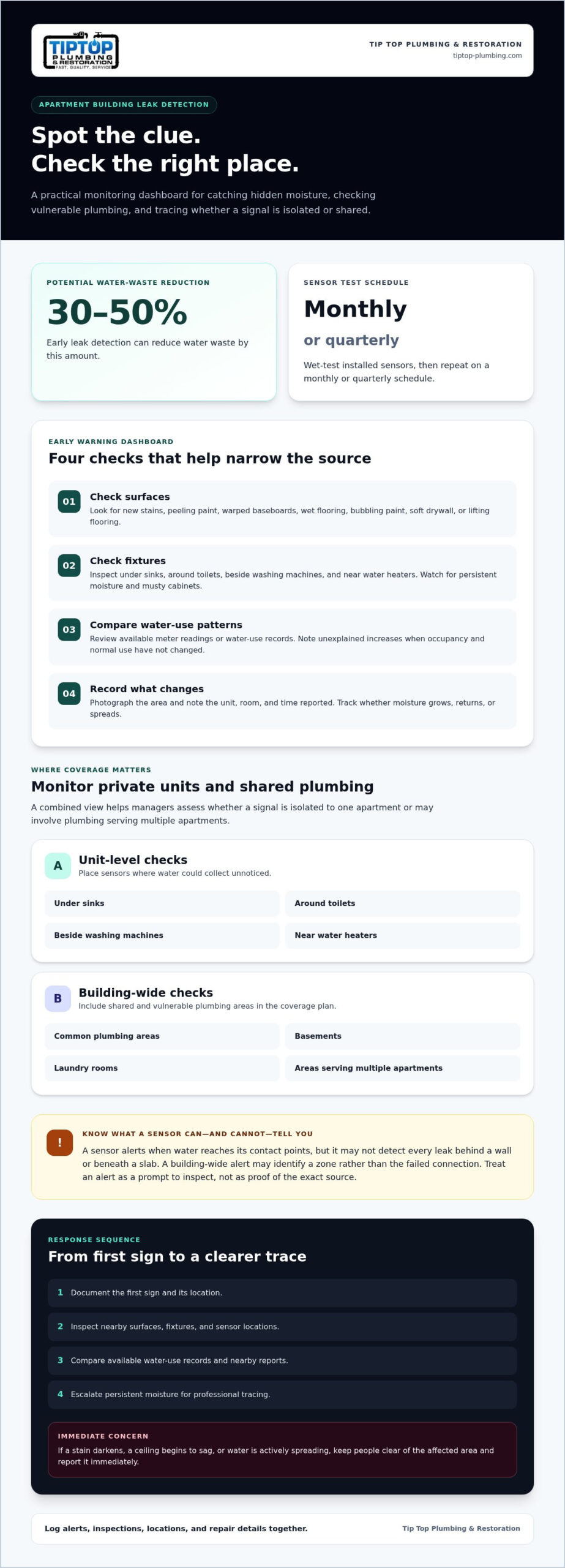
- Check surfaces: Look for new stains, peeling paint, warped baseboards, and wet flooring near plumbing.
- Check fixtures: Inspect beneath sinks, around toilets, beside washing machines, and near water heaters.
- Compare patterns: Match meter readings or water-use records against occupancy and routine building activity.
- Record changes: Photograph the affected area and note whether moisture grows, returns, or spreads.
Moisture sensors can monitor plumbing areas residents may not check daily. Place them near vulnerable connections, such as under sinks, near washing machines, around toilets, and by water heaters. A sensor can alert staff when water reaches its contact points, but it may not detect every leak behind a wall or beneath a slab. Treat an alert as a prompt to inspect the area.
Test installed leak sensors by wet-testing them, then repeat the test monthly or quarterly. Before placing a sensor on a cabinet floor, wipe the surface and let it dry so old moisture does not trigger a misleading alert. Give residents a clear way to report damp spots, unusual sounds, or fixture problems. Recording the location helps staff compare symptoms in neighboring units.
A proactive response protects finishes and helps limit water waste. Early leak detection can reduce water waste by 30-50%. For apartment building leak detection in Weston, use a simple sequence: document the first sign, inspect nearby fixtures and surfaces, review available water-use records, and escalate persistent moisture for professional tracing. If a stain darkens, a ceiling begins to sag, or water is actively spreading, keep people clear of the affected area and report it immediately.
Unit-level and building-wide system coverage
Apartment leak monitoring works best when coverage includes individual units and shared plumbing areas. Unit-level sensors can detect moisture near sinks, toilets, washing machines, and water heaters. Building-wide monitoring can help managers see whether a signal is isolated or part of a larger pattern. The right setup depends on the building’s layout, plumbing access, and areas most vulnerable to leaks.
In an individual apartment, place sensors where water could collect unnoticed. Under a kitchen sink, a sensor can flag a supply-line leak inside the cabinet. Near a washing machine, it can detect water escaping from a hose or connection. Sensors around toilets and near water heaters can help identify slow leaks between tenant reports. Keep them accessible so residents or maintenance staff can inspect and test them.
For larger properties, wireless IoT leak detection sensors can monitor moisture and water flow. They can trigger alerts when readings show unusual conditions and support automatic water shut-off. A centralized system may also provide app-based alerts, historical data, and unit-level visibility across one or more properties. Managers can use the alert location and recorded history to prioritize inspections and compare recurring signals.
- Unit coverage: Put sensors near appliances and plumbing connections inside each apartment.
- Shared coverage: Include common plumbing areas and other vulnerable points in the building.
- Central review: Route alerts to staff who can identify the affected unit and document the response.
- Follow-up: Inspect the reported area, record the cause, and confirm the signal clears after repairs.
Coverage matters as much as the sensor itself. A device under one sink will not identify a leak behind a wall elsewhere in the apartment, and a building-wide alert may indicate a zone rather than the failed connection. Map each device to a unit and location, and give tenants a simple way to report moisture or an alert. Clear records can help distinguish a recurring appliance issue from a shared-line concern.
Early detection can reduce water waste by 30-50%. Repeated leak incidents can also contribute to higher insurance premiums or dropped policies for multifamily properties. Keep alert records, inspection notes, and repair details together to support a clear account if an insurance claim follows. For a suspected plumbing leak that needs tracing, schedule professional leak detection as the next step.
A coverage plan can follow plumbing from private rooms to shared spaces, with each sensor assigned a specific location. Sensors can be installed in bathrooms, kitchens, near water heaters, in basements and laundry rooms, and near vulnerable plumbing. This helps staff connect an alert with the area that needs attention and compare it with unit and building records.
Wireless IoT leak detection sensors can monitor moisture and water flow, trigger alerts when they detect anomalies, and support automatic water shut-off. Pair these capabilities with clear location records so an alert guides an inspection without assuming the sensor identifies the failed connection. Keeping coverage and records aligned makes incidents easier to review and document.
Apartment-by-apartment leak detection
Checking one apartment at a time can help narrow a leak to its source, unit, or fixture. Consistent inspection records let managers compare symptoms and direct repairs while keeping an eye on neighboring units.
Responding to Reported Leaks
In Florida, landlords should respond promptly to a reported leak, especially when water is actively spreading or reaching electrical fixtures. A practical first step is to acknowledge the report, identify the affected apartment and nearby units, and arrange an inspection. A tenant’s description, photos, and the time noticed can help staff assess the situation. Investigate a continuing drip instead of waiting for a ceiling stain to grow.
Track the report, inspection findings, and repair status in one record. If residents in adjacent apartments report dampness or unusual plumbing sounds, include those locations in the inspection. Comparing symptoms can help distinguish an isolated fixture problem from a leak affecting shared plumbing. Communicate clearly about access and inspection timing, and ask tenants to report whether moisture returns after the repair.
Steps After Discovering a Leak
Start by containing the water and addressing immediate safety. If water is flowing, keep people away from affected electrical equipment, and shut off the fixture valve only if it is safe to reach. Notify building management, identify the room and apartment, and move belongings away from wet surfaces. Photograph visible water and damage before cleanup, then arrange an inspection to locate the source and determine the repair needed.
Homeowners’ or commercial property insurance does not automatically cover leak detection costs. Policy terms may treat locating a leak, repairing plumbing, and addressing resulting water damage separately. Coverage depends on the cause and the policy’s exclusions.
Apartment residents should allow 20-40 minutes to set up and test a water leak detector. Place a leak sensor where water would collect first, such as beside a washing machine or beneath a sink. Follow its instructions, test its alert, and confirm notifications reach the intended person. A sensor can provide useful warning at its location, but it cannot inspect every concealed pipe or replace a physical assessment.
After controlling the source, inspect the affected apartment and the surfaces below or beside it. Check cabinet floors, baseboards, flooring edges, and ceilings for moisture that remains or returns. Damage can extend beyond the visible wet area, so record what changes after the repair. If a stain returns, a fixture continues leaking, or moisture appears in another unit, arrange further leak detection rather than relying on the original sensor alert.
Inspections by licensed professionals can identify pipe corrosion, pressure imbalances, and stress fractures before a leak worsens. Keep notes for each apartment in a consistent format, including fixture locations, reported symptoms, and completed repairs. Comparing records can help managers spot recurring problems and give tenants a clear way to report new moisture, without assuming one repair addressed every source.
Common causes of apartment building leaks
Apartment leaks often start at a worn connection, aging pipe, or water-using appliance. Identifying the failure point helps managers plan a targeted repair rather than treating only the visible water damage.
Age and wear can weaken valves, supply lines, and gaskets. A valve beneath a sink may loosen or fail, while a worn gasket can cause a slow drip around a fixture. Pipe corrosion, pressure imbalances, and stress fractures can also lead to leaks. During scheduled maintenance, inspect accessible connections and replace aging parts before they fail.
Connections deserve close attention because small movements can strain them over time. A supply line behind a toilet may shift during maintenance, while a loose washing-machine hose can leak during use. Check the connection, surrounding cabinet or floor, and nearby plumbing for fresh moisture. If water continues flowing, shut off the local fixture valve if it is safe, then arrange a repair.
Appliances and water heaters create additional leak points in individual units. A washing-machine hose, dishwasher connection, or water-heater fitting can release water into a cabinet, closet, or adjacent room. Inspect the floor and visible connections near each appliance. Sensors in these areas can alert staff when a slow leak might otherwise go unnoticed.
Drain plumbing can leak when joints or sections deteriorate, allowing wastewater to escape inside a wall, ceiling, or under a cabinet. A stain below an upstairs bathroom, for example, may relate to a drain or supply line above it. Trace the moisture pattern and note whether it appears during fixture use. This observation can help distinguish a supply leak from a drainage problem, where professional sewer and drain specialists like avdrain.ca can assist with targeted cleaning and line replacements.
Leaks can also occur in concealed or shared plumbing, including lines beneath floors. A slab leak may cause persistent damp flooring or moisture that returns after the surface dries. Because the damaged pipe may not be visible, patching the wet area will not address the source. Focus detection on the plumbing route and signs across affected units.
- Inspect: Check accessible valves, gaskets, appliance hoses, and water-heater connections during upkeep.
- Monitor: Use sensors near vulnerable plumbing and review alerts alongside resident reports.
- Respond: Shut off water at the appropriate valve if safe, document the location, and arrange a repair.
- Follow through: Confirm the area stays dry and investigate recurring moisture rather than covering the stain.
Repair costs depend on the leak’s source, access, affected materials, and extent of water damage. A visible drip at an accessible fitting differs from a concealed pipe leak that requires tracing and access work. Early detection can help identify the likely cause sooner, while a focused inspection guides the repair instead of relying on surface symptoms.
Water damage and mold risks from undetected apartment leaks
An unnoticed leak can damage an apartment before water becomes visible. Moisture may move through flooring, drywall, ceiling cavities, or shared walls and reach a neighboring unit. A damp patch below an upstairs bathroom, for example, can indicate water traveling beyond the original plumbing fault. The longer materials stay wet, the more likely repairs will need to address both the source and affected areas.
Water damage is the number-one most common type of insurance claim for apartment buildings. Nearly 25% of all home insurance claims relate to water damage or freezing. These figures show why a minor drip still deserves attention. A small leak can spread through building materials, damage finishes, and complicate later repairs if the source stays active.
Basements can also be vulnerable: 98% of basements in multi-unit buildings will experience water damage during their lifetime. In an apartment property, water may reach stored belongings, flooring, walls, or shared mechanical areas. A leak from plumbing above can travel downward, while concealed moisture may remain after the visible surface appears dry. Inspect adjacent spaces, not only the room where water first appeared.
Mold risk increases when moisture remains in building materials. Look for recurring dampness, musty odors, or discoloration around a leak site, then document the location and changes. Do not cover a stain before identifying its source. Mold remediation and legal exposure can add to the consequences, and leaks in multifamily properties can cause tens of thousands of dollars in damage and related costs.
- Contain the source: Stop active water flow at a safe, accessible valve and report the leak.
- Map affected areas: Check rooms beside, below, and above the original leak location.
- Document changes: Photograph wet materials and note whether moisture returns after the repair.
- Address dampness: Arrange water remediation and drying for affected building materials.
An insurance claim may involve separate questions about the plumbing repair and resulting damage. Keep the report, photos, inspection notes, and repair records together. The cause of the leak and the policy terms affect how a claim is handled. Early documentation can also connect visible damage with the incident and the steps taken afterward.
A written response process helps managers collect residents’ reports and track follow-up across units. After stopping a leak, confirm the affected area is dry and inspect nearby materials for lingering moisture. If water damage extends beyond the plumbing repair, water remediation and restoration can address the building’s next needs.
Water damage is the #1 most common type of insurance claim for apartment buildings, underscoring the value of prompt reporting and attention to damp materials when a leak is discovered.
Tip Top Plumbing & Restoration: Emergency Plumbing
Tip Top Plumbing & Restoration provides Emergency Plumbing and Leak Detection & Slab Leak Repair for apartment leak concerns. Contact the team when a leak is active, its source is unclear, or moisture returns after a repair. Pinpointing the plumbing source helps determine whether the problem involves a fixture, concealed line, or slab leak.
For water escaping from a water heater, Tip Top Plumbing & Restoration also provides Water Heater Repair & Installation. When arranging service, share where the moisture appeared, whether it is spreading, and any steps already taken to shut off the water. These details help clarify the next step.
For help with a suspected apartment plumbing leak, contact Tip Top Plumbing & Restoration or visit tiptop-plumbing.com.
Make a Clear Plan for the Next Leak
Apartment building leak detection in Weston works best when reports lead to a clear next step. Keep a shared record of recurring trouble spots, repairs, and affected units so managers can recognize patterns and plan maintenance. For an active leak or an unclear source, Tip Top Plumbing & Restoration provides Emergency Plumbing and Leak Detection & Slab Leak Repair. Sewer Repiping Services can address recurring sewer-line concerns, while Water Heater Repair & Installation is relevant when a water heater is the source.
Choose the service that matches the problem and share what you have observed when arranging help. Clear details can help move the repair forward.
A measured response starts with a practical step: keep your building’s leak plan ready and act promptly when signs appear.
Tip Top Plumbing & Restoration for Apartment Building Leak Detection
Tip Top Plumbing & Restoration provides leak detection and slab leak repair, along with camera inspections and drain and sewer services. If you are investigating a suspected leak in an apartment building in Weston, these services can help address the plumbing problem.
If a leak has caused water damage, Tip Top Plumbing & Restoration also provides water remediation, dry out service, mold testing, and water damage restoration. Turn to the company for leak detection or follow-up restoration services.
Frequently Asked Questions
What types of leak detection are used in multifamily apartment buildings?
Multifamily properties can combine localized moisture sensors, water-flow monitoring, and professional plumbing inspections. Sensors monitor specific spots, while flow monitoring can reveal unusual water use across a larger system. A plumber can investigate further to locate the source and determine whether it involves a fixture, branch, or shared pipe. For sewer-line concerns, camera inspections examine the inside of drain and sewer lines, not water-supply pipes.
Disclaimer
The information provided in this article is for general educational and informational purposes only and should not be considered professional plumbing, restoration, mold remediation, or legal advice. Every plumbing system, property, and situation is unique, and the recommendations discussed may not apply to your specific circumstances.
While Tip Top Plumbing & Restoration strives to provide accurate and up-to-date information, we make no warranties regarding the completeness, accuracy, or reliability of the content. Any actions you take based on this information are at your own risk.
Plumbing repairs, water damage restoration, and mold remediation should be performed by qualified professionals and in accordance with applicable local building codes and regulations. If you are experiencing a plumbing emergency, water leak, or property damage, contact a licensed professional for an on-site evaluation.
Tip Top Plumbing & Restoration is licensed and insured to provide plumbing and restoration services throughout Broward County, Florida.