


The lowest upfront option isn’t always the least expensive fix. The cost of repiping a house in Miramar depends on whether the problem is confined to one area or affects plumbing throughout the home, as well as pipe access, layout, materials, and any repairs needed afterward. A project-specific price is provided after a quote request.
It’s understandable to want a clear number before deciding what to do. The cost depends on the project scope, so compare partial replacement with repiping throughout the home, and consider how access and finish repairs affect the work. This guide also covers warning signs of wider plumbing problems and practical next steps.
Key Takeaways
- Compare estimates using the number of plumbing fixtures and bathrooms, since a larger system generally requires more materials and labor.
- Look for patterns such as recurring leaks, reduced water flow, or visible corrosion to help judge whether pipe problems may extend beyond one area.
- Weigh PEX, copper, and CPVC by material and installation costs, while considering how your home’s layout and pipe access affect the work.
- Consider partial replacement when damage is localized; widespread pipe deterioration may make a whole-home repipe the more practical option.
- Plan for access and finish repairs alongside the plumbing work, and compare the full project scope rather than focusing only on pipe replacement.
How can homeowners save money on a whole-home repipe?
When comparing the cost of repiping a house in Miramar, consider fixture count, home layout, pipe material, and repair scope together. The number of fixtures helps describe project size, while concealed pipe access and finish repairs affect the work required.
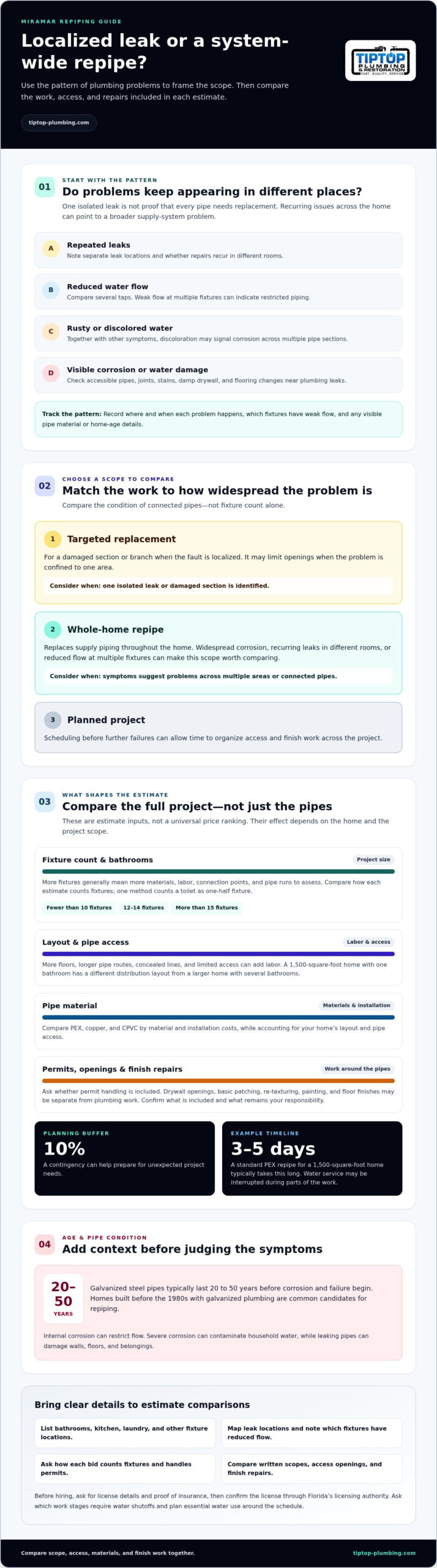
Fixture counts can make estimates easier to compare. One estimate method counts a toilet as one-half of a fixture, so ask how each bid totals fixtures. Homes with fewer than 10 fixtures, 12 to 14 fixtures, and more than 15 fixtures represent different project scopes. More fixtures typically mean more connection points and pipe runs to assess.
Home size and bathroom count also shape the layout. A 1,500-square-foot home with one bathroom has a different distribution system from a larger home with several bathrooms. More floors, longer pipe routes, and limited access can add labor. Before requesting estimates, note each bathroom, kitchen, laundry area, and other plumbing fixture location.
Budget for the work around the pipes, too. Ask whether permit handling appears in the written scope. Drywall openings may be needed to reach concealed lines; basic patching, re-texturing, and painting can be separate from plumbing work. Confirm which repairs are included, and whether floor finishes or repainting remain your responsibility. A 10% contingency can help prepare for unexpected project needs.
Use this comparison to clarify where costs may be controlled:
| Option | Scope | Cost-control consideration |
|---|---|---|
| Targeted replacement | A damaged section or branch | May limit openings when the fault is localized |
| Whole-home repipe | Supply lines throughout the home | Coordinates access and repairs across the system |
| Planned project | Work scheduled before further failures | Allows time to organize access and finish work |
Choose a scope based on the spread of corrosion and the condition of connected pipes, not fixture count alone. A localized leak may call for a targeted repair, while repeated problems across the home may justify comparing whole-home repiping.
Before hiring a plumber for repiping in Miramar, ask for license details and proof of insurance, then confirm the license through Florida’s licensing authority. Compare written scopes, including permits, access openings, and finish repairs.
A standard PEX repipe for a 1,500-square-foot home typically takes 3-5 days. Water service may be interrupted during parts of the work, so ask which stages require shutoffs and plan essential water use around the work schedule.
Homeowners insurance coverage depends on the policy and cause of damage. A policy may treat sudden resulting water damage differently from replacing worn or corroded pipes, so review the coverage terms and document damage promptly.
Warning signs that a home may need repiping
Recurring plumbing problems can point to a failing supply system, rather than one damaged pipe. Watch for leaks in different rooms, rusty or discolored water, and low flow at several fixtures. Together, these symptoms may indicate corrosion across multiple pipe sections. Record where and when each problem appears: a leak near one fixture differs from repeated issues throughout the home.
Pipe age and material add important context. Galvanized steel pipes typically last 20 to 50 years before corrosion and failure begin. Homes built before the 1980s with galvanized plumbing are common candidates for repiping because internal corrosion can restrict flow. Severe corrosion can also contaminate household water, while leaking pipes can damage walls, floors, and belongings.
- Repeated leaks: Note separate leak locations and whether repairs recur in different rooms.
- Reduced water flow: Compare supply at several taps; a whole-home pattern can indicate restricted piping.
- Visible corrosion: Look for rust on accessible pipes, joints, or around plumbing connections.
- Water damage: Track stains, damp drywall, or flooring changes that follow plumbing leaks.
Home size affects national repiping estimates because larger homes usually have more pipe routes and fixtures. Estimates for homes under 2,200 square feet differ from those for homes between 2,500 and 3,500 square feet. Homes larger than 6,000 square feet can require more extensive work. These size bands help frame comparisons, but the number of bathrooms, fixture locations, and access also shape the scope.
Layout matters, too. In a two-story home, supply lines may run between floors or through enclosed walls, making access and repair planning more involved than in a compact, single-story layout. Kitchens, bathrooms, and laundry areas in separate parts of the home can also mean longer pipe routes. Note each floor and plumbing area when documenting symptoms.
Whole-home repiping replaces supply piping throughout the house, while a localized repair addresses one damaged section. Widespread corrosion, recurring leaks in different rooms, or reduced flow at multiple fixtures can make a whole-home scope worth comparing. One isolated leak alone doesn’t mean every pipe needs replacement.
Use a practical assessment: list the pipe material if visible, note the home’s approximate age, map leak locations, and record which fixtures have weak flow. Share those observations during a plumbing evaluation. A repiping appointment can help determine whether symptoms point to a localized failure or a broader system problem.
How Much Does It Cost to Repipe a House?
There isn’t one estimate that fits every Miramar home. Compare project scope, home size, fixture count, pipe access, and finish work before assessing whole-house repiping estimates.
Factors Affecting Repipe Estimates
A repipe estimate reflects more than the amount of piping. Pipe material, labor, access through walls or floors, and the number of connections all affect the scope. Accessible lines can require different work from pipes concealed behind finished surfaces.
Repairs after pipe installation also affect the total project. Drywall patching, re-texturing, and painting may be separate from plumbing work, so compare what each estimate includes. Permit requirements and whether the water main is part of the project can also change the work plan.
For a fair comparison, list the home’s bathrooms, kitchen, laundry area, and other fixtures. Ask each plumber to describe the work area, materials, access openings, permits, and finish repairs in the estimate. This makes differences between whole-house scopes clearer.
Estimates by Square Footage
Square footage offers a rough way to compare homes, since a larger floor area may involve longer pipe routes. National estimate categories include homes under 2,200 square feet and homes between 2,500 and 3,500 square feet. These are comparison groups, not a substitute for evaluating the plumbing layout.
A 1,500-square-foot home may have a compact, direct layout or spread bathrooms and the kitchen across different areas. That distinction affects access and pipe routing. A home larger than 6,000 square feet may involve more rooms and openings, but floor area alone doesn’t show where existing lines run.
Use square footage as a starting point, then map the number of floors and fixture locations. Check whether a square-foot estimate includes drywall work or other repairs. Without that detail, estimates for similarly sized homes may cover different project scopes.
Estimates by Fixture Count
Fixture count adds detail that square footage can miss. National comparison bands include homes with fewer than 10 fixtures, homes with 12 to 14 fixtures, and homes with more than 15 fixtures. More fixtures can mean additional connections and supply branches to account for.
Count plumbing fixtures consistently before comparing estimates. Some estimates count a toilet as one-half of a fixture, so ask how each total is calculated. Then compare bathrooms, kitchen fixtures, laundry connections, and other supply points listed in the work scope.
Fixture count is useful, but it doesn’t capture pipe condition or access. A two-bathroom home with extensive concealed piping may require a different plan than a home with the same fixture total and accessible lines. The price depends on project scope, materials, access, fixture layout, and repairs, and is provided after a quote request. For clarity, request a repiping estimate that describes those factors.
When do repipe prices spike, and how can I time my project to avoid the peak?
Material choice affects the project budget, but pipe prices alone don’t explain the full estimate. Compare material and installation costs, access, and included work before choosing a repipe plan.
PEX, copper, and CPVC have different material price ranges. These figures describe pipe material, not a complete repiping project, which also involves labor, connections, access, and related repairs.
Whole-home material comparisons show another useful distinction. These are market estimates, not a local quote. Copper’s higher material range can raise the project total, while the home’s layout and installation requirements also influence the scope.
Installed square-foot estimates include labor and pipe installation. Square footage can help compare options, but it doesn’t show how many walls need access or how far supply lines run. A compact home and a larger home with bathrooms spread out may require different labor plans.
Timing helps most when it gives homeowners time to plan material selection, access, and finish repairs together. Raw material costs rose approximately 8% since 2025, as of May 2026. That market movement makes a current, itemized estimate more useful than relying on an older figure. No seasonal peak is established here, so avoid assuming a particular month guarantees lower prices.
- PEX: Compare its lower material range with its installed square-foot estimate.
- Copper: Account for higher material and installed costs, then weigh its estimated lifespan of 50-70 years.
- CPVC: Separate its material cost from the full-home project estimate.
PEX has an estimated lifespan of 40-50 years. Longevity matters, but the right comparison also considers the existing plumbing, access conditions, and repair scope. To control avoidable costs, decide which material options suit the project, document the home’s square footage and layout, and compare estimates that clearly separate pipe, labor, and repairs.
Partial replacement versus whole-house repiping
The right scope depends on whether pipe damage is isolated or widespread. A single leaking branch may call for partial replacement, while corrosion and recurring leaks in several rooms can make a whole-house plan worth comparing. Match the work to the pattern of failure rather than choosing the smallest scope by default.
Partial replacement addresses a specific damaged section, such as a leaking line serving one bathroom. It can limit the area disturbed and avoid replacing sound piping elsewhere. However, another section could fail later, bringing additional disruption and repairs. Consider the pipe material, visible condition, and history of problems in other rooms before deciding that one leak is the whole issue.
A whole-house repipe replaces supply piping throughout the home. It may be worth evaluating when corrosion affects multiple areas, water flow is reduced at several fixtures, or separate leaks keep appearing. Replacing more piping at once can involve more access work and finish repairs, but it addresses a broader system rather than a single failure point.
| Option | Best fit | Trade-off to consider |
|---|---|---|
| Partial replacement | One isolated leak or damaged branch | Other aging sections remain in service |
| Whole-house repiping | Widespread corrosion or recurring leaks in multiple rooms | More of the home may need pipe access and finish repairs |
Use these checks to compare the choices:
- Map leak locations by room, such as a bathroom, kitchen, or laundry area.
- Note whether reduced flow affects one fixture or several fixtures.
- Record visible pipe material and corrosion where lines are accessible.
- Compare which access openings, drywall repairs, and other restoration work each scope includes.
An average cost figure can obscure the difference between replacing one section and renewing the full system. A partial job usually covers a narrower work area, while a whole-home project includes more pipe routes and connections. The cost of either option varies with access, materials, layout, and finish work, so compare the written scope as well as the quoted amount.
If damage is confined to one branch and surrounding pipes appear sound, targeted replacement may be appropriate. If problems span multiple rooms, compare that repair with a whole-home repipe before deciding. For either scope, the price depends on the affected piping, access, materials, and included repairs, and is provided after a quote request.
Tip Top Plumbing & Restoration: Emergency Plumbing
Tip Top Plumbing & Restoration helps homeowners address urgent plumbing problems and assess pipe concerns. If a leak is active, water is damaging your home, or several fixtures have reduced flow, Emergency Plumbing and Leak Detection & Slab Leak Repair can help identify the issue and determine a practical next step.
For broader pipe concerns, Tip Top Plumbing & Restoration provides Sewer Repiping Services. Water Heater Repair & Installation can help when the problem involves your water heater rather than the home’s supply piping. Share which rooms are affected, any visible leaks, and previous repairs to help explain the situation.
For a project-specific price, request a quote; the scope, access, materials, and repairs affect the estimate. Contact Tip Top Plumbing & Restoration to discuss the plumbing concern and next steps.
Make Your Next Plumbing Decision With Confidence
The cost of repiping a house in Miramar is only one part of the decision. Turn your observations into a clear project brief: note where leaks occur, which fixtures have reduced flow, and whether you’re considering a targeted repair or broader replacement. This helps focus the conversation on the problem and a suitable scope.
Tip Top Plumbing & Restoration provides Emergency Plumbing, Sewer Repiping Services, and Water Heater Repair & Installation. These services address urgent plumbing concerns, repiping needs, and water heater problems that may be separate from aging household pipes. The estimate depends on the home, access, materials, and repair scope.
Share your questions and observations with Tip Top Plumbing & Restoration. A clear starting point can make it easier to plan the right next step for your home.
Contact Tip Top Plumbing & Restoration to discuss your options and plan the next step.
Frequently Asked Questions
Does Your Location Affect Repiping Costs?
Yes. Local permit fees, labor conditions, and access to the home can affect a repiping estimate. Homeowners in Miramar and nearby Broward communities, including Weston, Pembroke Pines, Davie, Sunrise, Southwest Ranches, Cooper City, and Plantation, should compare project scopes rather than assume one area-wide price. A home’s layout and pipe access also influence labor.
Is a whole-home repipe worth it, or should I keep repairing slab leaks?
A whole-home repipe is worth comparing with repeated slab leak repairs when leaks recur or appear in separate areas. One isolated leak may call for targeted repair, while multiple failures can suggest broader pipe deterioration. Slab leak repairs address the immediate leak but don’t prevent later failures elsewhere. Map previous leak locations and note pipe material to help determine whether the problem is localized or systemic.
What Factors Influence the Final Price?
The estimate reflects pipe material, home size, fixture count, bathroom layout, access, and work included after installation. For example, a two-story home with concealed pipes can require a different access plan from a single-story home with exposed lines. The number of connections and whether a water main is included also matter. Compare written scopes to see which materials, permits, and finish repairs each estimate covers.
What hidden fees are typically left out of repipe quotes?
Items that may be outside a base quote include drywall repair, repainting, re-texturing, permit fees, and water-main replacement. Check the written scope for each item.
What’s the Price Per Square Foot?
These figures help compare materials, but square footage doesn’t account for every installation condition. Two homes of equal size can have different pipe routes, fixture layouts, and access needs. Compare the installed rate with the written work scope, including any drywall or floor repairs.
Will You Need a Permit?
A repipe permit may be part of the project, and requirements depend on the local jurisdiction and planned work. Include permitting in the project budget and written scope rather than treating it as an unexpected extra. Permit requirements are separate from choices such as pipe material, fixture count, or whether the work replaces one section or the whole system.
What is the average cost to repipe a house in Miramar, Florida?
That range is a budgeting reference, not a price for a particular house. Fixture count, materials, pipe access, and finish repairs shape the project total. Compare estimates with the same scope, especially whether drywall work, permits, and water-main replacement are included.
How much does whole-house repiping cost by home size in Miramar?
These figures don’t establish a fixed Miramar price; bathroom count, fixture locations, access, and material choice affect the project scope.
Disclaimer
The information provided in this article is for general educational and informational purposes only and should not be considered professional plumbing, restoration, mold remediation, or legal advice. Every plumbing system, property, and situation is unique, and the recommendations discussed may not apply to your specific circumstances.
While Tip Top Plumbing & Restoration strives to provide accurate and up-to-date information, we make no warranties regarding the completeness, accuracy, or reliability of the content. Any actions you take based on this information are at your own risk.
Plumbing repairs, water damage restoration, and mold remediation should be performed by qualified professionals and in accordance with applicable local building codes and regulations. If you are experiencing a plumbing emergency, water leak, or property damage, contact a licensed professional for an on-site evaluation.
Tip Top Plumbing & Restoration is licensed and insured to provide plumbing and restoration services throughout Broward County, Florida.