

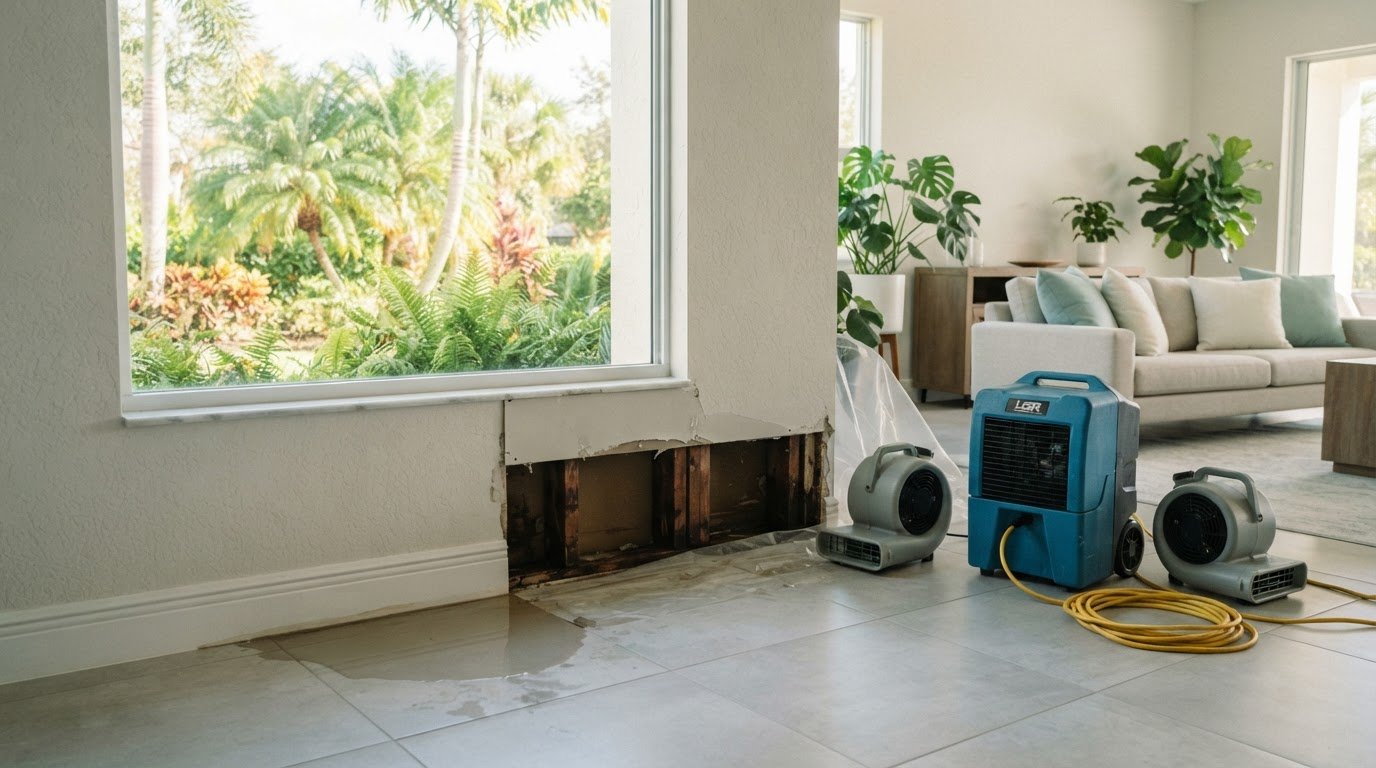
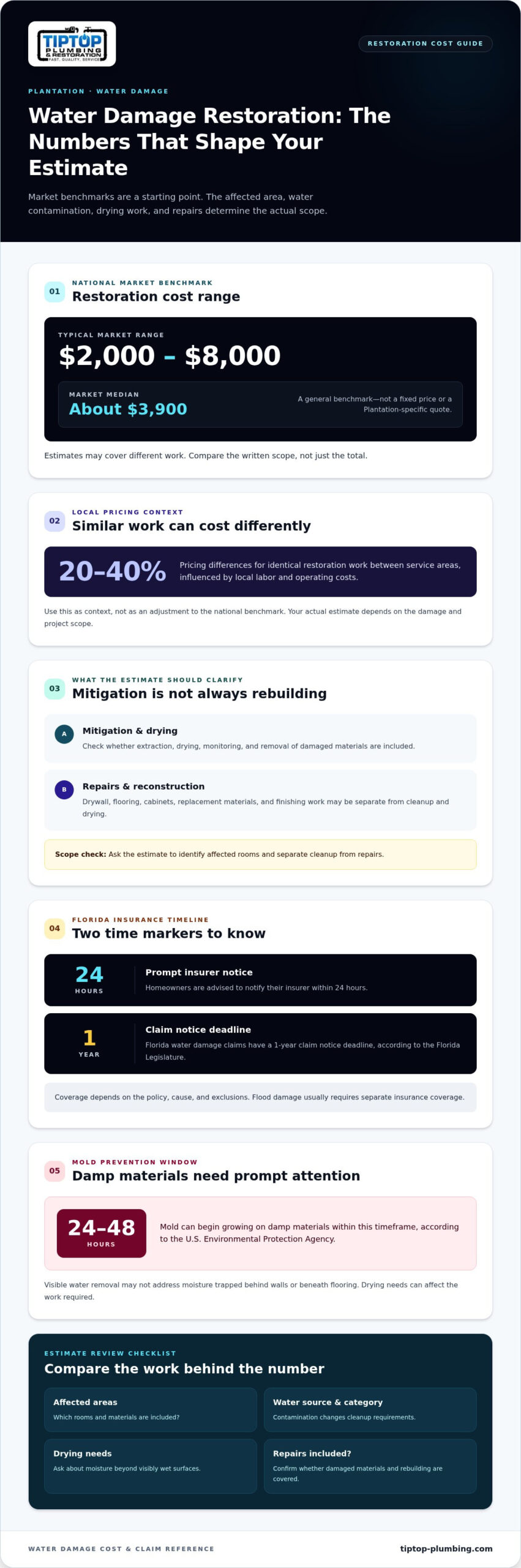
A water-damage bill can vary sharply with the area affected, the type of water, and how much drying or repair the property needs. For a useful market benchmark, water damage restoration typically ranges from $2,000 to $8,000, with a median of about $3,900. That’s a general market range, not a quote for your home, and it gives homeowners comparing water damage cleanup cost in Plantation a starting point.
It’s understandable to want a clear number quickly, especially when water is spreading and hidden damage is a concern. The final cost depends on more than visible cleanup: contaminated water may require additional removal and sanitizing, while moisture trapped behind walls or under flooring can extend drying and repair work.
This guide explains how Florida pricing and insurance considerations affect estimates, how water categories and square footage shape costs, and why prompt extraction and mold prevention matter. It also distinguishes mitigation and drying from repairs to damaged materials, making it easier to understand what an estimate covers.
Key Takeaways
- Use the market range as a starting point, then assess the affected area, water contamination, drying needs, and repairs to understand what drives an estimate.
- Water category affects mitigation costs per square foot: clean water, gray water, and black water involve different cleanup requirements.
- Florida water damage claims have a 1-year claim notice deadline, according to the Florida Legislature; flood damage usually requires separate insurance coverage.
- Drying is more than removing visible water. Equipment, monitoring, and moisture trapped in building materials can affect the work required.
- Mold can begin growing on damp materials within 24 to 48 hours, according to the U.S. Environmental Protection Agency, making prompt drying important.
What is the typical cost for water damage restoration?
National estimates offer a starting point, but the project scope drives the final restoration cost. For Plantation homeowners, the key distinction is whether an estimate covers mitigation alone or also includes repairs and reconstruction.
National Restoration Cost Ranges and Averages
National restoration figures are benchmarks, not fixed prices for every affected home. A separate market-price aggregate places the typical range at $2,000 to $8,000, with a median of about $3,900. Estimates differ because they may include different work.
When comparing water damage cleanup cost in Plantation, check whether the estimate includes extraction, drying, material removal, and rebuilding. A mitigation-only scope may not cover repairs to finishes.
Regional Differences in Restoration Pricing
Regional pricing reflects differences in local labor and operating costs, so a national average cannot predict a specific Plantation estimate. Market comparisons indicate that local cost of living and competition can create 20% to 40% pricing differences for identical restoration work between service areas.
Use that variation as context, not as a direct adjustment to a national figure. The affected rooms, materials, water category, access, and drying needs determine the actual scope. A useful local estimate identifies these items clearly.
Repair Costs for Drywall, Flooring, and Cabinets
Material repairs may be separate from water extraction and drying. The final amount depends on how much material is removed, the replacement materials, and finishing work.
Cabinet repair depends on how far moisture has penetrated and whether affected parts can be repaired or need replacement. Don’t treat a mitigation estimate as a complete repair budget. If cabinets were affected, make sure they’re included in the written scope.
Quick Responses That Limit Restoration Costs
Prompt action can limit how far standing water and moisture spread. If it’s safe, stop the water source, move dry belongings away, and photograph visible damage. Avoid electrical hazards and contaminated water. These steps document the incident and help reduce further exposure.
Arrange an assessment and extraction to identify moisture beyond visibly wet areas. For example, a leak beneath flooring may affect more material than the surface suggests, increasing removal and repair work. Acting quickly can limit additional damage, but drying and repairs still need to suit the materials and affected area.
Florida-specific pricing and insurance considerations
For Plantation homeowners, the market range of $2,000 to $8,000, with a median of about $3,900, is a general benchmark rather than a city-specific average. Insurance coverage depends on the policy and the cause of the water damage.
Typical Restoration Costs in Plantation
Use the market benchmark to frame an estimate, then compare its scope with the damage in your home. Restoration may include extraction, drying, removal of damaged materials, and repairs, all of which affect the total. Local labor and operating costs also influence pricing, so similar work may cost different amounts across service areas.
A contained plumbing leak affecting one room, for example, differs from water that reaches several rooms or remains under flooring. Ask for the estimate to identify affected areas and separate cleanup from repairs. This makes it easier to see what the total covers and how the scope relates to your property.
Homeowners Insurance Coverage and Exclusions
Does homeowners insurance cover water damage cleanup in Florida? Coverage depends on the policy, the cause, and applicable exclusions. Flood damage usually requires separate insurance coverage, so damage from outside flooding may be treated differently from an interior plumbing leak. Water on carpet alone doesn’t determine coverage; the source and circumstances matter.
Review the policy for covered causes, exclusions, limits, and claim-reporting requirements. Document the source, affected rooms, and visible damage with photos and notes. If a leak damages flooring and belongings, record each separately. This creates a clearer account of the loss when you contact your insurer and discuss cleanup or repairs.
Deductibles, Claims, and Warranty Coverage
A deductible is the amount you pay before insurance contributes toward covered damage. Claims for water damage costing $500 above the deductible typically warrant filing. Compare the estimated covered damage with your deductible, and keep photos, receipts, and the written estimate with your claim records.
Florida water damage claims have a 1-year claim notice deadline, according to the Florida Legislature. Report the loss promptly; homeowners are advised to notify their insurer within 24 hours. A product or workmanship warranty is separate from homeowners insurance, and its written terms determine what it covers. Review the warranty and policy together to understand how each applies to the damage and proposed work.
Cost per square foot and water contamination categories
Typical mitigation costs per square foot rise with contamination and the work required. Category estimates range from clean-water removal to black-water cleanup, while class estimates describe damage severity and can vary widely.
Pricing by Water Contamination Category
Water categories describe contamination, which affects cleanup procedures and restoration costs.
These ranges vary by project scope and estimating method. A clean supply-line leak may require less sanitizing than a contaminated sewage backup, which can require removing affected materials.
Cost Per Square Foot
A per-square-foot figure helps compare mitigation estimates across affected areas.
Use the measured area as a starting point, not as the full restoration budget. Repairs, material removal, and other tasks may be listed separately, so note what the estimate includes.
Water category and damage class describe different things. Category concerns contamination; class reflects how much of the building’s materials and space are affected. A contaminated source may require careful cleanup even when damage is contained, while extensive saturation can increase the work regardless of the source.
These figures are not interchangeable with category-based per-square-foot rates.
For a useful comparison, separate emergency extraction, drying, sanitizing, and repairs in the written scope. Check that the measured area matches the affected rooms, and note whether concealed moisture or contaminated materials are included. Severity, access, and the materials that need removal can change the work required. These details explain why similar-looking water events may have different restoration estimates.
Emergency water extraction and drying
In Plantation, estimates for water extraction and drying depend on the affected area, water category, equipment, and work required. Emergency charges can vary; a written estimate should list any callout or emergency fees separately from extraction, drying, and repairs.
Extraction and the Initial Assessment
Extraction removes standing water before drying equipment addresses moisture left in floors, walls, and other materials. Emergency water extraction estimates can vary with water volume, contamination, access, and affected rooms. A small appliance leak contained to one area differs from a sewage backup that reaches multiple rooms.
During assessment, the source and spread help define the cleanup scope. A visible wet patch may not show how far moisture has traveled beneath flooring or behind a wall. Document affected rooms and visible damage, and note whether the water came from a clean supply line or a contaminated source. These details help explain the proposed work.
Drying Equipment and Timelines
Drying plans use air movers to circulate air and dehumidifiers to remove moisture. A typical single-room setup may use 4 to 6 air movers and 1 to 2 dehumidifiers for 3 to 5 days. A mid-size job may need 8 to 12 air movers and 2 to 4 dehumidifiers for the same 3-to-5-day period.
Equipment needs depend on the affected area and the moisture held in building materials. Drying work includes monitoring, since the room’s surface can feel dry while concealed materials remain damp. A typical residential restoration project takes 5 to 14 days. Major damage or Category 3 contamination can extend the overall project to 3 to 6 weeks.
Response Time and Drying Windows
Begin addressing the water source promptly, provided it’s safe to do so. Water damage should be dried within a critical 24- to 48-hour window. This is a drying response window, not a promise that every room will be fully dry within that time. Areas affected by water damage generally take 72 hours to dry completely.
Drying time depends on the materials involved, water volume, and air movement. For example, carpet over a saturated subfloor needs more assessment than a hard surface with a small spill. Extraction removes pooled water; targeted equipment then addresses remaining moisture. Sewage backup also requires attention to contamination, not just drying.
How Estimates and Emergency Fees Work
An estimate typically considers extraction, water category, affected square footage, drying equipment, monitoring, material removal, and repairs. Ask for these items to be listed separately so the estimate distinguishes immediate cleanup from later restoration. When applicable, emergency or after-hours charges should also be shown separately, not obscured within equipment or labor descriptions.
Explain whether the loss involves an appliance, plumbing leak, or sewage backup, and identify rooms with standing water. These details help define the scope and equipment plan. A clear written estimate connects each proposed task to the observed damage and makes the expected drying process easier to understand.
Mold growth timeline and cost prevention
Mold prevention matters because damp building materials can develop growth quickly after a leak or flooding. Mold can begin growing on damp materials within 24 to 48 hours, according to the U.S. Environmental Protection Agency. That makes prompt water removal and thorough drying important parts of limiting secondary damage.
Moisture may remain inside drywall, flooring, insulation, or basement materials after visible standing water is gone. Dry surfaces don’t prove concealed areas are dry. Extraction removes pooled water, while air movers and dehumidifiers help remove moisture from affected materials. Monitoring can identify damp areas that still need attention.
Timing alone doesn’t determine mold risk. The affected materials, how wet they remain, and whether moisture is trapped behind walls all matter. For example, a damp drywall cavity can retain moisture after the room’s carpet feels dry. A careful assessment should identify affected materials and whether removal or additional drying is needed.
The scope can depend on where growth is present, how much material is affected, and whether removal or treatment is required. Treat market ranges as general context, not a quote for a particular home. When estimates divide the work into distinct stages, remediation costs are separate from other restoration costs.
These tasks may be included when cleanup requires them, but treatment doesn’t replace drying damp materials. Ask for the estimate to distinguish water extraction, structural drying, material removal, and remediation so the proposed work and its purpose are clear.
In a basement, water can affect drywall and other porous materials beyond the visible wet area. Removing damaged material may add disposal and repair work; reconstruction and finishing are separate parts of a complete restoration.
To limit additional damage, address the water source when safe, remove standing water, and begin drying promptly. Keep a record of visible damage and note which rooms or materials were affected. If dampness persists or mold is visible, an assessment can help establish whether drying, material removal, or remediation is needed. This supports a clearer damage restoration cost estimate.
Tip Top Plumbing & Restoration: Emergency Plumbing
Tip Top Plumbing & Restoration can address the plumbing source of water damage and the resulting restoration needs. Contact the team when an active leak, burst pipe, or water heater failure is affecting your home. Emergency Plumbing, Leak Detection & Slab Leak Repair, and Water Heater Repair & Installation address common plumbing problems that can lead to water intrusion. For damage inside the property, Water Remediation and Water Damage Restoration help manage cleanup and recovery. Addressing the source matters because continued water flow can spread damage and complicate drying. Share what happened and which areas are affected so the next steps focus on the problem at hand. Contact Tip Top Plumbing & Restoration to discuss your water damage concerns.
Take the Next Step Toward a Clear Restoration Plan
A restoration estimate is most useful when it explains what needs attention now and what can wait until the property is dry. Keep photos, notes about the water source, and copies of estimates together. This record can make discussions about the work and any insurance claim easier to follow.
For homeowners comparing water damage cleanup cost in Plantation, the next step is connecting visible damage with its source and scope. A plumbing leak may require attention to the cause as well as cleanup, while damaged finishes need a separate repair plan. If water is still entering your home, focus first on safely stopping the source.
Tip Top Plumbing & Restoration can help you determine the next step for a water-related plumbing problem. A clear plan starts with the details of your situation.
Move forward one practical step at a time, and keep your home’s recovery organized.
Turn to Tip Top Plumbing & Restoration for Water Damage Cleanup
Tip Top Plumbing & Restoration provides water remediation, dry out service, and water damage restoration. These services are a natural next step when you’re assessing water damage cleanup cost in Plantation and need help addressing the damage.
If a leak or plumbing issue is involved, the company also offers emergency plumbing, leak detection and slab leak repair, and copper pipe leak repair. Contact Tip Top Plumbing & Restoration when you’re ready to discuss the water damage and related service you need.
Frequently Asked Questions
How much does it cost to dry out a flooded basement?
These figures describe different damage scenarios and scopes, so compare water depth, contamination, affected materials, and whether the estimate includes repairs.
How much does water damage cleanup cost per square foot in Plantation?
That’s a mitigation benchmark, not necessarily the full cost of repairing or rebuilding a Plantation home. The water category, affected materials, moisture beneath flooring, and work included in the estimate all matter. Check whether the quoted area includes only visibly wet space or also materials that need removal.
How much do water extraction, drying, and dehumidification cost?
The equipment count and rental duration affect the total, so review those line items in the estimate.
What does mold remediation add to water damage cleanup costs in Plantation?
These are general estimates, not a guaranteed add-on for every Plantation cleanup. The scope can change with the affected materials, the location of growth, and whether removal or treatment is needed.
How quickly should water damage be cleaned up to prevent mold in South Florida?
Start water removal and drying promptly: mold can begin growing on damp materials within 24 to 48 hours, according to the U.S. Environmental Protection Agency. A wet cabinet toe-kick or drywall cavity may retain moisture even after the floor looks dry. Keep people away from unsafe water, stop the source if safe, and arrange assessment and drying without delay.
How can I compare local water damage restoration quotes in Plantation?
Compare estimates by matching the affected rooms, water category, extraction, drying, monitoring, material removal, and repair scope. For homes in Plantation, Weston, Miramar, Pembroke Pines, Davie, Sunrise, Southwest Ranches, and Copper City, check that each estimate describes the same work rather than comparing totals alone. Tip Top Plumbing & Restoration provides water remediation and dry out services for water-related property damage.
Disclaimer
The information provided in this article is for general educational and informational purposes only and should not be considered professional plumbing, restoration, mold remediation, or legal advice. Every plumbing system, property, and situation is unique, and the recommendations discussed may not apply to your specific circumstances.
While Tip Top Plumbing & Restoration strives to provide accurate and up-to-date information, we make no warranties regarding the completeness, accuracy, or reliability of the content. Any actions you take based on this information are at your own risk.
Plumbing repairs, water damage restoration, and mold remediation should be performed by qualified professionals and in accordance with applicable local building codes and regulations. If you are experiencing a plumbing emergency, water leak, or property damage, contact a licensed professional for an on-site evaluation.
Tip Top Plumbing & Restoration is licensed and insured to provide plumbing and restoration services throughout Broward County, Florida.