

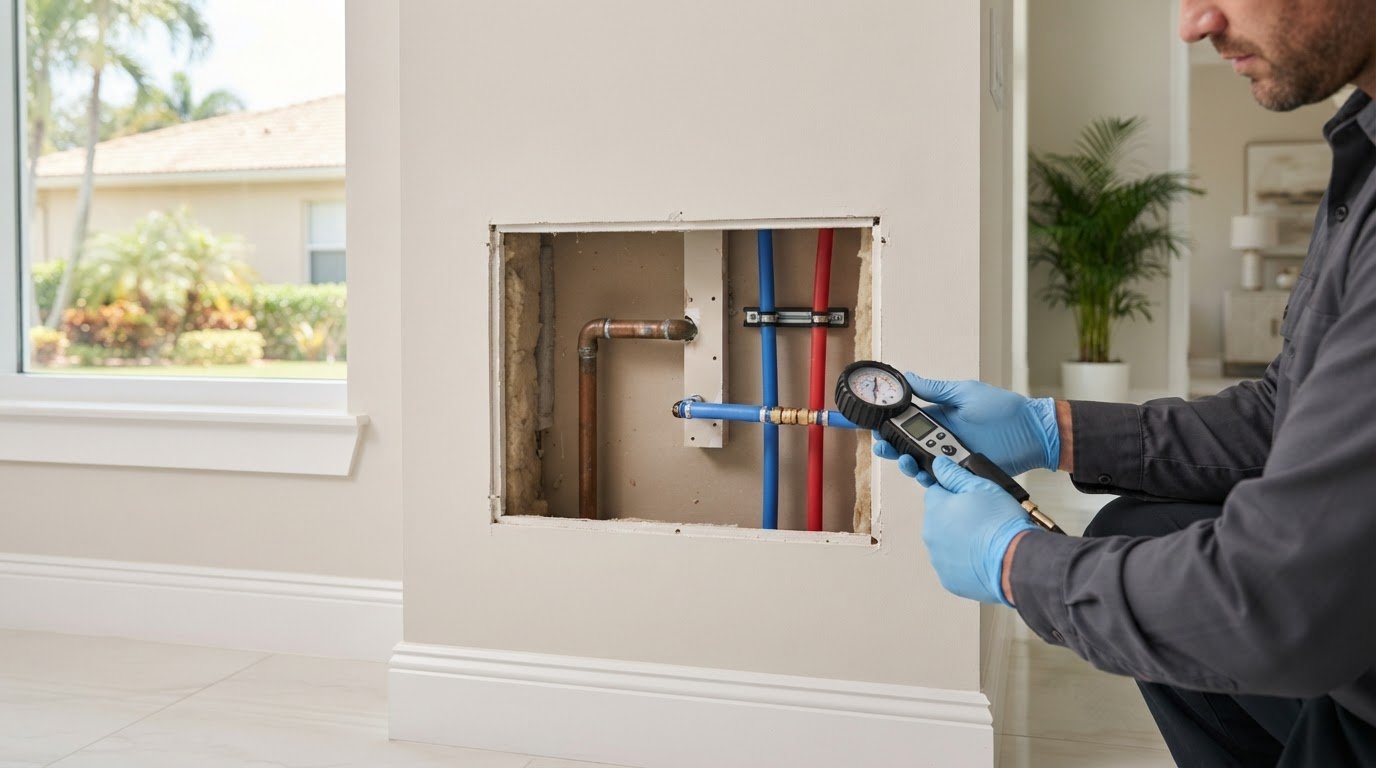
A repipe doesn’t always mean replacing every pipe in the house. For PEX repiping services in Weston, PEX and copper are common options, and the right scope may be a targeted partial repipe or a whole-house replacement, depending on the condition and spread of the plumbing problems. The key is matching the material and project size to your home.
If you’re weighing a repipe, it’s reasonable to want clear answers before work begins: which pipes suit your home, what affects the cost, and how long disruption may last. This guide explains how PEX compares with copper, what shapes project cost and timing, and how to weigh a partial repipe against replacing the whole system.
You’ll also learn what a repiping project involves and how pipe access, layout, and the number of affected areas shape the plan. Understanding these details can help you identify the work your home may need and decide on the next step.
Key Takeaways
- Compare PEX and copper by weighing their practical differences against your home’s plumbing needs.
- Understand how pipe access, home layout, and project scope affect repiping time.
- Recognize recurring leaks and other warning signs that may point to aging pipes.
- See how replacing problem sections differs from repiping the entire home.
- Learn which project details shape a repipe estimate, so you can better understand the proposed work.
PEX and copper pipe options
PEX and copper are common choices for a repiping project, but the right material depends on existing pipe condition and access. An inspection, material selection, and pressure testing help shape a plan for your home.
PEX and Copper Pipe Selection
Start by tracing visible piping and identifying recurring symptoms, such as rusty water, leaks, or reduced flow. Galvanized steel pipes may be present in homes built before 1980, and their age can make replacement worth considering. An inspection should locate affected sections and establish whether the problem is isolated or spread across the system.
PEX can be routed through accessible paths, while copper is a rigid pipe option. The layout, condition of existing connections, and areas needing replacement all influence material selection. After installation, pressure testing checks new connections for leaks before the system returns to regular use.
In Weston and Broward County, permit or inspection requirements for repiping depend on the project scope and applicable local requirements. Include those requirements in the project plan before work begins.
PEX has limitations: prolonged ultraviolet exposure can damage it, so it should not be left in direct sunlight. Rodents may chew PEX, making protection and concealed routing important where pipes could be vulnerable. These risks affect installation choices as well as the material comparison.
Pipe Lifespans and Performance
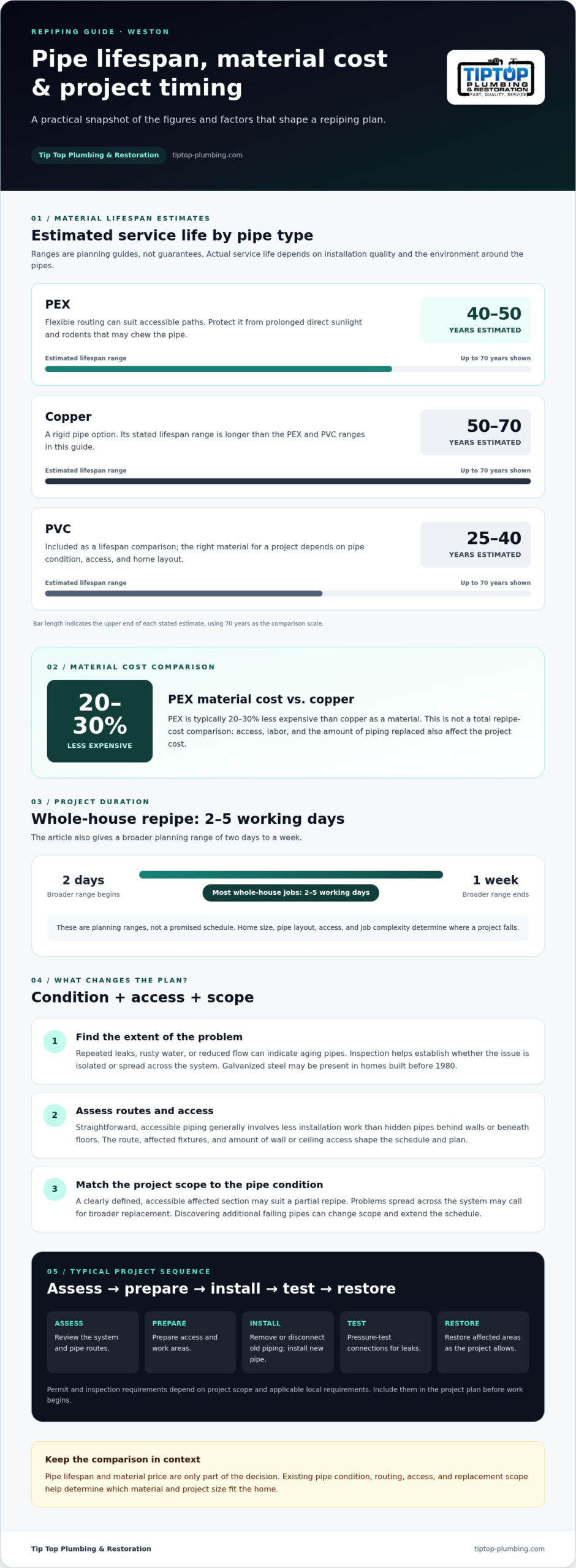
Typical lifespan estimates vary by material: PEX pipes last around 40 to 50 years, copper piping 50 to 70 years, and PVC piping 25 to 40 years. Actual service life depends on conditions such as installation quality and the environment around the pipes, so these estimates are planning guides rather than guarantees.
PEX is typically 20-30% less expensive than copper as a material. That comparison doesn’t establish the total cost of a repipe, which also reflects access, labor, and the amount of piping replaced. Copper offers a longer stated lifespan in these estimates, while PEX offers a lower material cost and flexible routing.
Compare materials based on your home’s needs rather than lifespan alone. Rusty water alongside aging galvanized piping, for example, points to a different concern than a single accessible leak. Pressure testing after replacement helps identify connection problems, while inspection findings show whether localized work or broader replacement better fits the pipe condition.
Repiping project duration
Most whole-house repipes take 2-5 working days, while a broader planning range is two days to a week. Home size, pipe layout, access, and job complexity determine where a Weston project falls within that range.
What shapes the timeline?
A small home with straightforward pipe routes requires less installation work than a larger home with hidden piping behind walls or beneath floors. A partial repipe may also take less time if the affected section is accessible and clearly defined. Discovering additional failing pipes during inspection can change the scope and extend the schedule.
Discuss the likely work areas before setting a start date. A bathroom-to-kitchen upgrade, for example, may require different access points than replacing a single exposed line. The number of affected fixtures, the route of new piping, and the amount of wall or ceiling access all shape the work plan. These details explain why another home’s timeline may not match yours.
Project stages and household planning
A repiping project typically follows a practical sequence. First, the existing system and pipe routes are assessed. Then the work area is prepared and old piping is removed or disconnected. New pipe is installed, connections are tested, and affected areas are restored as the project allows. Each stage depends on the scope and accessibility of your home.
- Before work: Identify rooms, fixtures, and access points affected by the planned replacement.
- During installation: Coordinate household water use around the work plan and any necessary interruptions.
- Before completion: Allow time for testing and a walkthrough of the completed piping.
Ask for the project stages and expected disruptions in writing. This makes it easier to plan around kitchens, bathrooms, and daily water use, especially when several rooms are involved. A clear schedule should distinguish installation from testing and any restoration included in the project.
Cost, warranty, and insurance considerations
Repiping cost depends on the project and is provided after a quote request. Key factors include the material, pipe access, home layout, and how much piping needs replacement. Scope can also affect timing: a targeted repair and a full-system upgrade involve different amounts of installation and testing.
For warranty and insurance, request written warranty terms that explain what workmanship or materials are covered, the coverage period, and any exclusions. Review insurance documentation for active coverage and relevant limits, including how the work and accidental property damage are addressed.
To plan around your home’s layout and expected work stages, schedule a repiping project discussion.
What type of pipes are used during a repiping project?
Warning signs can show that a plumbing system needs more than another isolated repair. Look for repeated leaks, rusty water, or changes in water flow, and note where and when each symptom appears.
Florida plumbing requirements govern PEX materials and installation, while permit and inspection needs depend on project scope and local requirements. Before work begins, ask for the planned materials, installation approach, and inspection steps rather than assuming every repipe follows the same process.
In Weston, choose a plumbing company that performs PEX whole-house repipes. A drain-only repair does not replace a home’s water-supply piping.
Warning signs homeowners can track
One leak may point to a localized failure, but problems across multiple rooms can suggest broader pipe deterioration. Keep a simple record of each leak’s location, date, and repair. Three or more leaks in three years are a strong signal to consider a whole-house repipe.
Check taps in more than one area. Rusty water from a bathroom faucet followed by weak flow at a kitchen sink deserves attention because separate fixtures may share aging supply lines. A single slow faucet can have a local cause, while symptoms at several fixtures may indicate a wider system issue.
- Recurring leaks: Note whether new leaks appear in different rooms after repairs.
- Rusty water: Record whether discoloration appears at one tap or several.
- Changing flow: Compare running water at multiple fixtures and note changes.
- Visible pipe condition: Photograph corrosion, staining, or damp areas near exposed piping.
Age, material, and inspection clues
Homes built before 1980 may have galvanized steel pipes, which can corrode internally and restrict water flow. Homes built before 1986 may have lead solder in plumbing connections. Those construction dates are clues, not proof of the materials in a particular house, so inspection should identify what is actually installed.
Ask for a room-by-room review of accessible pipes, leak history, and fixture performance. A camera inspection can examine parts of a system that are difficult to see, while pressure testing helps assess whether piping and connections hold pressure. Neither step replaces checking visible evidence such as water stains or corrosion.
Aging original plumbing from the 1960s or 1970s may be past its prime. Inspection findings help distinguish a contained repair from a system-wide concern and identify whether PEX or another replacement material suits the home’s layout. For example, multiple leak locations combined with recurring flow changes warrant a broader assessment than one isolated bathroom leak.
How much does a whole-house repipe cost?
A whole-house repipe can address corroded supply lines throughout a home, but cost depends on the project, not a standard figure. The price is provided after a quote request; the main factors are pipe material, home layout, access to existing lines, and how much piping needs replacement.
Replacing failing pipes can reduce leak risks by removing worn sections and vulnerable connections. It can also improve water flow when corrosion or buildup has narrowed old lines. Results depend on the condition of the existing plumbing and the replacement design, so improved pressure is not guaranteed in every home.
Water flow, pressure, and quality
Compare performance at several fixtures before work begins. Note, for example, whether a shower slows when a bathroom sink runs or whether rusty water appears at more than one tap. These observations help distinguish a system-wide concern from a problem isolated to one fixture.
After replacement, test water flow at the same fixtures and compare the results. If old, corroded supply pipes restricted flow, removing those sections can restore a more consistent supply. Water may also look different when corrosion-related discoloration is no longer entering the line, but repiping does not replace the need to identify other sources of water-quality concerns.
For peace of mind, ask for the completed piping and connections to be pressure-tested, then review any changes in fixture performance. A pressure test checks the new system for leaks; it does not promise a specific pressure increase in every home.
Shutoffs and living at home during work
Water shutoffs are part of repiping because sections must be disconnected and replaced. The work plan should identify when water will be unavailable, which fixtures will be affected, and when the system can be used again. Confirm the sequence for your household before work starts, especially if the kitchen or only bathroom is included.
Whether you can stay in the home depends on the work areas, access needs, and water interruptions. A plan affecting several bathrooms, for example, requires different daily arrangements than work limited to one accessible pipe run. Keep essentials available and follow the agreed shutoff schedule.
PEX on underground water lines
For an underground water line, material selection depends on the route, site conditions, connections, and applicable installation requirements. PEX is one possible material, but the design must account for the line’s location and how it will connect to the home’s plumbing. Inspection before excavation helps define the damaged section and avoid treating a surface symptom as the whole problem.
Whether you’re considering a whole-house replacement or an underground section, ask for a written scope identifying materials, access work, testing, and expected shutoffs. These details connect the estimate to the actual work and explain how the project addresses corrosion, leaks, and water flow.
Whole-house and partial repiping
The choice between a whole-house repipe and partial replacement depends on the pattern of pipe failure, not simply the first leak. An inspection should map affected lines, identify the material and condition of accessible piping, and show whether problems are isolated or widespread.
When partial repiping fits
A partial repipe can make sense when inspection traces a leak or deterioration to a limited, accessible section. If one branch serving a bathroom is damaged while other lines remain in sound condition, for example, replacing that branch may address the identified problem without changing every supply line.
The estimate should define the exact section to replace, the fixtures it serves, and how new piping will connect to existing materials. Ask how the completed work will be tested and what conditions could change the scope. These details help prevent a narrow repair from being mistaken for a full-system solution.
When whole-house repiping fits
A whole-house repipe may be the more complete option when inspection finds aging or failing pipes in several areas, or when leaks recur across separate branches. Replacing interconnected lines can address widespread deterioration as one coordinated project rather than treating each leak as an unrelated event.
Compare inspection findings with the home’s leak history and fixture performance. If the kitchen, bathroom, and laundry area show separate symptoms, ask whether those points share older supply piping. A clear plan should show which lines will be installed, where the crew will access them, and how the finished system will be tested.
How to compare the two scopes
Use the same questions for both options before reviewing the estimate. A useful scope explains the pipe material, lines included, access work, connections to existing plumbing, testing, and any restoration tasks. It should also identify exclusions, such as a separate water-heater connection, if that falls outside the repipe.
- Choose a partial scope when inspection identifies a contained problem and remaining lines are serviceable.
- Consider whole-house work when deterioration or leak history appears across several areas.
- Compare outcomes by checking which leaks and pipe sections each estimate addresses.
Repiping cost depends on the project and is provided after a quote request. Material, layout, pipe access, and replacement scope all affect the estimate. The smallest initial scope may leave older lines in place, while broader work replaces more of the system. Choose the scope that matches inspection findings and your home’s plumbing needs.
Before approving work, confirm how the crew will protect access areas and restore affected surfaces. A line routed behind a bathroom wall, for example, may require different access and finish work than exposed piping in a utility area. A written scope makes those details easier to compare.
Tip Top Plumbing & Restoration: Emergency Plumbing
Tip Top Plumbing & Restoration helps homeowners address urgent plumbing problems and plan repiping when recurring leaks point to wider pipe failure. Its Emergency Plumbing service is suited to active leaks that need attention, while Whole House Repipes can address deteriorating supply lines throughout a home. For a sewer-line issue, Sewer Repiping Services may fit the problem; water-heater concerns call for Water Heater Repair & Installation.
If a leak keeps returning after a localized repair, an inspection can help distinguish a single failure from a broader repiping need. If water is actively escaping, focus first on limiting damage and arranging plumbing help, then consider the longer-term repair scope.
Contact Tip Top Plumbing & Restoration to discuss the plumbing issue and the right next step for your home.
Take the next step with a clear plan
Before scheduling work, write down where plumbing problems have appeared and how they affect your routine. Include rooms that are difficult to access and fixtures you need available during the project. This gives the conversation a practical starting point, whether you’re considering a focused repair or a larger upgrade.
Use your inspection and repair notes to discuss the scope, pipe material, work areas, and testing with a plumbing professional. For PEX repiping services in Weston, a clear project plan helps you understand the proposed work and how it fits your home. If there’s an active leak, make that the first priority before planning longer-term improvements.
A well-defined next step makes a stressful plumbing decision easier to manage. Start with the problem you’re seeing, then move forward with a plan that suits your home.
Tip Top Plumbing & Restoration for PEX Repiping Services in Weston
Tip Top Plumbing & Restoration provides whole-house repipes and sewer repiping services for homeowners considering PEX repiping in Weston. When you’re ready to discuss repiping or need help identifying a plumbing issue, the team also offers leak detection, camera inspections, and drain and sewer services.
If a leak has caused water damage, Tip Top Plumbing & Restoration provides water remediation, dry out service, and water damage restoration. Reach out to discuss a repiping need, address a leak, or plan related plumbing work.
Frequently Asked Questions
Why Is Home Repiping So Essential?
Repiping replaces deteriorated supply lines that can keep causing leaks, staining, or unreliable flow. It can be especially useful when repairs keep moving from one section of a home to another. Recurring leaks in separate rooms, for example, may indicate a system-wide issue rather than one faulty connection. An inspection helps determine whether replacement is more appropriate than continuing isolated repairs.
Does PEX Piping Work for Both Hot and Cold Water?
Yes, PEX piping is used for both hot and cold water supply lines. The layout should identify which lines serve hot fixtures and which carry cold water so connections are installed correctly. A bathroom vanity, for example, has separate hot and cold feeds. Ask for a repiping plan showing how each fixture will connect, including any lines near the water heater.
How Do You Minimize Disruption During Repiping?
Reduce disruption by preparing around the work areas and coordinating household routines before installation begins. Clear access to cabinets, utility spaces, and affected walls so the crew can reach the piping. Set aside drinking water and plan bathroom use around scheduled shutoffs. If the kitchen is included, prepare meals that don’t require running water. A written work sequence helps everyone understand which rooms are affected and when.
How Long Will The New Pipes Last?
PEX piping typically has a lifespan of around 40 to 50 years, while copper estimates vary by source and conditions. Installation quality, pipe exposure, and the surrounding environment influence actual service life. Keep records of the materials installed and the project’s inspection or testing details. Those documents give future homeowners and repair professionals a useful baseline if plumbing changes or symptoms appear later.
What does whole-house PEX repiping cost in Weston, Florida?
The cost depends on the home and project scope, and is provided after a quote request. Homeowners comparing PEX repiping services in Weston can use the written estimate to understand the proposed work instead of relying on a generic figure. Ask how the proposal addresses pipe access, fixture connections, testing, and affected areas. This makes it easier to compare the scope with your home’s inspection findings.
What factors affect the price of PEX repiping in Weston?
The amount of piping to replace, home layout, and access to existing lines all affect the estimate. A route behind finished walls may require different access work than piping in an open utility area. Fixture count and connection locations also shape installation needs. Review whether the proposed scope includes testing and restoration of opened areas so you understand what the estimate covers.
How long does a PEX repiping project take, and will water be shut off?
Most whole-house repipes take 2-5 working days; installation can range from two days to a week, depending on size and complexity. Water shutoffs are part of the work because sections must be disconnected for replacement. Ask for the planned shutoff sequence and which fixtures remain usable during each stage. That information helps you arrange daily routines around the project.
What signs indicate a Weston home needs repiping?
Repeated leaks, rusty water, and changing flow across multiple fixtures can point to aging supply pipes. Three or more leaks in three years are a strong signal to consider a whole-house repipe. If you’re weighing PEX repiping services in Weston, note where symptoms occur and whether they return after repairs. Discoloration at several taps deserves a broader inspection than a problem limited to one fixture.
Disclaimer
The information provided in this article is for general educational and informational purposes only and should not be considered professional plumbing, restoration, mold remediation, or legal advice. Every plumbing system, property, and situation is unique, and the recommendations discussed may not apply to your specific circumstances.
While Tip Top Plumbing & Restoration strives to provide accurate and up-to-date information, we make no warranties regarding the completeness, accuracy, or reliability of the content. Any actions you take based on this information are at your own risk.
Plumbing repairs, water damage restoration, and mold remediation should be performed by qualified professionals and in accordance with applicable local building codes and regulations. If you are experiencing a plumbing emergency, water leak, or property damage, contact a licensed professional for an on-site evaluation.
Tip Top Plumbing & Restoration is licensed and insured to provide plumbing and restoration services throughout Broward County, Florida.