

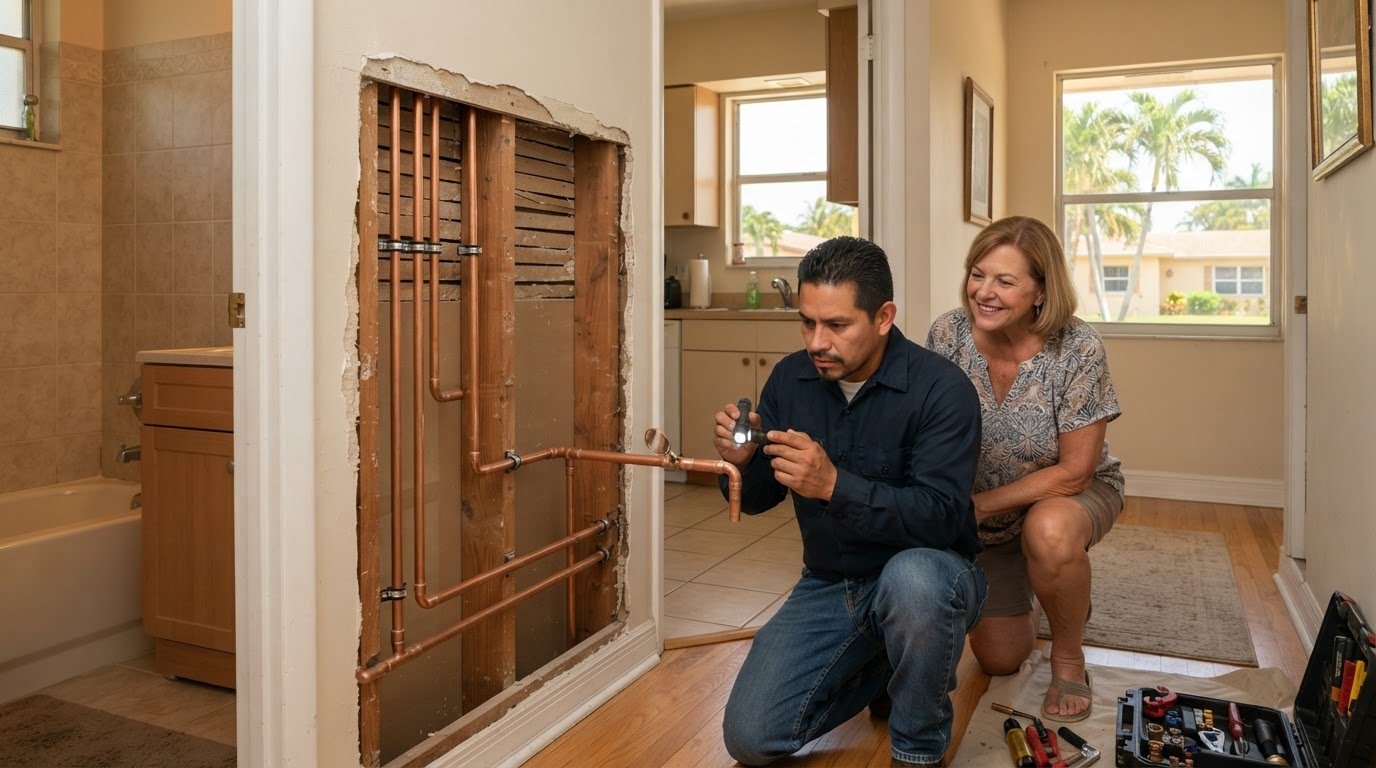
Older Pembroke Pines homes can need more than a simple pipe swap: a whole-home copper repipe replaces the water lines, with access and routing shaped by the home’s layout and existing plumbing. The work can take anywhere from a few days to a couple of weeks, depending on the home’s size and plumbing-system complexity. In eastern Pembroke Pines, homes from the 1970s-80s may have aging galvanized or early copper plumbing, so copper repiping specialists in Pembroke Pines assess the existing system before planning the work.
It’s understandable to want clear answers before opening walls or committing to a major plumbing project. This guide explains how repiping works, which pipe problems to watch for, and what older homes in Pembroke Pines and nearby Broward County communities may need. You’ll also learn what shapes a project plan and how to recognize when a repair may no longer be enough.
Key Takeaways
- A whole-home repipe replaces the water lines throughout a house, and the work may take from a few days to a couple of weeks depending on the home and plumbing system.
- Older galvanized or early copper plumbing can help explain recurring leaks or low water pressure in some Pembroke Pines homes.
- Pay attention to persistent leaks, changing water pressure, and other signs that a localized repair may not address the wider pipe system.
- Learn what a plumber considers when planning a repipe, including the home’s layout, pipe material, and condition.
- Tip Top Plumbing & Restoration offers repiping and leak services for homeowners dealing with aging pipes or recurring plumbing problems.
How Does A Whole Home Repipe Work?
A whole-home repipe replaces the water-supply pipes serving a house rather than repairing one isolated leak. The plan depends on the existing plumbing, the home’s layout, and the condition of its fixtures.
Whole-Home Repiping Process
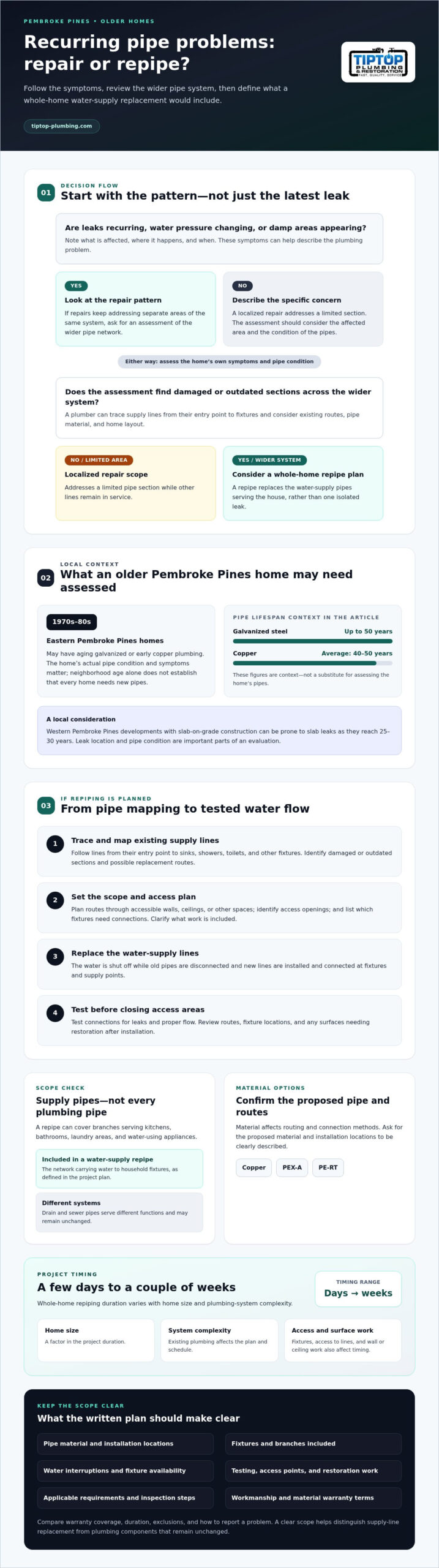
The process starts by tracing supply lines from their entry point to fixtures such as sinks, showers, and toilets. A plumber maps the existing routes, identifies damaged or outdated sections, and plans replacement paths through accessible walls, ceilings, or other spaces. This assessment helps determine where access openings are needed and how new lines can reach each fixture.
Next, the water supply is shut off while old pipes are disconnected and new lines are installed. The plumber connects the lines at fixtures and supply points, then tests the system for leaks and proper flow before access areas are closed. The final appearance depends on which surfaces were opened and what repair work is needed after installation.
Household Water Supply Replacement
Whole-home water-supply repiping replaces the network that carries water to household fixtures. Unlike a localized repair, which addresses a limited section while leaving other lines in service, a repipe can cover branches serving kitchens, bathrooms, laundry areas, and water-using appliances.
During planning, identify which fixtures need connections and whether existing pipe routes can be reused. The project scope should also distinguish water-supply lines from drain and sewer pipes, which serve different functions. This makes clear what the repipe includes and which plumbing components will remain unchanged.
Material selection is another planning step. Copper is one option; PEX-A and PE-RT are other materials homeowners may encounter when discussing residential repiping. Each affects routing and connection methods, so the home’s layout and replacement scope matter. Ask for the proposed material and installation locations to be clearly described in the project plan.
Repiping duration varies with home size and plumbing-system complexity. A whole-home repiping project can take anywhere from a few days to a couple of weeks. The number of fixtures, access to existing lines, and amount of wall or ceiling work all affect the schedule. A clear work sequence helps residents understand when water service will be interrupted and when fixtures can be used again.
After installation, testing checks the new connections and water flow before the work area is finished. Review fixture locations, pipe routes, and any access points that need restoration. If water-quality concerns prompted the project, distinguish changes related to the home’s supply pipes from other possible sources. This keeps the repipe focused on pipe replacement and its actual scope.
Who is a trusted plumber in Pembroke Pines, FL?
For an older Pembroke Pines home, a trusted plumber assesses recurring problems, pipe condition, and the project scope before recommending repiping. Warranty terms vary, so compare what workmanship and materials are covered, how long coverage lasts, and what exclusions apply.
Older Homes and Recurring Problems
Start with the pattern, not just the latest leak. If repairs keep addressing separate areas of the same plumbing system, ask for an assessment of the wider pipe network. Western Pembroke Pines developments with slab-on-grade construction can be prone to slab leaks as they reach 25-30 years. That local context makes leak location and pipe condition important parts of a repiping evaluation.
Service and Emergency Availability
An active leak calls for a different response than a planned replacement. In an emergency, identify the affected area, limit water use there, and explain whether water is still escaping. A clear description helps the plumbing professional assess the problem. For non-urgent repiping, review how the work will affect household water access and fixture use.
Local conditions matter, but a neighborhood’s age alone doesn’t prove that every home needs new pipes. The research states that 70% of homes have frequent leaks, yet an individual assessment should focus on the home’s own symptoms. Note recurring leaks, damp areas, or changes in water pressure, then share where and when they occur.
For code compliance and inspections, the project scope should explain applicable requirements and inspection steps. It should clarify who coordinates any inspection and what work will be reviewed. Keep the written scope and inspection records with your household documents. These details help you understand how the work is planned without mistaking an inspection for proof that every unrelated pipe is sound.
Warranty Coverage
Warranty terms aren’t uniform among local copper repiping companies. Compare workmanship and pipe-material coverage separately, then read the duration, exclusions, and process for reporting a problem. Ask how coverage applies if a leak appears near a new connection. Clear written terms explain what protection applies after the repipe is complete.
Leak detection can help distinguish a localized slab leak from broader pipe deterioration. Keep a simple record of the affected fixture, leak location, and repeat repairs; those examples help clarify whether maintenance or whole-system work deserves consideration. For a plumbing concern in Pembroke Pines, schedule a plumbing assessment to discuss the issue and next steps.
Aging galvanized and early copper pipes
Pipe material and age help explain why some Pembroke Pines homes develop recurring plumbing problems. In the city’s eastern sections, homes dating from the 1970s-80s often have aging galvanized or early copper plumbing.
Galvanized steel pipes can last up to 50 years, while copper pipes have an average lifespan of 40 to 50 years. These averages offer context, but the condition of an individual system also depends on its leak history, visible wear, and water pressure. Homes built before 1985 may still contain original galvanized or polybutylene pipes, making material identification a useful first step during an assessment.
Low Pressure from Old Pipes
Galvanized pipes that have been in place for thirty years or more can contribute to low water pressure. Corrosion and buildup may narrow the passage for water, reducing flow through affected sections. A pressure change at several fixtures may suggest a wider supply concern, while a change at one faucet may be limited to that fixture.
60% of homes have reduced water pressure. Homeowners can note where pressure drops, whether hot and cold water are both affected, and whether the change is constant. These details help distinguish a pipe concern from an issue isolated to one fixture.
Recognizing Pipe Replacement Signs
Recurring leaks, visible corrosion, and persistent pressure changes are signs to record, especially in older galvanized or copper systems. Note which rooms are affected and whether repairs have repeatedly addressed separate sections. Some Pembroke Pines homes built between the 1970s and 1990s may contain polybutylene, so identifying the material can inform the replacement assessment.
Age alone doesn’t establish the need for replacement. Consider the pipe material, pattern of leaks, and condition of exposed sections. If pressure changes appear across several fixtures, include that detail in the plumbing assessment.
Benefits of Replacing Old Pipes
Replacing deteriorated sections or a wider pipe network addresses the parts of the system behind repeated leaks, rather than treating each leak as unrelated. Planned replacement also gives homeowners a clearer record of which lines have been renewed. The appropriate scope depends on the material and condition found throughout the home.
For a home with old galvanized lines, addressing restrictions may help restore water flow through affected fixtures. Replacement can also leave fewer aging pipe sections to monitor. The practical benefit depends on which lines are included, so review the scope and note any original sections that will remain.
Signs a home may need repiping
A single leak may call for a focused repair, while recurring failures can point to wider pipe deterioration. In Pembroke Pines, consider the pattern of leaks, pressure changes, and fixture performance together before weighing whole-home replacement.
Age can be one clue. Pipes that are 40 or more years old may be a sign that a home needs repiping, but age alone doesn’t diagnose the system. Note visible corrosion, leaks in different rooms, and repairs that haven’t stopped problems from returning. A thorough assessment connects each symptom to its location and the affected supply lines.
Pressure changes also deserve attention. A pressure regulator more than ten years old, or one making unusual sounds, can be associated with low water pressure. Note whether reduced flow affects one fixture or several, and whether it changes when another tap runs. These details help distinguish a local fixture concern from a wider supply issue.
- Record recurring leaks by room and fixture.
- Note corrosion on pipes you can safely see.
- Track pressure changes at sinks, showers, and other fixtures.
- Describe unusual sounds from the pressure regulator.
Leak detection can help locate water escaping behind a wall or beneath a floor, where a stain may not reveal the source. If a leak is active, limit water use in the affected area and note where moisture appears. Detection findings, repair history, and pipe condition help determine whether a localized repair or broader replacement is appropriate.
Whether you can stay home during repiping depends on the project plan and affected areas. Ask which rooms and fixtures will remain accessible, when water service will be interrupted, and how the work will be sequenced. For example, a bathroom may be unavailable while pipes are accessed, even if other rooms remain usable. Knowing the plan helps residents organize meals, washing, and household routines around the disruption.
Replacing deteriorated pipes can address repeated leak points along the lines included in the project. It can also give homeowners a clearer record of renewed pipes and older sections that remain. The benefit depends on the scope: replacing one branch won’t renew every supply line. Review the work plan, affected fixtures, and access areas before installation begins.
Repiping older homes in Pembroke Pines
Older homes in Pembroke Pines need an assessment based on pipe material, leak history, and the routes serving each fixture. Western communities developed during the 1990s-2000s, while other homes have different plumbing histories and layouts.
Start with a material inventory. Identify visible supply pipes, note their condition, and record which fixtures they serve. In a Florida home, an exposed section may not show the condition of lines behind walls or below floors. A plumber can assess the system as a whole, comparing visible signs with reported leaks, repairs, and pressure changes.
Next, map the pattern of problems. Leak detection can help locate concealed leaks, while a written record shows whether issues recur in one area or across separate rooms. For example, repeated repairs near a bathroom warrant a different investigation than leaks reported at a kitchen and laundry fixture. Location and frequency help define whether the project should address one branch or broader supply lines.
Material identification matters because different pipe types call for different replacement plans. Homes built between the 1970s and 1990s may contain polybutylene, and recognizing it helps clarify what the existing system includes. Ask for the proposed scope to identify which lines will be replaced, which fixtures will receive new connections, and what remains in place. That detail makes the project easier to understand.
Older-home layouts also affect pipe routing and access. A plumber assesses where supply lines run, which walls or ceilings provide access, and how new routes can reach fixtures. If access near a bathroom is limited, the plan should explain the work area and expected disruption. Room-by-room details help residents prepare without assuming every home has the same construction.
Use the assessment to compare a localized repair with whole-home replacement. Frequent leaks in separate areas, aging materials, or widespread pressure concerns may justify reviewing more of the plumbing system. One isolated issue can have a narrower cause. The key is whether the documented condition affects a single section or multiple supply lines.
Before work begins, review the route plan, affected fixtures, water shutoff sequence, and finishing work after pipe access. Keep the written scope and any inspection records with the home’s plumbing documents. For an older Pembroke Pines property, these records give future homeowners a clearer account of replaced lines and original pipes that remain.
Tip Top Plumbing & Restoration: Emergency Plumbing
Tip Top Plumbing & Restoration can help when an active leak needs attention or aging supply pipes call for a broader repiping plan. Emergency Plumbing and Leak Detection & Slab Leak Repair address urgent plumbing concerns, while Whole House Repipes can address widespread pipe problems. Sewer Repiping Services apply to sewer lines, which are separate from household water-supply pipes.
Choose the service that fits the problem: an active leak, suspected slab leak, recurring pipe issues, or sewer-line concern. For a repipe discussion, details about affected fixtures, previous repairs, and observed pressure changes help clarify what’s happening.
Contact Tip Top Plumbing & Restoration to discuss your plumbing concern and next steps.
Make a Clear Plan for Your Home’s Plumbing
Turn symptoms into a practical plan. Gather notes about recurring leaks, affected fixtures, and previous repairs, then use them to explain what’s happening in your home. This gives a plumbing professional a useful starting point for assessing whether the issue calls for a targeted repair or a wider project.
Choosing copper repiping specialists in Pembroke Pines means looking for a clear explanation of the proposed scope, affected water lines, and work sequence. Tip Top Plumbing & Restoration also offers Emergency Plumbing, Sewer Repiping Services, and Water Heater Repair & Installation for related needs. The right service depends on whether you’re dealing with an active problem, sewer piping, or a water-heater concern.
Take the next step with the details you’ve gathered and get a plan tailored to the plumbing issue at hand.
A well-informed plan can make the path forward more manageable. Start with the problem, ask for a clear scope, and move ahead with confidence.
Tip Top Plumbing & Restoration for Copper Repiping in Pembroke Pines
Tip Top Plumbing & Restoration offers Whole House Repipes and Sewer Repiping Services for homeowners considering copper repiping. Its plumbing services also include Copper Pipe Leak Repair and Leak Detection & Slab Leak Repair.
Turn to Tip Top Plumbing & Restoration for help with a copper pipe leak, a repiping assessment, or related drain and sewer services. The company also offers Camera Inspections, Drain Cleaning, and Hydro Jetting.
Frequently Asked Questions
Signs it’s time to repipe my house?
Consider a broader pipe assessment when leaks recur in different parts of the home or repairs keep shifting to another location. Start by listing each repair, the room where it occurred, and whether pressure or fixture performance changed afterward. This timeline helps distinguish a damaged connection from a pattern across the plumbing system. Pipe material and condition also matter, so include any accessible sections in the assessment.
Which plumbers specialize in copper repiping in Pembroke Pines, Florida?
Tip Top Plumbing & Restoration provides Whole House Repipes and Copper Pipe Leak Repair in Pembroke Pines. Homeowners comparing copper repiping specialists in Pembroke Pines can describe the pipe material, leak locations, and repairs already completed to clarify the work under consideration. A useful project discussion distinguishes a copper pipe leak repair from a larger repipe, then identifies the affected supply lines and fixtures in the proposed scope.
What copper repiping services do Pembroke Pines plumbing specialists offer?
Services can address either a leak in a copper pipe or replacement of a home’s water-supply lines. Tip Top Plumbing & Restoration offers Copper Pipe Leak Repair and Whole House Repipes, as well as Sewer Repiping Services for sewer piping, which is separate from household water supply. Explain whether the concern involves a supply line, a sewer line, or both. That distinction helps define the relevant inspection and project scope.
How does copper repiping compare with PEX repiping for cost and durability?
Cost depends on the home’s layout, pipe routes, access, fixture connections, and the material selected; it’s provided after a quote request. Copper and PEX each have trade-offs in cost and durability, so compare the materials against the home’s needs and proposed installation. Those figures are broad averages, not a guarantee for an individual installation. Compare the proposed material, routing, and connection plan alongside the project’s quoted scope.
How long does a copper repiping project take in Pembroke Pines?
A whole-home repiping project can take anywhere from a few days to a couple of weeks, depending on home size and plumbing-system complexity. The schedule depends on pipe access, fixture connections, and the amount of wall or ceiling work. Ask for the planned sequence, including when water service will be interrupted and which rooms will be affected. This helps you coordinate household routines around the work.
Do Pembroke Pines permits or inspections apply to whole-house repiping?
Permit and inspection steps should be identified for the specific repiping scope and applicable local requirements. Before work starts, the project plan should explain who handles any required coordination, which parts of the installation are reviewed, and what records you’ll receive afterward. Keep those records with your home documents. This provides a clear account of completed work without assuming every plumbing project follows the same inspection process.
Are copper repiping specialists in Pembroke Pines licensed and insured?
Tip Top Plumbing & Restoration is licensed and insured. Those credentials apply to the company, not automatically to every plumber serving Pembroke Pines. For a repiping project, make sure the written scope names the business responsible for the work and describes the proposed piping. Keep the agreement and project records together. Clear documentation connects the planned work to the company performing it and helps avoid confusion about the project’s scope.
What signs indicate a Pembroke Pines home needs copper repiping?
Signs worth assessing include recurring leaks, pressure problems affecting several fixtures, and deteriorated copper visible in accessible areas. A home’s age alone doesn’t establish that copper replacement is needed; confirm which pipe material is present and where symptoms occur. For example, a pressure change limited to one faucet may point to a different issue than similar changes throughout the house. A pipe assessment can help connect symptoms to the affected lines.
Disclaimer
The information provided in this article is for general educational and informational purposes only and should not be considered professional plumbing, restoration, mold remediation, or legal advice. Every plumbing system, property, and situation is unique, and the recommendations discussed may not apply to your specific circumstances.
While Tip Top Plumbing & Restoration strives to provide accurate and up-to-date information, we make no warranties regarding the completeness, accuracy, or reliability of the content. Any actions you take based on this information are at your own risk.
Plumbing repairs, water damage restoration, and mold remediation should be performed by qualified professionals and in accordance with applicable local building codes and regulations. If you are experiencing a plumbing emergency, water leak, or property damage, contact a licensed professional for an on-site evaluation.
Tip Top Plumbing & Restoration is licensed and insured to provide plumbing and restoration services throughout Broward County, Florida.