

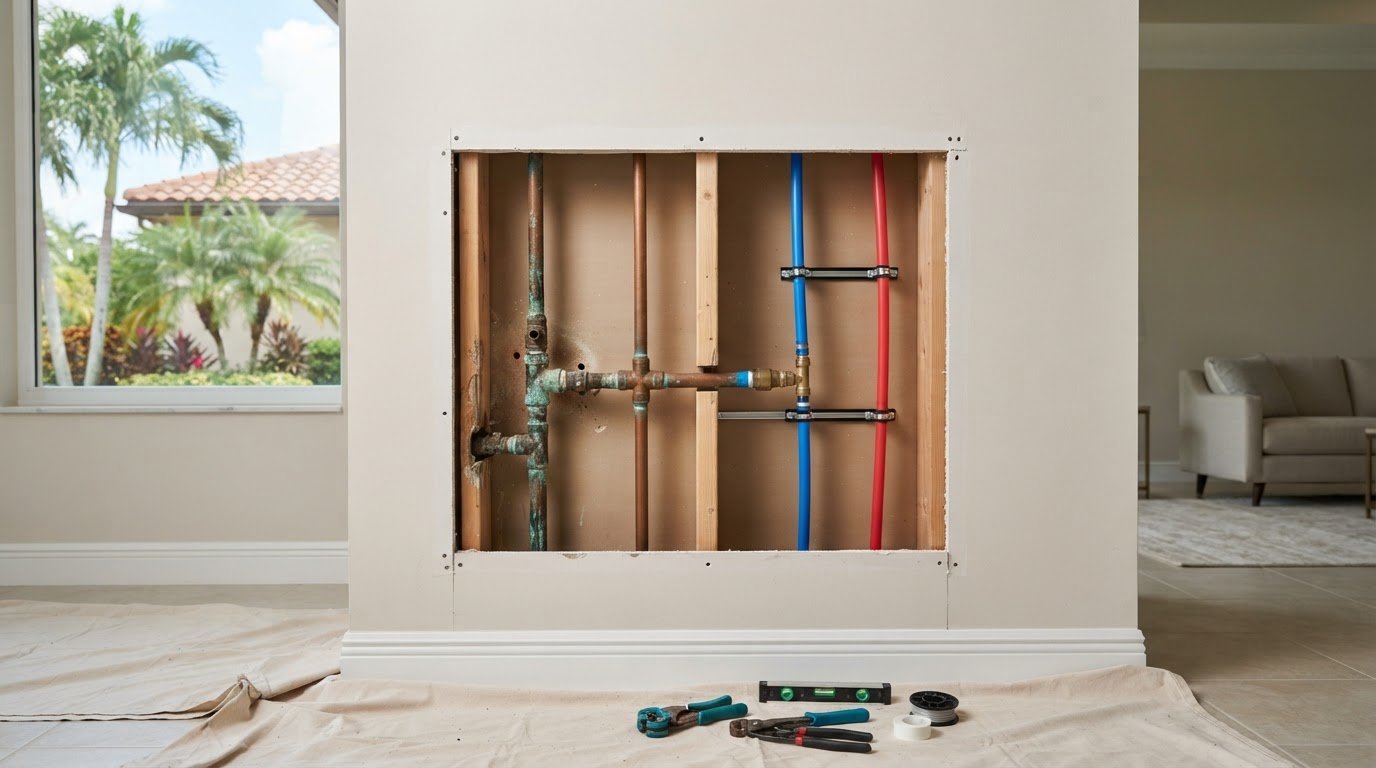
Repeated pinhole leaks, corroded copper, or aging CPVC or polybutylene pipes can be signs that a whole house repipe in Miramar is worth considering, especially when plumbing problems keep returning. Repiping can involve replacing water-supply pipes throughout a home, and accessing concealed pipes may require opening walls. Wall patching and finish repairs are not automatically part of the plumbing work, so make sure the written scope explains who handles them.
It’s understandable to worry that replacing pipes could leave your home torn apart. A clear plan explains where access may be needed, which material will replace the old lines, and how affected surfaces will be handled afterward. Learn the warning signs, how repiping works, which materials may be used, and how homeowners in Miramar and Southwest Broward can prepare for the project.
Key Takeaways
- Recurring leaks, pinhole leaks in copper, or water-pressure changes can point to pipe problems that deserve a closer assessment.
- Outdated CPVC, polybutylene, and corroded copper piping can be replaced with PEX or copper during a whole-home repipe.
- Repiping may require opening walls to reach pipes, so clarify how access and wall repairs will be handled in the project plan.
- The project scope and cost depend on factors such as the home’s layout, existing pipe condition, replacement material, and access to the plumbing.
Water pressure and recurring leak concerns
A pressure change can help locate a plumbing problem, but it does not identify the cause by itself. Compare several fixtures: weak flow at one sink may point to its faucet or supply line, while low pressure at multiple taps may indicate a broader issue. Note when the change occurs, whether hot and cold water behave differently, and whether leaks appear in more than one room. These details can help distinguish a local fixture problem from an issue affecting multiple pipes.
Recurring copper pinhole leaks deserve attention because another leak can develop elsewhere in the system. According to the City of Miramar, applications go to the Utilities Department at 13900 Pembroke Road, Miramar, FL 33027. The City monitors water quality for continued compliance with the EPA and Florida environmental and health departments, but water-quality monitoring doesn’t assess every home’s pipe condition.
For an independent water-quality evaluation, arrange testing of a sample from the tap in question. Compare the result with the water’s appearance, taste, and plumbing history, and keep the report with records of leaks or repairs. A sample can assess water quality, but it cannot show whether a hidden copper line is corroded or leaking inside a wall. That requires a separate plumbing inspection.
When choosing a licensed plumber for a repipe in Miramar, verify the license and ask for a written scope. Compare the proposed pipe material, access points, testing steps, and responsibility for wall repairs. The plan should explain how the work addresses the home’s specific leak pattern, rather than relying on pressure changes alone.
Permit and inspection requirements depend on the repiping scope and applicable local rules. Before work starts, clarify which permits apply, who will handle them, and which inspections must take place before walls are closed. This keeps access and inspection steps clear for the property owner.
Homeowners insurance coverage for repiping or related water damage in Florida depends on the policy language and cause of damage. Review the policy’s wording on plumbing failures, resulting water damage, maintenance, and exclusions. Record the leak location, damage, and repair history, then submit those details to the insurer for a coverage decision.
During repiping, ask which water-service interruptions to expect and which fixtures will be unavailable at each stage. Set aside drinking and cooking water before a shutoff, and plan around bathrooms or appliances that need supply lines. For concerns about copper and tap water, use the affected fixture’s test result and plumbing history to guide your next step. A whole-house repipe in Miramar may address aging or repeatedly leaking lines, while a single-fixture problem may need only a targeted repair.
Replacing outdated CPVC, polybutylene, or corroded copper pipes
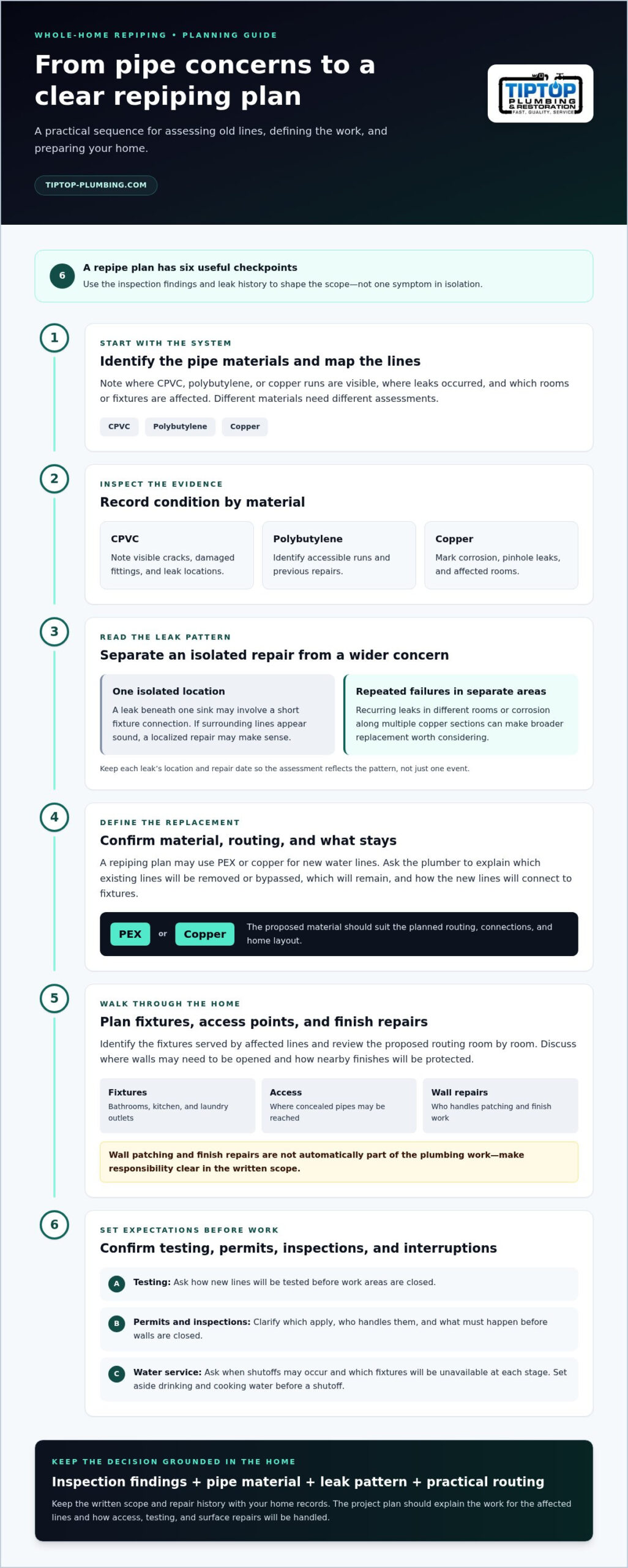
Start by identifying the pipe material and mapping where each line runs. CPVC, polybutylene, and copper require different assessments, so do not assume every pipe is in the same condition. A plumber can inspect visible sections, connections, and leak locations to determine whether the concern affects one branch or the home’s wider supply system. For example, a leak beneath one bathroom sink may involve a short fixture connection, not every pipe in the house.
Assess polybutylene and CPVC in context, considering visible damage, connection condition, and repair history. With copper, look for corrosion, pinhole leaks, or repeated repairs in separate areas. One damaged section may call for a localized repair; recurring failures in multiple areas can make broader replacement worth considering. Keep a record of each leak’s location and repair date so the assessment reflects the pattern, not one isolated symptom.
A repiping plan may use PEX or copper for new water lines. The material should suit the planned routing, connections, and home layout. Ask which existing lines will be removed or bypassed, which will remain, and how new lines will connect to fixtures. If the kitchen and laundry have different pipe materials, the written scope should explain how each area will be handled.
- CPVC: Record visible cracks, damaged fittings, or leak locations.
- Polybutylene: Identify accessible runs and note previous repairs.
- Copper: Mark corrosion, pinhole leaks, and affected rooms.
- Replacement material: Confirm whether the proposed lines are PEX or copper.
Before work begins, walk through the home with the plumber and identify the fixtures served by the affected lines. A labeled plan helps connect each bathroom, kitchen, and laundry outlet to the proposed routing. Discuss access points and how nearby finishes will be protected. Ask how the new lines will be tested before work areas are closed, and keep the completed scope with your home records.
Replacing pipes throughout a home is different from repairing one visible leak. A focused repair may make sense when the damage is isolated and surrounding lines appear sound. Consider broader replacement when leaks recur in separate rooms or corrosion appears along multiple copper sections. The decision should reflect the inspection findings, pipe material, leak pattern, and practical route for new lines.
For a home with repeated failures, organizing the pipe history and identifying affected rooms gives the assessment a useful starting point. You can schedule a repiping assessment to discuss the replacement scope and material options.
Service area in Miramar and Southwest Broward
A repiping plan should start with the property address, not a broad map label. Miramar homeowners should identify the exact service location before arranging an assessment. A nearby Southwest Broward address may have different local rules or utility arrangements, which can affect where service lines enter, who controls the water shutoff, and which offices handle local requirements. Keep the street address and any available plumbing plans ready.
Next, describe the home’s layout and affected rooms. A single-story home with a kitchen, laundry area, and bathrooms on one floor presents different pipe routes from a multi-story home. Note where the main shutoff is, whether visible piping is in the garage or utility area, and which fixtures have needed repairs. For example, a leak near an upstairs bathroom and another near the kitchen may involve different branches.
Use this location checklist before arranging a Miramar plumbing visit:
- Address: Provide the full property address and city.
- Access: Identify gates, parking instructions, and the main shutoff location.
- Layout: Note floors, bathrooms, kitchen, laundry, and visible pipe routes.
- History: List rooms with leaks, prior repairs, or water damage.
- Occupancy: Explain which rooms need to remain usable during the work.
For homes in Southwest Broward, photos can make an initial discussion more concrete. Photograph visible pipes beneath a sink, in an accessible utility space, or near the water heater. Note the room and any previous repair location. Photos do not replace an onsite inspection, but they help relate symptoms to the home’s layout and identify areas that may need closer attention.
Ask how the proposed piping route fits the property’s actual layout. A line routed through an accessible utility area may require different access work from one behind finished walls. Miramar residents should also clarify which fixtures may lose water during each phase. For example, a household with one bathroom needs a practical plan for temporary interruptions.
Before scheduling, gather the address, leak history, and room list. Include whether the building is occupied, where workers can enter, and any access limits. If a Miramar property has separate living areas or additions, identify them individually, since the plumbing may not match the original floor plan. This preparation helps focus the visit on the home’s actual piping conditions rather than assumptions based on neighborhood or building age.
Local details matter throughout planning. A home near a city boundary, for example, may have a different municipal contact from a nearby property. Use the same property address for service arrangements, permit discussions, and utility coordination. For a whole-house repipe in Miramar, precise location and access details help shape a scope that reflects the property.
Signs that a home may need repiping
A single plumbing symptom rarely tells the whole story. Look for patterns across rooms, fixtures, and repair records. For example, a kitchen leak followed by a bathroom leak may point to a wider piping concern than one loose faucet connection. Note each location, the date, and whether the same line or material may be involved. This record gives an inspection a useful starting point.
Visible corrosion on copper deserves attention, especially near joints and fittings. Check exposed piping under sinks, in utility spaces, and near the water heater. Green or blue deposits, dampness, or recurring drips can signal a problem in that section. A mark on exposed copper does not prove that every pipe needs replacement, but similar damage in separate areas makes a broader evaluation more useful.
Check for these clues during a careful walk-through:
- Repeat repairs: Record separate leak repairs in different rooms.
- Stains or bubbling: Photograph ceiling marks, blistered paint, or swollen baseboards.
- Visible pipe damage: Note corrosion, cracks, or moisture around accessible connections.
- Fixture changes: Compare flow at nearby taps and note which fixtures behave differently.
- Unexplained damp areas: Mark wet flooring or walls that return after drying.
Water marks need prompt attention because the visible area may not reveal the full extent of moisture. If a wall or floor becomes wet, identify the nearest fixture and shut off its supply when practical. For an active leak or burst pipe, shut off the home’s main water supply to limit flooding. Record affected rooms before cleanup, then address drying and repairs to restore the property.
Pipe material adds context. CPVC, polybutylene, and copper may require different assessments, so identify accessible sections without cutting into walls. Photograph labels or exposed runs, and gather previous repair invoices. One damaged fitting may need a focused repair; repeated failures across multiple branches call for an evaluation of the wider system.
In Florida, take an evidence-based approach: document symptoms, inspect accessible piping, and connect each sign to its location. Ask which lines show damage and how the findings support the recommended scope. Replacing the whole system is a bigger decision than fixing one leak, so the assessment should distinguish isolated defects from repeated or widespread problems. The goal is to match the work to the actual condition, not one symptom alone.
What factors affect the cost of repiping a house in Miramar?
The price depends on the property and is provided after a quote request. Key cost factors include the home’s layout, existing pipe condition, replacement material, access, and work included in the scope. A clear estimate should tie each item to the property rather than assume every Miramar home is the same.
Home size and layout: The number of bathrooms, kitchens, and stories affects how much piping must be routed. A single-story home with a kitchen and two bathrooms has a different layout from a multi-story home with bathrooms on separate floors. Longer routes and additional fixture branches can change the materials and labor involved.
Pipe material and scope: The estimate should identify the existing material and proposed replacement, such as PEX or copper. It should also state whether all household water lines are included or specific sections will remain. Replacing a few affected branches is a different scope from replacing lines throughout the home.
Access and routing: Exposed piping in a utility area can be easier to reach than a line behind finished walls or above a ceiling. The route may depend on the home’s framing, fixture locations, and practical access points. Ask which areas need opening and how the proposed route will reach each bathroom, kitchen, and laundry fixture.
- List each room with a fixture or affected pipe.
- Share previous leak locations and repair records.
- Identify visible pipes and areas with restricted access.
- Ask which piping is included, excluded, or rerouted.
- Clarify whether wall patching and finish work are included.
Wall repairs can affect the project’s total scope. Plumbing access may require openings, while patching, paint, tile, and other finish work are separate tasks unless included in the written agreement. A small drywall access opening differs from restoring a tiled shower wall. Clarify responsibilities for access and restoration before work begins.
Ask for a written, itemized scope that separates pipe replacement from related work. It should explain the material, rooms and fixtures served, access needs, testing steps, and any excluded finish repairs. If the home has an addition or separate living area, identify those spaces individually. This makes it easier to understand what the estimate covers and compare the scope with the property’s needs.
For a Miramar quote request, prepare the address, room list, pipe history, and photos of accessible piping. These details help relate the proposed work to the home’s layout.
Tip Top Plumbing & Restoration: Emergency Plumbing
Tip Top Plumbing & Restoration helps homeowners address urgent plumbing problems, including active leaks that need prompt attention. If water is escaping from a pipe, shut off the main supply when safe, then describe the leak’s location and symptoms. Leak Detection & Slab Leak Repair can help locate hidden leaks or concerns near a slab. Sewer Repiping Services address damaged sewer piping, while Water Heater Repair & Installation can help when the problem involves the water heater.
Share which fixtures are affected, when the problem began, and any previous repairs. These details help clarify whether the immediate concern involves a leak, sewer line, or water heater.
Visit Tip Top Plumbing & Restoration to discuss your plumbing concern.
Make a Clear Plan for Your Home’s Plumbing
Use the inspection findings to decide what needs attention now and what belongs in a longer-term plan. A whole house repipe in Miramar is a significant home project, so keep the proposed scope, access work, and wall-repair responsibilities together before scheduling. That gives you a practical reference as the work progresses.
Tip Top Plumbing & Restoration provides Emergency Plumbing, Sewer Repiping Services, and Water Heater Repair & Installation. If an active plumbing problem needs attention or you’re ready to discuss repiping, share the affected areas and repair history. Clear details help focus the conversation on your home’s needs and the appropriate next step.
Taking the next step with an organized plan can make a difficult plumbing decision feel more manageable.
Frequently Asked Questions
Do you repair the walls after repiping?
Wall patching and finish restoration depend on the written project scope. Plumbing access may require openings, but drywall repair, paint matching, and tile replacement are separate finish tasks unless specifically included. Before work begins, identify which surfaces could be opened and who will restore each one. Replacing pipe behind a tiled shower wall, for example, involves different finish work from accessing a line through an unfinished utility area.
How do I know if my house needs repiping?
Consider repiping when plumbing failures affect multiple areas or keep returning after repairs. A single leaking faucet connection usually points to a localized issue, while separate leaks at a kitchen line and bathroom branch suggest a broader pattern. Compare repair records, affected rooms, pipe material, and visible condition. A plumbing inspection can connect those clues and distinguish a system-wide concern from individual fixture problems.
How long does a whole-home repipe take?
There is no fixed duration for every home. The schedule depends on the number of fixtures, building layout, pipe access, routing, and finish work included. Reaching lines through an accessible utility area, for example, differs from opening finished walls across several rooms. Ask for a project sequence covering preparation, pipe installation, testing, and restoration work so you can plan household routines.
PEX-A, PE-RT, or copper: which should I choose?
Choose based on the proposed routing, connection system, home layout, and material specified for the project. PEX-A and PE-RT are different flexible piping materials, while copper is rigid; these differences affect how lines are routed and connected. Compare the written scope and material details rather than choosing by name alone. For a Miramar project, the plan should identify the selected material and explain how it suits your home.
What does a whole-house repipe include in Miramar, Florida?
A whole-house repipe generally replaces the home’s water-supply piping, reconnects lines serving fixtures, and tests the new system. The exact scope depends on which pipes are included and the home’s layout. A whole house repipe in Miramar should clearly identify the rooms and fixtures covered, proposed pipe material, access work, testing, and responsibility for patching or finish repairs.
Which pipe materials are best for repiping in South Florida: PEX or copper?
Both PEX and copper can be used for whole-home repiping; the right fit depends on the planned route, connection details, and property layout. PEX is flexible, while copper is rigid, so the installation design differs. Review how each option will reach fixtures and connect to existing plumbing. The estimate should name the selected material and explain the scope, rather than treating either option as best for every home.
How long does a whole-house repipe take, and will water service be interrupted?
Project duration depends on the home’s layout, pipe access, and the work included. Water service is shut off when crews need to disconnect or connect supply lines, so interruptions occur during those stages. Ask for a work sequence showing which areas are affected and when water will be unavailable. Scheduling work by section, for example, can help households plan around kitchen or bathroom access.
What signs indicate a home in Miramar needs a whole-house repipe?
Look for a pattern, not one isolated plumbing fault. Repeated leaks in separate rooms, recurring repairs on aging lines, and visible corrosion across accessible pipe sections all warrant closer evaluation. Note where each issue occurs and whether it returns after repair. In a Miramar home, sharing the location history and pipe material helps an inspection determine whether the problems involve a single branch or the wider supply system.
Disclaimer
The information provided in this article is for general educational and informational purposes only and should not be considered professional plumbing, restoration, mold remediation, or legal advice. Every plumbing system, property, and situation is unique, and the recommendations discussed may not apply to your specific circumstances.
While Tip Top Plumbing & Restoration strives to provide accurate and up-to-date information, we make no warranties regarding the completeness, accuracy, or reliability of the content. Any actions you take based on this information are at your own risk.
Plumbing repairs, water damage restoration, and mold remediation should be performed by qualified professionals and in accordance with applicable local building codes and regulations. If you are experiencing a plumbing emergency, water leak, or property damage, contact a licensed professional for an on-site evaluation.
Tip Top Plumbing & Restoration is licensed and insured to provide plumbing and restoration services throughout Broward County, Florida.