

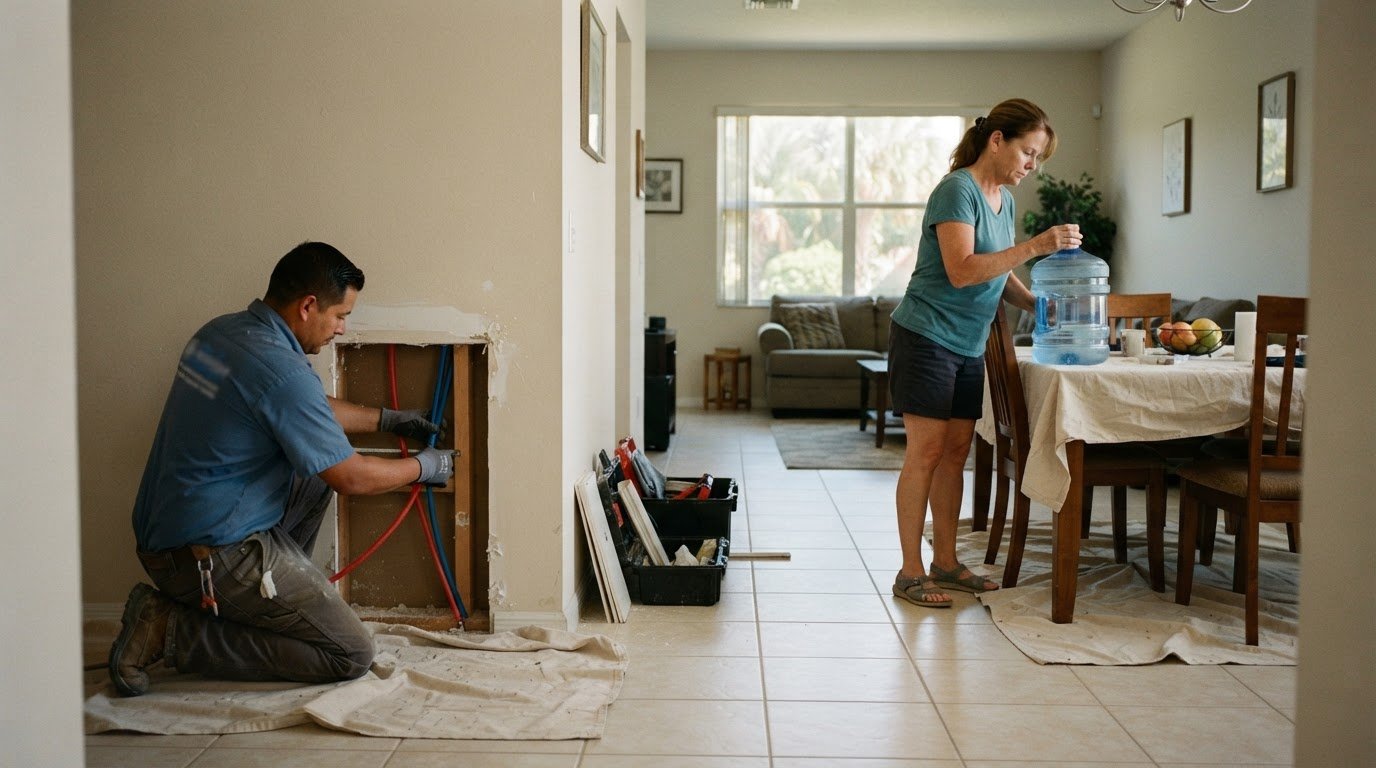
Living in a house during repiping is usually possible, though you’ll need to plan around daytime noise and water shutoffs. A whole-house repipe generally takes 2 to 4 days in a single-story home and 3 to 5 days in a multi-story home. On installation days, water is typically off for six to nine hours.
It’s understandable to wonder whether you’ll need to leave, especially if you work from home or have children or pets. In most cases, the disruption is temporary, but the work can affect your routine and access to parts of the house.
This guide explains when staying home or working remotely is practical, how pipe access can affect your walls, and what to expect as installation and repairs progress. You’ll also learn how noise, dust, and water interruptions may affect your routine so you can plan ahead.
Key Takeaways
- Staying home is usually manageable, but plan around daytime water shutoffs and noise before the work begins.
- Set up a quiet place away from active work areas if you need to work remotely, and keep children and pets clear of tools and materials.
- Repiping may require targeted openings for pipe access, not the removal of every wall; protect nearby belongings and expect repairs after inspection.
- Ask for a day-by-day schedule so you can plan around installation, water interruptions, inspection, and wall restoration.
- Consider staying elsewhere if losing access to your only bathroom or uninterrupted water creates a serious household difficulty.
Can I work from home during a repipe?
Working from home can be practical if you plan around active work areas, noise, and water interruptions. Before plumbing work begins, set up a separate workspace and adjust your daily routine.
Preparing Work Areas and Household Routines
Preparing work areas means clearing access routes and setting up household routines around the crew’s schedule. This matters because workers need room to reach plumbing, while calls and focused tasks need a quieter space. The loudest work may occur from 9 a.m. to 12 p.m., then from 1 p.m. to 3 p.m. Move meetings or demanding work outside those periods when possible.
A repiping estimate visit usually happens a few days or about a week before the project. Use that walkthrough to identify access points, discuss expected water shutoffs, and plan where you’ll work. The evening before installation, allow 2 to 3 hours for preparation, including setting aside drinking water and moving work equipment away from crew routes.
- Choose a workspace away from planned pipe access and active tools.
- Save calls requiring quiet for outside the loudest work periods.
- Plan meals and household tasks around daytime water interruptions.
- Keep children and pets out of work areas during installation.
Protecting Furniture and Valuables
Protecting belongings means clearing the areas around planned pipe access before work starts. This reduces obstacles for the crew and helps limit accidental damage to furniture, floors, and valuables. Move furniture 3 feet from walls identified for access, and remove wall art or photographs within 6 feet of those points.
Ask how the crew will protect floors and contain dust near access openings. Protective coverings and cleanup can help limit disruption in living spaces. Move fragile items, electronics, and important documents away from work areas, including kitchens, bathrooms, laundry rooms, and utility spaces. Keep pathways clear so workers can reach the areas they need.
Questions for the Plumbing Contractor
Before repiping, clarify access, scheduling, and household routines with the plumbing team. Ask which rooms need to be accessible, when water will be shut off, and how the crew will protect floors and belongings. Request a day-by-day schedule and an explanation of how the new supply lines will be installed, including the planned pipe material.
Repiping cost depends on factors such as house size, bathroom count, plumbing layout, and pipe material. Ask which project details shape the estimate and what work it includes. For permits, ask whether one is required locally, who handles the application, and whether it will be obtained before pipe replacement begins.
Use this home preparation checklist before the crew arrives:
- Clear furniture and wall decorations around identified access points.
- Set aside a quiet work area and move valuables from crew routes.
- Discuss permit preparation, access, water shutoffs, and daily scheduling.
- Prepare household routines for noise and temporary plumbing disruption.
Does a repipe mean cutting open all my walls?
No. Repiping usually requires openings at selected access points, not the removal of every wall. The locations depend on pipe routes and which rooms need plumbing access.
Repiping Access Openings
Access openings are sections of drywall removed so plumbers can reach pipes inside walls. Their placement affects which rooms are disturbed and where repairs will be needed. A kitchen, bathroom, laundry room, or utility area may need access if pipes run behind its walls.
After new pipes are installed, an inspection takes place before the walls are patched. The rough inspection typically takes 15 to 20 minutes. The process also includes a final inspection after the work is closed. This sequence means openings can remain visible between installation and wall restoration.
Ask which walls and ceilings will need openings during the estimate. A pipe route through a bathroom may require different access than one through a utility area. Knowing the planned locations helps you understand which rooms or fixtures could be temporarily affected.
Restricted Work Areas
Restricted work areas are the rooms and pathways crews need to reach pipes safely. Tools, materials, and open access points can make normal movement difficult, so keep those areas clear. Expect temporary limits near bathrooms, kitchens, laundry rooms, and utility spaces.
Keep children and pets away from active work, tools, and materials. Use another route if the crew is working near a hallway or doorway. This matters especially when an access opening is near a frequently used fixture or passage.
Repiping may involve installing new lines alongside old pipes before connecting the systems. Water may remain available during part of the work, but connecting the lines requires a shutoff. During that period, affected fixtures won’t operate. Crews may sequence the work so at least one toilet is available each evening.
Kitchen, Shower, and Bathroom Access
Access to kitchens, showers, and bathrooms can change as crews move between pipe routes. A water shutoff affects fixtures such as sinks, toilets, and showers, so plan around it. Ask which rooms are scheduled for work each day, and arrange meals or bathing around those areas.
In a home with multiple bathrooms, another may remain usable while work is underway in one. In a home with one bathroom, losing access can have a greater effect on daily routines. The crew’s sequence and pipe locations determine when each room is affected.
Older galvanized pipes may be part of the system being replaced, but their material alone doesn’t determine which walls need access. Pipe routes and connections to fixtures guide the openings. If you’re planning a repipe, discuss access and scheduling for your project before work begins.
Day-by-day installation timeline
A whole-house repipe generally takes 2 to 4 days in a single-story home and 3 to 5 days in a multi-story home. The installation schedule depends on the home’s layout, pipe routes, and material.
Before installation
A crew typically arrives between 7:30 and 8:30 a.m. on installation days. Before work starts, the team identifies access points and the routes for new pipes. The water shutoff is usually planned for the workday, so complete water-dependent tasks beforehand.
Set aside water the night before installation, and keep essential items outside rooms where crews will work. Leave clear routes to plumbing fixtures. The day’s work sequence can affect when the kitchen, bathroom, or shower becomes available again.
Day 1: Access and pipe installation
The first day commonly includes opening selected access points and beginning pipe replacement. The crew may install new lines alongside the existing system before connecting them. Water is typically shut off for six to nine hours on installation days, though the shutoff on Day 2 is usually shorter.
Plan for daytime disruption rather than assuming every fixture will remain usable. In a typical workday schedule, the main shutoff occurs between 8:30 and 9:00 a.m. Pressure testing and water restoration usually take place between 4:00 and 5:00 p.m.
Following installation days
On later workdays, plumbers continue installing pipe, connecting the system, and testing the work. The sequence depends on the home’s pipe layout and how many areas need access. Ask for the daily schedule so you can plan around water shutoffs and rooms under active work.
A single-story home’s repipe generally takes 2 to 4 days; a multi-story home generally takes 3 to 5 days. Homes with complex plumbing or more bathrooms may need additional installation time. These figures describe the plumbing work, not necessarily the entire wall-restoration period.
Inspection and wall restoration
After pipe installation, a rough inspection takes place before walls are closed. This inspection typically takes 15 to 20 minutes. The process includes two inspections: a rough inspection before closure and a final inspection after the work is closed.
Once the rough inspection passes, drywall patching, sanding, and painting can follow. This restoration takes 2 to 4 days and is often scheduled across separate, nonconsecutive days. The patch crew generally arrives the day after the rough inspection passes, or the same day when scheduling allows.
That distinction matters: new pipes may be installed before walls are fully repaired. Keep the work areas accessible until inspection and restoration are complete, and use the schedule to plan showers, meals, and quiet work periods.
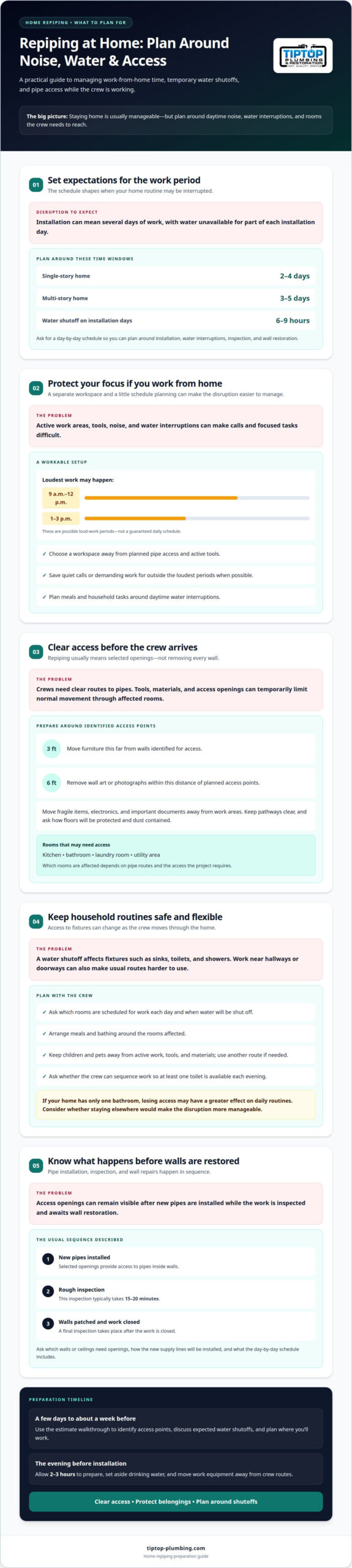
Whether homeowners can stay during repiping
Most homeowners can stay home during a repipe. The project still involves daytime work, temporary water interruptions, and restricted rooms, so the decision depends on household needs. Consider whether everyone can manage around the plumbing work. Living in a house during repiping is often workable when residents can use another space and plan around the daily schedule.
Work conditions matter. Household water is generally shut off for 7 to 9 hours per day during active work, while water is generally available in the evenings, at night, and on weekends. Plumbers may build new lines alongside old pipes, then shut off water while connecting the systems. That means the disruption is concentrated around work periods, but access to sinks, toilets, or showers can change as the crew moves through the home.
Staying home may be less practical when the household has a newborn under 6 weeks old near an active work zone, medical needs requiring uninterrupted water, or only one bathroom that will be unavailable for an extended period. Remote workers may also prefer another workspace if noise or crew activity makes calls difficult. Children and pets should stay away from active work areas, tools, and materials.
Why homeowners choose to repipe
Repeated leaks in galvanized pipes can signal a deteriorating plumbing system. Other possible issues include slab leaks from copper pipes embedded in concrete, rust in household water, or low water pressure. Recurring leaks can damage walls, floors, and belongings, and delaying repairs may allow the damage to worsen.
Replacing aging pipes can address recurring leaks, improve water pressure and water quality, and reduce the likelihood of future plumbing emergencies. These are reasons to consider the condition of the whole system, not just one fixture. Access openings and later drywall repairs are temporary parts of the project; replacing the supply lines addresses the underlying piping.
When moving out may make sense
Temporary relocation may make sense if daily routines depend on continuous water or if the only bathroom will be inaccessible for an extended period. For example, daytime shutoffs may be difficult for someone who needs reliable water for medical care. The same may apply when care needs or work obligations make staying in an active home impractical.
Before deciding, compare the crew’s schedule with household needs, including bathroom access, meals, medical routines, work calls, and care for children or pets. Ask which rooms will be affected and when water service is expected to return each day. This helps you judge what installation will involve and whether staying home is practical.
Noise and dust during the work
Repiping can create construction noise and dust, especially when crews remove old pipes or open drywall. Drilling through framing is noisy, while dust can collect near access points. Knowing which tasks cause each disturbance helps you plan where to spend time and how to protect nearby belongings.
The loudest periods may coincide with pipe removal and drilling. If you work remotely, move calls away from active work areas or arrange a quieter place for focused tasks. A whole-house project may involve several rooms, so noise can shift as the crew follows pipe routes. Keep children and pets away from tools, materials, and openings.
Dust is most noticeable around walls and ceilings opened for access. Before work begins, move electronics, food, and personal items out of those rooms. For example, clear kitchen counters if crews need access near the sink. Protective coverings and cleanup can help reduce dust and disruption in living spaces.
Ask how the crew will cover and organize work areas. Protect nearby furniture and floors, and keep doors to unaffected rooms closed where practical. Plastic sheeting can cover belongings, but it should not block access or create a trip hazard. Leave clear paths between the entrance and each work area.
Homes may have older copper pipes or other pipe materials. The material being removed and its route through the framing affect which areas experience noise or dust. When an installation stage is complete, keep access openings clear for inspection before drywall repairs begin. Patching, sanding, and painting happen later, so dust control remains important after the pipes are installed.
Water service also shapes household routines. During a shutoff, kitchen and bathroom fixtures won’t provide water, so normal tasks must wait. After service is restored, follow the plumber’s instructions for using fixtures and note any change in water pressure. Raise concerns promptly so they can be assessed before the work area is closed.
Arrange a calm space for pets away from daytime work, or have someone care for them elsewhere. A dog that reacts to drilling may be more comfortable outside the active work zone. Keep children away too, especially from open walls, tools, and stored pipe materials. Clear boundaries reduce distractions and help protect everyone during the job.
Noise, dust, and access changes are manageable when the daily work zones are clear and household plans match the schedule. Plan your repiping project
Tip Top Plumbing & Restoration: Emergency Plumbing
Tip Top Plumbing & Restoration provides Sewer Repiping Services for homeowners dealing with aging or repeatedly failing pipes. If a leak needs attention before a planned repipe, the company also provides Emergency Plumbing and Leak Detection & Slab Leak Repair. An assessment can help clarify whether the issue involves one section or a broader pipe replacement. Water Heater Repair & Installation is available for water heater problems during the project. Contact Tip Top Plumbing & Restoration to discuss your plumbing needs and next steps.
Set Your Household Up for a Smoother Repipe
Before scheduling, decide what a workable project day looks like for your household. Note which routines can shift, which rooms need access, and what arrangements would help family members feel comfortable. Sharing these priorities early helps the team coordinate work around your home.
Living in a house during repiping can feel more manageable when everyone understands the plan and knows where to direct questions as work progresses. Keep the agreed schedule easy to find, and allow for adjustments if the work sequence changes. A clear plan helps you stay focused on everyday needs while the plumbing work moves forward.
When you’re ready to plan the next step, contact a plumbing team that handles repiping and related household plumbing concerns.
With a shared plan and open communication, you can approach the project with greater confidence and keep your household moving forward.
Tip Top Plumbing & Restoration for Whole-House Repiping
Tip Top Plumbing & Restoration provides Whole House Repipes and Sewer Repiping Services for homeowners planning a repipe. Contact the team to discuss what to expect while living in your house during the work, including water shutoffs and inspections.
A whole-house repipe generally takes 2 to 4 days in a single-story home or 3 to 5 days in a multi-story home. Water is typically shut off for six to nine hours on installation days. The process includes a rough inspection before walls are closed and a final inspection after the work is closed; drywall patching, sanding, and painting take 2 to 4 days and are often not consecutive.
Frequently Asked Questions
Can I stay in my house during a repipe?
Yes, most homeowners can remain home during a repipe. The decision depends on whether your household can manage daytime work and temporary limits around active rooms. Set up a separate space for calls or schoolwork, and plan how children and pets will stay clear of tools and materials. Your daily routines can help determine whether staying home is practical during a repipe.
How long will I be without water each day?
Water is typically shut off for six to nine hours on installation days. Plan water-dependent tasks, such as laundry, dishwashing, and meal preparation, outside that window. Keep drinking water available, and use the crew’s schedule to plan bathroom needs. The shutoff can be shorter on the second workday than on the first, so follow the daily schedule rather than assuming each day will be the same.
Do I need to move furniture or clear the house?
No, you don’t need to empty the whole house. Clear furniture and personal belongings from the specific walls and rooms identified for pipe access. For example, move items away from a bathroom wall or kitchen cabinet area if the pipe route passes there. Store fragile valuables elsewhere, and keep the path to each work area open. This gives workers access without unnecessarily disrupting rooms outside the project.
How long does the process take?
Pipe installation and wall restoration happen in separate stages. A whole-house repipe generally takes 2 to 4 days in a single-story home, or 3 to 5 days in a multi-story home. After the rough inspection, drywall patching, sanding, and painting take 2 to 4 days, often on nonconsecutive days. Plan for the full sequence, not only the days when plumbers install new lines.
Can you live in your house during whole-house repiping?
Yes, staying home during whole-house repiping is possible for most households. The main practical test is whether residents can manage active work zones and daytime water interruptions. A home with multiple bathrooms may offer more flexibility if one becomes inaccessible. If your home has one bathroom or someone needs uninterrupted water for medical care, arrange a backup plan for those periods.
How long does residential repiping take?
Residential repiping can take about 2 working days for a small, single-story home with one or two bathrooms and a crawl space or unfinished basement. A two-story colonial with two or three bathrooms typically takes 3 to 4 working days. A large, slab-built home or one receiving full-copper repiping can take 4 to 5 working days for plumbing installation.
Which rooms and plumbing fixtures are unavailable during repiping?
The affected rooms depend on where existing pipes run and where new lines need access. Bathrooms, kitchens, laundry rooms, and utility areas may become work zones, temporarily limiting access to nearby sinks, toilets, showers, or appliances. During a water shutoff, fixtures throughout the home won’t provide running water. Ask which areas are scheduled for each workday so you can plan around the fixtures you use most.
What should homeowners do to prepare for repiping?
Before work begins, clear the identified access areas, protect valuables, and plan household routines around the schedule. Set aside drinking water and move essential items, such as toiletries or cooking supplies, where you can reach them without entering active work zones. If you live in Weston, Miramar, Pembroke Pines, Davie, Sunrise, Southwest Ranches, Copper City, or Plantation, coordinate the project schedule with your household’s work, school, and care routines.
Disclaimer
The information provided in this article is for general educational and informational purposes only and should not be considered professional plumbing, restoration, mold remediation, or legal advice. Every plumbing system, property, and situation is unique, and the recommendations discussed may not apply to your specific circumstances.
While Tip Top Plumbing & Restoration strives to provide accurate and up-to-date information, we make no warranties regarding the completeness, accuracy, or reliability of the content. Any actions you take based on this information are at your own risk.
Plumbing repairs, water damage restoration, and mold remediation should be performed by qualified professionals and in accordance with applicable local building codes and regulations. If you are experiencing a plumbing emergency, water leak, or property damage, contact a licensed professional for an on-site evaluation.
Tip Top Plumbing & Restoration is licensed and insured to provide plumbing and restoration services throughout Broward County, Florida.