

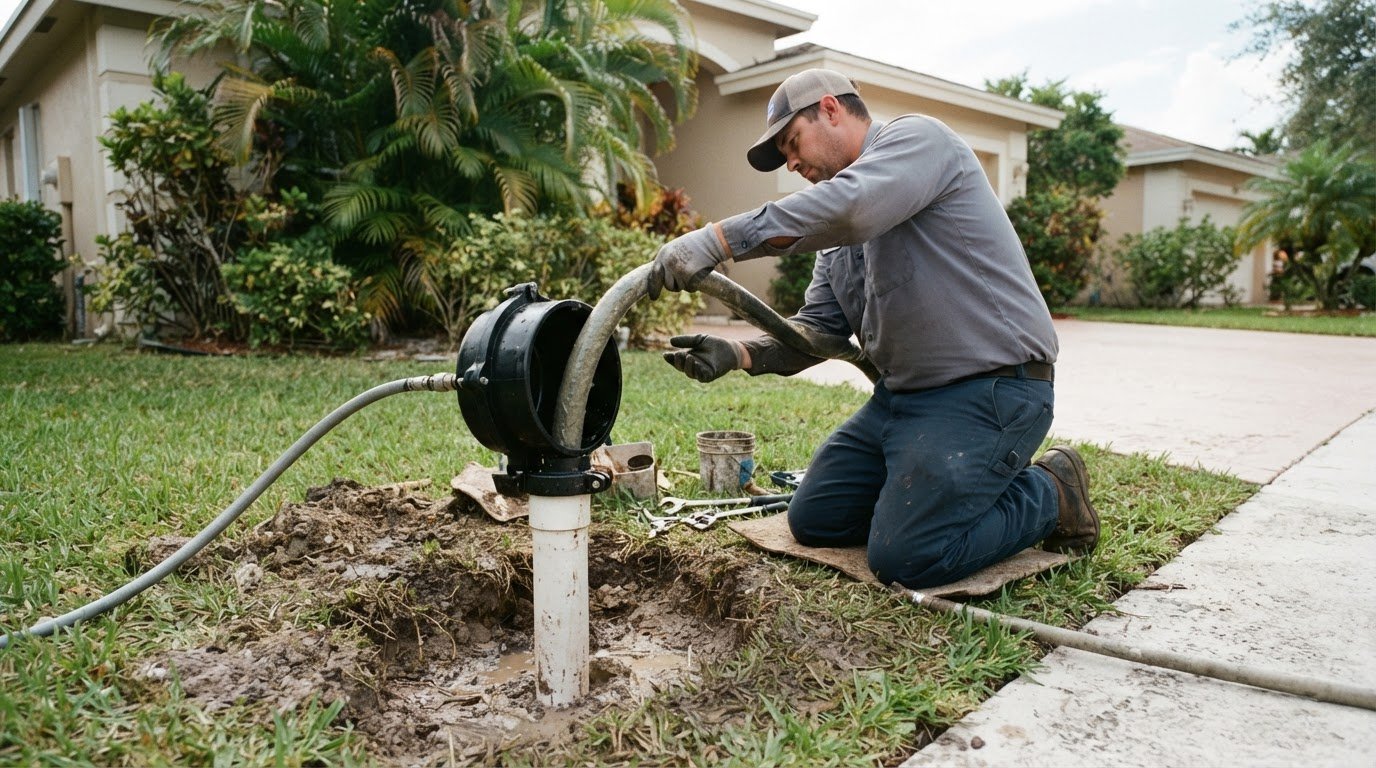
A damaged sewer line doesn’t automatically mean digging up the whole yard. Trenchless sewer line repair in Miramar typically uses a cleanout or one or two small access pits instead of a trench along the entire pipe; lining creates a new pipe inside the existing one. Excavation may still be needed when the damage or pipe condition makes a trenchless method unsuitable.
It’s reasonable to want a repair that limits disruption, but the least invasive option must suit the actual problem. Cracks, root intrusion, corrosion, shifted joints, and sagging sections affect pipes in different ways. The right choice depends on inspection findings, not just warning signs above ground.
This article explains how pipe lining works, which pipe conditions may suit it, and how it differs from pipe bursting and excavation. You’ll also learn why a camera inspection matters and why damage such as a pipe belly or failed connection may call for a targeted repair or digging. Knowing these differences helps you compare options and decide what to do next.
Key Takeaways
- Trenchless methods can limit surface disruption, but the right approach depends on the sewer line’s condition and layout.
- Pipe material and structural integrity help determine whether lining or another repair method is suitable.
- A camera inspection can reveal the pipe’s material, slope, and damage to guide repair-method selection.
- Recurring drain problems, odors, or wet areas may point to sewer-line trouble and deserve attention.
- Understanding what causes pipe damage can help you spot risks early and know when excavation may be necessary.
What Is Trenchless Sewer Repair?
Trenchless sewer repair renews or replaces an underground pipe without opening a trench along its full length. The work still needs access points, and the pipe’s condition determines whether lining, pipe bursting, or excavation is suitable.
Excavation Compared With Trenchless Methods
Traditional excavation exposes a sewer line by removing the ground above it. This gives workers direct access to the damaged section, but can disturb landscaping, paving, or other features over the pipe. Trenchless work limits surface disruption by using a cleanout or one or two small access pits instead of a continuous trench.
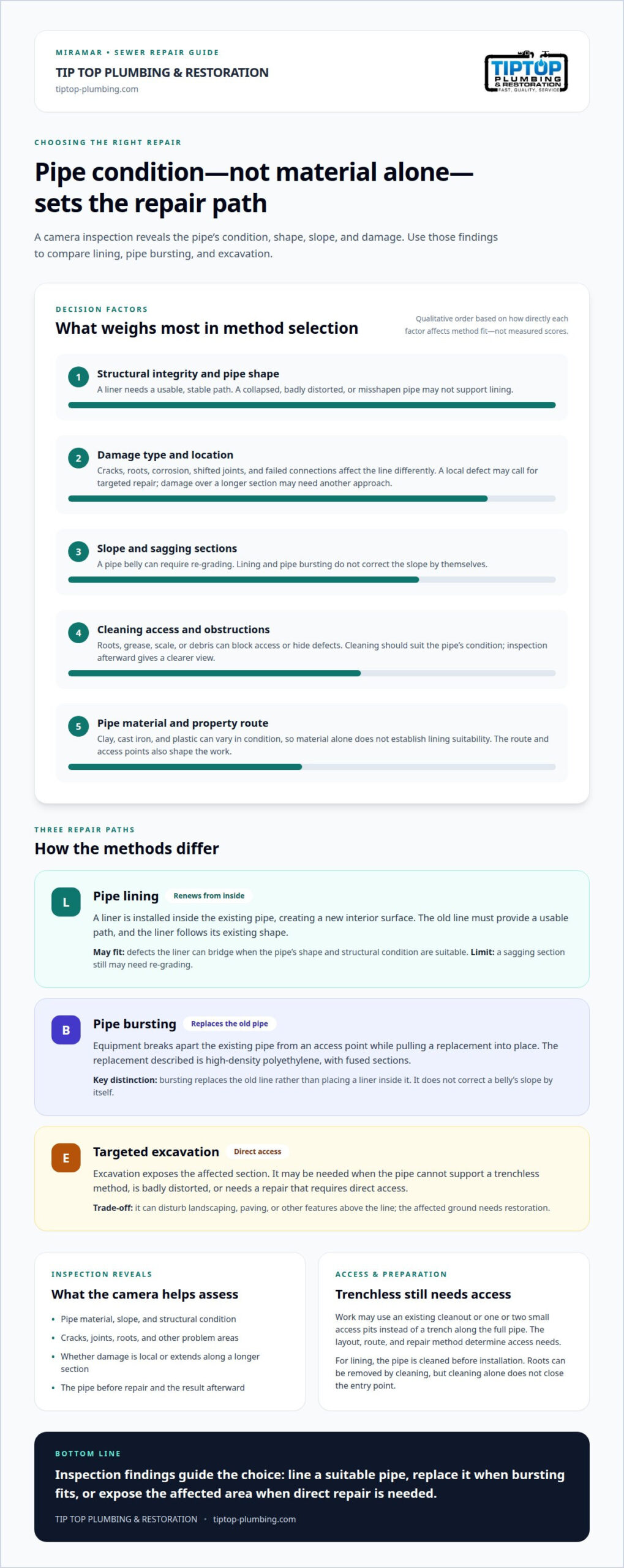
The methods address damage differently: lining forms a new pipe inside the existing one, while pipe bursting breaks apart the old pipe as a replacement is pulled into place. Consider the damage location, pipe structure, and route beneath the property. Because a liner follows the pipe’s existing shape, a sagging section may need re-grading rather than lining alone.
Access Pits and Site Preparation
Trenchless does not mean excavation-free. A crew may need one or two small pits to reach the sewer line, or use an existing cleanout if the layout allows. The location and size of access points depend on where work begins, the pipe’s route, and the repair method.
Site preparation starts with identifying the access route and protecting nearby surfaces. Consider what lies above the line, such as a driveway, garden bed, or walkway. Limited access can reduce the area disturbed, but pits still need room for equipment and the repair. The affected spots also need restoration afterward.
For lining, the pipe is cleaned so the liner can be installed against its interior surface. The U.S. Environmental Protection Agency says sewer rehabilitation includes cleaning and inspecting the line before and after the work. These steps help assess the pipe before repair and examine the result afterward. Pipe bursting follows a different process: equipment breaks apart the old pipe from an access point while pulling in a replacement.
Excavation remains useful when a damaged section needs direct access or the line cannot support the chosen trenchless method. A collapsed or badly distorted section, for example, may not provide a sound path for a liner. Preparation then involves exposing the affected area, reaching the pipe, completing the repair, and restoring disturbed ground.
For a sewer-line repair in Miramar, permit requirements depend on the work’s scope and applicable local rules. Confirm requirements with the city before excavation or replacement begins.
There is no single average cost for trenchless sewer repair in Miramar. The cost depends on the specific job and is provided after a quote request. Key factors include pipe length, damage, access, repair method, and surface restoration.
Pipe materials compatible with trenchless lining
Pipe material matters, but it does not determine suitability on its own. A camera inspection can identify the material and show whether the pipe’s structure and slope can support lining or another repair.
Lining and Pipe-Bursting Options
Pipe lining installs a new pipe within the existing sewer pipe, so the old line must provide a usable path for the liner. Pipe bursting takes a different approach: it breaks apart the existing pipe while pulling a replacement into place. The replacement described for this method is high-density polyethylene, with fused sections intended to avoid joints that can leak or admit roots.
Choose an approach based on the pipe’s condition and the repair goal. A liner follows the existing route and shape, while bursting replaces the old pipe. Neither method corrects the slope of a sagging section by itself.
Cured-in-Place Pipe Lining
Cured-in-place pipe, or CIPP, is a lining method. A flexible liner is placed inside the existing pipe and cured there, forming a new interior surface. Its fit depends on the line’s shape, size, and structural condition, so a damaged or obstructed pipe needs assessment before choosing this method.
Ask what the inspection reveals about cracks, joints, roots, and the pipe’s overall condition. These findings help determine whether the line can support a liner or is better suited to replacement.
Material alone does not determine whether a pipe is suitable for lining. Clay, cast iron, and plastic lines can vary in age, wear, joints, and deformation. A camera inspection checks the material, slope, and structural condition to help determine whether lining or another repair is needed. A collapsed or misshapen pipe may not provide a stable channel for a liner.
Cleaning is part of preparation because roots, grease, scale, and debris can block access or hide defects. Mechanical cleaning uses tools to remove obstructions, while hydro-jetting uses pressurized water to clear buildup. The method should suit the pipe’s condition, since forceful cleaning may be inappropriate for a fragile line. Inspection after cleaning provides a clearer view of the pipe’s surface and problem areas.
Tree roots can enter through joints or openings, obstruct flow, and worsen existing damage. Cleaning can remove root growth from the pipe, but it does not close the entry point. Lining may address suitable defects from inside the pipe; extensive deterioration or a failed connection may need a different repair. Camera footage helps locate the issue and distinguish a local defect from damage along a longer section.
Before choosing a method, consider whether the pipe is open enough to clean, keeps its shape, and has damage a liner can bridge. If it’s badly deteriorated, pipe bursting may replace it; if it has a belly, re-grading may be needed. Schedule a sewer-line assessment to discuss the condition and cleaning needs.
When is residential excavation necessary?
Excavation becomes necessary when the sewer line’s condition or layout prevents a sound trenchless repair. A video inspection helps identify those limits and compare practical repair methods.
Miramar permit and contractor requirements depend on the repair scope and applicable local rules. Trenchless work alone does not determine whether a permit, inspection, or licensed plumbing contractor is required.
A sewer camera inspection shows the pipe’s material, slope, and structural condition. It can reveal whether the main sewer has a stable interior for lining, can be burst and replaced, or needs direct access. Footage can also show roots, cracks, offsets, and standing water, which may change the repair plan.
Repair planning starts with inspection findings, not surface symptoms. A camera may show a localized hole with sound pipe around it, or a belly where wastewater collects because the line has lost its proper grade. Since a liner follows the pipe’s existing shape, it will not correct a low section. Re-grading or excavation may be needed to restore the slope.
The U.S. Environmental Protection Agency says sewer rehabilitation includes cleaning and inspecting the line before and after the work. Cleaning removes debris that might obscure the camera view, while post-work inspection helps assess the completed repair. Together, these steps provide a clearer basis for choosing a method and evaluating the result.
A typical trenchless repair sequence follows these steps:
- Inspect the sewer line with a camera to map defects, material, slope, and access points.
- Clean the pipe so deposits or roots don’t block inspection or interfere with rehabilitation.
- Select a method based on the footage, such as lining, pipe bursting, or a targeted repair.
- Prepare access through a cleanout or limited excavation, then complete the selected work.
- Inspect the line again to review the result and identify remaining defects.
Excavation is more likely when a pipe has collapsed, has a severe belly, or cannot hold a liner. A failed sewer lateral connection generally needs repair at the connection rather than lining. If the rest of the line is sound, a localized defect may allow a focused repair instead of replacement of the entire run.
Trenchless methods have limits. A liner cannot straighten a sagging pipe, and bursting depends on the existing line and surrounding conditions being suitable for replacement. Roots may be cleared during preparation, but camera footage must show whether the pipe remains structurally sound. Excavation can disturb landscaping, yet it provides direct access when damage or a connection needs hands-on repair.
Signs of a failing sewer line
A sewer-line problem can appear indoors, outdoors, or at several drains at once. A single slow sink may point to a local blockage, while recurring backups in a toilet and shower can suggest trouble farther along a shared drain path. Symptoms help indicate urgency, but they do not reveal the pipe’s exact condition or prove trenchless repair is suitable.
Watch for symptoms that return after ordinary drain use resumes. Wastewater backing up through a floor drain, repeated toilet gurgling, or several fixtures draining poorly can indicate restricted flow in the main sewer. A persistent sewage odor near a drain or outdoors is another warning sign. Note where and when symptoms occur, such as a backup after laundry drains, and share those details during inspection.
- Recurring backups: Wastewater returning through a shower, toilet, or floor drain can signal an obstruction or damaged section downstream.
- Several slow fixtures: A slow kitchen sink alone differs from slow sinks and showers across the home; patterns help locate the affected branch or main sewer.
- Gurgling sounds: Bubbles or unusual sounds from a toilet after another fixture drains may accompany restricted flow.
- Sewer odors: A persistent smell near a drain or in the yard warrants attention, especially alongside backups or slow drainage.
- Changes outdoors: A soggy patch, unexplained pooling, or unusually lush strip of landscaping above the sewer route may indicate a leak.
Do not dismiss repeated symptoms as a routine clog without considering the pattern. A blockage can cause similar signs, but a cracked pipe, root intrusion, offset joint, or sagging section needs a different diagnosis. Fixtures connect through branches, so a problem limited to one bathroom may not involve the sewer line serving the whole property. The location and combination of symptoms help guide the next step.
A sewer camera inspection can show whether the line contains roots, standing water, cracks, or a collapsed area. The footage helps distinguish a cleanable obstruction from structural damage that may need trenchless lining, pipe bursting, or excavation. A liner follows the pipe’s shape, so it will not correct a belly that holds wastewater. Bursting replaces the existing pipe, while a failed lateral connection may need repair at that connection.
Act promptly if sewage backs up into living areas or a wet outdoor patch keeps returning. Avoid using affected fixtures until the immediate issue is assessed, and keep people away from contaminated water. Restoring normal flow starts with identifying the source, not repeatedly clearing symptoms. Record affected drains, odors, and outdoor changes to give the inspection a useful starting point.
Causes of sewer-line damage
A sewer line can fail through gradual wear or sudden physical damage. The cause matters because a crack, root-filled joint, and collapsed section require different repairs. Identifying what damaged the pipe helps distinguish a localized fix from replacement of a longer run.
Tree roots seek moisture and can enter through small openings or joints in an existing pipe. Once inside, they may catch waste and debris, narrowing the passage and adding strain to the damaged area. Repeated blockages in the same location can be a clue. A camera inspection can show whether roots entered through one joint or spread along a deteriorated section.
Ground movement can shift a pipe out of alignment. If one section settles lower than the next, the resulting belly can hold wastewater and solids instead of letting them flow away. A shifted joint may also leave an opening for roots or soil to enter. Because trenchless lining follows the existing pipe’s shape, it will not correct a slope problem; the repair plan must address the underlying alignment.
Material deterioration is another possible cause. Older clay pipes can crack or separate at joints, while metal pipes can corrode over time. Plastic pipes can also suffer damage from external pressure or poor support. Material alone does not determine the repair method: inspection findings, including breaks, deformation, and joint condition, show whether the line can be lined or needs replacement.
Installation problems can contribute to later damage. A pipe laid without consistent support may sag, while a poorly aligned connection can create a spot where waste catches. Earlier digging or construction may also disturb a buried line if heavy equipment crosses its route or soil is removed nearby. Keep records of work around the property; dates and locations can help connect new symptoms with a possible disturbance.
Everyday use can worsen an existing weakness. Grease, wipes, and other unsuitable debris can build up inside a line and increase the chance of recurring blockages. Mechanical cleaning or hydro-jetting may remove buildup, but cleaning does not repair a cracked pipe or failed joint. If the same obstruction returns, inspection can determine whether structural damage is contributing.
The cause guides the repair method. A repairable section may suit lining; a line that needs replacement may be a candidate for pipe bursting, which breaks apart the old pipe as a new one is pulled into place. A severe belly, collapse, or failed lateral connection may require excavation. A camera inspection connects visible damage to a practical repair plan.
Tip Top Plumbing & Restoration: Emergency Plumbing
Tip Top Plumbing & Restoration can help when recurring backups or a damaged sewer line need professional attention. Its Sewer Repiping Services address sewer-pipe replacement needs when inspection points to replacement rather than lining. For an urgent plumbing problem, Emergency Plumbing provides a direct next step.
Share the symptoms you have noticed, such as repeated backups or several slow drains, along with any available inspection findings. This context helps clarify whether the issue needs emergency plumbing attention or a discussion about repiping. The right approach depends on the pipe’s condition and the repair required.
Contact Tip Top Plumbing & Restoration to discuss your sewer-line problem.
Move Forward With a Clear Repair Plan
Keep a clear record to support your next decision. Gather the inspection findings, proposed repair scope, and notes about affected areas; these details are useful when coordinating access, restoration, or future plumbing work. For trenchless sewer line repair in Miramar, ask how the recommended work addresses the specific defect, which parts of the property will be disturbed, and how completion will be documented. Clear answers help align the project with your priorities for the property.
Every sewer issue needs a plan based on the actual line, not a default method. Understand the proposed scope, know what restoration involves, and keep the inspection record with your home files. Clear communication helps you move forward with a better understanding of the work and its effect on your property.
A clear plan makes the next step easier.
Frequently Asked Questions
If my line was cleared, is the pipe repaired?
No. Clearing removes an obstruction, but it does not close a crack, reconnect a shifted joint, or restore a collapsed section. For example, a drain may flow again after root removal even though the entry point remains open. If backups return or several fixtures are affected, note the pattern and arrange a camera inspection. This can distinguish a recurring blockage from structural damage that needs repair.
What are the signs your sewer line is failing?
Recurring backups, several slow fixtures, persistent sewer odors, and damp ground above a sewer route can signal a failing line. Consider the combination of symptoms: a toilet that gurgles when a nearby shower drains, followed by a floor-drain backup, suggests a broader flow problem than one slow sink. Record which fixtures are affected and when symptoms occur. This timeline can help focus the inspection.
Who Is Trenchless Pipelining For?
Trenchless pipe lining can suit property owners whose sewer pipe has defects but retains a shape and structure that can support a liner. Camera footage can show whether cracks, root entry, or worn joints may be repaired from inside. A collapsed line, severe sag, or failed lateral connection may need a different approach. The key question is whether the existing pipe provides a stable route for lining.
What trenchless sewer line repair methods are available in Miramar, Florida?
Options include pipe lining, pipe bursting, point repair, and pipe coating. Lining forms a new pipe inside the existing one; bursting breaks apart the old pipe while pulling a replacement into place. Point repair targets one defect when the rest of the line is sound. Coating may suit a pipe too small for lining or one with numerous connections to reinstate. Inspection findings guide the choice.
Which sewer pipe materials and damage types can be repaired trenchlessly?
Material is only one part of the decision. A camera inspection identifies the pipe material and shows its slope, shape, joints, and structural condition. Cracks, root intrusion, or an isolated hole may suit lining or point repair if the surrounding pipe remains sound. A badly collapsed or distorted section may not hold a liner. A belly needs attention to its grade because a liner follows the pipe’s existing shape.
How does trenchless sewer repair compare with traditional excavation?
Trenchless repair usually reaches the sewer through a cleanout or limited access pits, reducing the surface area opened compared with a trench along the entire line. That can matter beneath a paved driveway or established garden. Traditional excavation exposes the pipe directly and may be necessary for a collapse, grading problem, or failed connection. Compare the proposed repair area and restoration needs, not just the method’s name.
How long does trenchless sewer repair take, and how long does the repair last?
For residential sewer repairs, a general rule of thumb is one liner per day; preparation, access, and pipe condition also affect the project schedule. A properly installed trenchless liner or replacement pipe is designed for a service life measured in decades. These are general planning points, not a timetable for every property. Inspection findings and the chosen method determine the work involved and expected repair scope.
Disclaimer
The information provided in this article is for general educational and informational purposes only and should not be considered professional plumbing, restoration, mold remediation, or legal advice. Every plumbing system, property, and situation is unique, and the recommendations discussed may not apply to your specific circumstances.
While Tip Top Plumbing & Restoration strives to provide accurate and up-to-date information, we make no warranties regarding the completeness, accuracy, or reliability of the content. Any actions you take based on this information are at your own risk.
Plumbing repairs, water damage restoration, and mold remediation should be performed by qualified professionals and in accordance with applicable local building codes and regulations. If you are experiencing a plumbing emergency, water leak, or property damage, contact a licensed professional for an on-site evaluation.
Tip Top Plumbing & Restoration is licensed and insured to provide plumbing and restoration services throughout Broward County, Florida.