

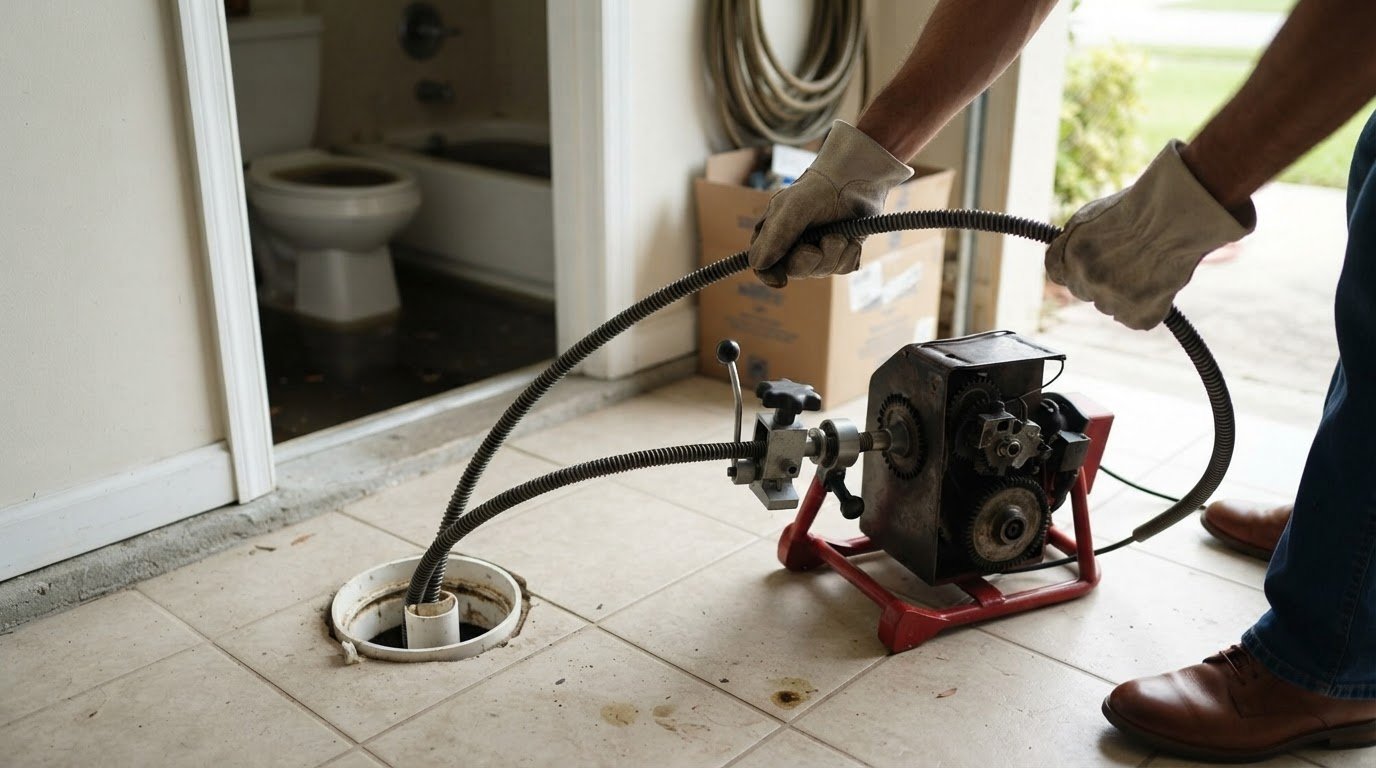
For sewer line repair in Cooper City, act promptly if multiple drains back up: stop running water and arrange a sewer inspection. Sewage rising into tubs or toilets, strong sewer odors indoors, or several fixtures failing at once calls for emergency attention. These signs may point to a problem beyond an ordinary drain clog.
A sewer issue can feel urgent, especially when wastewater threatens to enter your home. The right next step depends on the cause of the backup and how much of the pipe is affected. An inspection can help distinguish a blockage from damage that needs repair.
This guide covers warning signs, when to arrange repairs, and how a camera inspection can identify the problem. You’ll also learn how trenchless lining and pipe replacement differ, and what to expect when a sewer problem needs emergency attention.
Key Takeaways
- If more than one drain backs up, stop running water and arrange a sewer inspection.
- Recurring backups can signal roots, cracks, pipe shifts, low spots, or deterioration; a camera inspection helps pinpoint the cause.
- Trenchless lining or pipe bursting may reduce digging, but the pipe’s condition and structure help determine whether either method is suitable.
- Consider emergency attention if sewage backs up into tubs or toilets, strong sewer odors enter the home, or several fixtures fail at once.
- Repair and replacement estimates depend on factors such as pipe access, the extent of damage, labor, and site restoration.
Should You Arrange Sewer Line Repairs Now?
If multiple drains back up, stop running water and arrange a sewer inspection. For sewer line repair in Cooper City, the right solution depends on the damage, pipe condition, access, and whether a lasting repair is possible. When you need reliable service throughout the local area, Tip Top Plumbing & Restoration is ready to help diagnose and resolve your plumbing issues.
Repair and Replacement Options
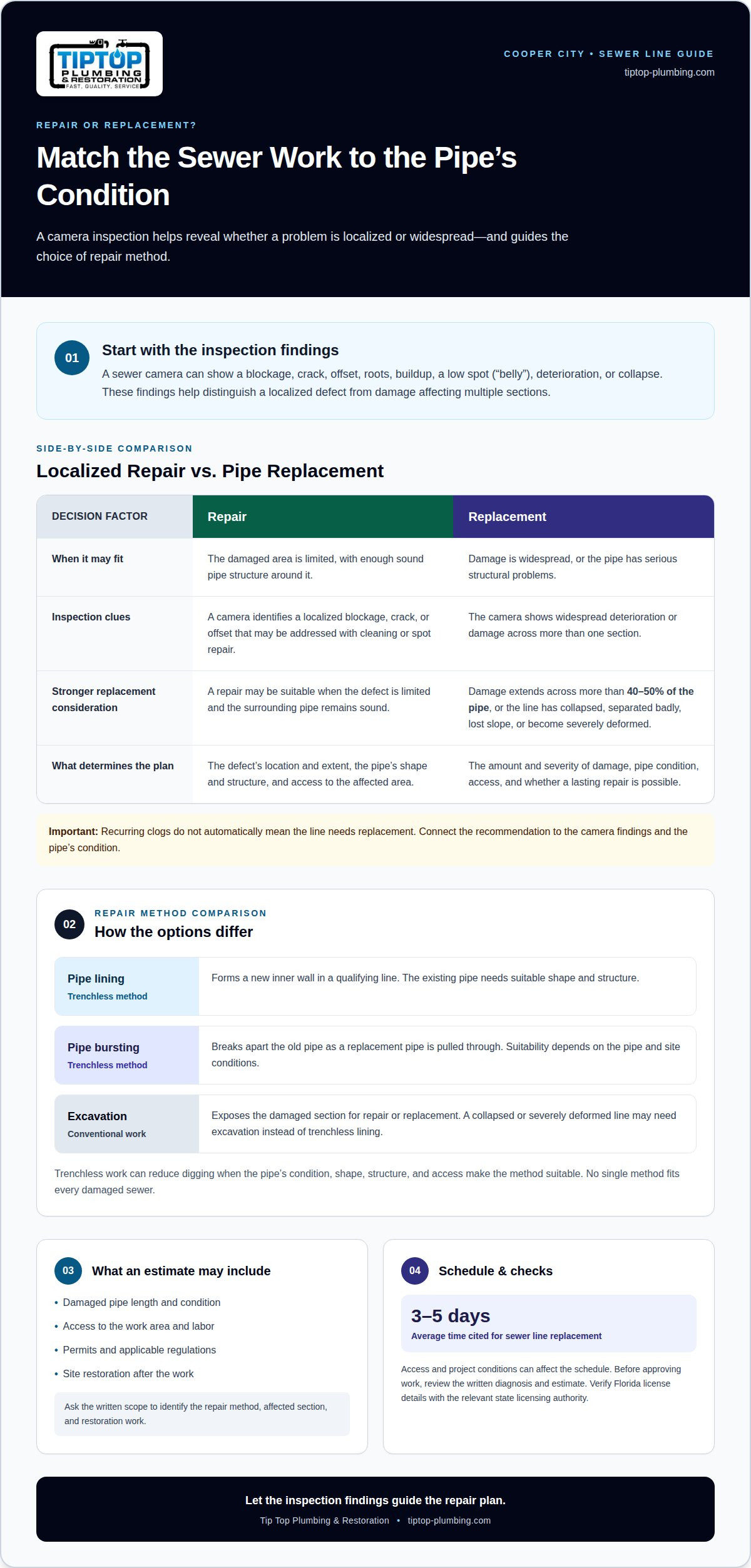
Sewer line work can address a localized defect or replace a damaged pipe section. A camera inspection can show whether the issue is a blockage, crack, offset, or widespread deterioration. Those findings help determine whether cleaning or spot repair may resolve it, or whether sewer line replacement is more suitable. If sewage is backing up through fixtures, limit water use until the cause is identified.
Choosing Between Repair and Replacement
A repair may suit a pipe with a limited damaged area and enough sound structure around it. Replacement becomes a stronger long-term consideration when damage extends across more than 40-50% of the pipe, or when the line has collapsed, separated badly, lost slope, or become severely deformed. A professional assessment from Tip Top Plumbing & Restoration should connect the inspection findings to the recommended work, rather than treating every recurring clog as a replacement job.
To choose a licensed sewer line contractor in Cooper City, ask for Florida license details and verify them with the relevant state licensing authority. Review the written diagnosis, proposed work, and what the estimate includes before approving the project.
Trenchless Service Methods
Trenchless methods can reduce digging when the existing pipe’s condition, shape, structure, and access make them suitable. Pipe lining forms a new inner wall in a qualifying line, while pipe bursting breaks apart the old pipe as a replacement is pulled through. Neither method fits every damaged sewer. A collapsed or severely deformed line may need excavation and conventional replacement instead.
Estimate Factors and Financing
An estimate from Tip Top Plumbing & Restoration may reflect the damaged pipe’s length and condition, access to the work area, labor, permits, applicable regulations, and site restoration. For example, a line beneath a surface that needs reinstatement involves different restoration work from an accessible pipe. Ask for a scope that identifies the repair method, affected section, and restoration work. Replacing a sewer line takes about three to five days on average, though access and project conditions affect the schedule.
Florida homeowners insurance coverage for sewer-line damage depends on the policy terms and reported cause. Review the policy language and discuss the specific damage with your insurer. If considering financing, examine the repayment schedule, fees, and total amount due before agreeing to terms.
How can you tell if a sewer pipe is broken?
Recurring backups can point to damage that ordinary drain cleaning won’t resolve. A camera inspection can show what’s happening inside the pipe and help guide the repair plan.
Pipe Damage and Deterioration
Tree roots can enter small openings and grow inside sewer lines, catching debris and restricting flow. Cracks may allow roots or surrounding soil to intrude, while an offset occurs when connected pipe sections shift out of alignment. These faults can cause recurring blockages even after a drain has been cleared.
A belly is a low section where wastewater and debris can collect instead of flowing freely. Pipe deterioration can weaken the line, and a severely damaged section may collapse. Material and age matter: sewer lines are described as lasting between 50 and 100 years, depending on material, while PVC lines may last around 100 years.
Clay and cast-iron pipes can deteriorate over time, while metal pipes may corrode. A technician considers the damage’s location and extent, the pipe’s shape and structural condition, and access to the affected area. Those findings help determine whether repair, lining, bursting, or excavation is appropriate.
Camera-Based Problem Diagnosis
Plumbers diagnose sewer problems by inspecting the line, often with a sewer camera. The camera can reveal visible roots, cracks, offsets, bellies, buildup, deterioration, and collapse, helping pinpoint damage before repair work is planned.
During a camera inspection, a technician guides a camera through the sewer line and reviews the pipe’s interior. The inspection can distinguish a localized defect from damage affecting multiple sections. That difference matters: a small damaged area may call for targeted repair, while widespread deterioration may require replacement.
Access and pipe condition also shape the repair method. Trenchless lining can create a new inner wall in a qualifying line, but the pipe needs suitable structure and shape. Pipe bursting replaces the existing line with a new pipe, while excavation exposes the damaged section for repair or replacement. A collapsed pipe may not have enough structure for lining.
Camera findings help connect the visible defect to a practical next step, rather than treating every backup as the same problem. If recurring clogs or suspected pipe damage need investigation, schedule a camera inspection to identify the affected area and inform repair planning.
WHAT ARE SIGNS OF A DAMAGED SEWER LINE?
Gurgling toilets, persistent sewer odors, and several slow drains can point to sewer problems. Notice how fixtures behave together, because trouble affecting multiple drains may indicate a main sewer line restriction.
Warning Signs Around the Home
A toilet that gurgles after flushing may be struggling to move wastewater through the pipe. Foul odors from drains or the yard can also signal a sewer issue. Take recurring symptoms seriously, particularly when they occur alongside slow sinks, tubs, or showers.
Notice whether one fixture or several are affected. A clog isolated to one sink can have a different cause from backups in multiple drains. Water rising in a tub or shower when a toilet is flushed is another warning sign that the sewer line may need attention.
How Tree Roots Cause Sewer Problems
Tree roots can enter sewer pipes through small openings and grow into the line. As roots expand, they can catch toilet paper, debris, and other material, creating blockages that restrict wastewater flow. Repeated clogs may return after cleaning if roots remain inside the pipe.
Root intrusion can damage the pipe itself, not just obstruct it. Growing roots can worsen an existing crack or shift connected sections; severe damage may contribute to a collapse. A camera inspection can identify visible roots and show whether the line also has cracks, offsets, or other damage.
Other Causes and Patterns
Roots aren’t the only cause. Aging clay or cast-iron pipes can deteriorate, while grease and debris can accumulate inside a line. Ground or soil movement may displace pipe sections. Corrosion can weaken metal pipes, and an improperly sloped line can allow wastewater to collect rather than flow away.
Look for patterns rather than relying on one symptom. Recurring backups in multiple fixtures, for example, suggest a broader restriction, while one slow drain may reflect a localized clog. Gurgling, odors, and slow drains appearing together are stronger reasons to investigate the sewer line than any one sign alone.
When to Treat It as an Emergency
Sewage backing up into toilets or tubs, strong sewer odors indoors, or several plumbing fixtures failing at once calls for emergency sewer repair. If backups are spreading through the home, stop using water, since additional wastewater can worsen the mess. Keep people away from sewage and arrange a prompt inspection to locate the source.
In Cooper City homes, a camera inspection can help distinguish root blockages from pipe deterioration, poor slope, or a collapsed section. The diagnosis guides the next step: clearing a removable obstruction, repairing localized damage, or planning replacement when the pipe cannot function reliably.
Trenchless pipe lining and pipe bursting
Trenchless sewer repair uses lining or pipe bursting to address certain damaged lines with minimal digging. The right method depends on the pipe’s condition, structure, shape, and access.
CIPP Pipe Lining
Cured-in-place pipe lining, or CIPP, creates a new inner wall in a qualifying sewer line. It may address cracks, worn sections, and root entry points while reducing the need to dig up landscaping. It isn’t suitable for every pipe: the existing line needs enough structure and a usable shape for lining.
Before planning lining, a technician needs a clear view of the pipe’s interior. A camera inspection can locate damage and show whether the line is suitable for this approach. If buildup or grease obstructs the view, cleaning may be needed first. Hydro jetting can clean a qualifying line when its condition can support the process.
Pipe Bursting and Replacement
Pipe bursting is another trenchless option. It breaks apart the existing pipe while a replacement is pulled through its route, limiting excavation compared with exposing the entire line. This can matter when a sewer line runs beneath landscaping or other areas that would need restoration after digging.
Pipe bursting still requires suitable access and a route for the replacement line. An inspection helps establish whether the method can address the damaged sections. If the pipe has collapsed or lacks enough structure for trenchless work, excavation may be needed to reach and replace the affected area.
Cleaning, Inspection, and Planning
Cleaning and inspection serve different purposes. Drain cleaning removes obstructions such as grease or debris; it doesn’t repair a cracked, displaced, or deteriorated pipe. A camera inspection helps show whether a blockage is the main issue or whether pipe damage calls for repair or replacement.
For example, a line with a removable obstruction and sound structure may need cleaning, while cracks or worn sections may make lining worth considering. Severe damage, poor access, or a collapsed section can shift the plan toward excavation. The repair method should match the inspection findings, not just the symptom.
An estimate can account for access, labor, permits, applicable regulations, and restoration after the work. Landscaping affected by excavation may require different restoration than a trenchless project. A camera-based assessment helps define the damaged area and the work involved; schedule a sewer inspection to inform repair planning.
Emergency sewer service
Sewage backing up into tubs or toilets, strong sewer odors indoors, or several plumbing fixtures failing at once calls for emergency sewer repair. These signs can indicate a restriction or damaged section affecting the main line. Stop using plumbing fixtures, since flushing, laundry, or dishwashing can add wastewater and worsen backups.
What to Do During a Sewer Backup
Start by limiting water use throughout the property, not just at the fixture showing sewage. If a toilet backs up while a shower is running, pause both and avoid testing other drains. Note which fixtures are affected and when the problem began. Those details help the technician understand the pattern and plan an inspection.
- Stop flushing toilets and running faucets, showers, washing machines, and dishwashers.
- Keep people away from areas where sewage has backed up.
- Note whether odors or backups occur at multiple fixtures or one location.
- Describe recent symptoms, such as repeated clogs or gurgling, during the service call.
These steps limit additional wastewater entering the plumbing system while the source is assessed. Avoid pouring drain chemicals into fixtures as a substitute for diagnosis. Chemical treatment may not address a blocked or damaged sewer line, and it won’t correct a collapsed pipe.
Inspection Before the Repair Method
Emergency work starts by identifying whether the problem is a removable blockage or pipe damage. A camera inspection can reveal roots, buildup, cracks, offsets, or a collapsed section inside the sewer line. The technician uses those findings to determine whether cleaning, localized repair, trenchless work, or excavation fits the condition.
For example, grease or debris may call for cleaning when the pipe remains structurally sound. A damaged section may require repair or replacement instead. Trenchless methods can reduce digging when the pipe and access are suitable; severe collapse may require excavation. The inspection guides the method rather than treating every backup as the same clog.
Residential and Commercial Backups
In a home, simultaneous problems in toilets, tubs, and other drains can signal a shared sewer-line issue. In a commercial property, multiple affected fixtures can disrupt restrooms and daily operations. In either setting, report the affected areas, where sewage is appearing, and whether water use has stopped. Clear details support a focused plumbing diagnosis.
Once the immediate backup is contained, repair planning should address the underlying cause, not just restore flow temporarily. Camera findings help define the affected section and whether cleaning or structural repair is needed. For emergency sewer plumbing, request emergency plumbing service.
Tip Top Plumbing & Restoration
Tip Top Plumbing & Restoration helps Cooper City property owners address sewer concerns with Emergency Plumbing and Sewer Repiping Services. If recurring backups, suspected pipe damage, or sewage intrusion disrupts your home, the next step is a professional assessment to understand the issue and discuss suitable repair or replacement options.
The right approach depends on the sewer line’s condition and the extent of the damage. Clear findings can help you understand whether the problem calls for a focused repair or repiping, and what work may be needed to restore reliable flow.
Contact Tip Top Plumbing & Restoration to discuss your sewer line concerns and next steps.
Make a Clear Plan for Your Sewer Line
The next step is turning inspection findings into a decision you can act on. Before approving work, make sure the proposed scope identifies the affected pipe section, explains why the repair method suits its condition, and describes any site restoration involved. This gives you a practical basis for planning household access and discussing the work.
If sewer symptoms return or worsen, don’t let uncertainty delay a professional assessment. A clear diagnosis can help you decide what needs attention and what work suits your property. For sewer line repair in Cooper City, focus on a plan based on the pipe’s actual condition, not guesswork from one symptom.
Tip Top Plumbing & Restoration can help with your sewer concerns. Reach out to discuss your situation and arrange the next step.
A considered next step can make a stressful plumbing problem easier to manage.
Tip Top Plumbing & Restoration for Sewer Line Repair in Cooper City
Tip Top Plumbing & Restoration offers drain and sewer services, camera inspections, drain cleaning, and hydro jetting. If you have a sewer line concern, these services can help assess the issue and determine the next step.
Turn to Tip Top Plumbing & Restoration for sewer-related inspection or service. The company also offers Emergency Plumbing and Sewer Repiping Services when you need plumbing support or repiping.
Frequently Asked Questions
How long should sewer pipes last before needing replacement?
Sewer pipes can last between 50 and 100 years, depending on their material; PVC lines may last around 100 years. Age alone doesn’t determine whether replacement is due. A line that still functions may not need immediate work, while recurring problems can warrant inspection before its expected lifespan ends. Keep records of past repairs and pipe material, since those details help interpret new symptoms.
Do all sewer problems require replacement?
No. A removable blockage may respond to cleaning, while a localized defect may be addressed with a targeted repair. Replacement is more likely when damage is extensive or the pipe can no longer support repair methods. A recurring clog, for example, doesn’t automatically mean the whole line is damaged. The key distinction is whether the issue is limited to an obstruction or involves the pipe’s structure.
Do I have to get a permit to install a new sewer line?
A new sewer line installation may require permits depending on the work’s scope and applicable local requirements. Replacement along a different route may involve different permitting considerations from a limited repair. Before work begins, the project scope should identify which permits apply and how they will be handled. Permit requirements are separate from the technical decision about which repair method fits the pipe.
What affects sewer repair cost?
The cost depends on the damage and the work needed to address it. Factors can include the affected pipe length, access to the line, labor, permits, and restoration after the repair. Work beneath a surface that needs restoration, for example, can involve different tasks from work on an accessible section. The chosen method also matters because lining, replacement, and excavation involve different scopes of work.
What is the average price for replacing a sewer line?
There isn’t one useful average for every replacement because project scope can vary substantially between properties. The price depends on the case and is provided after a quote request. Important cost factors include pipe condition and length, access, labor, permit requirements, replacement method, and site restoration. An estimate should reflect the work planned for the property, not a generic figure.
What are common signs of a damaged sewer line?
Several slow drains, recurring backups, unusual gurgling, or sewer odors can indicate a sewer-line issue. Notice whether symptoms occur in separate fixtures at the same time. Trouble in a toilet and a bathtub, for example, may point to a shared line rather than one isolated drain. Note when symptoms appear and which fixtures are affected; that pattern can help focus the inspection.
How much does sewer line repair cost in Cooper City, FL?
The price depends on the specific case and is provided after a quote request. In Cooper City, the estimate is shaped by the pipe’s condition, the location and extent of damage, access for the work, and whether repair or replacement is appropriate. Restoration needs and permit requirements can also affect the scope. A camera inspection can help identify the damaged area and inform the estimate.
What factors affect the cost of sewer line repair or replacement?
Beyond the repair method, the route to the damaged section and the condition of nearby pipe can affect the work involved. Repairing one accessible area differs from work requiring excavation and surface restoration. The estimate should distinguish the repair itself from related tasks, such as permits or restoring the site afterward. Understanding those parts helps homeowners see what the proposed scope covers.
Disclaimer
The information provided in this article is for general educational and informational purposes only and should not be considered professional plumbing, restoration, mold remediation, or legal advice. Every plumbing system, property, and situation is unique, and the recommendations discussed may not apply to your specific circumstances.
While Tip Top Plumbing & Restoration strives to provide accurate and up-to-date information, we make no warranties regarding the completeness, accuracy, or reliability of the content. Any actions you take based on this information are at your own risk.
Plumbing repairs, water damage restoration, and mold remediation should be performed by qualified professionals and in accordance with applicable local building codes and regulations. If you are experiencing a plumbing emergency, water leak, or property damage, contact a licensed professional for an on-site evaluation.
Tip Top Plumbing & Restoration is licensed and insured to provide plumbing and restoration services throughout Broward County, Florida.