

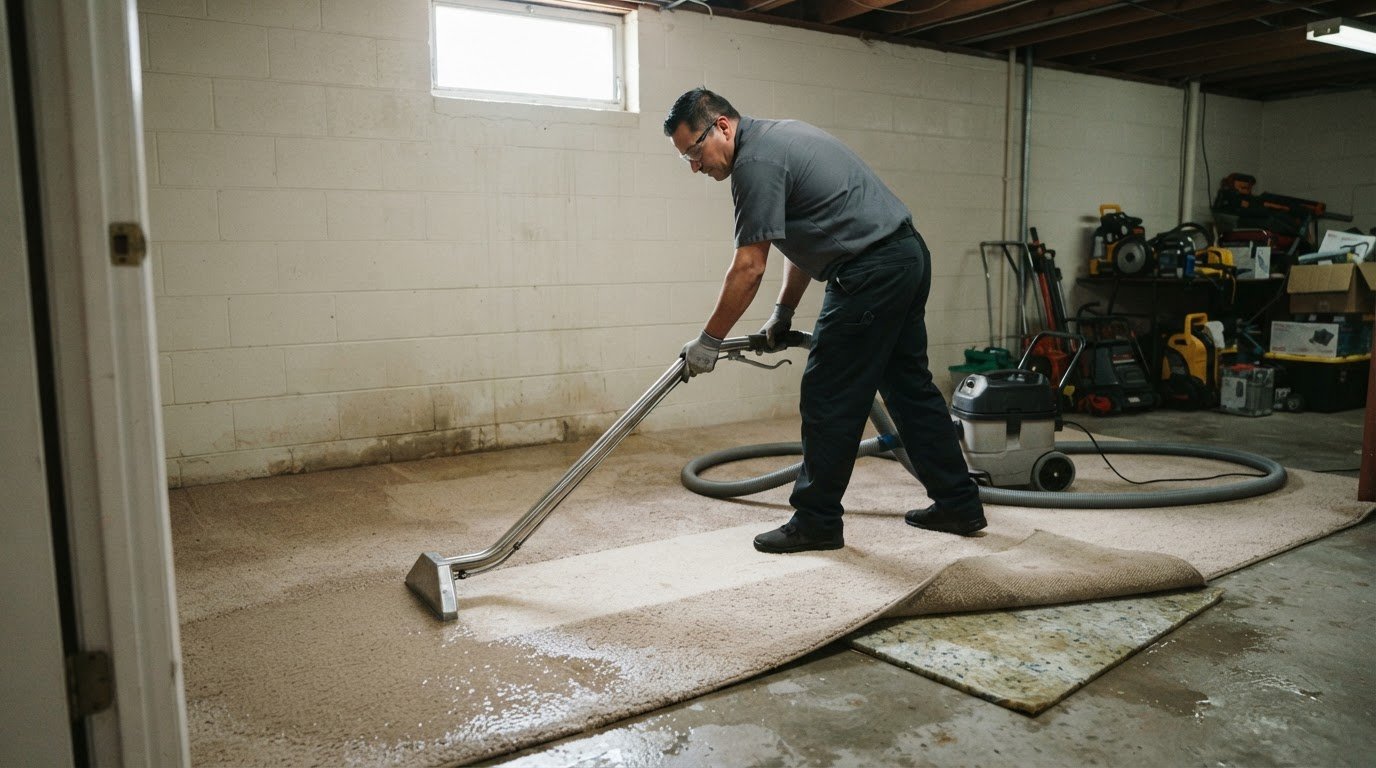
If it is safe, stop the water source, then arrange professional restoration promptly. Basement water removal in Copper City begins with limiting further water entry and assessing how far moisture has spread. If water is still coming in, stay out of any area that may be unsafe.
Finding water below your home is stressful, and a prompt response matters. Removing visible water is only part of the job: moisture can remain in flooring, walls, and other materials even when the surface looks dry. When you need expert help, Tip Top Plumbing & Restoration is ready to assist.
This guide explains what to do first, how extraction and structural drying work, and what to expect during an emergency response. You’ll also learn which signs suggest water has spread beyond a simple cleanup and how professional moisture checks help determine when drying is complete.
Key Takeaways
- If you discover water, stop its source if it’s safe and arrange professional help promptly.
- Water removal is only the first step; moisture checks help identify damp materials that still need drying.
- According to the U.S. Environmental Protection Agency, drying wet materials within 24-48 hours after flooding significantly reduces the risk of mold growth.
- Water from storms, plumbing, and appliances can require different response steps, so identifying the source helps guide the cleanup.
- Water that has spread across rooms, soaked building materials, or reached electrical areas calls for a prompt, careful response.
What’s the first thing I should do when I discover water damage?
If it is safe, stop the water source and contact a restoration professional promptly. For a leaking pipe, shut off the water supply if you can reach the valve without entering standing water. If you can’t identify the source, note where water appears and whether it continues to spread. A timely inspection can help distinguish an active plumbing leak from stormwater entering the basement.
Stay out of areas where water has reached outlets or wiring. Don’t step into standing water if electrical equipment may be affected, and don’t enter a basement with an active leak you can’t safely control. Move people and pets away from the affected area. If water has spread across rooms or soaked drywall or subflooring, professional assessment is appropriate.
The water source can help indicate whether it may be clean, gray, or sewage-contaminated. A supply-pipe leak differs from water that has contacted an appliance, drain, or sewer backup. Color and smell alone can’t reliably establish what the water contains. If you can’t identify the source, treat it as uncertain and avoid direct contact, especially if sewage may be involved. The cleanup method depends on the source and the materials the water reached.
For discharge and flood-cleanup rules in Cooper City, the appropriate route depends on the water source and where it will go. Don’t assume basement water can be pumped into any drain or outdoor area. Keep it contained while the disposal method is determined, especially if stormwater may have mixed with sewage or other contaminants.
Florida homeowners should distinguish sudden plumbing damage from flooding caused by outside water. Sudden damage from a burst pipe is usually covered by homeowners insurance, while flooding from outside sources often requires separate flood insurance. Coverage depends on the event and policy terms, so document the water source and visible damage before cleanup changes the scene. Take photographs when safe, and keep records of affected rooms and materials.
Cooper City is about 10 miles from the Atlantic coast, and hurricane season runs from June through November. During a storm, water can enter through more than one route, so note whether it came from outside, a plumbing fixture, or a sewer line. For a suspected hidden plumbing leak, professional leak detection can help locate the source before repairs begin.
For a flooded-basement cleanup, follow a clear order:
- Stop the source if it’s safe, and keep people away from electrical hazards.
- Record the water’s apparent source and photograph affected areas when safe.
- Arrange an inspection to assess water spread, affected materials, and repair needs.
- Begin water removal and damage restoration based on the source and condition of the space.
Repairs depend on what caused the flooding. A burst pipe may require pipe repair, while stormwater damage may involve cleanup and drying affected materials. Don’t cover wet walls or flooring before the extent of the moisture is assessed. A thorough inspection helps determine what needs removal, what can be dried, and which repairs address the original cause.
Structural drying and moisture monitoring
After extraction, structural drying addresses moisture held inside building materials, not just visible water. In Cooper City, timely drying and repeat measurements help identify damp areas that need continued attention.
Wet Material Drying
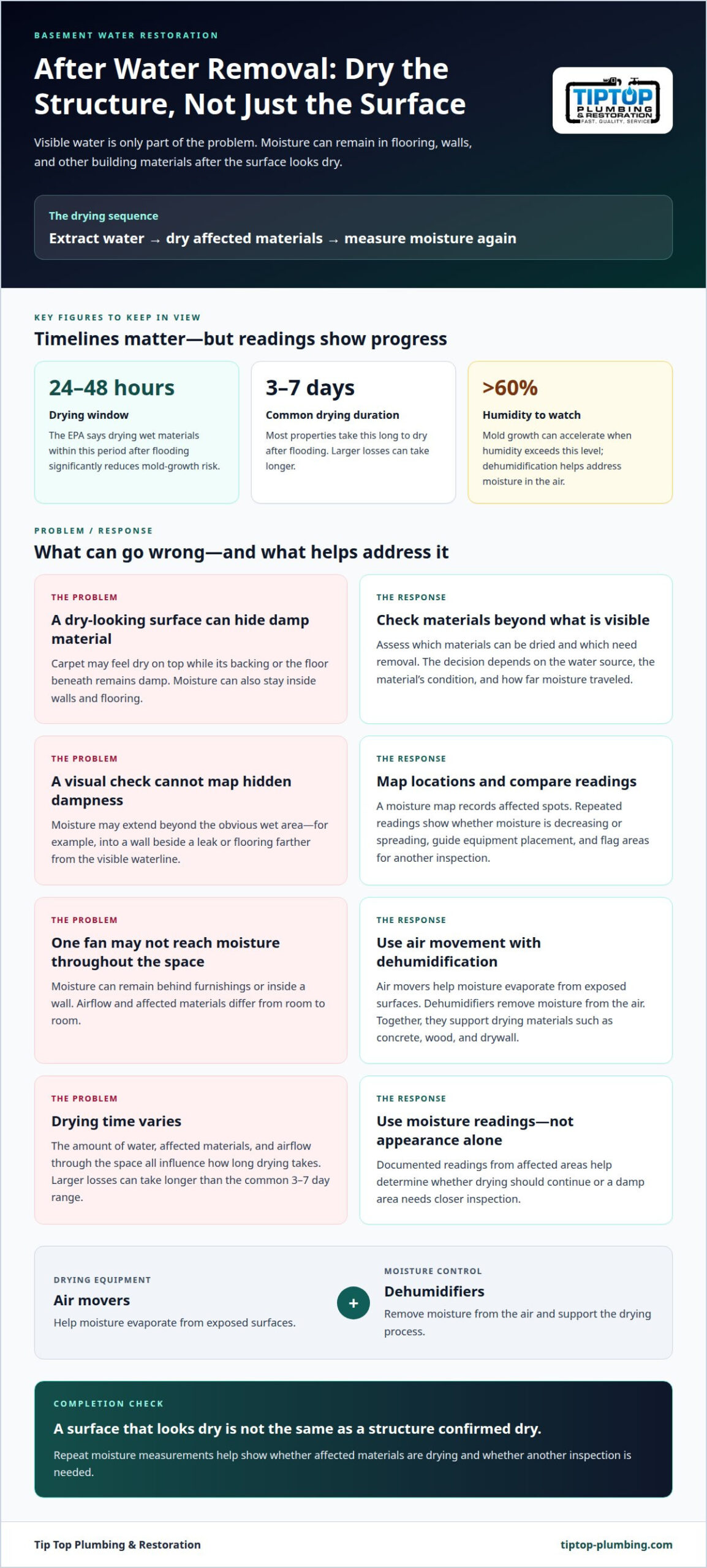
According to the U.S. Environmental Protection Agency, drying wet materials within 24-48 hours after flooding significantly reduces the risk of mold growth. The U.S. Environmental Protection Agency also says mold can begin growing in Cooper City properties within 24-48 hours after moisture is present. These timelines make prompt drying important, especially after water reaches drywall, flooring, or stored items.
Drying addresses affected materials and the moisture they retain. For example, carpet may feel dry on top while its backing or the floor beneath remains damp. An assessment should distinguish materials that can be dried from those that need removal. That decision depends on the water source, the material’s condition, and how far moisture has traveled.
Moisture Detection and Mapping
Moisture detection checks for dampness beyond the visible waterline. A moisture map records affected locations, such as a wall beside a leak or flooring beyond the basement’s wet area. Comparing those locations during drying shows whether moisture is decreasing or spreading. The map also guides equipment placement and identifies areas that need another inspection.
Look for documented readings from affected areas, not just a visual check. In a basement with wet drywall, for example, readings can track moisture within the wall and near the floor. A plumbing leak may also leave dampness outside the obvious spill area. Mapping these locations helps clarify which structural materials need continued drying.
Structural drying commonly combines air movement with dehumidification. Air movers help moisture evaporate from exposed surfaces, while dehumidifiers remove moisture from the air. Together, these steps support drying materials such as concrete, wood, and drywall. Equipment placement depends on the affected rooms and materials; a single fan may not reach moisture behind furnishings or inside a wall.
Drying time varies with the amount of water, the materials affected, and airflow through the space. Most properties take three to seven days to dry after flooding, and larger losses can take longer. Repeated moisture readings provide a more useful progress check than surface appearance alone. Readings help determine whether drying should continue or a damp area needs closer inspection.
Humidity also matters in Cooper City. Mold growth can accelerate when humidity exceeds 60%, so dehumidification helps address moisture in both materials and indoor air. If musty odors or visible mold appear, surface drying alone may not resolve the underlying moisture. Mold remediation addresses mold concerns, while structural drying focuses on reducing moisture in affected building materials.
For a basement with persistent dampness, a documented moisture assessment can clarify where drying is needed. Schedule a moisture assessment to help identify affected areas and guide the next drying steps.
Water damage from storms, plumbing, and appliances
In Cooper City, water damage can start with stormwater, a plumbing failure, or an appliance leak. Identifying the source helps direct the inspection, extraction, and repairs.
Common Water Damage Causes
Storms can push water through openings, while damaged concrete roof tiles can let rain reach roof materials and ceilings. A ceiling stain after heavy rain may point to roof intrusion; a damp area near a pipe may signal plumbing trouble. Washing machines, water heaters, and other appliances can leak at connections or from the unit itself.
Hurricane season affecting Cooper City runs from June through November. Plumbing risks can also relate to older materials: gray polybutylene pipe was installed in many South Florida homes between roughly 1978 and 1995. These are useful clues during an inspection, not proof of the cause. The location and pattern of water help narrow the possibilities.
Inspection and Water Extraction
An inspection traces water from the visible damage toward its likely source. For example, a ceiling stain beneath damaged roof tiles differs from water pooling beside an appliance. The assessment also identifies wet flooring, wall materials, and belongings, helping determine where extraction and repairs should focus.
Extraction removes standing water, but it doesn’t repair a leaking pipe, appliance, or roof. Addressing the source helps limit continued damage. If water reappears after removal, that pattern may indicate an unresolved leak or recurring entry point. In Broward County homes, a careful inspection connects visible damage with the necessary corrective work.
Homeowners insurance often treats sudden plumbing damage differently from outside flooding. Sudden water damage from a burst pipe is usually covered by homeowners insurance, while flooding from outside water sources often requires separate flood insurance. Policy and event details matter, so preserve photographs and note whether water came from a pipe, appliance, roof, or outdoors. This record can help explain the loss during the claim process.
Stormwater and plumbing failures call for different restoration steps. Roof-related water may require roof repairs before ceiling materials can be restored. An appliance leak may require repair to the failed connection or unit before drying affected surfaces. A pipe leak may call for leak detection and plumbing repairs, while standing water requires extraction and assessment of affected materials.
Sump pumps, drainage improvements, and waterproofing can help reduce repeat basement flooding by addressing how water collects and enters. A sump pump removes water gathered at a collection point; drainage improvements guide water away from vulnerable areas, and waterproofing helps limit entry through surfaces or openings. The right measure depends on where water comes from and where it accumulates. If stormwater returns at the same basement wall, that pattern can help identify the area needing attention.
Whatever the cause, a water damage inspection should connect the source, affected materials, and necessary repairs. Extraction addresses standing water; restoration follows the damage path, from a wet ceiling after roof intrusion to flooring affected by an appliance leak. This source-based approach helps avoid treating only the visible stain while the underlying cause remains.
Emergency response and service coverage
For an emergency water response in Cooper City, provide the property address and a concise description of the affected space. ZIP codes 33328 and 33330 are listed for Cooper City service coverage, making the address useful when arranging an assessment.
Emergency Response Availability
Emergency response is available when water damage needs prompt attention. Describe whether water is still entering, which rooms are affected, and whether the source appears to be plumbing, an appliance, or stormwater. These details help clarify the immediate concern and whether water has spread beyond the basement.
Availability and arrival timing are separate considerations. Access to the property, the location of the water, and the extent of damage shape the response. For example, a contained leak beside one fixture differs from water affecting several rooms. Share access details, such as a locked gate or a basement entrance away from the main living area.
Emergency Services and Estimates
Emergency services may involve assessing the source, removing standing water, and identifying affected materials. An estimate should describe the observed damage, proposed work, and areas needing attention. For example, water pooled beside a basement wall may call for inspection of adjacent flooring, rather than an assessment based only on the visible pool.
An estimate and completed restoration are separate steps. The work scope may change if an inspection reveals moisture in concealed areas. Owners can make the initial assessment more specific by sharing the property address, when water appeared, and whether it has spread. Keep photographs of visible conditions if it’s safe to take them.
Before arranging assistance, note which rooms are affected and whether water continues to accumulate. If stormwater entered, describe where it came in; if a fixture or appliance is involved, identify its location. In Broward County, these details help distinguish a plumbing emergency from water entering the property during a storm.
Access to Cooper City properties can vary, from a gated entrance to a basement reached through a separate exterior door. Explain how responders can reach the affected area and identify hazards that could make entry unsafe. Keep people away from standing water near electrical equipment, and communicate those concerns when requesting assistance.
For a Cooper City property, the address helps establish whether it falls within the listed ZIP codes, 33328 or 33330. Nearby Broward County communities may have different access and coverage considerations, so provide the exact location when arranging a response rather than assuming it matches Cooper City service coverage.
After extraction, the response can move into drying and restoration planning. The next steps depend on the water source, affected materials, and whether moisture has reached areas beyond the visible damage. A clear work scope separates immediate water removal from follow-up repairs, helping owners understand what work is planned and why.
Emergency water extraction and response
Emergency extraction removes standing water and helps limit further damage to a basement. The response should address the water source, affected materials, and safe access.
Standing Water Removal
Extraction should begin promptly once the area is safe to enter. Professionals assess water depth, affected rooms, and the route the water took before removing it. That detail matters because water under stored items or along a wall can be missed in a quick surface cleanup. Equipment and removal methods depend on the amount of water and conditions in the basement.
Water that has spread into multiple rooms, soaked drywall or subflooring, or remained for several hours calls for professional help. Extraction addresses pooled water; it doesn’t dry materials or resolve a leak on its own. A clear inspection after removal helps identify damp areas that need further attention.
Mold and Structural Damage Prevention
Standing water can keep flooring, wall materials, and belongings wet long after visible pools disappear. Prompt removal limits continued exposure and supports the next steps in water damage restoration. In South Florida, high indoor moisture can complicate drying, so the response should account for damp materials beyond the immediate waterline.
Once extraction is complete, structural drying and moisture checks help reveal whether materials remain wet. For example, a basement floor may look clear while moisture persists beneath stored boxes or near a wall. Continued dampness can contribute to mold and material deterioration, so the assessment should document affected areas and guide follow-up work.
Safety comes first. Don’t enter a basement where water may have reached outlets or wiring, or where the source is contaminated. Keep people and pets away from the affected space. If conditions prevent safe access, describe the hazards when requesting emergency assistance rather than attempting extraction yourself.
Before work begins, a useful response record captures the water source if known, the rooms affected, and visible damage. Photograph the waterline, damaged belongings, and wet materials only when safe. These details help document conditions before extraction changes the scene. Note whether water is still entering, whether a plumbing fixture is involved, and where the deepest pooling appears.
After removal, the response moves from extraction to assessment. The team can determine which materials need drying, closer inspection, or removal. An extremely wet section of drywall, for instance, may need a different next step from a damp concrete floor. The water source matters too: a plumbing leak requires attention to the leak, while stormwater requires identifying its entry route.
Choose the next step based on what remains after extraction. If moisture persists in walls or flooring, continued drying and monitoring may be needed. If water returns, the underlying source still needs attention. Clear documentation connects the initial emergency with the restoration plan, helping ensure the response addresses more than the visible water.
Tip Top Plumbing & Restoration
Tip Top Plumbing & Restoration helps homeowners address water damage and investigate plumbing problems connected to basement flooding. If water appears near a pipe, fixture, or slab, Leak Detection & Slab Leak Repair can help locate the source; Emergency Plumbing addresses urgent plumbing issues. Identifying and correcting the cause is an important part of responding to water damage, alongside removal and drying.
Contact Tip Top Plumbing & Restoration for help assessing a plumbing-related water problem and determining the next step. Share where water appeared, whether it is still entering, and which areas are affected. These details help describe the situation clearly.
Move from water removal to a clear next step
Once the immediate problem is under control, focus on what will help you move forward: a clear account of the damage, the suspected source, and the work still needed. Keep photos and notes together, and share them when discussing repairs. This record can make it easier to distinguish cleanup from the plumbing work needed to address the cause.
For basement water removal in Cooper City, Tip Top Plumbing & Restoration can assess water-related issues and determine a practical path forward. Its services include Emergency Plumbing, Sewer Repiping Services, and Water Heater Repair & Installation. The right next step depends on what caused the water and what the inspection finds.
If you need basement water removal in Cooper City, contact the team to discuss the affected property and your concerns. Share where water appeared and whether it is still entering to help clarify the situation.
With a clear plan, you can move forward one practical step at a time.
Tip Top Plumbing & Restoration for Basement Water Removal in Cooper City
Tip Top Plumbing & Restoration provides water remediation, dry out services, and water damage restoration for homeowners dealing with basement water. Turn to the team when water has entered your basement and you need help addressing the damage.
If the water may be related to a leak or drain issue, Tip Top Plumbing & Restoration also offers leak detection, drain cleaning, camera inspections, and drain and sewer services.
Frequently Asked Questions
How do you help with my insurance claim?
Tip Top Plumbing & Restoration provides water damage restoration, but claim decisions are made by your insurer. Keep a record of the incident, including when you discovered the water, the suspected source, and affected areas. Save photographs, insurer correspondence, and documents related to the restoration work. For example, a photo of a damaged wall can help show its condition before cleanup changes the scene.
How many days does it usually take to dry out a flooded property?
Most properties take three to seven days to dry after flooding, and larger losses can take longer. The actual duration depends on how much water entered, which materials were affected, and how far moisture traveled. A basement with wet wall cavities may need more drying than one with damp concrete alone. Moisture readings during the work help track progress beyond what a surface check can show.
Need Immediate Help?
Tip Top Plumbing & Restoration provides 24/7 emergency plumbing services. If water is actively entering your home, tell the team where it’s coming from and which areas are affected. Mention any immediate access concerns, such as a locked gate or water near electrical equipment. Stay out of unsafe areas while arranging help, and share the property address so the situation can be clearly identified.
What happens after you call?
After you call, be ready to describe the property, the suspected water source, and the damage you can see. For example, explain whether water appeared near a water heater, an appliance, or a basement wall. The team can use these details to understand the plumbing or restoration concern. Keep your phone available for follow-up questions, and don’t enter an area that appears unsafe.
Does Cooper City have basements, and what causes basement or below-grade water intrusion there?
Cooper City homes can have basement or below-grade spaces, and water intrusion can result from plumbing leaks, stormwater entry, or sewer problems. Rain entering through a roof or exterior opening can also affect lower levels. The entry point offers a useful clue: water beside a pipe suggests a different cause from dampness appearing along an outside-facing wall. An inspection helps distinguish these possibilities.
What are the steps for professional water extraction, drying, and dehumidification?
Professionals first assess the affected areas and identify the water source. They then extract standing water, inspect materials for moisture, and set up air movement and dehumidification as needed. For example, wet flooring near a wall may need attention beyond the visible puddle. Follow-up moisture readings help track whether materials are drying and guide decisions about continued drying or further restoration.
Does homeowners insurance cover basement flooding or water removal in Florida?
Coverage depends on the cause of the water. Sudden water damage from a burst pipe is usually covered by homeowners insurance, while flooding from outside water sources often requires separate flood insurance. Review your policy terms and document the apparent source, affected rooms, and visible damage. For example, note whether water came from a plumbing failure or entered during a storm, since that distinction can affect coverage.
What permits or local rules apply to water discharge and flood cleanup in Cooper City?
The appropriate disposal route depends on the water source and where it will go. Keep the water contained while the disposal method is determined, especially if stormwater may have mixed with sewage or other contaminants.
Disclaimer
The information provided in this article is for general educational and informational purposes only and should not be considered professional plumbing, restoration, mold remediation, or legal advice. Every plumbing system, property, and situation is unique, and the recommendations discussed may not apply to your specific circumstances.
While Tip Top Plumbing & Restoration strives to provide accurate and up-to-date information, we make no warranties regarding the completeness, accuracy, or reliability of the content. Any actions you take based on this information are at your own risk.
Plumbing repairs, water damage restoration, and mold remediation should be performed by qualified professionals and in accordance with applicable local building codes and regulations. If you are experiencing a plumbing emergency, water leak, or property damage, contact a licensed professional for an on-site evaluation.
Tip Top Plumbing & Restoration is licensed and insured to provide plumbing and restoration services throughout Broward County, Florida.