

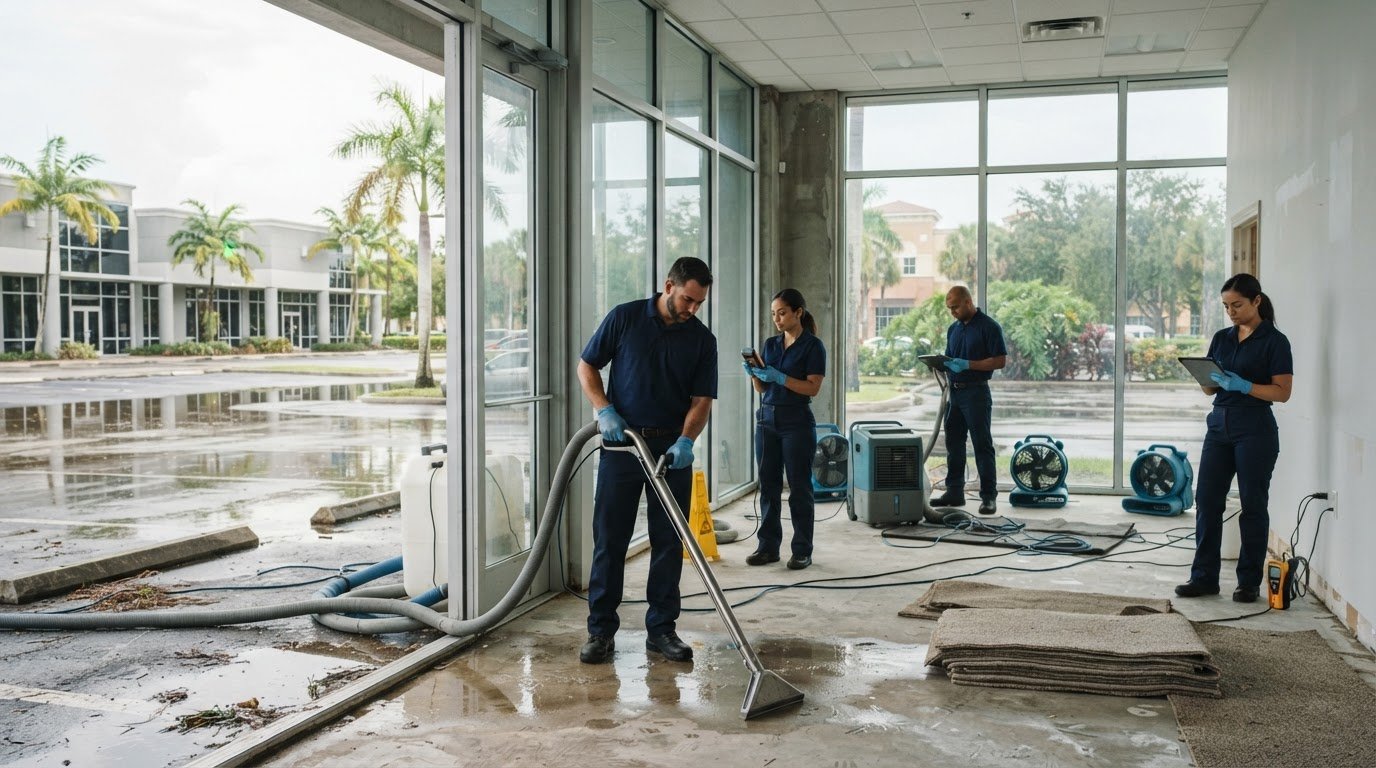
Flood damage isn’t automatically covered by a standard homeowners policy. For businesses seeking business flood cleanup in Sunrise, FL, groundwater flooding is usually covered by flood insurance, not a standard property policy. Coverage depends on the water source and the terms of your policy.
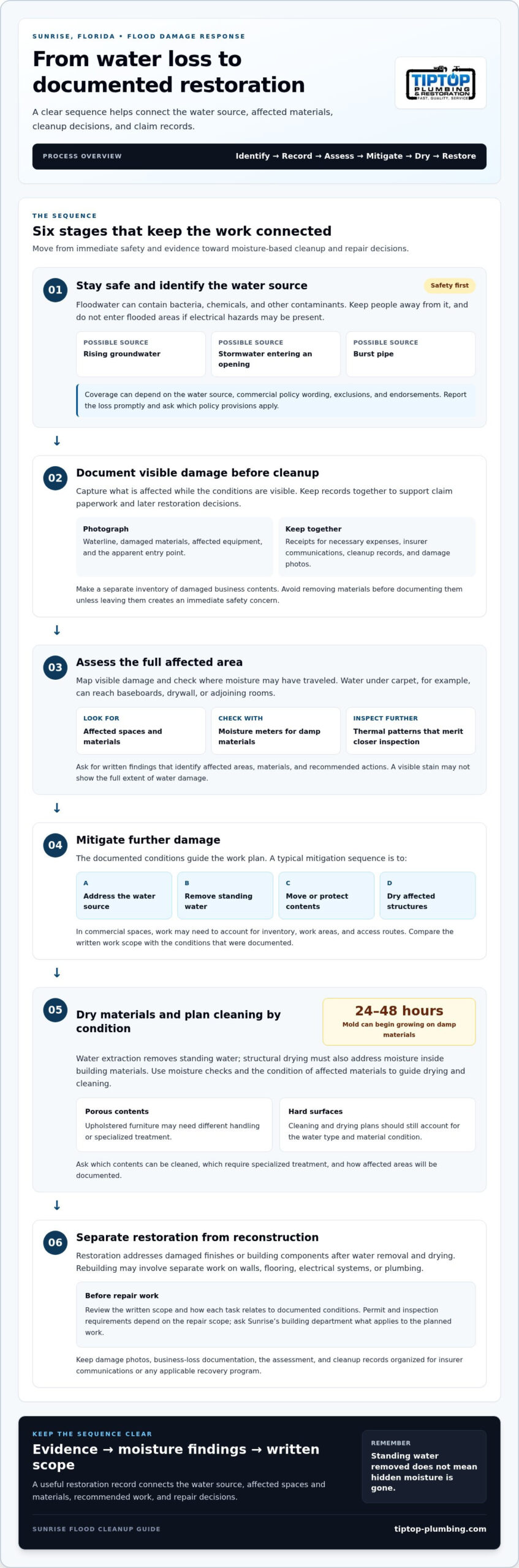
It’s understandable to expect insurance to help after a damaging storm, but flood-related claims can depend on how the water entered the property and what coverage you carry. Acting promptly also matters: floodwater can contain contaminants, and mold can begin growing on damp materials within 24-48 hours.
This guide explains how to review coverage, document damage for a claim, and understand cleanup and drying. You’ll also learn what affects drying time and when water remediation and restoration may be needed, helping you plan practical next steps for your business.
Key Takeaways
- Separate flood damage from other water losses when reviewing your policy, and identify which coverage applies to the source of the water.
- Before cleanup begins, document visible damage and affected business contents to help organize your claim paperwork.
- Keep people away from contaminated floodwater, and avoid entering flooded areas if electrical hazards may be present.
- Water extraction is only the first step; drying needs to address moisture trapped in building materials, not just visible standing water.
- Use moisture checks and the condition of affected materials to guide cleaning, drying, and decisions about what needs restoration.
Is flood damage covered by insurance?
Flood damage isn’t automatically covered by a standard homeowners policy. Groundwater flooding is usually covered by flood insurance rather than a standard homeowners policy. For a Sunrise business, coverage depends on the commercial policy wording, water source, and any exclusions or endorsements. Report the loss promptly and ask your insurer which policy provisions apply.
Identify the water source before documenting the damage. Rising groundwater, stormwater entering through an opening, and a burst pipe may fall under different policy terms. Photograph the waterline, damaged materials, affected equipment, and apparent entry point. Save receipts for necessary expenses, and keep insurer communications and cleanup records together.
Sunrise’s property types can shape restoration needs. Sunrise Lakes and nearby 55+ condominium communities were built primarily in the 1970s and 1980s, and their plumbing, roofing, and waterproofing systems are described as 40-50+ years old. In older buildings, water can travel through shared walls or ceilings, making the source harder to identify. A visible stain may not mark the full extent of water damage.
For commercial flood damage restoration in Sunrise, distinguish emergency cleanup from reconstruction. Water removal and drying address wet materials; rebuilding may involve separate work on walls, flooring, electrical systems, or plumbing. Permit and inspection requirements depend on the repair scope. Before reconstruction, ask Sunrise’s building department which permits or inspections apply to the planned work.
FEMA or Broward County assistance isn’t automatic for every business loss. Support depends on an active recovery program and its eligibility rules. Keep claim records, damage photos, and business-loss documentation organized so you can follow the instructions for any applicable program.
Comparing cleanup providers and handling the work
Compare Sunrise water damage restoration proposals by their written scope, affected areas, removal plan, drying approach, and documentation. Ask for credentials relevant to the proposed work, then verify trade licenses with the issuing authority and restoration certifications with their issuing organizations. Clear records show what the estimate includes and what falls outside its scope.
DIY cleanup may suit a small, clean-water spill on a hard surface, such as a limited sink overflow. Floodwater is different: it can carry bacteria, chemicals, and other contaminants. Avoid contact with floodwater, and don’t enter a flooded area if electrical hazards may be present. For widespread water damage, contaminated water, or moisture inside walls, professional assessment and restoration can address conditions mopping cannot reach.
Choose your next step based on the type of loss. Preserve evidence, report the damage, and separate cleanup from repair decisions. A written assessment can connect the water source, affected materials, and required work, whether the job involves a commercial suite or a home in Sunrise.
Assessment, mitigation, and restoration process
A clear restoration plan connects the water source, affected materials, and repair decisions. In Sunrise, document each stage so commercial operators and homeowners can track the work.
Assessment and Inspection Methods
A restoration assessment maps visible water damage and checks areas where moisture may have traveled. For example, water beneath carpet can reach baseboards, drywall, or adjoining rooms. Ask for findings that identify affected spaces, materials, and recommended actions. Moisture meters assess damp materials, while thermal imaging can reveal temperature patterns that merit closer inspection. Photos and written notes create a useful record for property decisions.
Mitigation and Restoration Work
Mitigation aims to limit further damage before repairs begin. A typical sequence is to address the water source, remove standing water, move or protect contents, and dry affected structures. In a commercial space, crews may need to coordinate around inventory, work areas, and access routes. Restoration then addresses damaged finishes or building components. Review the proposed scope and ask how each task relates to documented conditions.
Mold and Contents Restoration
Flood-damp materials need prompt attention because mold can begin growing within 24-48 hours. Cleaning and drying plans should account for the water type and each material’s condition. Porous items, such as upholstered furniture, may need different handling than hard surfaces. Ask which contents can be cleaned, which require specialized treatment, and how affected areas will be documented. Keep a separate inventory of damaged business or household belongings.
Commercial and residential restoration share core steps, but their priorities differ. A shop may need attention to stock, equipment, and customer areas; a home may require inspection of rooms, cabinets, and personal belongings. In either setting, the restoration company should explain how its assessment supports the work plan. Compare the documented scope with the spaces you observed, such as a wet storage room or damp hallway.
Homeowners can support the process by keeping people away from wet areas and leaving clear access for inspection. Note where water appeared, when it was discovered, and which rooms or belongings were affected. Avoid removing materials before documenting them, unless leaving them creates an immediate safety concern. These records can connect observed damage with restoration decisions and insurance paperwork.
For a property with active water damage, schedule an assessment to discuss the affected areas and next steps.
Emergency water extraction and structural drying
Extraction removes standing water, while structural drying addresses moisture inside floors, walls, and other materials. The water source and level of contamination shape the cleanup steps.
Emergency Water Extraction
Technicians begin by identifying hazards and the source of water, then choose extraction equipment for the affected area. A flooded sales floor, for example, may need water removed from open flooring before staff can move equipment safely. Natural floodwater is category 3 water damage and can contain bacteria, chemicals, and other contaminants, so avoid treating it like a clean plumbing leak.
Flooding can follow intense rainfall, rising groundwater, stormwater entry, or a failed pipe. The cause affects what needs attention: a continuing leak must be stopped, while floodwater may require controlled handling and cleaning. If you need to shut off electricity, do so only when you can reach the switch without stepping into water. Keep people clear of affected rooms during extraction.
Water Removal and Moisture Mapping
After visible water is removed, moisture mapping helps identify damp areas beyond the obvious pool. A technician can record readings across floors, walls, and adjoining rooms, then compare them during drying. For example, moisture near a doorway may extend into a wall cavity even when the next room looks dry. Ask for affected locations and readings to be documented.
Moisture mapping also guides equipment placement. Air movers circulate air across wet surfaces, while dehumidifiers remove moisture from indoor air. Equipment placement should reflect recorded conditions, not just the room’s appearance. Rechecking the same areas shows whether materials are drying and helps identify spots that need more attention.
Leak detection technology can help distinguish a plumbing leak from water that entered during flooding. Depending on the suspected source, inspection may involve acoustic tools, thermal imaging, or moisture meters. These methods can locate hidden moisture or trace a leak beyond visible damage. For example, a damp patch near a restroom may warrant checking the plumbing before repairs conceal the source.
Drying continues after extraction. Building materials hold moisture differently, so technicians assess affected surfaces and adjust equipment as conditions change. Wet carpet and a damp wall cavity need different attention. Keep access clear, avoid moving drying equipment, and report new damp spots or odors promptly. These steps help the crew assess changing conditions and maintain a useful record of the work.
For a suspected plumbing source, arrange a water damage assessment to discuss inspection and next steps.
How long does drying and dehumidification take?
Drying time depends on how far water traveled, which materials absorbed it, and how much moisture remains. A wet tile floor dries differently from soaked drywall, insulation, or wood framing. In Sunrise, indoor humidity also affects evaporation, so equipment settings and airflow matter. Crews track material conditions and adjust the drying plan instead of relying on a fixed schedule.
Move quickly. Mold can begin to grow on damp materials within 24-48 hours after flooding. That makes prompt water removal, controlled drying, and inspection important parts of cleanup. A dry-looking surface doesn’t prove that the wall cavity or the underside of flooring is dry. Moisture readings in affected areas help determine whether drying should continue.
Dehumidifiers pull moisture from indoor air, while air movers direct airflow across damp surfaces. Placement depends on room layout, wet materials, and measured conditions. For example, a closed office with wet carpet may need a different setup from an open warehouse with damp drywall. Doors, ventilation, and equipment placement affect airflow and how quickly moisture leaves materials.
Cleaning and sanitization depend on the water source and materials involved. Floodwater can carry bacteria, chemicals, and other contaminants, so it requires careful handling. Remove debris and clean affected surfaces with methods suited to their material. Porous items may absorb contamination more deeply than sealed surfaces. Keep affected contents separate until their condition and cleaning needs are assessed.
South Florida’s humidity can make mold prevention more demanding because damp materials may stay wet when indoor moisture is high. Watch for musty odors, discoloration, or recurring dampness around baseboards and cabinets. These signs may point to moisture that remains after visible water is gone. Ventilation can help, but it doesn’t replace drying materials or finding a continuing leak.
Mold inspection focuses on visible growth, moisture sources, and concealed areas affected by water. If growth appears, remediation should address both the affected material and the moisture that supports it. Cleaning a surface without fixing a leak or damp cavity can leave the underlying condition in place. Keep photos and written notes of affected rooms and cleanup steps for your records.
Use moisture checks to determine when drying equipment can be removed. Compare readings from affected materials over time and review any areas that remain damp. A technician’s documented findings can help distinguish completed drying from conditions that still need attention. For instance, dry flooring beside a persistently damp wall may indicate a hidden moisture path that needs further assessment.
Insurance paperwork and claims assistance
Organized records connect the reported loss with cleanup work and damaged property. Start a claim file as soon as you discover water damage.
Insurance Paperwork
Read the commercial policy and note the reported cause, coverage sections, exclusions, and claim instructions. Groundwater flooding is usually covered by flood insurance rather than a standard homeowners policy, so identify whether water entered from outside or came from plumbing. Record the insurer’s claim number, representative, and requested documents. Keep copies of every form you submit, including emails and written claim updates.
Documentation and Billing
Request an itemized work record that separates water extraction, drying, material removal, and repairs. Match each task to the affected room or business area. For example, an invoice for drying should name the space or materials addressed, rather than simply say “cleanup.” Keep receipts for emergency purchases and temporary measures, along with records showing when standing water was removed and drying began.
Before submitting bills, compare the dates, work descriptions, and property locations across documents. A mismatch, such as an invoice naming a storage room while photos show a sales floor, can slow review. Request corrected paperwork when details are inaccurate. Store digital copies in a dedicated folder and retain original receipts, signed work authorizations, and insurer correspondence.
Claim Documentation
Build a dated record of the loss with photographs, videos, and written notes. Capture each affected area before cleanup when it’s safe, then document visible changes during water removal and drying. List damaged equipment, inventory, furniture, and building materials separately. For business contents, include identifying details such as item type, location, and condition. Keep damaged items available for inspection unless they create a safety concern.
A simple timeline can clarify how the loss unfolded. Note when water was first found, when the source was addressed, and when cleanup tasks occurred. Record the names or departments involved in insurer conversations, along with the guidance received. These details connect the reported damage with work records, photographs, and submitted forms without relying on memory.
Insurance Claim Assistance
Use the cleanup scope, moisture readings, photos, and invoices to explain the work performed. Organize documents by date and room, then submit them through the insurer’s stated process. Keep a copy of each submission and note any follow-up request. A restoration company can provide work records; the insurer determines how those documents apply to policy coverage.
For a Florida business, keep cleanup documentation separate from decisions about rebuilding or replacing property. Store estimates, invoices, and communications together, and flag disputed descriptions for follow-up. Before approving additional work, document the affected condition and the reason for the change. A clear paper trail helps owners track claim steps while restoration moves forward.
Tip Top Plumbing & Restoration: Emergency Plumbing
Tip Top Plumbing & Restoration can help when a business flood involves an active plumbing problem. Its Emergency Plumbing and Leak Detection & Slab Leak Repair services address plumbing issues that may continue adding water to an affected space. Water Remediation, Dry Out Service, and Water Damage Restoration support cleanup and drying after the source is addressed.
For example, if water appears near a restroom wall or beneath flooring, determining whether a plumbing leak is still active can guide the next step. If the damage stems from a sewer or plumbing issue, Tip Top’s services may fit; stormwater flooding without a plumbing problem calls for a different response. Document the affected area and share what you’ve observed.
Contact Tip Top Plumbing & Restoration or visit its website to discuss your property’s water damage.
Take the Next Step Toward a Safer Reopening
Once the immediate decisions are clear, focus on what your business needs before reopening. For business flood cleanup in Sunrise, FL, consider not only visible damage but also whether a plumbing issue could cause water to return. If the source involves plumbing, Tip Top Plumbing & Restoration provides Emergency Plumbing, Sewer Repiping Services, and Water Heater Repair & Installation. These services address plumbing problems that may need attention alongside cleanup.
Keep a concise record of affected areas and any ongoing water entry. This gives you a clear starting point when discussing the plumbing problem and possible next steps. Coordinate the response around your property and operations, rather than rushing into repairs without a clear scope.
An organized next step can help you move from disruption toward reopening with greater clarity.
Frequently Asked Questions
Are you available 24/7 in Sunrise?
Yes. Tip Top Plumbing & Restoration advertises 24/7 Emergency Plumbing service in Sunrise. If water is actively entering a business, explain where it’s coming from and whether the source is still active. This helps clarify whether the immediate concern involves a plumbing issue, such as a failed water heater or leak, and what plumbing service may fit the situation.
Can my belongings and floors be saved, or must everything be replaced?
Some belongings and flooring can be cleaned and retained; others may need removal or replacement. The water source, how deeply materials absorbed water, and their condition all matter. For example, a sealed hard floor may respond differently from saturated carpet padding or swollen laminate. Separate affected items, photograph their condition, and avoid discarding property before documenting the loss.
Do you offer free inspections or estimates?
Free inspections or estimates aren’t promised. Before authorizing work, ask for a clear explanation of the assessment, proposed tasks, and written estimate. For example, confirm whether the scope covers only plumbing repairs or also water remediation and drying. Review any exclusions, such as damaged flooring or other reconstruction, so you understand what the proposed work addresses before it begins.
Do you work directly with my insurance?
Tip Top Plumbing & Restoration provides water damage restoration and remediation services, but your insurer makes coverage decisions. Submit the required forms and keep copies of the restoration scope, work records, and invoices. If the insurer requests details about the plumbing source, share relevant inspection or repair documentation and direct policy questions to your claims representative.
Have a Restoration Question?
When discussing restoration, describe the affected area, apparent water source, and whether water is still entering. For example, mention if water appeared near a water heater, drain, or ceiling. Those details help identify whether plumbing service, water remediation, dry out service, or water damage restoration is relevant. Contact Tip Top Plumbing & Restoration to discuss your concern.
How can I reduce future flood damage and prepare my property?
Prepare by keeping drains clear, watching for leaks, and knowing how to shut off water to your property. Arrange routine checks of plumbing fixtures and water heaters, and pay attention to slow drains, unusual odors, or new stains. In a commercial space, keep important records and equipment away from areas that have flooded before. Address recurring plumbing problems before they cause further water damage.
How fast can you respond in Sunrise?
Tip Top Plumbing & Restoration advertises 24/7 Emergency Plumbing service and fast response times in Sunrise. No specific arrival time is promised. When arranging service, share the property address, the type of plumbing issue, and whether water is still flowing. If the problem involves a leak or sewer concern, those details help establish the nature of the emergency and the appropriate plumbing response.
What commercial flood cleanup companies serve Sunrise, FL?
Tip Top Plumbing & Restoration provides plumbing and water damage restoration services for Sunrise businesses. If you need flood cleanup in Sunrise, FL, consider whether the damage involves an active plumbing source and requires remediation or drying. The company also serves Weston, Miramar, Pembroke Pines, Davie, Southwest Ranches, Cooper City, and Plantation. Describe the affected commercial area and water source when contacting Tip Top.
Disclaimer
The information provided in this article is for general educational and informational purposes only and should not be considered professional plumbing, restoration, mold remediation, or legal advice. Every plumbing system, property, and situation is unique, and the recommendations discussed may not apply to your specific circumstances.
While Tip Top Plumbing & Restoration strives to provide accurate and up-to-date information, we make no warranties regarding the completeness, accuracy, or reliability of the content. Any actions you take based on this information are at your own risk.
Plumbing repairs, water damage restoration, and mold remediation should be performed by qualified professionals and in accordance with applicable local building codes and regulations. If you are experiencing a plumbing emergency, water leak, or property damage, contact a licensed professional for an on-site evaluation.
Tip Top Plumbing & Restoration is licensed and insured to provide plumbing and restoration services throughout Broward County, Florida.