

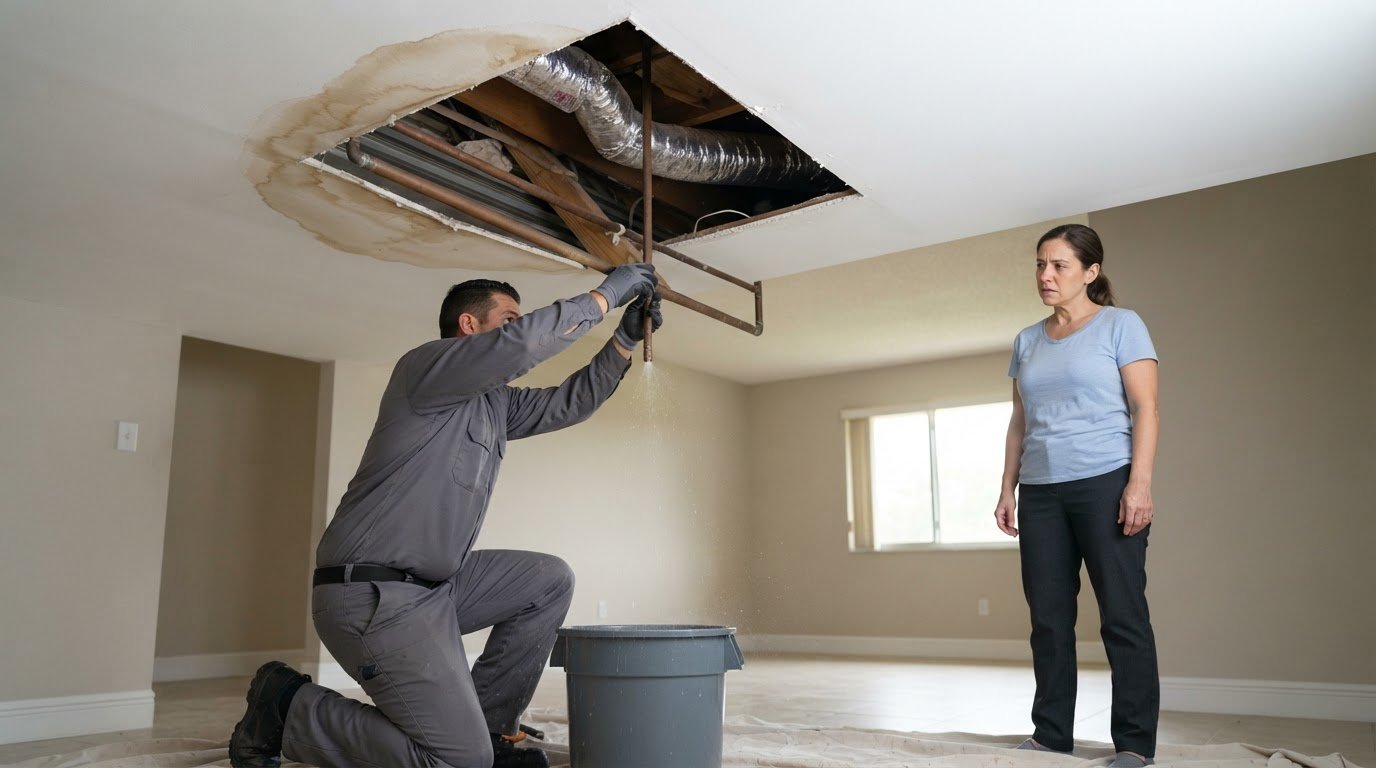
Don’t paint a water-stained ceiling until the leak is stopped and the affected materials are fully dry. For ceiling water damage repair in Pembroke Pines, first identify the water source, limit further damage, and assess whether the ceiling can be dried or damaged drywall needs removal and replacement. A soft or sagging ceiling can give way without warning, so stay clear of the area beneath it.
A stain may be the visible sign of a leak from a roof, plumbing, or an upstairs unit, while moisture remains hidden inside the ceiling or wall. Prompt drying matters: the U.S. Environmental Protection Agency says mold can begin forming within 24-48 hours of water exposure. This guide explains what warning signs to look for, how leaks in condos and multi-story homes can affect more than one unit, and how water extraction and structural drying support lasting repairs. You’ll also learn what to document before cleanup, how to approach an insurance claim, and what factors shape the repair process in Pembroke Pines.
Key Takeaways
- Document the ceiling damage and contact your insurance agent to discuss coverage and claim steps.
- In a condo or multi-story home, trace the leak’s source because responsibility may involve different policies.
- Learn how water extraction and structural drying help address moisture beyond the visible stain.
- See how moisture checks guide the decision to dry, remove, or rebuild ceiling materials.
- Find out how restoration needs can vary across Pembroke Pines properties and communities.
How do you help with my insurance claim?
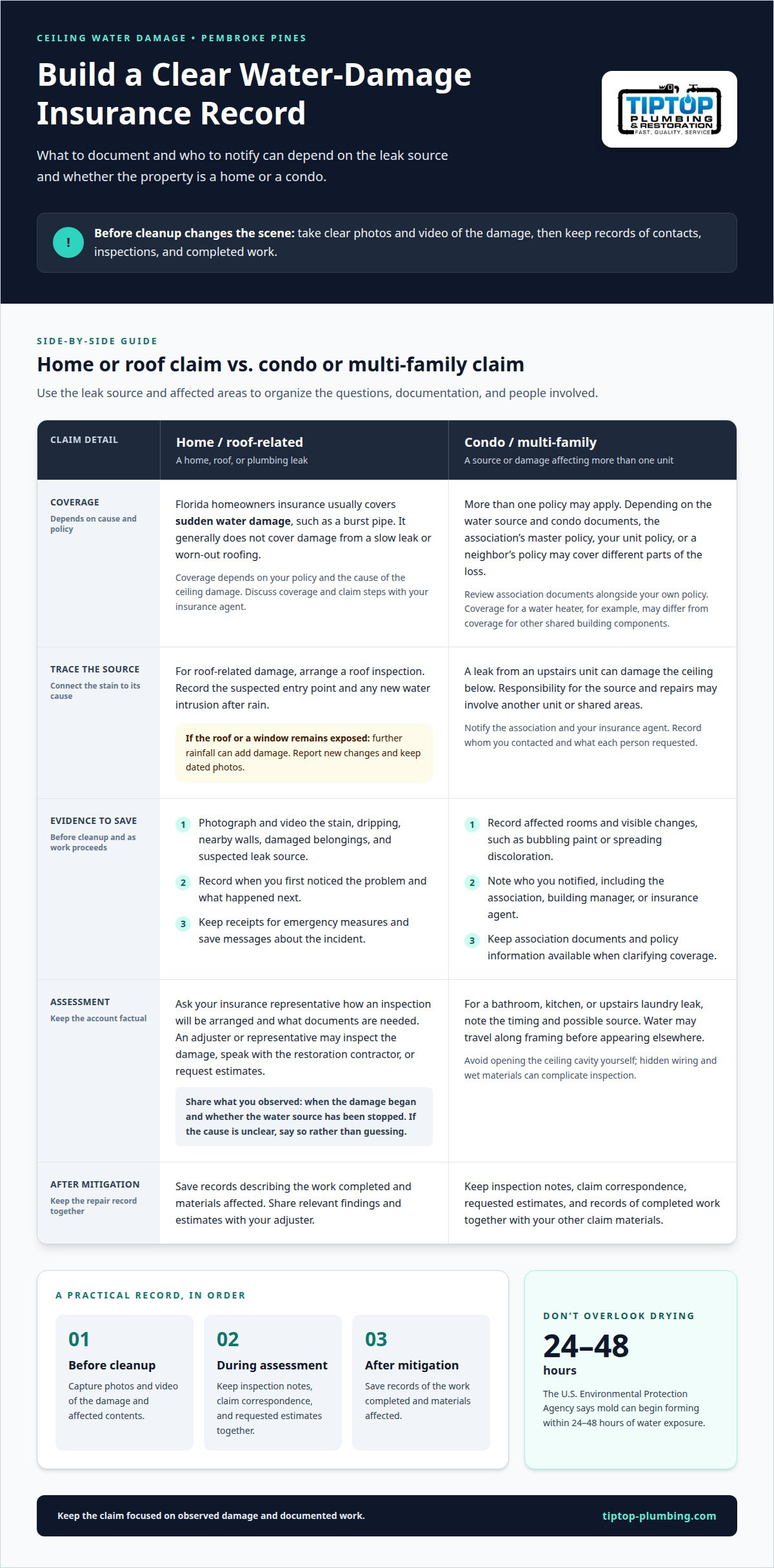
Florida homeowners insurance usually covers sudden water damage, such as a burst pipe, but not damage from a slow leak or worn-out roofing. Coverage depends on your policy and the cause of the ceiling damage, so contact your insurance agent to discuss coverage and start a claim.
Document the damage before cleanup changes its appearance. Take clear photos and video of the stain, any dripping, nearby walls, damaged belongings, and the suspected leak source. Record when you first noticed the problem and what happened next, such as a stain appearing after an upstairs toilet overflow. Keep receipts for emergency measures and save messages about the incident.
Ask your insurance representative how an inspection will be arranged and what documents are needed. An adjuster or representative may inspect the damage, speak with the restoration contractor, or request estimates. Stick to what you observed: when the damage began and whether the water source has been stopped. If the cause is unclear, say so rather than guessing.
- Before cleanup: Photograph and video visible damage, including the ceiling and affected contents.
- During assessment: Keep inspection notes, claim correspondence, and any requested estimates together.
- After mitigation: Save records describing the work completed and the materials affected.
For a condo or multi-family building, more than one policy may apply. Depending on the water source and condo documents, the association’s master policy, your unit policy, or a neighbor’s policy may cover different parts of the loss. For example, a leak from an upstairs unit could damage the ceiling below, while responsibility for the source and repairs may involve another unit. Notify your association and insurance agent, and record whom you contacted and what they requested.
Florida condo owners should review their association documents alongside their own policy. These records help clarify which building areas and unit components fall under each policy. A water heater is one example: coverage under an association’s master policy may differ from coverage for other shared building components. Ask the association and your insurer how the policy applies to the specific source and damaged area.
Roof-related claims need a clear record of both the suspected entry point and interior damage. Arrange a roof inspection and document visible ceiling stains, damp areas, and any new water intrusion after rain. If a storm-damaged roof or window remains exposed, further rainfall can add damage. Report new changes to your insurance representative and keep dated photos with your claim materials.
A careful assessment connects the visible stain to the water source, affected materials, and necessary restoration work. When a broken pipe may be involved, leak detection in Broward County can help locate the source. Share relevant findings and estimates with your adjuster, and keep the claim focused on observed damage and documented work.
Ceiling leaks in condos and multi-story homes
A ceiling stain in a Pembroke Pines condo may come from plumbing, a roof, or another unit. Finding the source helps determine which areas need inspection and cleanup.
Leaks from Bathrooms and Neighboring Units
A failed toilet seal, cracked tub drain, loose washing-machine hose, or overflowing upstairs sink can send water through a floor and into the ceiling below. The ceiling may not be directly beneath the leak because water can travel along framing before appearing. Note when the stain or drip occurs, and promptly tell the upstairs resident or building manager.
In a condo, the source may be inside another unit or in a shared area. That distinction can affect which owners and policies are involved. Record the affected rooms and visible changes, such as bubbling paint or spreading discoloration. Avoid opening the ceiling cavity yourself: hidden wiring and wet materials can complicate inspection.
Signs of Hidden Ceiling Leaks
Yellow or brown rings, peeling paint, bubbling surfaces, sudden cracks, and drips near a fixture can signal trapped moisture. A ceiling that feels soft or begins to sag is a serious warning. Stay clear of the area beneath it, since saturated material can give way without warning.
Not every leak produces an immediate stain. A clogged condensate line from an attic air handler can drip for weeks before discoloration appears. A musty smell in an upstairs room or closet can also point to hidden moisture. Record where the smell occurs and any changes in the ceiling, then arrange a professional assessment instead of painting over the evidence.
Roof and Plumbing Leaks
Roof leaks often become noticeable after rain, while plumbing leaks may continue regardless of the weather. Storm-damaged shingles or flashing can let more water in with each rainfall. A leak near a bathroom, kitchen, or upstairs laundry area may instead come from a fixture, drain, or supply line.
Look for patterns, not just the stain: note whether dripping follows rain, toilet use, or laundry cycles. If you suspect plumbing, shut off the relevant fixture’s supply valve when safe, or use the main water valve. Water remediation and extraction may be needed after the source is controlled, especially if moisture has spread beyond the visible ceiling.
Mold Risks and Local Leak Conditions
In Pembroke Pines, mold can begin forming within 24-48 hours of water exposure, according to the U.S. Environmental Protection Agency. A prolonged leak can leave moisture behind paint, drywall, insulation, and framing, even after surface drips stop. Drying and damage restoration should account for hidden damp areas, not only visible staining.
Humid air can make moisture removal more demanding, so drying needs to address affected materials and surrounding spaces. After hurricane-related roof or window damage, later rainfall can add water and expand the repair area. If a ceiling leak is active or has spread, arrange an assessment for water damage before cosmetic repairs begin.
Water extraction and structural drying
After a leak is controlled, water extraction and structural drying address moisture beyond the visible ceiling stain. In Pembroke Pines, standing water can seep into nearby rooms, lower floors, and structural framing. The affected area may be larger than it appears, even when the ceiling seems to be the main problem. Ceiling water damage repair in Pembroke Pines should account for connected materials, not just the room where water first appeared.
For a broken-pipe leak, the source must be controlled before the damage is assessed and a repair plan is created. Extraction removes standing water from affected surfaces, while inspection identifies where moisture has traveled. Water removal requires appropriate equipment, since untrained removal can worsen damage and expense. Don’t assume visible water represents the full extent of the loss.
Structural drying targets damp materials and enclosed spaces. Technicians can use moisture meters and thermal imaging to find wet areas that stains alone may not reveal. Air movers circulate air across affected surfaces, while dehumidifiers remove moisture from the surrounding air. Readings help track drying, and equipment placement depends on the affected rooms and materials.
Water can move from a ceiling into insulation, wall cavities, framing, and flooring. For example, a leak above a hallway may leave moisture along the ceiling and adjoining wall, even if water first dripped near one fixture. Checking connected areas helps define the drying scope. If storm damage has allowed repeated water entry, the opening must also be addressed to prevent further wetting during later rainfall.
Drying and replacing damaged drywall
Drywall decisions depend on its condition and the water involved. Don’t paint a damp ceiling before it is fully dry: stains can return, and the material may remain weak. Softened or sagging drywall usually needs removal and replacement rather than a surface patch. An assessment distinguishes areas that can be dried from material that has lost integrity.
Water quality also affects the response. Ceiling drywall soaked by Category 3 water from a toilet overflow is usually removed. After removal or drying, moisture readings help establish whether remaining materials are dry enough for rebuilding. Replacing drywall before addressing hidden dampness can leave moisture behind the repaired surface, so water damage restoration should sequence extraction, drying, and reconstruction carefully.
- Extract: Remove standing water and identify the rooms or surfaces it reached.
- Dry: Use air movers and dehumidifiers, then monitor moisture readings.
- Rebuild: Replace drywall that is softened or sagging after assessing the affected area.
For ceiling water damage repair in Pembroke Pines, property owners should follow the full sequence: stop the source, extract water, dry affected materials, and rebuild only when readings support that step. Painting alone can’t resolve wet drywall or moisture inside structural spaces.
Ceiling damage inspection and repair process
A sound repair starts by tracing the moisture, assessing affected materials, and identifying the work needed. Inspection findings guide removal, drying, and rebuilding.
Restoration and Moisture Assessment
During a restoration inspection, technicians assess the visible ceiling and nearby surfaces, not just the stain. A roof leak, plumbing failure, or water traveling through framing can leave moisture beyond the obvious damage. The inspection maps affected areas and helps determine whether materials need drying or removal. Those findings support a repair plan based on the ceiling’s actual condition.
Moisture meters measure dampness in materials, while thermal imaging can help locate temperature patterns associated with concealed moisture. Technicians use these tools to check the ceiling cavity and surrounding areas. A reading near a stain may differ from one farther along the same ceiling. Mapping those differences helps focus drying and identify areas that need further inspection.
Water near a light fixture or ceiling fan calls for caution. Keep away from the affected area and have the electrical risk addressed before work proceeds. For roof leaks, inspection should consider the entry point as well as the interior damage. A visible ceiling repair alone won’t stop water from entering again if the roof opening remains active.
Permits depend on the planned repair scope and applicable local requirements, not simply the stain’s size. Before reconstruction, confirm with Pembroke Pines building officials whether the specific work requires a permit.
Repair Costs and Timelines
There is no dependable average cost per square foot for every water-damaged ceiling. The price depends on the case, and an estimate follows a quote request. The affected area, removal, drying, and rebuilding all shape the estimate. A small surface stain differs from a ceiling with softened drywall, wet insulation, or damage extending into framing.
Repair time also depends on the work sequence. The leak must be controlled before an assessment can establish the full scope. If moisture remains inside the ceiling cavity, drying and monitoring come before reconstruction. A ceiling with damaged drywall may need removal and replacement after the surrounding materials are dry.
Moisture readings help determine when materials are ready for rebuilding. Technicians can use air movers and dehumidifiers, then recheck affected materials before closing the ceiling. The timeline depends on drying progress, material condition, and whether roof leaks or plumbing issues need correction first.
Ask for an estimate that separates the work stages: source correction, inspection, drying, material removal, and ceiling reconstruction. For example, an estimate for a stained surface should distinguish cosmetic repair from work involving damp drywall or hidden moisture. A clear scope helps owners understand what each step addresses.
Once the materials are dry, reconstruction can restore the ceiling surface. The final repair should follow inspection findings, rather than covering a stain before addressing moisture and damaged materials.
Restoration service areas in Pembroke Pines
In Pembroke Pines, restoration needs can differ between older homes, condo buildings, and newer planned communities. The building’s age, layout, and water source shape the inspection, drying plan, and ceiling finish.
Pasadena Lakes and Hollybrook include homes and condos dating from the 1960s into the early 1980s. Older buildings may have different ceiling materials, plumbing layouts, and past repairs than newer properties. In Century Village, construction occurred in sections from the mid-1980s into the mid-1990s. A restoration assessment should account for the specific building and affected unit, not assume every property has the same structure.
Western communities such as Silver Lakes, Chapel Trail, Pembroke Falls, and Spring Valley are mostly 1990s and 2000s construction. In these neighborhoods, a ceiling leak can still travel from an upper floor or roof into wall cavities and adjoining rooms. The visible stains may mark only one part of the affected area. Inspection and moisture mapping help establish where drying is needed before anyone repairs the ceiling finish.
Local humidity makes thorough drying especially important after water enters drywall or framing. Storm damage poses another concern: a roof or window opening can admit more water during later rainfall. For example, a ceiling stain that grows after another storm suggests the source may still be active. Restoration planning should distinguish new water entry from moisture already trapped inside the structure.
Owners looking for licensed water damage restoration contractors in Pembroke Pines can search the Florida Department of Business and Professional Regulation’s license records by contractor name or license number. Match the record to the person or business doing the work, and confirm that the license category fits the proposed repair. For a ceiling project, ask for a written scope covering inspection, drying, material removal, and rebuilding.
Service location matters because access, building rules, and shared walls can affect the restoration sequence. In a condo, for instance, coordinating entry with an association or neighboring unit may be necessary to inspect the source. In a detached home, the assessment may focus on the roof, attic, and rooms below. The Pembroke Pines service area page gives local property owners a starting point for understanding area service availability.
A useful local takeaway: identify the property type, document where stains change, and note whether rain or plumbing use comes before dripping. Those details help an inspection focus on the likely source and affected materials. In Pembroke Pines, lasting ceiling repair depends on finding the leak and drying the structure before restoring the finish.
Tip Top Plumbing & Restoration: Water Damage Restoration
Tip Top Plumbing & Restoration provides water damage restoration for Pembroke Pines properties affected by ceiling leaks. Turn to the team when water has spread beyond a stain, drywall feels soft, or moisture may remain inside the ceiling structure. Services include water remediation and drying to address the damage. If an active plumbing leak is the cause, emergency plumbing can help address the source. Water heater repair and installation is also available when a water heater is involved.
Sharing where the ceiling is stained, when the leak appeared, and whether it followed rain or plumbing use helps explain the situation. Contact Tip Top Plumbing & Restoration to discuss the water damage and next steps.
Take the Next Step Toward a Sound Repair
A ceiling repair is an opportunity to address the source and plan a durable finish, not just cover visible damage. If plumbing is involved, include it in the repair discussion. Tip Top Plumbing & Restoration offers emergency plumbing, sewer repiping services, and water heater repair and installation for related plumbing needs. The right next step depends on the cause of the ceiling damage and the work the property needs.
For ceiling water damage repair in Pembroke Pines, gather the details that can move the conversation forward: where the damage appeared, what changed, and whether the source is still active. Clear information helps focus the next assessment and keeps the repair discussion centered on your property.
A careful next step can turn an uncertain ceiling problem into a clear path forward.
Frequently Asked Questions
Can a Stained Ceiling Just Be Painted Over?
No. Painting over a stain before the leak is stopped and materials are dry can hide continuing damage. Once the ceiling is dry, prepare the surface for repainting, but first check whether discoloration or bubbling remains. For example, a stain that returns after repainting may point to unresolved moisture or an unrepaired source. Address the cause before choosing a finish.
What Are the Warning Signs?
Warning signs include brown or yellow rings, peeling or bubbling paint, new cracks, drips, and a ceiling that feels soft or sags. A musty odor in a closet or upstairs room can also signal hidden moisture. Watch for changes: a stain that expands after rain or a drip that starts when an upstairs fixture runs can help identify where the leak may originate.
What Should You Do Right Away?
Move people and belongings away from the leak, especially if the ceiling is sagging. If water is near a light fixture, fan, or outlet, turn off power to that area at the breaker if you can do so safely. Photograph and video the damage before cleanup. For a plumbing leak, shut off the affected fixture’s supply valve or the main water valve to limit additional water.
What Causes Ceiling Water Damage in Pembroke Pines Homes?
Common sources include roof leaks, plumbing failures, and water entering from an upstairs bathroom or neighboring unit. A failed toilet seal, cracked tub drain, washing-machine hose, or overflowing sink can send water through the floor. A clogged condensate line from an attic air handler may also drip unseen before a stain appears. The room where water shows up doesn’t always reveal the exact source.
How Do Contractors Inspect and Repair a Water-Damaged Ceiling?
Technicians assess the ceiling, nearby rooms, and likely water source, then use moisture meters or thermal imaging to locate damp areas. The findings guide drying, removal, and rebuilding decisions. For example, a stain beside a bathroom may warrant checking the ceiling cavity and connected wall, not just the visible mark. Repairs should follow moisture assessment so concealed wet materials aren’t sealed behind a finished surface.
When Should Water-Damaged Drywall Be Repaired Versus Replaced?
Drywall may remain in place if it can be dried and retains its strength. Material that has softened, sagged, or lost its integrity usually needs removal and replacement. Water quality matters, too: drywall soaked by Category 3 water from a toilet overflow is usually removed. A professional assessment considers the material’s condition and contamination, rather than relying only on whether the surface looks dry.
What Are the Risks of Delaying Ceiling Water Damage Repairs, Including Mold?
Delay can allow moisture to spread into insulation, framing, walls, or floors, increasing the area that needs drying and repair. The U.S. Environmental Protection Agency says mold can begin forming within 24-48 hours of water exposure. A ceiling may look dry while moisture remains inside its cavity. Promptly addressing the leak and affected materials helps limit continued damage and mold risk.
What Should I Do Immediately if My Ceiling Is Leaking or Sagging?
Stay clear of the area beneath a sagging ceiling because wet material can give way without warning. Keep others away, and avoid touching nearby fixtures if water is present. If the leak appears plumbing-related, shut off the relevant supply valve or main water valve when safe. If water is near electrical fixtures, turn off the affected area’s breaker if safe, then arrange a prompt professional assessment.
Disclaimer
The information provided in this article is for general educational and informational purposes only and should not be considered professional plumbing, restoration, mold remediation, or legal advice. Every plumbing system, property, and situation is unique, and the recommendations discussed may not apply to your specific circumstances.
While Tip Top Plumbing & Restoration strives to provide accurate and up-to-date information, we make no warranties regarding the completeness, accuracy, or reliability of the content. Any actions you take based on this information are at your own risk.
Plumbing repairs, water damage restoration, and mold remediation should be performed by qualified professionals and in accordance with applicable local building codes and regulations. If you are experiencing a plumbing emergency, water leak, or property damage, contact a licensed professional for an on-site evaluation.
Tip Top Plumbing & Restoration is licensed and insured to provide plumbing and restoration services throughout Broward County, Florida.