

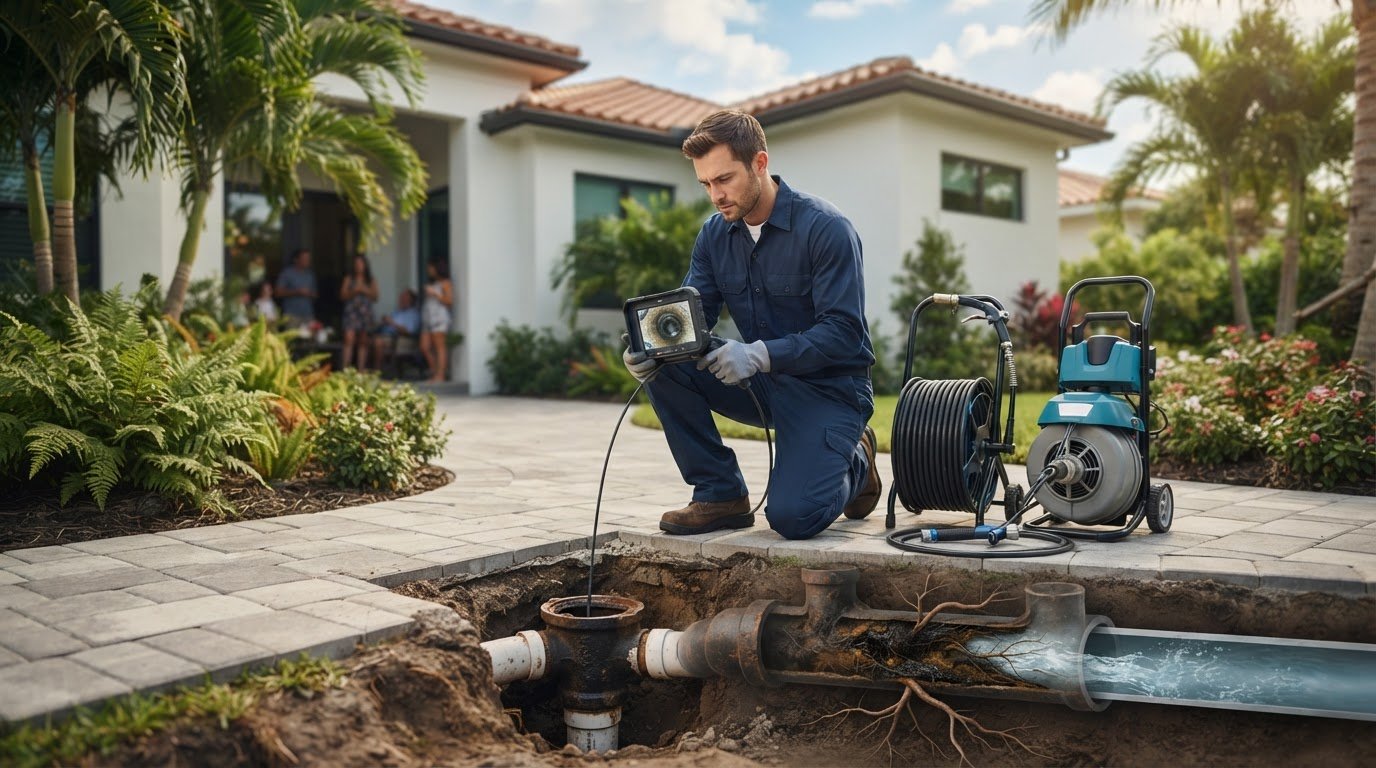
The quickest way to solve a recurring clog is to understand what may be causing it before choosing a cleaning method. For drain cleaning Broward County homeowners and businesses may need, the first useful step is to note whether the problem affects one fixture or several. A slow sink, backed-up tub, or floor drain that keeps blocking could be caused by grease, hair, soap scum, sand, or tree roots in different parts of the drain or sewer line. Clearing the immediate blockage may not address its source.
This guide covers common causes and warning signs, how professionals use camera inspections to investigate unclear or recurring blockages, and how mechanical cleaning and hydro jetting differ. It also explains which symptoms may point beyond one fixture, so you can choose a sensible next step for your property.
A clear diagnosis helps match the cleaning method to the condition instead of relying on guesswork. It also gives you a better understanding of what is affecting your plumbing and how to restore reliable flow.
Key Takeaways
- Track which fixtures are affected and when symptoms occur to help narrow down where the blockage may be.
- Problems in more than one drain can point to an issue beyond a single fixture and may call for further investigation.
- For drain cleaning Broward County properties, the right approach depends on the blockage’s location, material, and inspection findings.
- If a clog returns, stop repeated forceful attempts and consider a professional assessment to guide the next step.
Drain Cleaning in Broward County: Recognize the Problem Before It Gets Worse
A slow kitchen sink can disrupt meal prep, while a blocked shower or floor drain can affect a whole household or workplace. Notice whether the problem is limited to one fixture or is showing up in several places. Drain cleaning is the process of clearing buildup or obstructions from a drain pathway so wastewater can flow through it. Recognizing the pattern helps you describe the issue and decide whether it needs professional attention.
A drain problem may start at one fixture, develop in a branch drain shared by several fixtures, or involve the main sewer line. This overview of plumbing drain design and common issues provides background, but symptoms alone cannot confirm where a blockage is. The number and location of affected drains are useful clues.
- Water drains slowly or stops moving in a sink, tub, shower, or floor drain.
- A clog clears temporarily, then returns.
- Drains gurgle or make bubbling sounds as water moves.
- Several fixtures drain poorly or back up around the same time.
Which drain-clog symptoms deserve attention?
An isolated slow sink may point to a blockage close to that fixture. If several drains are affected, the problem may be farther along a shared branch or the main sewer line. A clog that keeps returning also deserves attention because a temporary clearing may leave material or another underlying cause in place. Sewage odors or wastewater backing up call for prompt plumbing help.
Notice what happens when you use nearby fixtures. If running water in one area coincides with gurgling or backup elsewhere, report that pattern rather than treating each drain as a separate problem. Stop using a fixture that is overflowing. Continuing to run water can spread wastewater and make the affected area harder to manage.
How Broward County property owners can describe the issue
Before arranging help, note which fixtures are affected, when the symptoms began, and whether the clog returned after clearing. Record whether the problem happens during particular activities, such as using a sink or shower. These details give a plumbing professional a useful starting point for assessing the drain and deciding whether more diagnosis is needed.
These observations are useful whether your property is in Weston, Miramar, Pembroke Pines, Davie, Sunrise, Southwest Ranches, Cooper City, or Plantation. If you notice sewage odors or wastewater backup, seek prompt assistance through Broward County emergency plumbing. Clear notes can help focus the assessment and guide the next step for drain cleaning Broward County properties need.
How Drain Professionals Diagnose a Clog in Broward County
Diagnosis starts with the pattern, not a guess about what is inside the pipe. A professional considers which fixtures are affected, whether they share a drain pathway, and whether the trouble is constant or intermittent. One slow fixture may focus attention near that fixture. Several drains acting up can point to a shared branch or a concern farther along the sewer line. These clues help determine what to inspect next, but they do not prove the blockage’s exact location.
Where water backs up, which fixtures were used beforehand, and whether the problem has returned can all help narrow down the possibilities. A professional can assess the affected drains and decide whether targeted clearing is appropriate or whether a closer look inside the pipe would be useful. Diagnosis helps match the cleaning approach to the blockage instead of relying on guesswork.
What a sewer camera inspection can reveal
A sewer camera inspection lets a professional view the inside of a pipe and investigate an unclear or recurring problem. The images can help locate visible buildup, an obstruction, or another concern along the section being inspected. This gives the plumber more information before selecting a next step. A camera inspection supports diagnosis; it does not automatically mean extensive work is needed.
Inspection findings help guide the decision. Depending on what the camera shows, the next step may be drain cleaning or another appropriate service. If you notice possible signs of a separate water leak, such as unexplained dampness alongside drain symptoms, leak detection services address a different diagnostic question than clearing a drain. Symptoms alone cannot establish the cause.
When a clog may point beyond one drain
Several fixtures having trouble at once, or a clog that repeatedly returns, gives a professional reason to assess more than one drain. The fixtures’ locations and how their symptoms relate can help indicate whether the issue may involve a shared pathway. That pattern does not confirm a sewer-line obstruction or pipe damage. An inspection helps establish what is happening and where.
Keep drain-flow issues distinct from possible leak signs. Slow drainage, gurgling, or wastewater backing up concern the movement of water through a drain. Persistent damp areas or unexplained moisture may raise a separate leak question and call for a different assessment. Broward County’s Water and Wastewater Services provides information about the local public system, while a plumbing assessment can focus on your property’s drain symptoms.
- List each affected fixture and its location.
- Note whether symptoms happen together or recur at different times.
- Describe any moisture or odor separately from slow or backed-up drains.
Clear observations help make drain cleaning Broward County properties need more targeted. A professional can compare your notes with the assessment, use a camera inspection when the cause remains unclear, and select a suitable next step. If symptoms keep returning or affect multiple drains, you can schedule a plumbing assessment.
Drain Cleaning Methods in Broward County: Match the Approach to the Blockage
Effective drain cleaning starts with choosing a method that suits the problem, rather than defaulting to the most forceful option. A blockage close to one fixture may call for a different approach than buildup along a longer section of pipe. The blockage’s location and material, the pipe’s condition, and any inspection findings help guide the choice. For drain cleaning Broward County properties, the goal is to address the diagnosed obstruction with an appropriate method.
How mechanical drain cleaning differs from hydro jetting
Mechanical cleaning uses suitable drain-cleaning equipment to reach and clear an obstruction. Hydro jetting uses high-pressure water to clean the inside of a pipe when conditions make it appropriate. The methods serve different purposes, and neither is the automatic answer to every clog. The assessment of the blockage and line helps determine which approach fits.
For example, a localized obstruction and widespread material along a pipe may call for different considerations. A professional can assess the symptoms and, if needed, use a sewer camera inspection to view the pipe interior before recommending a method. This helps distinguish a straightforward clearing task from a situation where more information about the line is needed.
Hydro jetting uses specialized equipment and pressure, so suitability matters. It is not a universal fix or the right choice simply because a clog is stubborn. The Broward County hydro jetting guide explores the method in greater depth. The key is to match it to the diagnosed condition.
Why the pipe condition matters when choosing a method
Blockage location and material are only part of the decision. Inspection findings and pipe condition also help inform the approach. If the cause or line condition remains unclear, a camera inspection can provide useful information before cleaning proceeds. Findings guide the next step, but they do not automatically mean extensive work is required. No single method suits every pipe or situation.
A clear explanation of the options helps you understand why a method is recommended and how it relates to your symptoms. Ask for the diagnosis and proposed approach in plain language. This keeps the decision focused on the actual condition rather than assumptions based on the fixture alone.
- Mechanical cleaning: Targets an obstruction using appropriate drain-cleaning equipment.
- Hydro jetting: Uses high-pressure water to clean pipe interiors when the assessment supports its use.
- Camera inspection: Helps investigate an unclear or recurring blockage by viewing the pipe interior.
If a clog keeps returning or the affected area is unclear, a professional assessment can help determine which option fits. You can book drain service to discuss the symptoms and next steps.
What to Do About a Clogged Drain in Broward County
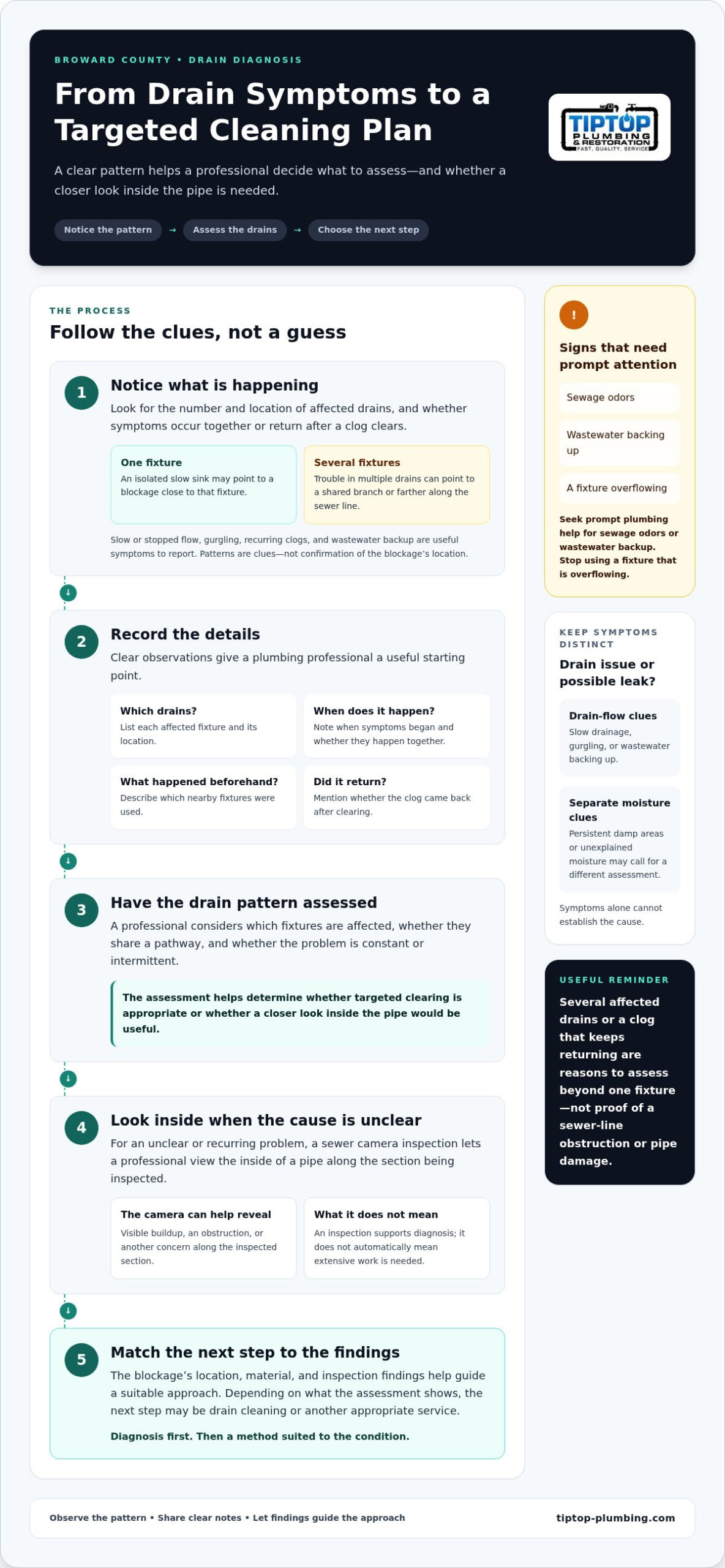
A clogged drain can be stressful, but a few clear steps can help protect the area and give a plumber useful information. First, distinguish an isolated slow drain from a backup affecting several fixtures. A single sink that drains slowly may be less urgent than wastewater rising in a tub or multiple drains becoming unusable. Do not keep running water into a fixture that is backing up.
Use this sequence to respond:
- Identify affected fixtures. Check which sinks, tubs, showers, or floor drains are slow or backing up. Note whether the problem is limited to one spot or appears across the property.
- Stop using an overflowing fixture. Keep water from adding to the backup, and avoid using connected fixtures if they seem to make it worse.
- Record what you observe. Write down when symptoms started, whether they return, and any gurgling, odors, or changes in more than one drain.
These notes help a plumbing professional understand the pattern and decide what to assess. They can also help prevent treating several connected symptoms as unrelated fixture problems.
When is a drain problem urgent?
Sewage backup, rising wastewater, or several unusable drains are urgent warning signs. Stop using affected fixtures, limit contact with wastewater, and keep children and pets away from the area. Do not make repeated forceful or improvised attempts to clear the drain if water continues to back up. A single slow drain may need assessment, but a multi-fixture backup warrants prompt attention because the problem may extend beyond one fixture.
For an urgent backup, Broward County emergency plumbing service is relevant when wastewater is affecting your property. Share which drains are involved and whether the backup is still rising. That information helps the plumber understand the immediate situation and plan an appropriate assessment.
Habits that can help reduce repeat clogs
Everyday habits can limit what enters household drains, though they cannot resolve an existing obstruction or explain recurring symptoms. Keep cooking grease, wipes, and bulky debris out of drains. Use sink strainers to catch food scraps and bathroom strainers to collect hair. Empty them into the trash instead of rinsing the trapped material down the pipe.
If a clog keeps returning despite these habits, or multiple fixtures are affected, prevention alone is not enough. The location and cause may need professional assessment, especially if symptoms recur after a temporary clearing. For drain cleaning Broward County homes and businesses need, sharing your observations helps guide the next step without guesswork.
Professional Drain Cleaning in Broward County: What to Expect From Tip Top
A clear process makes it easier to understand what is causing a drain problem and why a particular cleaning method is recommended. Tip Top Plumbing & Restoration provides drain cleaning, hydro jetting, and sewer camera inspections. The service begins with your description of the symptoms, followed by an assessment, selection of an appropriate approach, and a review of the findings. The method depends on the diagnosed condition, not a one-size-fits-all assumption.
- Discuss the symptoms. Explain which fixtures are affected, when the issue began, and whether it has happened before.
- Assess the drain. The plumber considers the symptoms and evaluates the affected area. For an unclear or recurring issue, a sewer camera inspection can help view the pipe interior.
- Choose an approach. Drain cleaning or hydro jetting may be appropriate depending on the blockage and inspection findings.
- Review what was found. You’ll have a clearer picture of the assessment and the recommended next step.
What information helps prepare for a drain service visit?
A little preparation can make the assessment more focused. Identify every affected fixture, note when symptoms began, and share whether the clog returned after an earlier clearing attempt. Mention gurgling or water backing up elsewhere, since the pattern may help distinguish a fixture-level issue from one affecting a shared drain pathway.
Where practical, move items away from the affected drain so the area is accessible. Do not dismantle plumbing or try forceful clearing to prepare. Your notes and a clear work area are useful starting points.
Serving homeowners and businesses across Broward County
Tip Top Plumbing & Restoration provides drain cleaning, hydro jetting, and sewer camera inspections for residential and commercial properties in Weston, Miramar, Pembroke Pines, Davie, Sunrise, Southwest Ranches, Cooper City, and Plantation. Whether the concern is a slow fixture in a home or a recurring drain issue at a business, an assessment helps connect the symptoms to an appropriate service.
Clear communication matters throughout the visit. Share what you have observed, ask for the findings to be explained in plain language, and make sure you understand why the recommended approach fits the diagnosed condition. For drain cleaning Broward County property owners can start with a careful assessment that guides the next step instead of guessing at the cause or method.
Ready to address a recurring or blocked drain? Book a service visit with Tip Top Plumbing & Restoration to discuss the problem and arrange an assessment.
Take the Next Step Toward Reliable Drain Flow
A drain that keeps slowing or backing up is a reason to act on what you have observed, not to repeat temporary fixes and hope the problem stays away. The next step for drain cleaning Broward County properties need is an assessment of the symptoms and a plan based on the drain’s condition. That gives you a practical way forward, whether the issue has just appeared or has become a recurring interruption.
You do not need to know exactly where the blockage is before arranging service. Share what you have noticed, ask what the assessment reveals, and use that information to make an informed decision about the work. A clear diagnosis can replace uncertainty with a focused next step.
With useful information and a considered approach, you can move toward dependable drainage with greater confidence.
Frequently Asked Questions
Why does the same drain keep clogging?
A drain often clogs again because the first clearing did not remove all the material or the underlying cause remains. Grease can cling to kitchen pipes, while hair and soap residue can collect in bathroom drains. A recurring blockage may also signal buildup farther along the drain pathway. Note how soon the clog returns and which fixtures are involved. That history can help a plumber decide whether to clear the drain or investigate further.
Can I use a chemical drain cleaner for a clogged drain?
A chemical drain cleaner may not be the best first step, especially if the clog is recurring or you do not know what is causing it. It cannot show where an obstruction is or whether several fixtures share the same problem. Never mix drain-cleaning products, and follow the product label if you use one. If the drain remains blocked, tell the plumber what you used so they can account for it during the assessment.
How do I know if a clog is in one drain or the main sewer line?
If only one fixture is slow while nearby fixtures work normally, the problem may be limited to that fixture or its branch drain. Trouble in several fixtures, especially if they back up around the same time, can point to a shared drain pathway or an issue farther along the line. These patterns are clues, not proof of a main-line clog. A professional assessment can help locate the problem before a cleaning method is chosen.
Is hydro jetting appropriate for every clogged drain?
No. Hydro jetting uses high-pressure water, so the pipe’s condition, the blockage, and inspection findings should inform whether it is suitable. A different drain-cleaning approach may be more appropriate for a localized obstruction or a line whose condition needs further assessment. If you are considering drain cleaning in Broward County, focus first on identifying the problem rather than assuming hydro jetting is right for every blockage.
What can a sewer camera inspection show?
A sewer camera inspection can show visible conditions inside the section of pipe being inspected, such as buildup, an obstruction, or another concern that may help explain recurring symptoms. The footage can guide the next diagnostic or cleaning step, but it does not automatically mean extensive work is needed. Ask what the camera view shows and how those findings relate to your drain symptoms.
How often should drains be professionally cleaned?
There is no single cleaning schedule that suits every property. The need depends on how the drains are used, whether clogs have occurred before, and what an assessment finds. A household with recurring kitchen buildup may need a different plan from a business with different daily drain use. For properties in Weston, Miramar, Pembroke Pines, Davie, Sunrise, Southwest Ranches, Cooper City, or Plantation, recurring symptoms are a practical reason to seek an assessment rather than rely on a fixed calendar.
What should I do if wastewater backs up into my home?
Stop using water-connected fixtures, keep people and pets away from the affected area, and limit contact with wastewater. Do not try to clear a sewage backup yourself or continue running water to test the drain. If it is safe to do so, note where the backup appeared and whether other fixtures are affected. Contact a plumbing professional promptly and explain that wastewater is entering the home.
Disclaimer
The information provided in this article is for general educational and informational purposes only and should not be considered professional plumbing, restoration, mold remediation, or legal advice. Every plumbing system, property, and situation is unique, and the recommendations discussed may not apply to your specific circumstances.
While Tip Top Plumbing & Restoration strives to provide accurate and up-to-date information, we make no warranties regarding the completeness, accuracy, or reliability of the content. Any actions you take based on this information are at your own risk.
Plumbing repairs, water damage restoration, and mold remediation should be performed by qualified professionals and in accordance with applicable local building codes and regulations. If you are experiencing a plumbing emergency, water leak, or property damage, contact a licensed professional for an on-site evaluation.
Tip Top Plumbing & Restoration is licensed and insured to provide plumbing and restoration services throughout Broward County, Florida.