

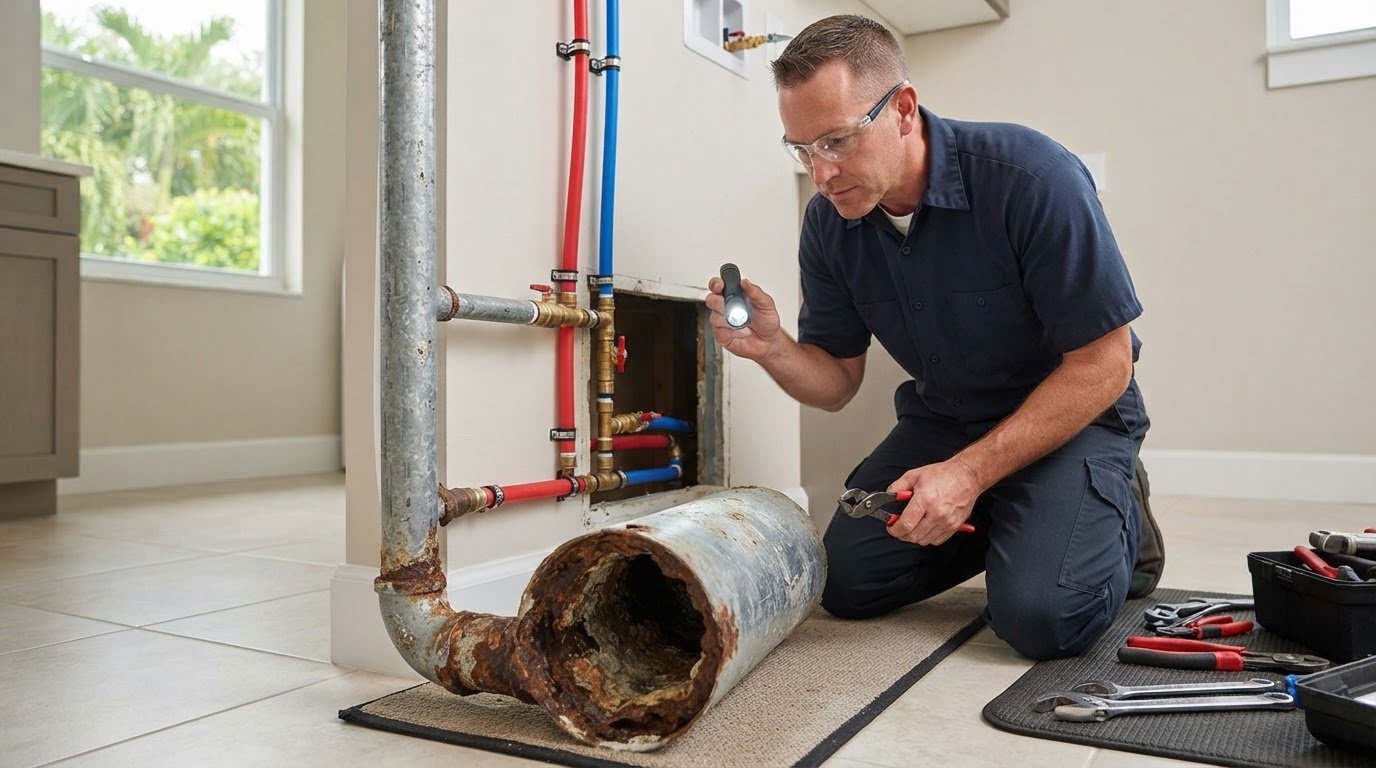
Corroding, leaking, or badly restricted galvanized pipes are strong reasons to consider replacement instead of relying on repeated repairs. For galvanized pipe replacement in Davie, the right scope depends on pipe condition and how much of the plumbing system is affected. The U.S. Environmental Protection Agency says lead particles can accumulate on galvanized pipes and later enter drinking water.
It’s understandable to want clear signs before committing to a major plumbing project. Rust-colored water, reduced water flow, visible corrosion, and recurring leaks can point to aging pipes. The extent and pattern of the damage matter when weighing repair against replacement.
This article explains how galvanized pipes corrode, which warning signs deserve attention, and when replacement may be the more practical long-term choice. It also compares PEX and PVC as alternatives, helping you understand what a repiping decision involves and what to discuss when planning the work.
Key Takeaways
- Rust and mineral deposits can narrow galvanized pipes, reducing water flow and making recurring pressure problems a reason to assess the plumbing system.
- As the zinc lining wears away, the steel beneath can corrode; recognizing that process helps explain why a small repair may not address widespread aging.
- Leaks and pipe failure can lead to water damage, so the location and pattern of leaks are important when weighing repair against replacement.
- PEX and PVC are flexible, easy to install, and resistant to corrosion, but comparing alternatives means considering how each fits the home’s plumbing needs.
- Brownish or reddish water and exposed metallic silver-gray pipes can offer clues that a home has galvanized plumbing.
Should You Replace Galvanized Steel Pipes?
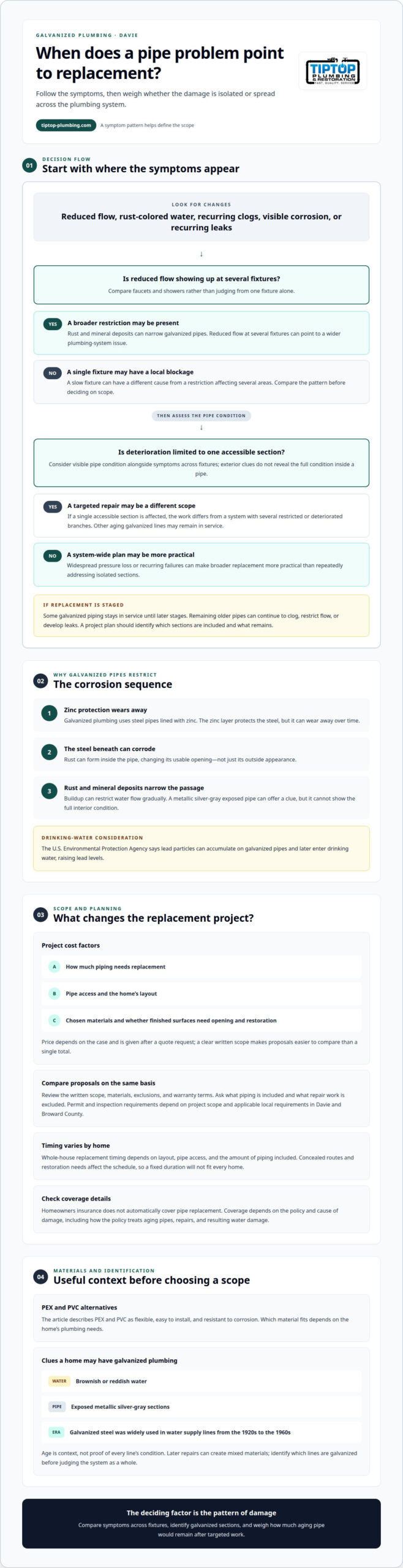
Replacement becomes more compelling when recurring clogs, weak water flow, visible corrosion, or leaks suggest widespread pipe deterioration. The decision depends on whether the problem is isolated or affects multiple parts of the plumbing system.
Replacement Warning Signs
Changes in water flow or appearance, along with visible pipe damage, can signal aging galvanized plumbing. Rust and mineral deposits may build up inside these pipes, narrowing the path water travels and reducing pressure at faucets or showers.
A slow fixture may have a local blockage, while reduced flow at several fixtures can point to a broader restriction. Repeated clogs, rust-colored water, visible corrosion, and recurring leaks make the overall pipe condition important to assess. The U.S. Environmental Protection Agency says lead particles can accumulate on galvanized pipes and later enter drinking water, raising lead levels.
When comparing repiping proposals, review the written scope, materials, exclusions, and warranty terms side by side. Permit and inspection requirements depend on the project scope and applicable local requirements in Davie and Broward County.
Homeowners insurance doesn’t automatically cover pipe replacement; coverage depends on the policy and the cause of the damage. Review your policy language to understand how it treats aging pipes, repairs, and resulting water damage.
Replacement Cost Factors
Replacement cost factors are the project details that determine how much work a home’s repiping requires. The price depends on the case and is given after a quote request; key factors include how much piping needs replacement, access to the pipes, the home’s layout, and the chosen materials.
The work can also vary depending on whether damaged areas are easy to reach or require opening and restoring finished surfaces. A clear scope helps you compare proposals on the same basis, rather than judging them by a single total. Ask what piping is included and what repair work is excluded.
Project Timing and Staged Replacement
The time needed for whole-house replacement depends on the home’s layout, pipe access, and the amount of piping included. Concealed routes and restoration needs affect the schedule, so a fixed duration won’t fit every home.
Staged replacement can spread work across separate areas, but it leaves some galvanized piping in service until later stages. That older piping can continue to clog, restrict flow, or develop leaks while replacement remains incomplete. A project plan should identify which sections are being replaced and how the remaining pipes affect the decision to stage the work.
When deciding, weigh the pattern of symptoms against the amount of aging pipe left in place. Widespread pressure loss or recurring failures can make a system-wide plan more practical than repeatedly addressing isolated sections.
Galvanized pipe corrosion and rust
Galvanized plumbing uses steel pipes lined with zinc. That zinc layer protects the steel, but it can wear away over time. Once protection weakens, the steel underneath can corrode and form rust inside the pipe. This internal process matters because corrosion can affect the pipe’s usable opening, not just its outside appearance.
Rust and mineral deposits can collect along the interior walls of pipes. As buildup reduces the space available for water, flow may become restricted. For example, a faucet that once delivered a steady stream may produce less water as deposits accumulate. A blockage at one fixture can have a different cause, so compare several fixtures and note whether the change affects one area or the home.
Corrosion can also make the inside of a pipe uneven, creating more places for rust or deposits to collect and further narrowing the passage. This restriction can develop gradually, making changes in water flow easy to overlook. Note which taps show reduced flow and whether the pattern extends across the home.
External clues can help, but they don’t reveal the full condition of a pipe’s interior. An exposed section may look metallic and silver-gray, while corrosion inside remains hidden. A plumber can assess the piping and distinguish a localized issue from broader deterioration. Visible rust, the condition of accessible pipe, and symptoms at multiple fixtures all help build a clearer picture.
Consider the extent of the corrosion before choosing between a repair and broader replacement. If a single accessible section is affected, the scope differs from a system where several branches show restrictions or deterioration. Replacing only one section may leave other aging galvanized lines in use. A plumbing assessment can help clarify what the visible symptoms indicate and which pipes need attention.
Age can provide context, but it doesn’t establish the condition of every line. Galvanized steel pipes were widely used in residential and commercial water supply lines, especially from the 1920s to the 1960s. Homes with plumbing from that era may contain galvanized sections, though later repairs can create mixed materials. Identify which lines are galvanized before judging the system as a whole.
Corrosion is more than a surface stain: it can change the pipe’s interior and restrict water movement. Comparing symptoms across fixtures, identifying galvanized sections, and assessing the extent of rust helps determine whether targeted work is enough or broader repiping is more appropriate.
When the zinc layer on galvanized pipes wears away, the steel underneath can corrode and form rust inside the pipes. Consider this hidden change alongside existing signs, such as reduced flow at multiple fixtures, visible rust on accessible pipe, or an uneven interior surface. No single clue describes every line, so assess the affected sections before deciding how much work is needed.
Leaks and pipe failure
Corroded galvanized pipes can leak or burst, potentially causing extensive water damage. A leak may begin as a damp patch near an exposed pipe, while a failure can release water quickly. The pipe’s condition and the leak’s location help determine whether a localized repair addresses the problem or more piping needs replacement.
Look for changes around plumbing routes, not only beneath sinks. A damp cabinet floor, a water mark near a visible pipe, or moisture beside a wall can point to a leak. These signs don’t identify the exact source on their own. Note where they appear and whether they return after the area dries, then share those details during an assessment.
Act promptly if water is actively escaping. If the fixture has a shutoff valve, turning it off can stop flow to that fixture. If the leak continues, use the home’s main shutoff if you can safely reach it. Move items away from wet areas and note which rooms or fixtures are affected. Don’t assume a dry visible section means the concealed pipe is sound.
The pattern matters. A leak at one fitting may call for a different scope than leaks in separate areas. For example, a leak under one bathroom sink is a localized symptom, while recurring leaks near several galvanized pipe runs suggest a broader condition to assess. Note the locations, timing, and any changes in water flow. This information helps distinguish an isolated failure from aging plumbing across the home.
A repair can stop water at a damaged section, but it doesn’t renew the remaining galvanized lines. If other sections show deterioration, they remain part of the system and may develop problems later. Whole-house repiping replaces the plumbing more broadly, while a limited repair addresses a defined location. The right scope depends on the affected pipe and the condition of connected sections.
After a leak, check nearby floors, cabinets, and walls for visible dampness or water marks. Keep a simple record of affected areas and repeat incidents. If wet materials or spreading water are present, water damage restoration may be relevant after the leak source is addressed. Clear notes also help explain the issue and assess whether a broader replacement plan is warranted.
For Davie homeowners, a focused plumbing assessment can connect leak evidence with the condition of galvanized lines. An assessment for recurring pipe leaks can help define the next step, whether that means addressing one damaged area or considering broader repiping.
PEX and PVC pipe alternatives
PEX and PVC are alternatives homeowners may consider when replacing galvanized water piping. Both are flexible, easy to install, and resistant to corrosion. Those shared qualities address an important concern with aging metal pipes: choosing piping that won’t rust in the same way. The right option still depends on the home’s layout and the specific plumbing plan.
Flexibility can help installers route piping through existing spaces in a home. For example, a line running through a wall cavity may require a different route than one crossing an open utility area. Ease of installation can also shape how the work proceeds, but it doesn’t mean every replacement follows the same method. Access, connections, and the existing layout all matter.
PEX and PVC aren’t interchangeable just because they share some advantages. Their suitability depends on the intended use and the design of the replacement system. Start by identifying the pipes being replaced, including their locations, connections, and destinations, such as a kitchen sink, bathroom shower, or water heater. This gives the project a practical basis instead of relying on material names alone.
Ask for the proposed material and scope to be clearly identified in the written plan. It should explain where each material will be used, how new lines connect to the home’s plumbing, and whether the plan replaces all galvanized sections or only selected runs. If old galvanized branches will remain in service, understand how they fit into the overall plan.
Corrosion resistance matters because galvanized steel relies on a zinc lining that can wear away. PEX and PVC resist corrosion, but that trait alone doesn’t determine which option suits a particular home. The routing plan, pipe locations, and connection points provide more useful context for comparing alternatives.
During a project discussion, use a simple checklist:
- Which galvanized sections will be removed?
- Where will PEX or PVC be installed?
- How will new piping connect with existing plumbing?
- Which areas or fixtures will be affected by the work?
These questions help reveal whether two proposals cover the same work. A plan addressing only the visible problem differs from one replacing galvanized piping throughout the home. Comparing scope alongside material prevents a narrow quote from appearing equivalent to a broader repiping plan.
For a Davie home, choose based on the system’s needs, not a general claim that one material is always better. A clear explanation of routing, connections, and replacement coverage lets you weigh PEX and PVC using relevant project details.
Signs of galvanized plumbing in older homes
Two visible clues can help identify galvanized plumbing: brownish or reddish household water and exposed pipes with a metallic, silver-gray appearance. Neither clue alone maps every pipe in a home, but both provide useful starting points for an inspection. Look at accessible plumbing near sinks, laundry areas, and water heaters without removing covers or fittings.
Galvanized steel pipes were extensively used for residential and commercial water supply lines. They gained popularity especially from the 1920s to the 1960s, so the home’s construction era can provide context. A home from that period could still have later replacement sections, making it important to distinguish original plumbing from visible newer work.
Start with a simple visual survey. Note the exposed pipe’s color, where it runs, and which fixtures it appears to serve. For example, silver-gray piping beneath a bathroom sink is one clue, while a brownish tint from a kitchen tap is another. Record each observation by room rather than assuming one exposed section represents the entire system.
Water color can change for reasons beyond pipe material, so treat a tint as an indicator, not a complete diagnosis. Compare water from different fixtures and note whether discoloration appears in one location or several. A single affected faucet offers different information from similar color changes at the kitchen sink, bathroom, and laundry connection.
Older homes can contain more than one pipe material. Repairs or renovations may have replaced only a visible section, leaving galvanized piping elsewhere. A newer-looking connection near a fixture doesn’t establish that every supply line has been updated. Review past plumbing records, if available, and compare them with accessible pipe locations.
Useful observations include:
- The construction era and any known plumbing renovations.
- Locations where exposed pipes appear metallic and silver-gray.
- Fixtures where household water looks brownish or reddish.
- Whether the same clue appears in one room or several.
- Visible changes in pipe material along accessible routes.
These notes help focus an assessment on specific rooms and lines. A plumbing professional can identify accessible materials and explain what further inspection is appropriate. Don’t scrape or cut a pipe to identify it; record what you can see and leave concealed sections intact. For Davie homeowners considering replacement, knowing which lines are galvanized helps define the work’s scope.
Pair visual clues with the home’s plumbing history before deciding whether replacement is appropriate. The age of a house alone doesn’t prove every pipe is galvanized, and one silver-gray section doesn’t reveal hidden branches. A clear map of observed materials and water changes gives the next assessment a practical starting point.
Tip Top Plumbing & Restoration: Emergency Plumbing
Tip Top Plumbing & Restoration can help when a leak, pipe failure, or sudden plumbing problem needs attention. Its Emergency Plumbing service addresses urgent plumbing issues, while Leak Detection & Slab Leak Repair can help locate leaks affecting a home. For aging galvanized lines, Sewer Repiping Services may be relevant when an assessment points to broader replacement rather than a localized repair.
Share which fixtures are affected, where you’ve noticed moisture, and whether water flow has changed. Those details help clarify the problem and the appropriate next step. For plumbing help in Davie, contact Tip Top Plumbing & Restoration.
Make a Clear Plan for Your Plumbing
Planning galvanized pipe replacement in Davie is easier when the next step is a focused conversation about your home’s plumbing. Bring notes on affected fixtures, visible pipe locations, prior repairs, and changes you’ve noticed. These details help frame a practical discussion about which sections need attention and how to scope the work.
Use that conversation to clarify what the proposed work includes, which materials are planned, and how remaining pipes fit into the overall approach. The right decision depends on your plumbing’s condition and layout, not simply the home’s age. A clear scope gives you a useful basis for moving forward with confidence.
Take the next step with a clear understanding of your home’s needs and a plan built around them.
Tip Top Plumbing & Restoration for Galvanized Pipe Replacement in Davie
Tip Top Plumbing & Restoration offers Sewer Repiping Services and Whole House Repipes, making the company a natural next step when galvanized pipes need replacement. The team also provides Leak Detection and Copper Pipe Leak Repair.
Turn to Tip Top Plumbing & Restoration when you’re ready to discuss pipe replacement or need help identifying a leak. Its plumbing services also include Emergency Plumbing, Camera Inspections, and Drain & Sewer Services.
Frequently Asked Questions
What are the signs that your home may have galvanized plumbing?
Past plumbing records and visible pipe connections can provide useful clues. If renovation paperwork mentions galvanized steel, note which rooms or supply lines were included, since a partial update may leave older sections elsewhere. Compare those records with accessible pipes near fixtures, but don’t remove fittings or cut into walls to identify materials. A plumbing assessment can help distinguish galvanized lines from newer sections and clarify what remains.
Which plumbers in Davie, Florida replace galvanized pipes?
Tip Top Plumbing & Restoration serves Davie and offers Whole House Repipes and Sewer Repiping Services. For homeowners planning galvanized pipe replacement in Davie, these services can address projects where an assessment points to broader replacement. The company also serves nearby Broward County communities, including Weston, Miramar, Pembroke Pines, Sunrise, Southwest Ranches, Copper City, and Plantation. Share the affected areas and any known renovation history when discussing the project.
What pipe materials are best for replacing galvanized plumbing: copper, PEX, or CPVC?
No single material is best for every home; compare the proposed material with the plumbing layout and replacement scope. For galvanized pipe replacement in Davie, copper isn’t prone to rust or corrosion, while PEX and PVC are flexible, easy to install, and corrosion-resistant. CPVC is a separate material, so don’t treat it as interchangeable with PVC. Ask how the proposed material suits the specific lines being replaced and connects with existing plumbing.
Disclaimer
The information provided in this article is for general educational and informational purposes only and should not be considered professional plumbing, restoration, mold remediation, or legal advice. Every plumbing system, property, and situation is unique, and the recommendations discussed may not apply to your specific circumstances.
While Tip Top Plumbing & Restoration strives to provide accurate and up-to-date information, we make no warranties regarding the completeness, accuracy, or reliability of the content. Any actions you take based on this information are at your own risk.
Plumbing repairs, water damage restoration, and mold remediation should be performed by qualified professionals and in accordance with applicable local building codes and regulations. If you are experiencing a plumbing emergency, water leak, or property damage, contact a licensed professional for an on-site evaluation.
Tip Top Plumbing & Restoration is licensed and insured to provide plumbing and restoration services throughout Broward County, Florida.