
The more powerful option isn’t automatically the safer or smarter choice for a stubborn drain. In the hydro jetting vs drain cleaning decision, the right approach depends on what’s blocking the line and the pipe’s condition, not simply how quickly you want the water flowing again.
Recurring clogs can disrupt the whole household, especially when the cause isn’t clear. A drain snake can break through a blockage and restore flow. Hydro jetting uses high-pressure water to scour buildup from inside the pipe. That broader cleaning can help with some recurring problems, but pressure may be unsuitable for old, fragile, or damaged pipes.
This guide explains how the methods differ, when each may help, and what details can point toward a suitable next step. A camera inspection can help clarify the blockage’s location and the pipe’s condition before a method is chosen. If a drain problem is affecting your Broward County home, these details can help you understand the options Tip Top Plumbing & Restoration provides.
Key Takeaways
- “Drain cleaning” can describe a service, while snaking is one specific way to address a clog.
- For hydro jetting vs drain cleaning, blockage type, location, recurrence, and pipe condition help guide the choice.
- Neither method fits every situation. The right approach depends on what’s happening inside the line.
- Note which fixtures are affected and whether the problem keeps returning before arranging a drain assessment.
- In Broward County, a camera inspection can help inform the choice between drain cleaning methods.
Hydro Jetting vs. Drain Cleaning: What Is the Difference?
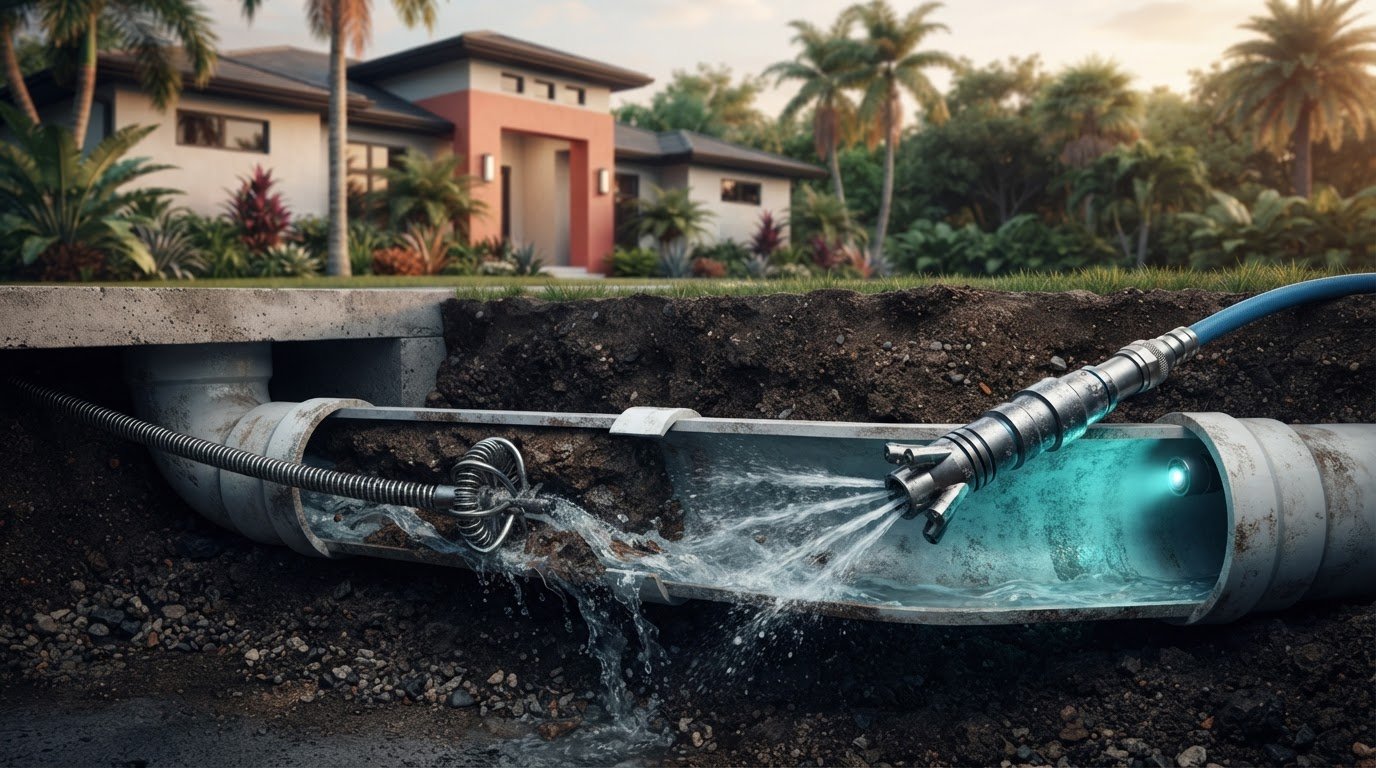
Both methods can address clogs, but they work differently inside a pipe. Drain cleaning is a broad term for clearing or cleaning a drain. The specific method depends on the blockage and the line. Snaking is one drain-cleaning method. Hydro jetting uses controlled, high-pressure water inside a drain or sewer line.
Snaking uses a cable and cutting head to break through a blockage, while hydro jetting directs high-pressure water through the line to clean buildup from its interior surfaces. Snaking may open a route through a clog. Hydro jetting aims to address residue along the pipe as well. This distinction matters because “drain cleaning” can refer to several methods, not just one technique.
What does drain snaking do?
A plumber feeds a flexible cable, often called an auger or drain snake, into the pipe toward the blockage. Its head can break up or catch material so it can be moved or removed, helping restore a path for wastewater to flow.
Snaking can help with a localized obstruction, but opening a path doesn’t necessarily clear grease, sludge, or other residue from the pipe walls. If buildup remains, the drain may need further assessment, particularly if the same problem returns.
How does hydro jetting clean a line?
Hydro jetting sends controlled, high-pressure water through a hose and nozzle inside the drain or sewer line. The water is directed against the pipe’s interior to help remove accumulated grease, scale, sludge, and other buildup, rather than simply making a narrow passage through a clog.
Think of the difference as clearing a route versus washing the surrounding surface. A snake works on the blockage it reaches. Hydro jetting is intended to clean along the inside of the line. The amount and location of buildup, along with the pipe’s condition, help determine whether this broader cleaning approach is suitable.
Hydro jetting isn’t automatically the better choice for every drain. If the line’s condition or the blockage location is uncertain, a sewer camera inspection can provide information to guide the method. Tip Top Plumbing & Restoration provides drain cleaning, hydro jetting, and camera inspections in Broward County. For more detail on the water-jet method, read the Broward hydro jetting guide.
How Snaking and Hydro Jetting Work, and What Each Can Address
The right method depends on more than whether water is draining slowly. The material causing the blockage, its location, how much of the line is affected, and whether symptoms keep returning all help shape the decision. A cable may suit a reachable obstruction, while buildup along a pipe may call for a different kind of cleaning.
Consider the pattern as well as the symptom. One slow bathroom sink is different from several fixtures draining poorly at the same time. Neither pattern confirms the cause, but noting which drains are affected and whether the problem recurs gives a plumber useful information before work begins.
When can snaking be a reasonable first approach?
Snaking may be considered for a localized blockage affecting one fixture, such as a bathroom sink or tub that drains slowly. Hair and similar material can collect near a drain opening, but the symptom alone doesn’t confirm what’s inside the pipe. A plumber can use a drain snake to reach and break through an obstruction. The result depends on the blockage and its location.
If the same fixture slows again, the obstruction may have returned, or material left behind may still be affecting flow. There may also be another underlying issue. Clearing a path can address the immediate blockage without identifying every reason it formed.
When might hydro jetting be considered?
Hydro jetting may be considered when grease, sludge, or other accumulated material appears to extend along a drain or sewer line, particularly if symptoms recur after a clog is cleared. Rather than targeting only one obstruction, the water jet is used to clean buildup from the pipe interior. Whether it’s suitable depends on the line and the cause of the problem.
Roots or heavy buildup call for careful assessment, not an automatic choice of higher pressure. A sewer camera inspection can help show where the material is and provide information about the pipe’s condition. That information helps guide the next step. Hydro jetting isn’t appropriate for every line, so diagnosis matters before choosing the method.
Recurring symptoms are a reason to investigate the cause, not simply repeat the same clog-clearing step. If a drain improves after snaking but slows again, material may have returned or the first clearing may not have addressed the broader issue. If several drains are affected, the problem may involve a shared section of plumbing rather than one fixture. These clues help direct an assessment, but they don’t establish a diagnosis on their own.
For more context on the method and its use in local drain restoration, visit Tip Top Plumbing & Restoration’s Broward hydro jetting guide. If a recurring drain issue needs assessment, schedule drain service so the blockage and line can guide the method.
Hydro Jetting vs. Drain Snaking: Compare Safety, Suitability, and Results
A drain snake and hydro jetting differ in how they work and how much of the line they address. A snake targets an obstruction with a cable. Hydro jetting uses pressurized water to clean buildup along the pipe’s interior. Neither method is automatically best for every clog or pipe. The suitable choice depends on the blockage, its location, and the line’s condition.
| Method | Typical purpose | Scope | Key suitability consideration |
|---|---|---|---|
| Drain snaking | Reach and break through a localized obstruction | Focuses on the blockage, rather than cleaning the full pipe wall | Consider where the clog is and whether symptoms point to a localized issue |
| Hydro jetting | Address accumulated material inside a drain or sewer line | Directs water along the pipe’s interior to remove buildup | Assess the pipe’s condition before using high-pressure water |
Does hydro jetting risk damaging pipes?
Hydro jetting may be unsuitable for a line that’s old, fragile, or damaged, so pipe condition matters before using pressure-based cleaning. The pipe’s material, age, visible condition, and the type and location of the blockage all inform whether hydro jetting is appropriate. A method that makes sense for one section of plumbing may not suit another.
If the pipe’s condition or the obstruction’s location is uncertain, a sewer camera inspection can show the inside of the line and help guide the decision. It adds information beyond symptoms alone, which is especially useful before choosing a method that directs high-pressure water through the pipe.
Which method offers the more complete cleaning?
Snaking can clear a path through a blockage, but it may leave residue along the pipe walls. Hydro jetting is designed to clean buildup from more of the interior surface, which can matter when accumulated material contributes to recurring symptoms. That broader cleaning doesn’t guarantee a lasting fix. Results still depend on the cause and condition of the line.
For Broward homeowners, choose a method based on the particular drain or sewer line, not on the assumption that more pressure means better results. A single obstruction and buildup distributed along a line call for different considerations. Identifying roots or heavy deposits isn’t enough by itself to determine the safest approach. The pipe’s condition matters too.
This is the practical difference in hydro jetting vs drain cleaning: “drain cleaning” can include different techniques, while hydro jetting is one specific approach. A camera inspection can help clarify whether the issue is localized or extends along the line, and whether the pipe appears suitable for the proposed method. Assess first, then choose the method.
How to Decide Between Hydro Jetting and Drain Cleaning
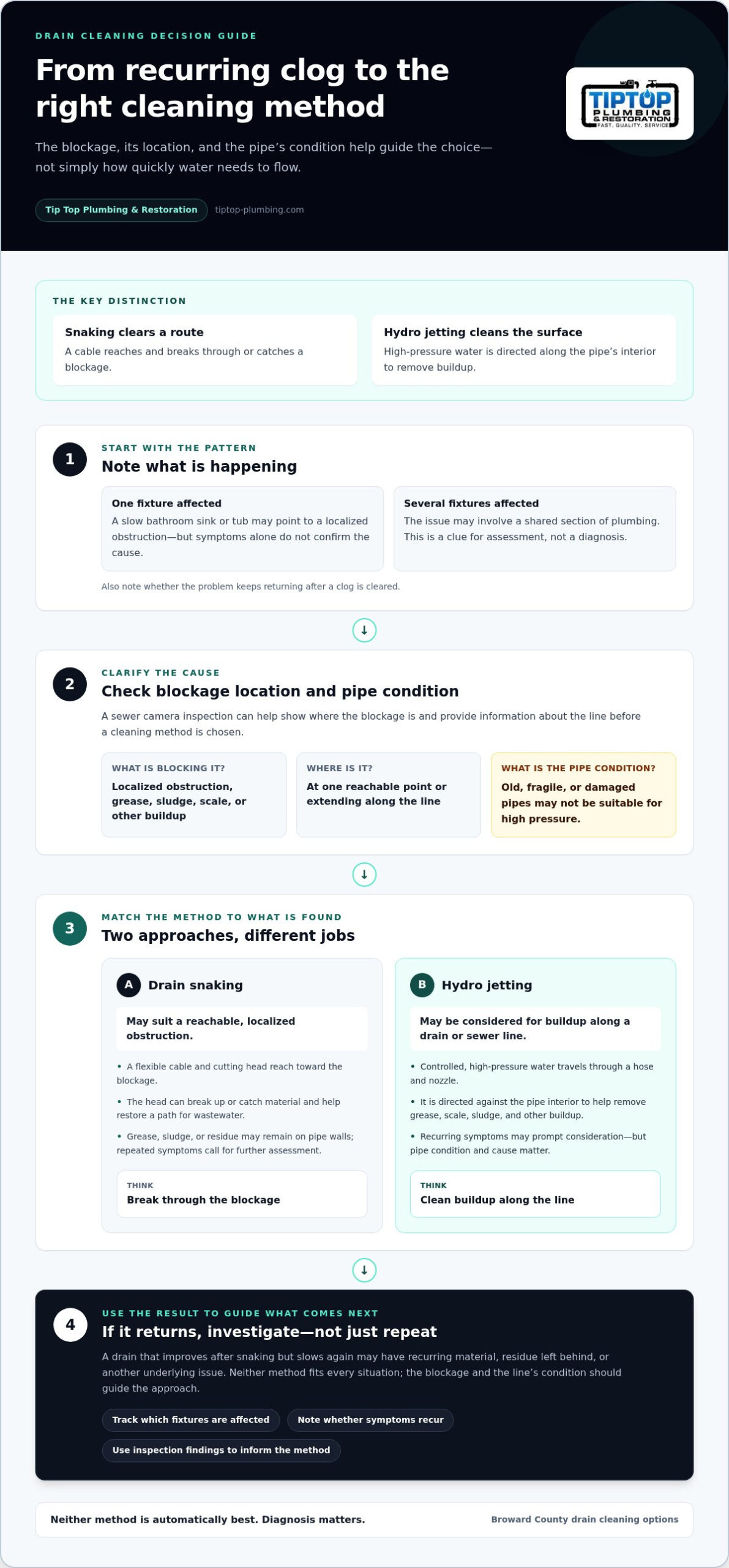
Don’t choose a method based on one symptom alone. Start with what’s happening in the home, then use an assessment to determine whether snaking, hydro jetting, or another response is appropriate. These steps can help you prepare:
- Identify affected fixtures. Note each slow or blocked drain. One affected sink differs from several fixtures backing up, which may point to a shared line.
- Track recurrence. Record whether the problem is new or has returned after previous clearing. Repeated symptoms may mean the blockage has returned or another cause needs attention.
- Diagnose before choosing. A professional evaluation can connect the symptom pattern with the blockage location and visible pipe condition, helping guide the method instead of relying on guesswork.
What symptoms should a homeowner note?
Write down which fixtures drain slowly and whether more than one is affected. Note whether the problem appeared suddenly, gradually worsened, or returned after earlier clearing. Include any gurgling or backups you’ve observed, and mention active overflow promptly. These details don’t diagnose the clog, but they give a plumber a clearer starting point than “the drain is slow.”
Patterns can help distinguish a fixture-level issue from a problem farther along a shared drain or sewer line. For example, slow drainage at more than one fixture may warrant checking the common line rather than treating each drain as an unrelated clog. It’s a clue, not a diagnosis. In the hydro jetting vs drain cleaning decision, the location of the issue matters as much as what the water is doing.
When can a sewer camera inspection help?
A sewer camera inspection can help locate a problem inside an accessible line and assess its visible condition. The findings may clarify whether an obstruction appears localized or buildup extends farther along the pipe. They can also inform whether the line’s condition is suitable for a proposed cleaning method. An inspection provides evidence for the decision, but it doesn’t promise a particular finding.
Share your notes about affected fixtures, recurrence, and any backup with the plumbing professional assessing the problem. Pairing those observations with diagnostic information helps make the choice between drain cleaning methods more reasoned. Tip Top Plumbing & Restoration provides drain cleaning, hydro jetting, and camera inspections for Broward County homeowners. The aim is to match the approach to the condition and cause, rather than assume one technique fits every clog.
Choosing Drain Cleaning Help in Broward County
A useful service visit starts with the problem you’re seeing, not an assumption that every clog needs the same treatment. Tip Top Plumbing & Restoration provides drain cleaning, hydro jetting, and camera inspections. These services support a method-based approach: understand the symptoms, assess the affected drain or sewer line, then use the findings to guide the next step.
That distinction matters when comparing hydro jetting vs drain cleaning. Hydro jetting is one specific cleaning method, not a universal solution. If the cause or condition of the line is unclear, an assessment can help determine whether another drain-cleaning approach is more suitable.
What to expect from a method-based assessment
Start by describing which fixtures are affected, how long the issue has been present, and whether it has returned after earlier clearing. Mention any backups or overflow, too. This history helps focus attention on the right drain or sewer line and gives useful context for an inspection.
If a camera inspection is appropriate, its findings can help locate a problem and assess visible pipe condition. That information may guide the choice between drain-cleaning methods, including whether hydro jetting suits the line. The assessment informs the decision rather than presuming the result.
When to arrange local drain service
Arrange an assessment if a clog keeps returning, more than one drain is affected, or wastewater is backing up. These symptoms can disrupt daily routines, and multiple affected fixtures may warrant looking beyond one drain. Note what you observe and share it during the service visit. Clear details help the plumber understand the pattern and determine what to investigate.
Tip Top Plumbing & Restoration serves Broward-area communities including Weston, Miramar, Pembroke Pines, Davie, Sunrise, Southwest Ranches, Copper City, and Plantation. Wherever you’re located in these communities, the central question is the same: what do the symptoms and the line’s condition indicate? Drain cleaning, hydro jetting, and camera inspection each have a role. Inspection findings should guide the method rather than treating pressure as the answer to every clog.
For a recurring blockage, several affected drains, or a backup, arrange drain service so the issue can be assessed and the next step considered with care.
Move Forward With a Clearer Drain Plan
A drain problem can feel like a guessing game, especially when it disrupts routines or returns after attention. The useful next step is to gather information about the line and why it’s acting up. That gives the hydro jetting vs drain cleaning decision a practical basis: choose an approach in response to what the drain needs, not simply because one method sounds more powerful.
Before booking, make a brief note of what you’ve observed and what you want clarified. Understanding why a method fits the situation can help you make a more confident decision about your home’s plumbing. Tip Top Plumbing & Restoration provides drain service for Broward homeowners, including those in Weston, Miramar, Pembroke Pines, Davie, Sunrise, Southwest Ranches, Copper City, and Plantation.
Frequently Asked Questions
Is hydro jetting better than snaking for every clogged drain?
No. Hydro jetting vs drain cleaning isn’t a choice with one method that fits every clog. A blockage confined to a bathroom sink may call for a different response than recurring trouble in a sewer line. Pipe condition matters too, since high-pressure water may not suit a damaged or fragile line. Professional technicians, such as the team at ProServ Las Vegas, evaluate symptoms and camera inspection findings to recommend the safest, most effective approach for the specific plumbing system.
Can hydro jetting clear tree roots from a sewer line?
Hydro jetting may remove some root material inside a sewer line, but it doesn’t repair the point where roots entered. If roots are involved, the line’s condition and the extent of the intrusion matter. A camera inspection can help assess what’s visible inside the pipe. Roots may return if the entry point remains. Ask for an explanation of whether cleaning addresses the immediate obstruction or whether further evaluation is needed.
How often should a home have its drains hydro jetted?
There’s no universal schedule that applies to every home. Hydro jetting is a cleaning method, not a routine requirement for every plumbing system. The right timing depends on the line’s history and whether an assessment identifies a reason for repeat service. If drains are working normally, don’t assume they need pressure cleaning on a set timetable. Recurring problems are a reason to investigate the cause and discuss maintenance based on the findings.
Can hydro jetting clear a kitchen sink clog?
Does hydro jetting use chemicals to clean drains?
No. Hydro jetting uses water directed through the line. It doesn’t rely on chemical drain cleaner to break down buildup. That doesn’t mean the method is appropriate for every pipe, since its pressure still needs to be considered against the line’s condition. If you’ve already used a chemical product, tell the plumber what you used and when. Keep the product container or its name available if possible.
What should I do if a drain backs up again after snaking?
Pause use of the affected fixture, especially if wastewater is rising or backing up, and note when the problem returned. Avoid repeatedly forcing water down the drain, since it may worsen an overflow. A repeat blockage may need further diagnosis rather than another attempt to clear it without checking the cause. Tip Top Plumbing & Restoration serves homeowners in Weston, Miramar, Pembroke Pines, Davie, Sunrise, Southwest Ranches, Copper City, and Plantation.
Can I use a chemical drain cleaner before calling a plumber?
It’s usually wiser to avoid adding a chemical cleaner when the cause is unknown, particularly if water is standing in the fixture or the drain has backed up. Never mix drain products, and follow the label if you’ve already applied one. Let the plumber know what was used before work begins, since residue may remain in the drain. This helps them account for the product while assessing the blockage.
Disclaimer
The information provided in this article is for general educational and informational purposes only and should not be considered professional plumbing, restoration, mold remediation, or legal advice. Every plumbing system, property, and situation is unique, and the recommendations discussed may not apply to your specific circumstances.
While Tip Top Plumbing & Restoration strives to provide accurate and up-to-date information, we make no warranties regarding the completeness, accuracy, or reliability of the content. Any actions you take based on this information are at your own risk.
Plumbing repairs, water damage restoration, and mold remediation should be performed by qualified professionals and in accordance with applicable local building codes and regulations. If you are experiencing a plumbing emergency, water leak, or property damage, contact a licensed professional for an on-site evaluation.
Tip Top Plumbing & Restoration is licensed and insured to provide plumbing and restoration services throughout Broward County, Florida.