

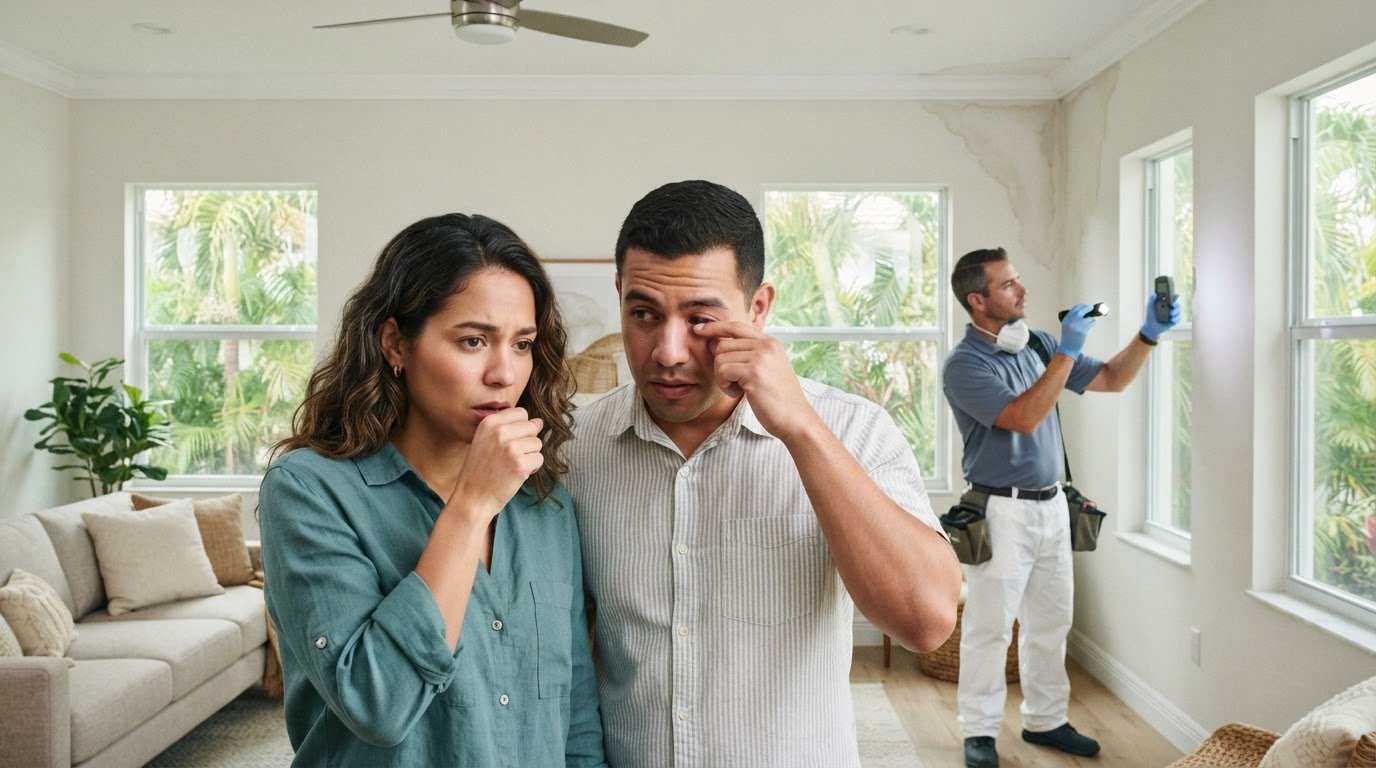
Could a lingering cough, stuffy nose, or itchy eyes be connected to mold at home? The health symptoms of mold exposure can resemble allergies or a common cold, so symptoms alone can’t confirm the cause. Feeling worse in a damp room or better when away from home may be a useful pattern to note, but it isn’t a diagnosis.
Recurring symptoms can make hidden mold a worry. This guide covers commonly reported respiratory, eye, skin, and asthma symptoms, why they can have other causes, and practical steps for responding to suspected indoor mold. If symptoms persist or concern you, speak with a healthcare professional. For the property, mold testing, leak detection, and water remediation can help assess suspected growth and address moisture conditions that allow it to develop.
Key Takeaways
- Learn which health symptoms of mold exposure are commonly reported and how they may vary by person.
- Understand why symptoms and timing can raise a concern but can’t prove mold is the cause.
- Use a practical sequence to document suspected moisture without disturbing extensive or hidden growth.
- Know when persistent or concerning symptoms call for medical advice.
- See how mold testing, leak detection, water remediation, and dry-out services can help address a suspected home moisture problem.
Health Symptoms of Mold Exposure: Common Signs to Recognize
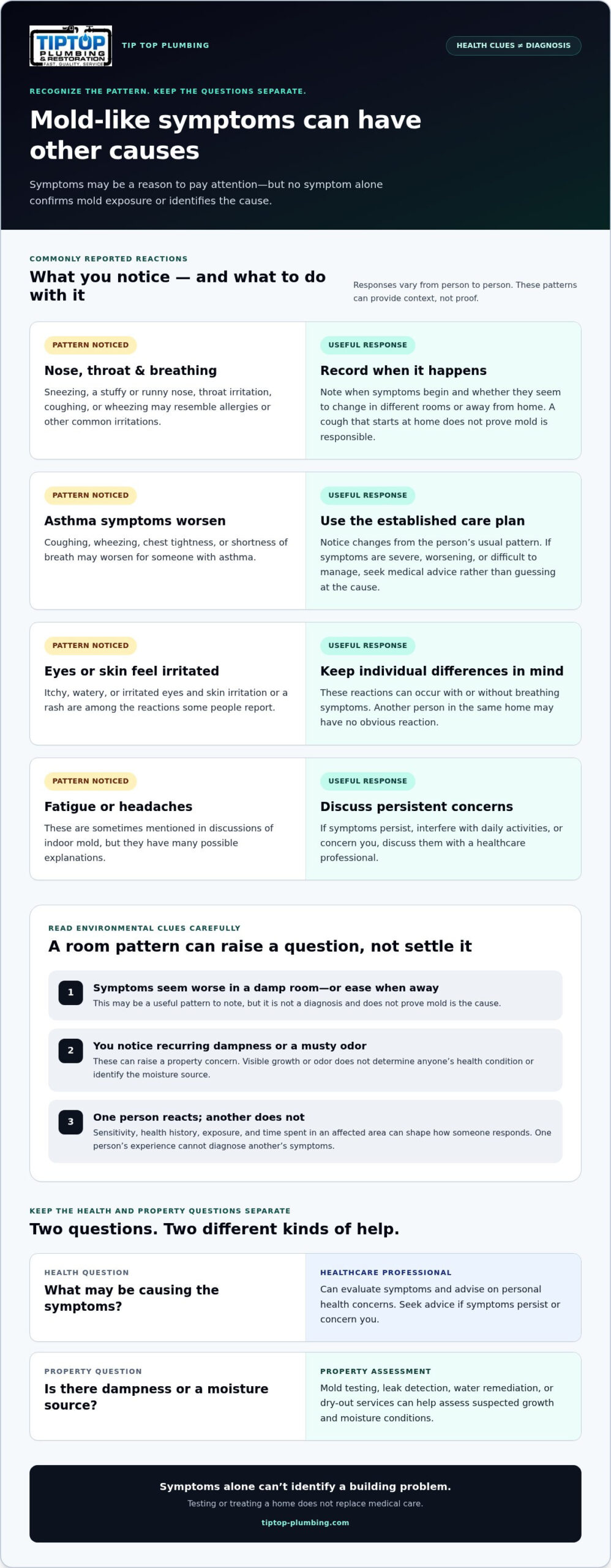
Mold exposure may irritate or trigger symptoms in some people, particularly allergy-like reactions or asthma symptoms. The health symptoms of mold exposure can involve the nose, throat, lungs, eyes, or skin, but they vary from person to person and aren’t unique to mold. No symptom on its own confirms that mold is present or identifies the cause of a health concern.
Commonly reported mold-related symptoms include respiratory irritation, itchy or watery eyes, skin irritation, and worsening asthma symptoms, but none alone proves mold exposure. The Mold health issues overview discusses how reactions and possible effects can differ among individuals. Treat symptoms as a reason to pay attention, not as a diagnosis.
Respiratory and allergy-like symptoms people commonly report
Reactions may resemble seasonal allergies or other common irritations. People may report sneezing, a stuffy or runny nose, throat irritation, coughing, or wheezing. These symptoms have many possible causes, so a cough that starts at home doesn’t prove mold is responsible.
For someone with asthma, indoor mold may worsen existing symptoms, such as coughing, wheezing, chest tightness, or shortness of breath. Notice changes from the person’s usual pattern and follow their established asthma care plan. If symptoms are severe, worsening, or difficult to manage, seek medical advice rather than trying to identify the cause from the home environment alone.
Eye, skin, and other reported reactions
Some people experience itchy, watery, or irritated eyes; others may notice skin irritation or a rash. These reactions can occur alongside nasal or breathing symptoms or on their own. Their timing and intensity vary, and another household member may have no obvious reaction in the same space.
Fatigue and headaches are sometimes mentioned in discussions of indoor mold, but they have many possible explanations and aren’t diagnostic signs of mold exposure. If they persist, interfere with daily activities, or concern you, discuss them with a healthcare professional.
Keep a simple record of symptoms, when they begin, and whether they seem to change in different rooms or away from home. This context may help a clinician, but it can’t establish that mold caused the symptoms. Visible growth or a musty smell can raise a property concern, but neither determines anyone’s health condition.
Keep the health and property questions separate. A healthcare professional can advise on symptoms; a property assessment can investigate suspected dampness or mold. Testing or treating a home doesn’t replace medical care, and symptoms alone can’t identify a building problem.
Why Mold Exposure Affects People Differently
Mold spores are common in the environment, and their presence alone doesn’t mean a home has a mold problem or that anyone will become ill. Indoor growth is more likely when moisture persists and surfaces stay damp. One person may notice irritation while another in the same home notices nothing. Individual sensitivity, health history, the amount and type of exposure, and time spent in an affected area can all shape how someone responds.
Finding mold or mold spores indicates a possible environmental exposure, not a diagnosis of illness in any person. Consider the health symptoms of mold exposure alongside a person’s medical history and the home’s moisture conditions, not as proof of a cause.
How indoor moisture can lead to mold growth
Mold can grow when moisture reaches materials that support it, such as damp drywall, wood, or other household surfaces. A plumbing or roof leak may wet materials out of sight, while condensation can collect on cool surfaces. Persistent humidity can also make it harder for materials to dry; maintaining adequate airflow is essential, and heating and cooling specialists like Zee Jay Mechanical often emphasize how proper HVAC ventilation helps control excess indoor moisture. Ongoing or recurring dampness is an important property clue; the color or type of visible growth doesn’t identify the moisture source.
Similar-looking spots can have different underlying causes. A stain near a pipe could point to a plumbing leak, while moisture near a fireplace or ceiling could stem from flue or masonry damage evaluated by chimney specialists like Home Safe Hearth & Chimney. Surface appearance can’t reliably identify the source or explain a person’s symptoms.
Homes in Broward County still need to be assessed individually. Don’t assume the local climate alone explains a damp area. Look for specific signs such as recurring condensation, water staining, peeling finishes, or a musty odor. Finding and correcting the moisture source is a practical property step, whether or not anyone in the household has symptoms.
Who may need to take extra care
People with asthma, mold allergies, or other respiratory conditions may be more sensitive to mold exposure and should take changes in their symptoms seriously. A reaction doesn’t prove mold is present, and not everyone with these conditions will respond the same way. A healthcare professional can evaluate personal health concerns; a property assessment addresses dampness or suspected growth.
Health history, time spent in an area, and whether dampness is ongoing can all affect how someone responds. One household member’s experience can’t diagnose another person’s symptoms.
If you suspect moisture from a plumbing leak, a leak-detection assessment can help investigate the property. It won’t determine the cause of anyone’s symptoms, but locating a plumbing-related moisture source can guide the next steps for the home.
Mold Symptoms or Something Else? What Symptoms Can, and Cannot, Tell You
Symptoms can offer clues, but they can’t identify mold as the cause. Sneezing, congestion, coughing, and irritated eyes may fit an allergy-like pattern, but they can also occur with other allergies, infections, or irritants. Fatigue and headaches are even less specific. A damp room or symptoms that seem to ease when you leave may be worth noting, but neither proves what’s happening.
| Pattern you notice | What it may suggest | What it can’t establish |
|---|---|---|
| Sneezing, nasal congestion, or itchy eyes that seem worse in a particular room | An allergy-like response or irritation; the location and timing may be useful details to share with a clinician. | That mold is present, or that mold is the cause. Other allergens and irritants may produce similar symptoms. |
| Coughing or wheezing, especially for someone with asthma | Airway irritation or a change in asthma symptoms that deserves attention. | Which trigger is responsible. A healthcare professional can assess the symptoms and health history. |
| Fatigue, headaches, or feeling generally unwell | A reason to consider overall health and recent changes in the environment. | A specific mold-related condition. These symptoms have many possible causes. |
| Visible dampness or a musty odor at home | A possible property moisture concern worth investigating. | A medical diagnosis or proof that the home caused someone’s symptoms. |
Why symptoms alone cannot confirm mold exposure
Respiratory and irritation symptoms overlap across many conditions, and a checklist can’t determine their cause. A clinician evaluates the person, considering symptom history, health background, and other possible explanations. Separately, a home inspection or mold testing can help assess a suspected property issue. Neither a home observation nor a test result diagnoses an individual’s health condition.
Keep the questions distinct: “What’s causing these symptoms?” belongs with a healthcare professional; “Is there a moisture or mold problem here?” calls for a property assessment. If symptoms seem to follow time in a particular space, record when they occur and what you notice in the room. This may help guide further conversations, but it doesn’t prove causation.
When to speak with a healthcare professional
Seek medical advice if symptoms persist, worsen, recur, or concern you, especially if you have asthma or another respiratory condition. Don’t wait for a home inspection or mold test before addressing a health concern. Property assessment can proceed separately to investigate dampness or suspected mold.
Severe difficulty breathing requires urgent medical attention. If breathing becomes severely difficult, seek emergency care now rather than trying to identify a household trigger first. For less urgent symptoms, a healthcare professional can advise on evaluation and care. A suspected home issue is worth investigating, but health decisions should be guided by medical advice, not a symptom list or an online test.
What to Do at Home if You Suspect Mold Exposure
Possible symptoms can make a home concern feel urgent, but a calm, practical response can help. Treat health and property as separate questions: consult a healthcare professional about symptoms, and investigate signs of moisture without disturbing suspected growth. Recording what you notice can help you decide what needs attention and provide useful context.
Look for moisture clues without disturbing materials
Start with areas you can see and reach safely. Note musty odors, water stains, visible growth, peeling finishes, or dampness that keeps returning. Check around plumbing fixtures, windows, and surfaces affected by water, but don’t open walls, pull up flooring, or scrub extensive or hidden growth. Disturbing affected materials can spread particles and make the problem harder to assess.
Use this sequence to keep your next steps clear:
- Track symptoms. Record what you notice and when, including whether symptoms seem to change in a particular room or away from home. This is useful context, not proof that the home caused them.
- Document damp areas. Note where you see staining, moisture, or visible growth. Photos can help track changes without touching the area.
- Address active water intrusion. If water is still entering, act promptly to stop the source where it’s safe to do so. Don’t leave wet materials unattended; EPA guidance advises drying wet or damp materials within 24 to 48 hours to help prevent mold growth.
- Arrange an appropriate assessment. If growth is extensive, hidden, recurring, or linked to a suspected plumbing leak, avoid taking materials apart and seek property-focused help.
Reduce ongoing dampness and document the issue
Cleaning a visible spot without addressing a leak or repeated condensation may leave the underlying moisture problem unresolved. Note whether the area becomes wet again after drying and whether the moisture appears near a fixture, window, or water-affected surface. These details can help focus attention on the source, not just the visible mark.
If plumbing-related moisture is suspected, Broward County leak detection services can help investigate. For damage involving wet building materials, understanding the water damage restoration process can clarify why moisture control and proper drying matter. A home assessment doesn’t replace medical advice, especially if symptoms persist or worsen.
When Professional Mold Testing and Water Remediation Can Help
A professional property assessment can help when you find visible growth, notice recurring dampness, or suspect water is entering an area you can’t easily inspect. Mold testing and moisture-focused assessment address questions about the home. They don’t diagnose illness, determine whether mold caused the health symptoms of mold exposure, or replace medical evaluation. Keep health concerns with a healthcare professional and use property services to investigate the building.
What property-focused assessment can clarify
An assessment can help investigate suspected mold or moisture and inform next steps for the property. Clues may include a recurring water stain, damp materials, visible growth, or a musty odor. Testing may provide information about the property concern, but it doesn’t guarantee that every affected area will be found or that the moisture source has been corrected.
These are separate forms of evaluation. A building assessment focuses on conditions in the home, while a clinician evaluates symptoms and may recommend medical testing, such as an allergy evaluation, based on a person’s health history. Home test results can’t explain why someone is coughing or feeling unwell. Seek medical advice for persistent or concerning symptoms while the property issue is being addressed.
Addressing moisture in Broward County homes
When water has affected building materials, water remediation and dry-out services can help address property damage and dampness. The response depends on the situation, including where the water came from and which materials are affected. If a plumbing leak may be keeping an area wet, leak detection can help investigate that possible source. Addressing moisture matters because treating visible growth alone may not resolve recurring dampness.
Tip Top Plumbing & Restoration provides mold testing, water remediation, dry-out services, and leak detection for property concerns in Broward County. Homeowners in Weston, Miramar, Pembroke Pines, Davie, Sunrise, Southwest Ranches, Copper City, and Plantation can view the Broward County service areas. An assessment helps focus on the property conditions that need investigation; it doesn’t make a medical diagnosis or promise a particular test outcome.
If you’re concerned about moisture or suspected mold at home, a property assessment is a practical step toward understanding the building conditions. Medical questions remain with a healthcare professional.
Choose Your Next Step With Confidence
You don’t need to decide on your own whether the health symptoms of mold exposure are connected to a particular room. Keep health questions with a clinician and property questions focused on what you can observe. This separation helps you take a sensible next step without jumping to conclusions.
Persistent or worsening symptoms deserve medical guidance; a suspected moisture issue deserves a closer look at the home. A property assessment can clarify what was observed, what remains uncertain, and which property steps may make sense next, without claiming to explain anyone’s health.
When you’re ready, arrange an assessment to investigate the moisture concern in your home.
Take it one step at a time: speak with a healthcare professional about symptoms and contact Tip Top Plumbing & Restoration to arrange a property assessment for suspected moisture or mold.
Frequently Asked Questions
Is black mold more dangerous than other types of mold?
Color alone can’t establish a mold’s toxicity or predict how someone may respond. “Black mold” isn’t a medical diagnosis, and dark growth can’t be identified as one particular species just by looking at it. Focus on signs of moisture and visible growth rather than judging risk by color. If symptoms concern you, seek medical advice instead of trying to determine health risks from a photo or surface appearance.
Can mold exposure cause a fever?
Fever isn’t a typical symptom used to identify a mold allergy, and it can have many causes, including infections. Don’t assume indoor mold explains a fever without medical evaluation. Contact a healthcare professional if a fever is persistent, severe, or accompanied by other concerning symptoms. If you’re also experiencing serious difficulty breathing, seek urgent medical care rather than waiting for a home assessment or test.
How long can symptoms of mold exposure last after leaving a damp home?
There’s no single timeline: symptoms vary by person, symptom, and underlying cause. Some irritation may ease after exposure decreases, but symptoms that continue after leaving don’t prove mold was responsible. Returning to a damp environment may mean continued exposure to the suspected condition. Ask a healthcare professional about ongoing or worsening symptoms, and address persistent moisture in the home separately.
Can you have mold-related symptoms without seeing mold?
Visible growth isn’t the only possible clue to a moisture problem, but symptoms alone can’t confirm hidden mold or show that it caused a health issue. A musty odor, water stain, or damp patch that keeps returning may justify a careful property assessment. Don’t open walls or disturb suspected growth to search for it. Discuss symptoms with a healthcare professional while investigating the home safely.
Should I use a home mold test kit?
A home test kit may provide information about a sample, but the result can’t tell you whether mold caused symptoms or establish a health risk for your household. Consider what property question you’re trying to answer and whether there’s a moisture concern to investigate. Homeowners in Weston, Miramar, Pembroke Pines, Davie, Sunrise, Southwest Ranches, Copper City, and Plantation can arrange a professional property assessment for suspected dampness or growth.
Can mold exposure affect pets?
Indoor environmental irritants may affect animals, but symptoms in pets are nonspecific and can’t identify mold as the cause. If your pet develops breathing problems, ongoing irritation, or unusual behavior or symptoms, contact a veterinarian for advice. Investigate dampness separately and keep pets away from areas where suspected moldy materials might be disturbed. A property assessment addresses the building concern, not your pet’s health.
What should I do if symptoms improve when I leave home and return when I come back?
A pattern tied to a location is worth recording, but it doesn’t prove mold is the cause. Note the timing, symptoms, rooms involved, and any musty odor or dampness you observe. Share recurring or worsening symptoms with a healthcare professional. If the home shows moisture clues, arrange a property-focused assessment as a separate step. Keeping a record can help guide what to investigate without relying on guesswork.
Disclaimer
The information provided in this article is for general educational and informational purposes only and should not be considered professional plumbing, restoration, mold remediation, or legal advice. Every plumbing system, property, and situation is unique, and the recommendations discussed may not apply to your specific circumstances.
While Tip Top Plumbing & Restoration strives to provide accurate and up-to-date information, we make no warranties regarding the completeness, accuracy, or reliability of the content. Any actions you take based on this information are at your own risk.
Plumbing repairs, water damage restoration, and mold remediation should be performed by qualified professionals and in accordance with applicable local building codes and regulations. If you are experiencing a plumbing emergency, water leak, or property damage, contact a licensed professional for an on-site evaluation.
Tip Top Plumbing & Restoration is licensed and insured to provide plumbing and restoration services throughout Broward County, Florida.