

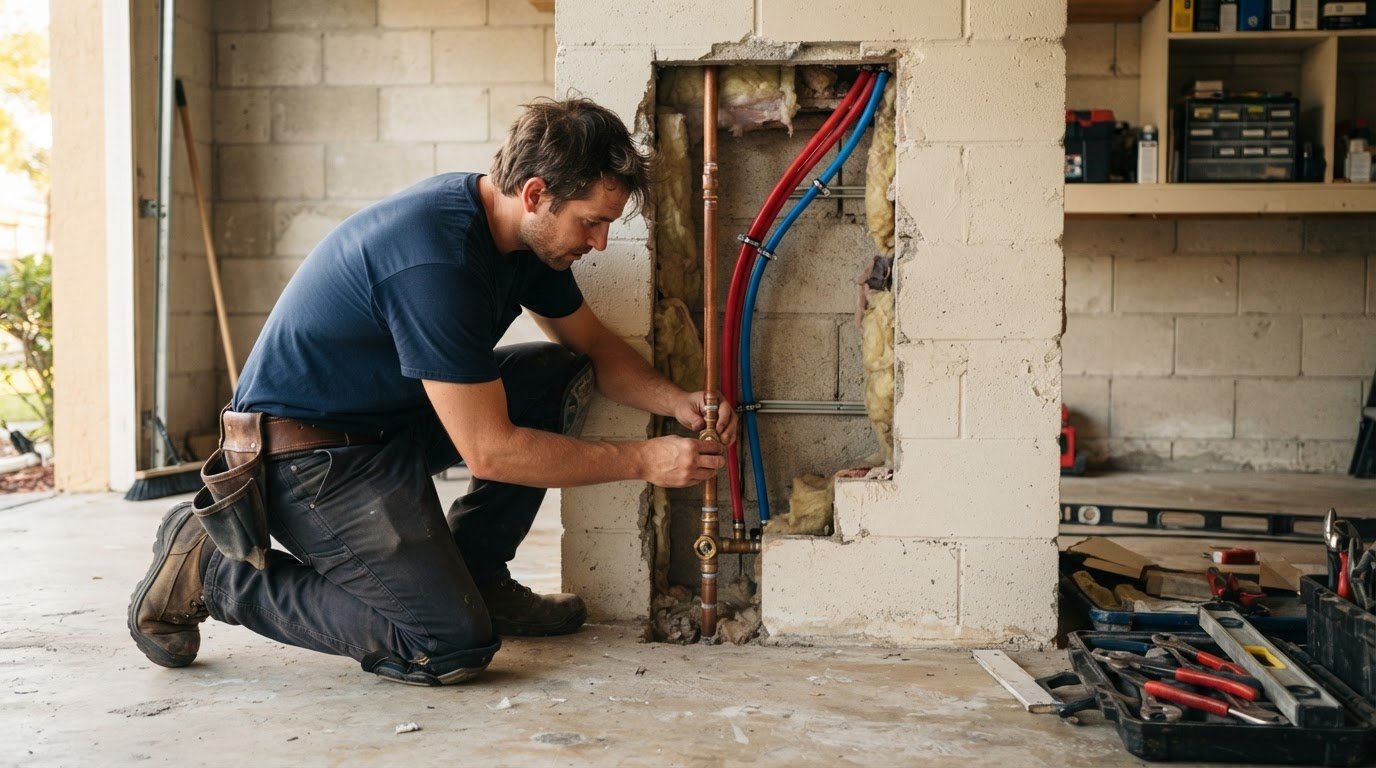
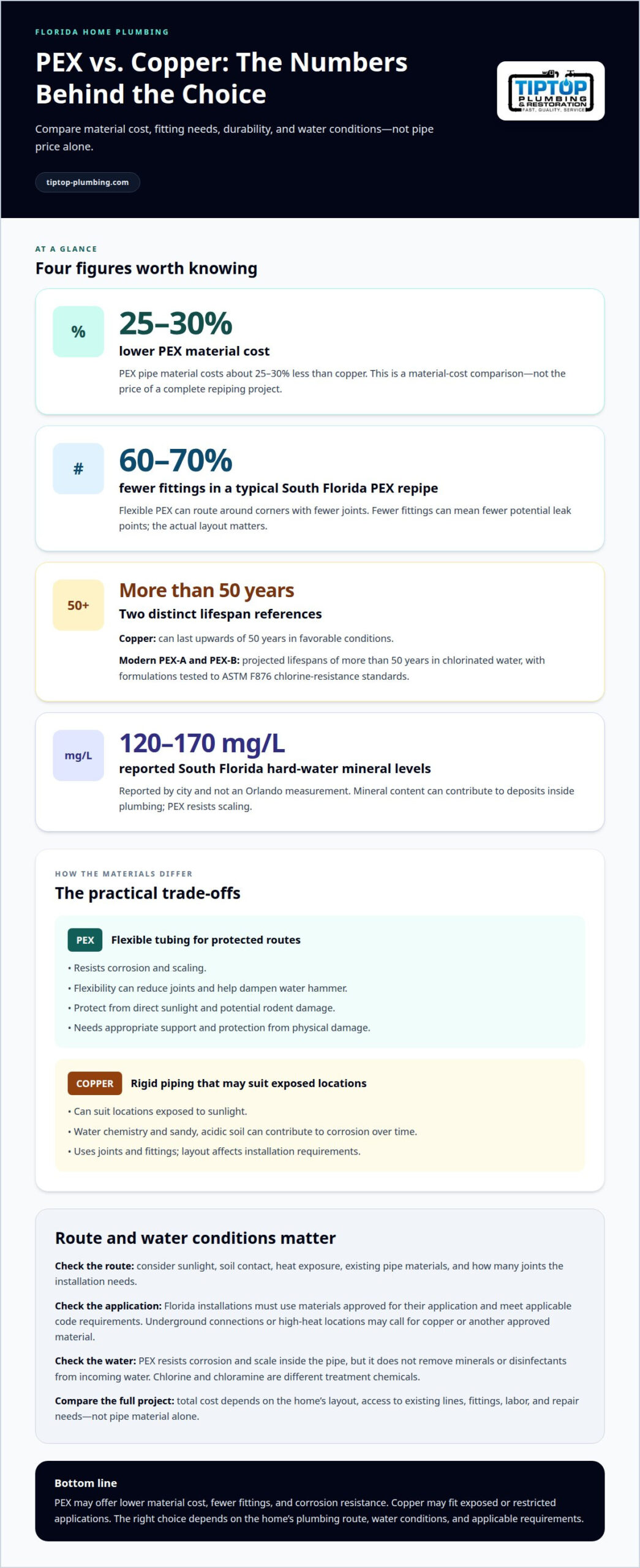
Copper isn’t automatically the better choice for a Florida home: PEX has several practical advantages, including material costs about 25-30% lower than copper and resistance to corrosion and scaling. The benefits of PEX pipes in Florida homes also include flexibility, which can help reduce the risk of leaks at joints and offer some protection from freezing damage.
When comparing PEX and copper, weigh more than the upfront pipe cost. Water quality, installation layout, durability, and exposure to Florida conditions all matter. Each material has trade-offs, so the right choice depends on your home and the specific plumbing application.
This comparison explains how PEX and copper differ in cost, water quality, corrosion and scale resistance, flexibility, and freeze resistance. It also covers where PEX needs protection and when copper may suit a particular application.
Key Takeaways
- Compare the full installation and ownership picture, not just the pipe material: layout, fittings, labor, and the condition of existing plumbing all affect the choice.
- PEX can help limit corrosion and scale buildup, while water quality and the home’s plumbing history matter when assessing copper.
- PEX’s flexibility can reduce the need for fittings and help lessen water hammer, but protect it from sunlight and potential rodent damage.
- For a leak or failing pipes, Tip Top Plumbing & Restoration offers leak detection, slab leak repair, and whole-house repiping to help address the problem.
What Are the Key Differences Between Copper and PEX Pipes in Broward County Plumbing?
In Broward County, choosing between copper and PEX depends on the pipe route, water conditions, and installation requirements. PEX means cross-linked polyethylene, a flexible plastic tubing used for water lines. Copper is rigid metal piping. Flexible PEX runs can require fewer joints and fittings, reducing some potential leak points. Properly maintained copper can last upwards of 50 years in favorable conditions.
Florida conditions can affect copper. Chlorine in municipal water can contribute to copper corrosion over time, while sandy, acidic soil can pose a corrosion risk to buried copper lines. PEX resists corrosion and scaling, but sunlight can make it brittle over time. Protect PEX from direct sunlight during storage and installation.
Compared with galvanized pipe, PEX avoids metal-pipe corrosion and scale concerns associated with older plumbing. Compared with CPVC, PEX is flexible and can dampen water hammer, while CPVC transmits it. A typical South Florida repipe uses 60-70% fewer fittings with PEX than with copper. Still, some plumbing codes may require copper or another approved material for specific uses, including underground connections or high-heat areas.
Copper may suit locations exposed to sunlight, where PEX needs UV protection. If a line must remain exposed, consider its environment and the requirements for that application. PEX can run through protected spaces such as attics, but it still needs support and protection from damage. Rodents can chew through PEX tubing, creating a leak risk in enclosed spaces.
| Pipe option | Flexibility | Corrosion and scale | Exposure considerations |
|---|---|---|---|
| PEX | Flexible, often fewer fittings | Resistant to corrosion and scaling | Protect from sunlight and rodents |
| Copper | Rigid, uses joints and fittings | Can corrode in some water and soil conditions | Can suit exposed locations |
| Galvanized | Rigid metal pipe | Older pipe may face corrosion and scale | Assess existing pipe condition |
| CPVC | Rigid plastic pipe | Handles chlorine well | Mechanical performance matters |
Florida plumbing installations must use materials approved for their application and meet applicable code requirements. Underground connections and high-heat locations may call for copper or another approved material.
Permit and inspection requirements for PEX installation or repiping depend on the work and applicable local code. Account for those requirements when planning the project.
Choose pipe material by considering its route. Assess sunlight, soil contact, heat exposure, existing materials, and the number of joints needed. A protected interior run may suit flexible PEX, while an exposed or restricted application may favor another approved material.
Copper vs PEX: Water Quality & Safety in Orlando Homes
Orlando homeowners shouldn’t treat South Florida water measurements as local readings. South Florida hard-water mineral levels are reported at 120-170 mg/L, depending on the city, but that range isn’t an Orlando measurement. Mineral content matters because deposits can build inside plumbing and narrow passages over time. PEX resists scaling, while copper can develop deposits under mineral-rich conditions. The practical comparison depends on the water entering the specific home, not Florida’s climate alone.
Disinfectants also matter. Chlorine and chloramine are different water-treatment chemicals, so evidence about one shouldn’t be assumed to cover the other. Modern PEX-A and PEX-B formulations are tested to ASTM F876 standards for chlorine resistance, with projected lifespans of more than 50 years in chlorinated water. That fact concerns chlorine resistance; it isn’t a claim that every product has identical performance or that chloramine testing is equivalent.
Heat is another consideration for Florida plumbing. PEX is rated for hot-water use and can tolerate ambient attic heat while retaining flexibility, but it must still be installed appropriately for its location. A hot-water line near a heater must be suitable for that use, and an attic run needs protection from sunlight. Proper material selection and routing help avoid preventable damage.
A PEX manifold system can help maintain water flow when several fixtures operate at once. A manifold distributes water through dedicated lines, rather than relying on one shared route with multiple branches. PEX systems can also use fewer 90-degree elbows and fittings than copper systems, which can allow water to move more smoothly. Picture a shower running while a kitchen tap is open: the manifold layout and pipe routing influence how the system serves both fixtures.
Water quality and plumbing safety are separate considerations. PEX doesn’t remove minerals or disinfectants from incoming water; its advantage is resistance to corrosion and scale inside the pipe. Copper remains a common option, but water chemistry can contribute to corrosion over time. When planning a repipe, compare the pipe material, fittings, hot-water routing, and whether the design uses a manifold. These details show how each system may fit your home’s needs.
If a suspected leak or pipe problem accompanies concerns about water quality, schedule plumbing service to address the plumbing issue.
Pipe installation and lifetime costs
PEX can cost less to install because flexible tubing routes around corners and often needs fewer joints. Installation is also generally faster than copper, reducing labor time. Material costs for PEX are about 25-30% less than copper, but that comparison covers pipe material, not a whole-home project. Total project cost depends on the home’s layout, access to existing lines, and the amount of repair work required.
A copper repipe uses rigid sections joined at fittings, so tight routes may require more connections. Each joint is a potential leak point, and future repairs may require opening walls to reach concealed lines. PEX can follow a more direct path through walls or attics, although access, support, and protection still matter. Compare the pipe, fittings, labor, access, and likely repair needs together.
Florida heat and humidity can cause copper pipes to expand and contract, potentially weakening solder joints over time. PEX also moves with temperature changes, so supports and routing must allow movement without kinks or strain. That doesn’t mean tubing should be left loose: secure support and a well-planned path help prevent rubbing against framing or other surfaces.
Attic placement adds another factor. PEX is rated for hot water and tolerates ambient attic heat without losing flexibility, but it still needs protection from sunlight. Copper can expand and contract under heat exposure, while PEX can expand up to 3 times its diameter without bursting. Those properties matter when planning a route through a hot attic, especially where the pipe passes through framing.
How well does PEX withstand Florida heat, humidity, and hard water? PEX tolerates ambient attic heat, resists corrosion and scaling, and can expand under pressure. Protect it from sunlight, and plan supports and routing to accommodate temperature-related movement.
PEX-A and PEX-B are common pipe types; manufacturers often color-code tubing red for hot water, blue for cold, and white or clear for general use. Color helps identify lines during installation and later repairs, but the tubing’s intended use and approved application remain essential. PEX has a described lifespan of 40-50 years or more, and many manufacturers provide warranties longer than 25 years.
How long do PEX pipes last, and what warranties are available? PEX piping is described as lasting 40-50 years or more, while many manufacturers offer warranties of more than 25 years. Warranty terms vary by manufacturer and product, so compare the written coverage for the tubing and installation.
To assess lifetime value, consider installation access, fitting count, temperature exposure, and warranty coverage, not just material cost. Repair access is especially important for concealed lines. A well-routed PEX system can reduce joints, while copper may suit specific exposed applications. Compare the options based on the details of your project.
Corrosion and scaling resistance
Corrosion and scale are different problems, with different signs. Corrosion damages the pipe material, while mineral deposits build up inside piping and restrict its opening. PEX resists both. Copper can be affected by water chemistry and, when buried, surrounding soil. Identifying the issue helps determine whether a repair or a broader repipe merits consideration.
Scale buildup can gradually reduce water capacity in older copper lines. After 30-40 years, deposits can reduce the effective diameter of a 3/4-inch copper pipe by 20-30%. That narrowing may affect flow at fixtures, especially when several outlets run together. Low flow alone doesn’t prove scale is responsible, though. A plumber can assess the line and distinguish deposits from a leak, a blockage, or another plumbing problem.
Corrosion can create a different pattern. In parts of South Florida, copper pipes can develop pinhole leaks when they are as young as 15 years old. A small leak may appear as a recurring damp spot, water staining, or unexplained moisture near a pipe route. Those signs call for attention to the source, not just surface repairs. The pipe’s location, condition, and exposure all help guide the next step.
PEX tubing doesn’t rust or corrode like metal piping, and it resists mineral scale, which can be useful where hard water affects plumbing. That resistance doesn’t soften water or remove minerals. Instead, it reduces the likelihood that corrosion or scale inside the tubing will become a cause of pipe failure.
Municipal water chemistry is one factor to consider. Chlorine can contribute to copper corrosion over time, while minerals can encourage scale. The effects depend on the home’s water and pipe conditions. An older copper branch with reduced flow, for example, raises a different concern from a visible pinhole leak. A careful inspection can identify the affected section before you decide on a repair.
Use a simple assessment sequence: note where moisture or reduced flow appears, identify whether the affected line is copper or PEX, then determine whether the issue involves corrosion, scale, or a separate leak. A home built before the early 2000s may have copper behind walls, so the visible fixture material may not reveal the concealed piping. Existing pipe condition matters more than age alone.
When considering a repipe, compare the affected pipe material, signs of corrosion, changes in flow, and access to concealed lines. Replacing a damaged section may address a localized problem; wider deterioration may warrant evaluating more of the system. PEX’s resistance to corrosion and scaling can make it a useful option, but the home’s plumbing layout and condition still determine the right scope.
PEX flexibility and freeze resistance
PEX is flexible plastic tubing that can bend around framing and follow longer routes with fewer joints. That flexibility also gives the pipe room to move as water temperature changes. Copper and other rigid piping don’t flex in the same way, which can put more strain on connections when pipes move. This difference matters in tight wall cavities, attic runs, and places where pipes cross framing.
PEX can expand up to 3 times its diameter without bursting. That capacity helps it tolerate expansion as water freezes, making it more resistant to freeze damage than traditional rigid pipes. It doesn’t make the plumbing freezeproof: tubing can still be vulnerable if exposed to prolonged freezing or installed in a way that limits movement. Treat the feature as added resilience, not a substitute for protecting vulnerable lines.
Freeze resistance is a bigger concern in northern climates, but Florida homeowners should still consider exposed pipes. A cold snap can put vulnerable lines at risk, particularly in unprotected spaces. During a plumbing assessment, note pipes in exterior walls, garages, or other areas exposed to cold air. Insulation and a protected route help reduce exposure; material is only one part of the system’s protection.
PEX flexibility can simplify pipe routing. A continuous run, for example, can curve around an obstruction instead of using several fittings to turn rigid pipe. Fewer joints mean fewer potential leak points. The bend must still meet the tubing’s permitted radius and installation requirements, so avoid sharp turns, kinks, and pressure from nearby building materials.
PEX can expand slightly under pressure, which may reduce the likelihood of a burst during sudden water-temperature changes. This movement can help absorb stress within the line, while rigid pipe transfers more force to its connections. Proper support is important: keep tubing in position while allowing for the movement caused by temperature changes.
Use this practical check when considering PEX for a repipe:
- Identify runs exposed to cold air, direct sunlight, or physical damage.
- Plan flexible routes that avoid kinks and unnecessary joints.
- Support tubing while allowing for temperature-related movement.
- Protect pipes where rodents could chew through the material.
PEX offers flexibility and freeze resistance, but installation details determine how well those qualities benefit your home. A licensed plumbing professional can assess pipe routes, supports, and exposed sections before replacement. If your home has recurring pipe failures, a whole-house repipe may address the system rather than treating each damaged spot separately.
Tip Top Plumbing & Restoration: Emergency Plumbing
Tip Top Plumbing & Restoration can help with plumbing leaks, damaged lines, and urgent pipe failures. Emergency Plumbing addresses urgent problems, while Leak Detection & Slab Leak Repair can locate and repair hidden leaks. For aging or failing pipes, Sewer Repiping Services may be the next step. Water Heater Repair & Installation can address problems affecting your home’s hot-water system.
If you’re weighing repair against repiping, consider the pipe material, leak location, and condition of the existing system. Contact Tip Top Plumbing & Restoration to discuss the issue and plan your next steps.
Choose the Next Step for Your Plumbing
Turn the comparison into a plan for your home by starting with the problem you need to solve: recurring leaks, aging pipes, or a plumbing update during renovation. The benefits of PEX pipes in Florida homes are most relevant when the material suits the project, pipe route, and condition of the existing system.
Before work begins, identify known leak locations and note where plumbing is accessible. This context can help clarify whether the priority is fixing a current failure or planning a broader replacement. A focused discussion about your home’s needs can make the decision more practical and define a clear path forward.
Tip Top Plumbing & Restoration can help you discuss plumbing concerns and next steps. Contact the team when you’re ready to make a plan.
A well-considered decision can help you move forward with confidence.
Frequently Asked Questions
What Is PEX Plumbing?
PEX plumbing uses flexible cross-linked polyethylene tubing to carry hot and cold water through a home. Installers can route continuous tubing between connection points, rather than joining rigid pipe sections at every turn. That can help with renovations in Weston or Davie, where existing walls and framing shape the available routes. PEX is designed for water supply lines, not as a general-purpose replacement for every pipe in a home.
Are There Any Drawbacks to PEX?
Yes. PEX needs protection from sunlight, and rodents can chew through the tubing. Connections still need careful installation, and some applications may require another approved material. Homeowners should also distinguish modern PEX from older products such as Kitec, which has a documented history of premature failure. Identifying the exact pipe product can be useful during repairs, renovations, or an insurance review in a Broward County home.
Does PEX piping affect the water pressure in my large Weston home?
PEX alone doesn’t determine pressure at every fixture; system design and condition matter. Long runs, pipe sizing, fittings, and simultaneous water use can affect flow at a distant bathroom or kitchen. In a large Weston home, compare a nearby fixture with a distant one, first with other taps off and then with several running. Those observations can help describe the issue during a plumbing assessment.
Is PEX or Copper Better Suited for Broward County Storms and Weather Swings?
Neither material makes plumbing stormproof. PEX can flex with some movement and temperature changes, while copper is rigid and can experience stress at connections as temperatures shift. Pipe routing matters too: protect PEX from sunlight and physical damage, and inspect accessible lines after a leak or visible plumbing failure. In Miramar or Pembroke Pines, consider exposure, existing pipes, and repair access when weighing materials.
What are the main benefits of PEX pipes in Florida homes?
The benefits of PEX pipes in Florida homes include flexible routing, fewer joints in some installations, and resistance to corrosion and scale buildup. PEX material costs about 25-30% less than copper, though that figure describes material, not the entire project. Its flexibility can also help installers route lines through tight spaces. These advantages are most useful when the planned route and plumbing application suit PEX.
How does PEX compare with copper and CPVC for Florida home plumbing?
PEX bends around framing, while copper and CPVC are more rigid. PEX resists corrosion and scale; copper may corrode in certain water or soil conditions, and CPVC handles chlorine well. The right material depends on the line’s location and use. Exposed routes, for example, require sunlight protection for PEX, while some underground or high-heat applications may call for another approved material.
Can PEX pipes freeze or burst during Florida cold snaps?
PEX can freeze, but its ability to expand makes it more resistant to bursting than rigid piping. It isn’t immune to freeze damage, especially in unprotected or exposed locations. Before cold weather, identify tubing in garages, exterior walls, and other chilly spaces. Insulation and limiting cold-air entry can reduce exposure. If a pipe bursts, shut off the water supply and address the leak promptly to limit damage.
Does PEX resist corrosion, scale buildup, and leaks?
PEX resists corrosion and scale, but it isn’t leak-proof. A damaged section, faulty connection, or rodent-chewed line can still leak. Look for damp spots, stains, or unexplained moisture near accessible tubing, and note any flow changes at nearby fixtures. These details can help distinguish a possible pipe leak from a fixture problem. A plumbing assessment can identify the source and help determine whether a localized repair is appropriate.
Disclaimer
The information provided in this article is for general educational and informational purposes only and should not be considered professional plumbing, restoration, mold remediation, or legal advice. Every plumbing system, property, and situation is unique, and the recommendations discussed may not apply to your specific circumstances.
While Tip Top Plumbing & Restoration strives to provide accurate and up-to-date information, we make no warranties regarding the completeness, accuracy, or reliability of the content. Any actions you take based on this information are at your own risk.
Plumbing repairs, water damage restoration, and mold remediation should be performed by qualified professionals and in accordance with applicable local building codes and regulations. If you are experiencing a plumbing emergency, water leak, or property damage, contact a licensed professional for an on-site evaluation.
Tip Top Plumbing & Restoration is licensed and insured to provide plumbing and restoration services throughout Broward County, Florida.