

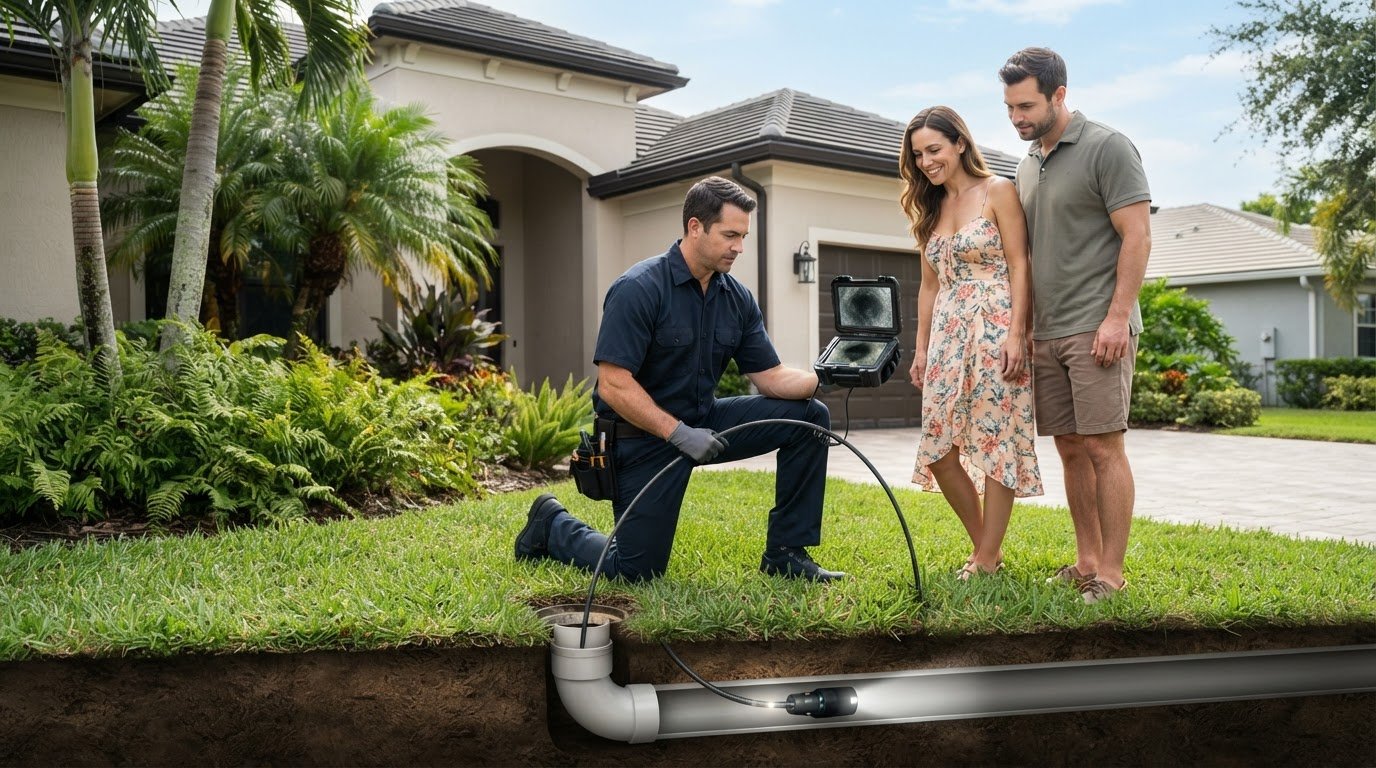
A standard home inspection may not reveal problems hidden inside a sewer line. The plumbing inspection cost for a home purchase in Sunrise depends on the property and the work included, such as checking pipes, using a sewer camera, or investigating a suspected leak. The quote should clearly define the inspection scope.
Before committing to a home, understand what the inspection covers, especially when plumbing problems could be concealed behind walls or underground. This guide explains what affects the quote, what a general inspection may identify, and when a focused pipe, sewer, or leak assessment can help you make a more informed purchase decision.
Key Takeaways
- A standard home inspection and a dedicated plumbing assessment cover different ground; hidden sewer or pipe concerns may call for a camera inspection.
- Quotes can vary with the inspection scope, pipe accessibility, and whether the assessment includes leak screening or underground lines.
- Visible signs such as water damage or leaking fixtures can point to plumbing concerns, but they may not reveal the condition of concealed pipes.
- Specialized inspections address distinct needs, so identify which checks are relevant to the property and your purchase or insurance requirements.
- For a suspected leak, damaged pipe, sewer issue, or water-heater concern, match the next step to the specific plumbing problem.
Pipe, sewer, drain, and underground camera inspections
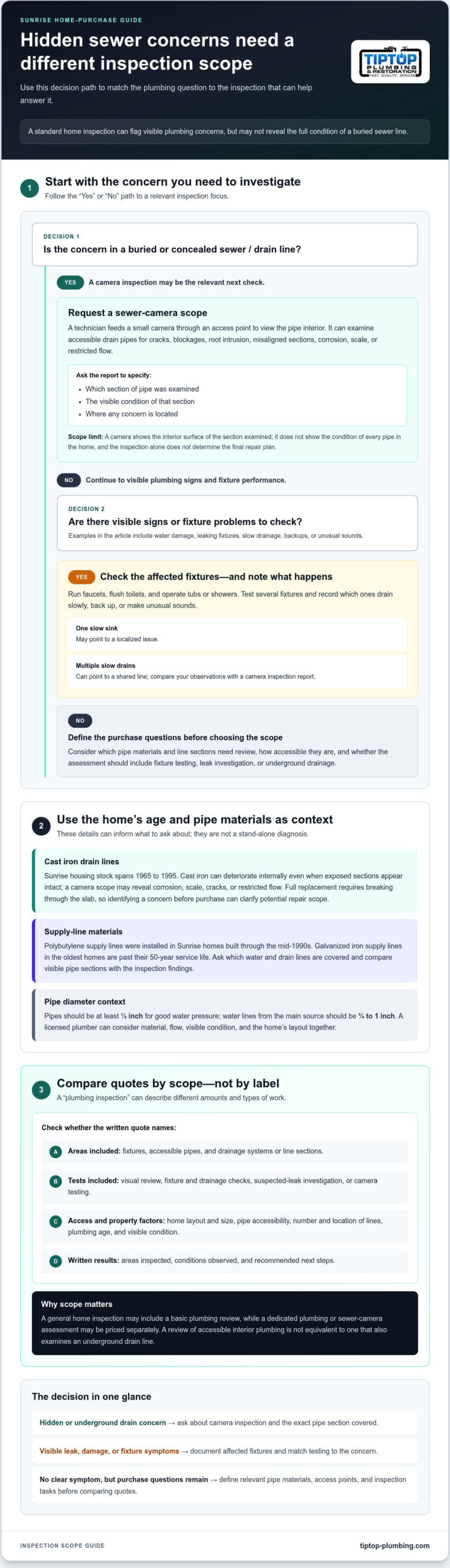
A standard home inspection can flag visible plumbing concerns, but may not reveal the full condition of a buried sewer line. A separate camera inspection can examine accessible drain pipes for cracks, blockages, root intrusion, or misaligned sections. For a Sunrise buyer, the results can help clarify whether a concern appears limited to one drain or may involve a larger part of the system.
What a sewer camera inspection can reveal
During a camera inspection, a technician feeds a small camera through an access point and views the pipe’s interior. Live or recorded images can help locate defects and show where a line changes direction or diameter. Ask the inspector to identify the section examined, its visible condition, and the location of any concern. A camera shows the interior surface, but not the condition of every pipe in the home.
Cast iron drain lines deserve attention in older houses. Sunrise’s housing stock spans 1965 to 1995, and cast iron can deteriorate internally even when exposed sections appear intact. A camera scope may reveal corrosion, scale, cracks, or restricted flow. Full cast iron pipe replacement requires breaking through the slab, so locating the problem before purchase can help buyers understand the potential scope of a repair. The inspection itself doesn’t determine the final repair plan.
Pipe materials and drainage checks
Ask which water and drain lines the inspection covers. Polybutylene plumbing supply lines were installed in Sunrise homes built through the mid-1990s. Galvanized iron supply lines in the oldest homes are past their 50-year service life. Those details make material identification useful during a purchase review, especially when visible pipe sections can be compared with inspection findings.
Diameter can also affect performance: pipes should be at least ½ inch for good water pressure, while water lines from the main source should be ¾ to 1 inch. These figures are context, not a stand-alone diagnosis. A licensed plumber can consider pipe material, flow, visible condition, and the home’s layout together.
Fixture testing provides another practical check. Run faucets, flush toilets, and operate tubs or showers. Watch for slow drainage, backups, or unusual sounds. Test several fixtures: a slow sink may be a localized issue, while multiple slow drains can point to a shared line. Note which fixtures you tested and what happened, so you can compare your observations with a camera inspection report.
Municipal permit inspections serve a different purpose from a buyer’s private plumbing assessment. For a City of Sunrise Building Division inspection, scheduling is handled by phone at (954) 572-2380, according to the City of Sunrise Building Division. For a purchase inspection quote, cost depends on access, the number and location of lines, and whether camera testing or fixture and drainage checks are included; the price is provided after a quote request.
Inspection pricing factors and flat-rate quotes
A plumbing inspection quote is based on the work included, not simply the fact that you are buying a home. Compare the scope of each assessment with the questions you need answered about the property.
Factors That Shape Inspection Pricing
Property size can affect the work because a larger home may have more fixtures, branch lines, and drain access points. Plumbing age and visible condition matter, too. Older materials, corrosion, stains, or slow drainage may warrant closer examination. Access is another factor: a readily accessible cleanout differs from a line that requires locating an entry point before camera testing.
Scope is the key comparison. A visual review of accessible plumbing is different from testing fixtures, investigating a suspected leak, or using a camera to inspect an underground sewer line. Ask for each task to be named in the quote. This helps you compare similar services rather than treating a broad home inspection and a focused plumbing assessment as equivalent.
Flat-Rate Quote Details
A flat-rate quote sets a charge for a defined inspection scope. Its value depends on clear boundaries: which fixtures, pipe sections, and drainage systems are included, and whether the work covers camera testing or only visible components. For example, a quote for accessible interior plumbing is not equivalent to one that also examines an underground drain line.
Compare the scope with the findings you need for your purchase decision. A home inspector’s broader report may cover plumbing, electrical components, and other areas, while a plumbing-focused assessment can examine specific concerns in greater depth. Ask how the written results identify the areas inspected, conditions observed, and recommended next steps. This helps you compare quotes without assuming they cover the same work.
Additional Plumbing Inspection Charges
Do home inspection companies in Sunrise charge extra for a plumbing inspection? Some may include a basic plumbing review in a general home inspection, while a dedicated plumbing assessment or sewer-camera inspection may be priced separately. The difference is the testing included, so check whether the quote covers fixtures, accessible pipes, and underground drainage.
The quote depends on the home’s layout, pipe access, the concerns being investigated, and whether camera or leak testing is included. To compare quotes, list the inspection tasks you need and match each one against the stated scope rather than relying on the label “plumbing inspection.”
If a quote needs to address a specific sewer or pipe concern, request a plumbing inspection quote that reflects the property and requested assessment.
Leak screening and visible plumbing conditions
A home inspection in Florida can identify visible plumbing concerns, but it cannot reveal every hidden leak. It typically checks interior plumbing and faucets for leaky pipes, water damage, and outdated materials that could burst. For buyers, the useful question is which areas the inspector examined and what they actually observed.
Start with a room-by-room review of visible fixtures. Under the kitchen sink, look for damp cabinet flooring, mineral residue, or a musty odor. In bathrooms, check faucet bases, supply connections, and the areas around toilets for moisture or staining. These signs can point to a leak, but they do not identify its source or establish whether concealed pipework is affected.
When testing fixtures, operate faucets and flush toilets while watching accessible connections and nearby surfaces. Note whether a faucet drips after being turned off, water pressure changes during use, or moisture appears beneath a supply line. In the laundry area, check around washer connections and the floor. Recording the location and condition can help distinguish an isolated issue from several concerns.
What thermal imaging can and cannot show
Thermal imaging does not see through walls. It displays temperature differences on a surface that may warrant closer attention. For example, an unusually cool patch near a bathroom wall could prompt further assessment, but the image alone does not prove a plumbing leak. Treat thermal imaging as a screening clue, not a diagnosis or a map of concealed pipes.
A useful report connects any thermal image to the visible area and the inspector’s observations. Ask which room or surface showed a temperature difference and whether there was supporting evidence, such as staining, dampness, or a leaking fixture. That context can help you decide whether a focused leak assessment is relevant before buying.
Visible conditions also set the limits of a general inspection. An inspector may identify water damage on a ceiling below a bathroom without opening the ceiling to trace the source. Similarly, an outdated pipe visible in a utility space does not reveal the condition of every concealed line. The report should separate observed facts from suspected causes, so buyers know what the inspection established.
Use the findings to decide what needs follow-up. If the report notes an active drip, fresh water staining, or a damp cabinet, document the exact location and ask for that concern to be assessed directly. If no visible moisture appears, that doesn’t establish that concealed plumbing is leak-free. A plumbing inspection quote depends on the areas and suspected issues to be assessed, with the exact figure provided for your case.
Costs of specialized inspections
Some home-purchase concerns call for a focused inspection beyond the general review. Each assessment addresses a different question, so match the inspection to the issue you need evaluated.
Understand what each inspection covers
A four-point inspection reviews four major areas, including plumbing, as part of an insurance-related assessment. It isn’t the same as a dedicated plumbing inspection or sewer-camera scope. Most insurance carriers require a four-point inspection for Sunrise homes that are 30 years old or older. Insurance companies may also require wind mitigation and roof condition inspections before a home can be insured, especially an older home.
Ask what specific concern each report is intended to address. A four-point report may help with an insurance review, while a camera inspection focuses on the inside of accessible drain lines. A termite inspection addresses a different risk. Keeping those purposes distinct helps you avoid treating one report as a substitute for another.
When insurance inspections may be relevant
Insurance requirements can affect which inspections buyers arrange during a purchase. An insurance carrier may require a four-point inspection every couple of years, depending on the home’s age. In Sunrise, establish early whether a four-point, wind mitigation, or roof condition inspection is part of the insurance process, and check which age threshold or carrier requirements apply.
A wind mitigation report is valid for five years from the inspection date. When reviewing an existing report during a purchase, compare its date with the current insurance process. An older report may not serve the same purpose as a current assessment, so note its date and inspection type before relying on it.
Know what a standard inspection leaves out
A standard home inspection does not test for asbestos, radon, or common sources of lead unless buyers pay for those specific tests. These are separate environmental checks, not routine plumbing assessments. For example, a buyer concerned about lead should distinguish a specific lead test from a general review of visible plumbing materials.
For a home built before 1986, plumbers should check for lead pipes. That plumbing concern is distinct from specialized insurance inspections, even if both appear on a buyer’s inspection checklist. The property’s age, the purpose of each assessment, and the report needed for the decision should guide which inspections buyers prioritize.
To keep the process clear, list each concern alongside the report that addresses it. A four-point assessment, wind mitigation inspection, and plumbing-focused evaluation answer different questions. Matching the right assessment to the decision can help you make an informed purchase without assuming one inspection covers every risk.
Home-purchase and pre-listing plumbing inspections
A separate plumbing inspection is a buyer’s due-diligence step, distinct from a City of Sunrise inspection for permitted work. Buyers and sellers can use an assessment to document plumbing conditions before closing or listing.
Purchase and Pre-Listing Inspection Purposes
Before buying, an inspection can help identify visible leaks, water damage, outdated materials, and concerns that need further assessment. Buyers can use the findings to understand the plumbing’s observed condition before making a decision. For sellers, a pre-listing assessment can flag issues such as a dripping fixture or damaged supply connection, allowing them to address findings or disclose them clearly.
Keep the inspection report with the other property records. Separate observed conditions from suggested follow-up so buyers can tell whether the report documents a visible defect or recommends additional testing.
Pre-Purchase Inspection Scope
What does a pre-purchase plumbing inspection include? It can cover accessible interior plumbing and faucets, checking for leaky pipes, water damage, and outdated materials that might burst. The assessment may also cover fixture operation and visible drainage conditions. A camera inspection is a separate way to examine accessible drain-line interiors.
Scope matters. Review the report for the areas examined, the conditions observed, and recommended next steps. A standard home inspection does not test for asbestos, radon, or common sources of lead unless buyers pay for those specific tests. These require separate testing and should not be assumed to be part of a plumbing review.
Finding a Licensed Plumbing Inspector
How can buyers find a licensed plumbing inspector in Sunrise, Florida? For a plumbing-focused assessment, look for a licensed plumber, particularly for a home older than ten years. For a home inspector, verify certification by Florida’s Department of Business and Professional Regulation (DBPR). These are distinct roles, so match the professional’s qualifications to the assessment you need.
Homes built before 1986 should be checked for lead pipes by a plumber. When reviewing credentials and the proposed scope, make sure the inspection addresses the property’s specific concern, such as visible supply lines or a suspected leak.
Inspection Timing and Scheduling
How long does a plumbing inspection take, and when should buyers schedule one? Most plumbing inspections in Sunrise take one to a few hours, depending on the home’s layout and accessibility. If the sale depends on inspection results, allow at least three days to arrange a home inspection.
Schedule early enough for the report to inform your purchase timeline. A hard-to-access plumbing area or requested camera assessment can affect the scope and time needed. Keep the inspection date, report, and any follow-up findings together so the information is ready when you make your buying decision.
Tip Top Plumbing & Restoration: Emergency Plumbing
Tip Top Plumbing & Restoration can help when an inspection uncovers an active leak, damaged sewer line, or failing water heater. Its Emergency Plumbing service addresses urgent issues, while Leak Detection & Slab Leak Repair can investigate suspected hidden leaks. If the inspection identifies deteriorated sewer piping, Sewer Repiping Services may address the affected system. Water Heater Repair & Installation is available when the report flags a heater problem.
Use the inspection report to describe the location and observed concern. This gives the repair discussion a clear starting point and helps connect the finding with the relevant plumbing service.
Contact Tip Top Plumbing & Restoration or visit tiptop-plumbing.com.
Turn Inspection Findings Into a Clear Next Step
After the inspection, turn each unresolved concern into a specific decision: proceed, arrange a closer assessment, or plan a repair. Keep the report handy and note which issue matters most to your purchase. This creates a focused starting point for discussing the work without treating an inspection observation as a repair diagnosis.
Understanding the plumbing inspection cost for a home purchase in Sunrise is part of budgeting, but clarity about the property’s condition can also help you plan for after closing. If the report identifies an urgent plumbing issue, Tip Top Plumbing & Restoration offers Emergency Plumbing. For documented sewer-pipe concerns or a failing water heater, its Sewer Repiping Services and Water Heater Repair & Installation can address those repair needs.
Take the next step with the inspection report and your questions ready.
A clear plan can make moving into your Sunrise home feel more manageable.
Frequently Asked Questions
How much does an inspection cost?
That range is for a general home inspection, not a dedicated plumbing or sewer-camera assessment. When budgeting for a Sunrise purchase, separate the general inspection from focused plumbing work so each quote reflects the assessment you need.
When do I get a report?
The inspector prepares the report after completing the assessment; delivery timing depends on the scope and documentation involved. A straightforward visual review may require less documentation than an assessment with camera images or several specific concerns. Before the inspection, establish when the written findings will be available so you have time to review them within your purchase timeline.
Do you offer flat rate inspection pricing or hourly billing?
Tip Top Plumbing & Restoration uses upfront, transparent flat-rate pricing for its plumbing services. For an inspection quote, focus on the defined scope: which areas are assessed, what testing is included, and what the written findings cover. This helps you understand what the quoted service includes without treating general hourly billing information as the price of a home-purchase inspection.
What Happens During the Inspection?
The inspector reviews the agreed areas, operates accessible fixtures, and records relevant conditions. For example, they may run a faucet, flush a toilet, or note visible moisture under a sink. If the agreed scope includes a camera assessment, the inspector examines accessible drain-line interiors. The report should distinguish observed conditions from concerns that need further investigation, helping you plan a focused next step.
What do you look at?
A plumbing-focused assessment can cover accessible pipes, faucets, fixtures, drainage, and visible signs of leakage or water damage. The areas reviewed depend on the inspection scope and access in the home. For example, an inspector may document a visible stain near a bathroom fixture, while concealed pipes need a separate diagnostic approach. Use the report to see which components were actually observed.
What is included in the fee?
The fee covers the inspection work defined in the scope, not automatically every possible plumbing test. Review whether it includes visual checks, fixture operation, camera work, leak screening, and written findings. For example, a quote for accessible interior plumbing may not include an underground sewer-line inspection. A clear scope helps you compare the fee with the assessment your property needs.
What is the average plumbing inspection cost for a home purchase in Sunrise, Florida?
There isn’t a reliable average to use for every plumbing inspection; the plumbing inspection cost for a home purchase in Sunrise depends on the work included. A visual assessment differs from camera inspection of an underground line or focused leak investigation. The property’s layout, pipe access, and requested testing shape the quote. The exact figure is provided in a quote for your case.
What factors affect the cost of a home plumbing inspection in Broward County?
In Broward County, the main cost factors are the inspection scope, home layout, pipe access, and any specialized testing. A Sunrise home with accessible fixtures may need a different assessment from a property with a suspected underground drain concern. The same considerations apply in Weston, Miramar, Pembroke Pines, Davie, Southwest Ranches, Copper City, and Plantation.
Disclaimer
The information provided in this article is for general educational and informational purposes only and should not be considered professional plumbing, restoration, mold remediation, or legal advice. Every plumbing system, property, and situation is unique, and the recommendations discussed may not apply to your specific circumstances.
While Tip Top Plumbing & Restoration strives to provide accurate and up-to-date information, we make no warranties regarding the completeness, accuracy, or reliability of the content. Any actions you take based on this information are at your own risk.
Plumbing repairs, water damage restoration, and mold remediation should be performed by qualified professionals and in accordance with applicable local building codes and regulations. If you are experiencing a plumbing emergency, water leak, or property damage, contact a licensed professional for an on-site evaluation.
Tip Top Plumbing & Restoration is licensed and insured to provide plumbing and restoration services throughout Broward County, Florida.