

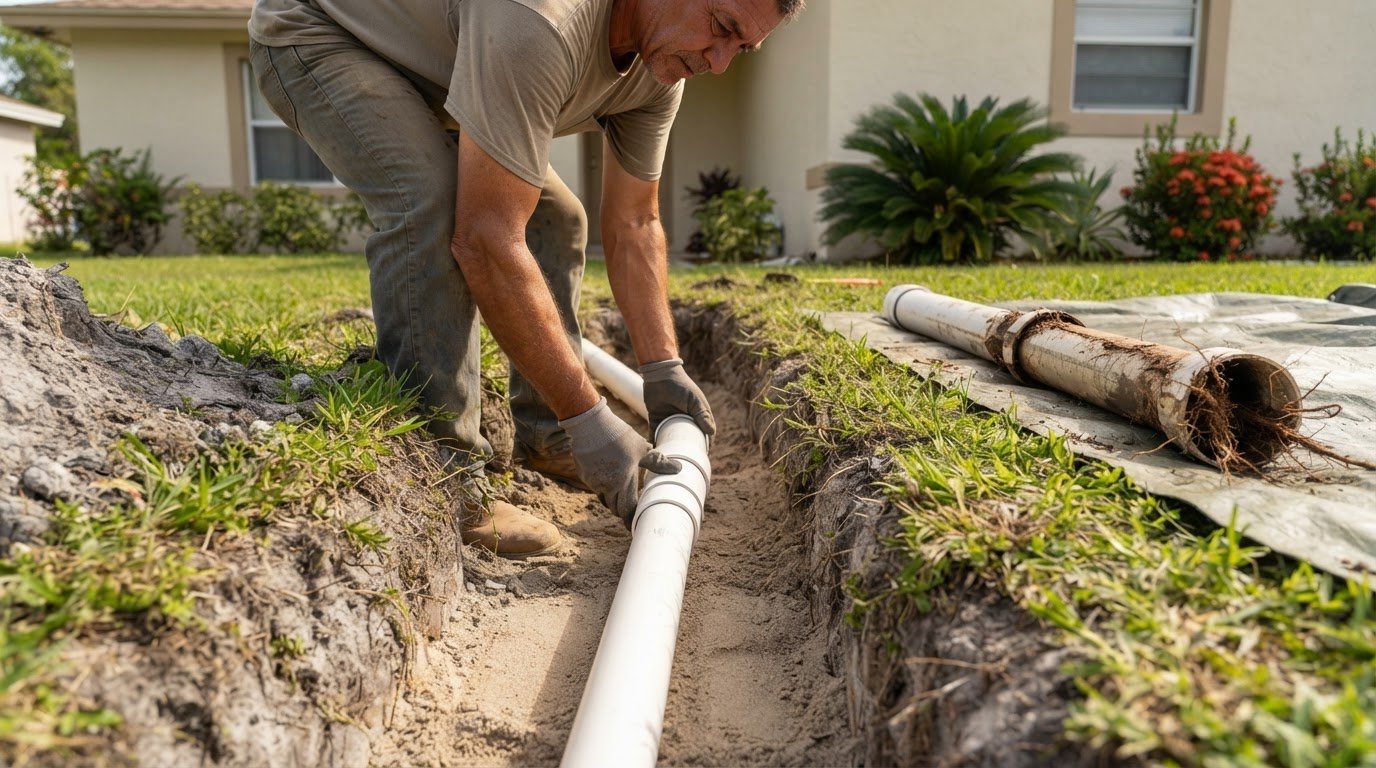
A damaged sewer line doesn’t automatically need full replacement. In Pembroke Pines, replacement is generally considered when damage is extensive or recurring, while a localized problem may be repairable. A sewer camera inspection helps show which option fits. Root intrusion, corrosion, shifting joints, and buildup can all contribute to sewer trouble.
It’s understandable to worry that a backup or persistent drain problem means your yard must be dug up. That isn’t always the case. The right solution depends on the line’s condition, the location and extent of the damage, and whether repair or a trenchless method can address it. A clear assessment helps determine whether sewer line replacement in Pembroke Pines is appropriate.
This guide explains common causes of sewer line problems in Pembroke Pines and compares inspection, repair, traditional replacement, and trenchless options. You’ll learn what can point to a repairable defect, when sewer line replacement in Pembroke Pines may make more sense, and which details help determine the next step.
Key Takeaways
- Learn how camera inspection findings help distinguish a localized repair from damage that may call for full sewer line replacement.
- See how trenchless methods compare with excavation and which conditions can affect the choice of approach.
- Understand how roots, pipe deterioration, shifting joints, and buildup can contribute to sewer line trouble.
- Know which licensing, insurance, and warranty details to consider when reviewing sewer work.
- Find out when sewer repiping may be the next step for a persistent or extensive problem.
Sewer line repair and replacement
A camera inspection helps distinguish a localized defect from widespread pipe failure. In Pembroke Pines, the findings guide decisions about repair, replacement, trenchless methods, and how household plumbing use may be affected during the work.
Repair or Replacement Assessment
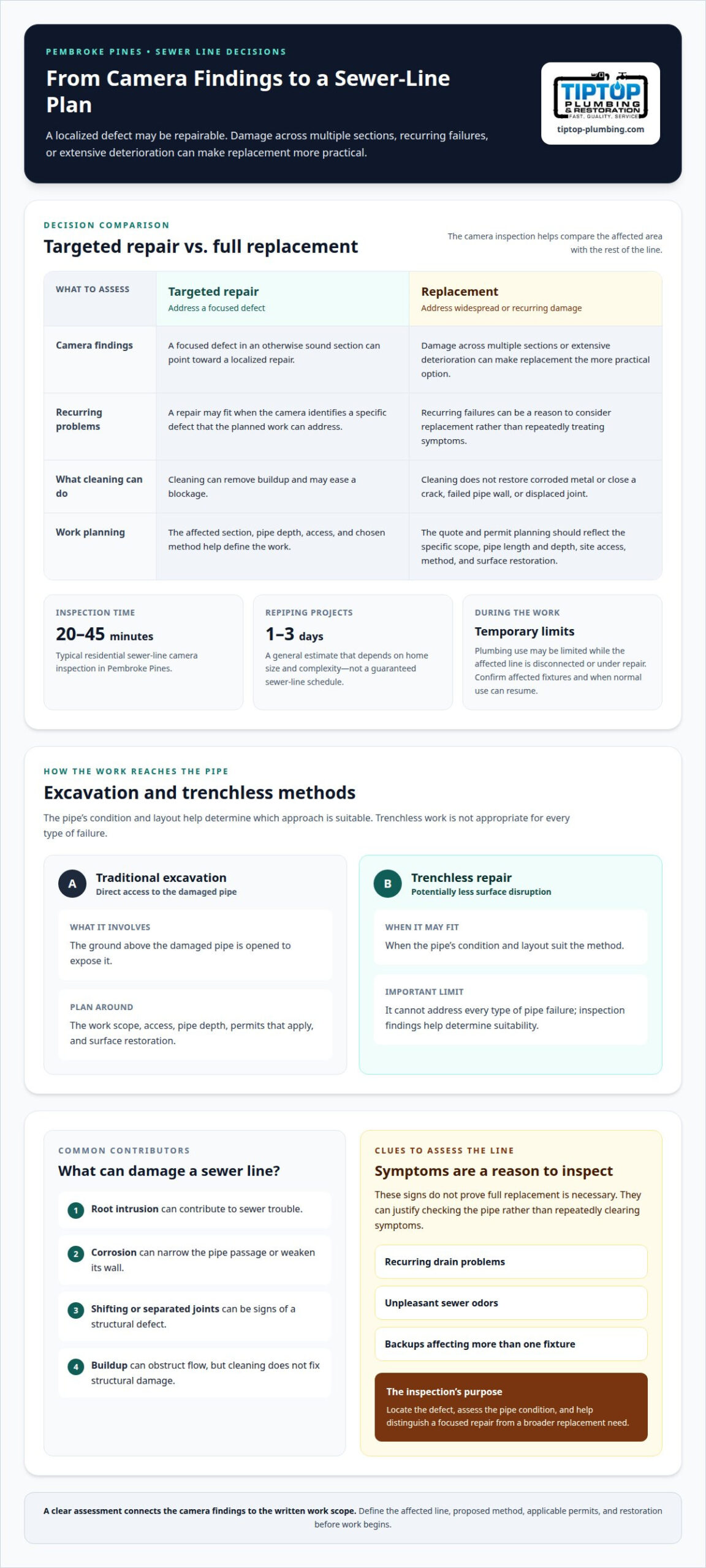
A residential sewer-line camera inspection typically takes 20 to 45 minutes in Pembroke Pines. It reveals the location and condition of the underground pipe, including visible cracks, corrosion, blockages, and separated joints. A focused defect in an otherwise sound section can point toward targeted pipe repair. Damage across multiple sections, recurring failures, or extensive deterioration can make replacement the more practical option.
Cast-iron pipes can corrode over time, narrowing the passage or weakening the pipe wall. Cleaning can remove buildup, but it won’t restore corroded metal or close a crack. An assessment should distinguish a removable obstruction from structural damage before settling on a repair plan. Camera footage gives the plumber evidence to compare the affected area with the rest of the line.
Repair Timelines and Service Interruptions
The work timeline depends on the damaged section, pipe depth, access, and chosen method. Most repiping projects take 1 to 3 days, depending on home size and complexity. That figure describes repiping projects generally, not a guaranteed schedule for every sewer-line repair or replacement. A camera inspection can help define the work before excavation or trenchless repairs begin.
Plan for temporary limits on plumbing use while the affected sewer line is disconnected or under repair. The work plan should explain which fixtures are affected and when normal use can resume. Traditional excavation exposes the damaged pipe by opening the ground above it. Trenchless repair can reduce surface disruption when the pipe’s condition and layout suit the method, but it isn’t appropriate for every type of failure.
Permits, Pricing, and Financial Options
For a Pembroke Pines project, permit requirements depend on the scope of work and applicable local rules. A spot repair and a full replacement are different project scopes, so permit planning should match the proposed work before excavation begins. Replacement costs depend on the damage, pipe length and depth, site access, repair method, and surface restoration. A quote should reflect the specific property and proposed work.
Don’t assume local rebates or financing are part of sewer replacement planning. Any applicable option has its own eligibility and terms, so keep it separate from the technical decision to repair or replace. A clear written project scope helps show which work and restoration the quote covers.
Risks of Delaying Replacement
A cracked or corroded line can continue to leak, while a damaged section can contribute to recurring blockages or sewage backups. In South Florida, delaying a known defect can allow it to worsen before the underlying cause is addressed. Cleaning may ease a blockage, but it won’t correct a failed pipe wall, displaced joint, or repeated leak.
Watch for recurring drain problems, unpleasant sewer odors, or backups affecting more than one fixture. These symptoms don’t prove full replacement is necessary, but they do justify assessing the line rather than repeatedly clearing the symptoms. Prompt diagnosis helps clarify whether a focused repair can address the defect or replacement is the sounder long-term choice.
Looking for a Trenchless Sewer Repair Company Serving Pembroke Pines, Florida?
For a Pembroke Pines property, start with the address, sewer connection, and damage location. These details help define the plumbing issue and the work needed.
Pembroke Pines and Broward County Coverage
Match service coverage to the property’s full street address, not just “Broward County.” Include the ZIP code when describing the location, since postal areas and municipal boundaries are different identifiers. For a home or business in Pembroke Pines, the damaged line’s location, access to the work area, and connection type help define the job.
Clarify what the proposed work covers: a sewer lateral, an interior plumbing system, or fixtures inside the building. These are distinct parts of a property’s plumbing. A location-specific assessment also helps determine whether trenchless methods suit the line’s route and condition.
Permits and Inspections for Sewer Work
Permit and inspection requirements depend on the proposed work and applicable Pembroke Pines rules. Before excavation or replacement, define the project scope and determine which city approvals and inspections apply. A targeted repair and a full line replacement may involve different steps, so the work description matters.
A camera inspection documents the pipe’s condition and helps define the affected section. Connect the findings to the written work scope, including the repair method and restoration. This gives the property owner a clear record of what the proposed job addresses.
The city connection matters, too. A private sewer lateral generally becomes the city’s responsibility at its connection to the city sewer. A plumber can locate the suspected defect and explain whether it appears to be on the private lateral or near the connection point. That distinction helps direct the next step without assuming every blockage is in the same part of the system.
Residential and commercial properties may connect to municipal sewer or use a septic system. Septic service is separate from sewer-lateral repair, so identify the property’s waste system before arranging plumbing work. A sewer camera assessment applies to a connected sewer line, not as a substitute for septic-system service.
For homeowners insurance, review the policy wording, the reported cause of damage, exclusions, and any sewer-backup endorsement. Don’t assume the policy covers replacement simply because a sewer line failed. Keep inspection findings and the repair scope together when discussing a claim with the insurer.
For a backup affecting multiple fixtures, describe the symptoms, property address, and known sewer connection when arranging plumbing help. A local plumber can use those details to assess urgency and determine whether an inspection or repair is the appropriate next step. Arrange a plumbing appointment to discuss the issue.
Company licensing, insurance, and warranty
Before sewer lines are repaired or replaced, establish who is responsible for the work and what the written scope covers. In Pembroke Pines, licensing, insurance, and warranty terms answer different questions: who is qualified for the job, how certain risks are handled, and what workmanship or materials are covered afterward. Treat each as a separate part of the project record.
Licensing and scope of work
Start with the exact work proposed: a localized pipe repair, trenchless work, or full sewer-line replacement. Then match the company’s documented credentials to that scope and location. A business name alone doesn’t show who will perform the work or what the paperwork covers. The written proposal should identify the responsible company, describe the affected line, and state who handles required permits and inspections.
For example, a camera inspection may find a damaged lateral while the rest of the system remains functional. The proposed work should identify that section rather than describe an unclear, broad repair. Ask for written clarification about any change in scope before work proceeds. This makes it easier to compare the inspection findings with the planned repair.
Insurance documentation
Insurance is separate from licensing. Review current documentation that identifies the insured business and the coverage relevant to the worksite. Confirm that it names the same business shown on the proposal. For a property in Broward County, consistent details across the address, company, and work description help keep the project file clear.
Also clarify how the work area will be protected and who handles damage directly related to the project. Excavation can affect landscaping, paving, or other surfaces; trenchless methods may have different access needs. The written plan should describe the work area and any restoration included, rather than relying on a verbal summary.
Warranty terms and inspection records
A warranty is useful only when its terms are clear. Review what it covers, when coverage begins, how long it lasts, and which conditions may limit it. Check whether coverage applies to workmanship, installed materials, or both. Don’t assume a warranty for one repair also covers every part of the plumbing system.
Keep the camera inspection findings, proposal, invoices, and warranty together. These records connect the observed defect to the completed work and make later questions easier to address. Read the terms so you understand what the documents cover. When you contact Tip Top Plumbing & Restoration, have the property address and inspection details ready to discuss the sewer-line concern clearly.
Benefits compared with excavation
Trenchless sewer work can reduce how much of a yard or driveway needs to be opened. Traditional excavation exposes the pipe by digging along the damaged section. A trenchless approach works through limited access points, which can help preserve paving, landscaping, and other surfaces. Compare methods based on the pipe’s condition, route, and surrounding structures, not just the method’s label.
For example, a line beneath a finished patio may be a stronger candidate for trenchless work than one with severe collapse or major misalignment. Technicians assess whether the existing pipe can support the selected method and whether access points are practical. If damage prevents a reliable trenchless repair, excavation may provide the access needed to remove or replace the failed section.
The clearest potential advantage is less surface disruption. Avoiding a long trench can limit disturbance to grass, garden beds, walkways, or a paved parking area. In Florida, where outdoor spaces and hardscaping can be integral to a property, preserving intact surfaces may simplify restoration. Still, access openings and equipment placement can affect the work area, so “trenchless” doesn’t mean no digging.
- Surface impact: Compare access points with the length and location of any excavation.
- Pipe condition: Identify whether the line is cracked, collapsed, offset, or narrowed by buildup.
- Property layout: Note structures, landscaping, and paving above the sewer route.
- Repair scope: Confirm whether the plan addresses the damaged section or the full line.
Trenchless methods can also reduce the amount of ground that must be restored after work. With open excavation, the disturbed area may include soil, sod, paving, and nearby planting. A smaller work zone can mean fewer affected surfaces, but restoration needs still depend on access locations and the site. A written scope should describe both the pipe work and the surfaces affected.
Neither approach automatically prevents future blockages. Cleaning can remove debris or buildup, but it cannot correct a structural defect. A suitable repair method must address the cause shown by the inspection, such as a damaged section or failing joint. The recommended method should be explained in terms of how it fits the pipe and site, not presented as the answer for every sewer line.
Use the inspection findings to compare options. Ask what pipe condition makes trenchless work suitable, where access is required, and what excavation would involve instead. If open excavation is recommended, the reason may be the line’s condition, route, or need for direct replacement. The decision should balance pipe integrity, surface disruption, and the specific work needed for a durable repair.
Causes of sewer line damage
In Broward County, sewer trouble can start underground long before a yard or floor shows damage. Mature tropical trees, corrosion, shifting pipe joints, and repeated blockages can affect sewer lines in different ways. Identifying the cause matters: clearing a blockage won’t correct a cracked pipe, and replacing a sound section won’t remove buildup elsewhere.
Tree roots are a common concern near mature landscaping. Roots can enter through small openings at joints or existing cracks, then grow inside the pipe and catch debris. As material accumulates, wastewater drains more slowly and backups can recur. Pembroke Pines homeowners with trees near the sewer route can schedule main-line inspection and cleaning every 18 to 24 months, particularly where mature tropical trees are present.
Corrosion gradually weakens some older pipes, including cast iron. A rough, deteriorated interior can collect waste and restrict flow; advanced corrosion can also lead to leaks or structural failure. Cleaning may remove an obstruction, but it cannot restore lost pipe material. A camera inspection helps locate the affected section and distinguish surface buildup from visible pipe damage.
Ground movement can also strain buried lines. If soil shifts or settles unevenly, a pipe may lose alignment, separate at a joint, or develop a low spot where waste collects. For example, a recurring blockage in the same location can point to a problem beyond household debris. Camera footage helps connect the symptom to a specific defect.
What enters household drains matters, too. Grease can cool and stick to pipe walls, while wipes and other non-dispersible items can snag at joints or existing obstructions. Over time, that material narrows the passage and may worsen a weak section. Avoid treating repeated slow drains with chemical cleaners, which won’t repair a crack or realign a shifted sewer pipe.
Heavy rain can expose weaknesses in a damaged line, especially where water enters through openings or compromised connections. The city of Pembroke Pines advises inspecting and cleaning sewer lines before hurricane season begins in June. That can help identify an existing concern before seasonal storms, but cleaning alone won’t fix structural damage.
Look for recurring backups, slow drains in several fixtures, or sewage odors near the property. These signs call for an inspection, not a guess about the cause. If wastewater is backing up into the home, treat it as an emergency and limit water use until the line is assessed. For sewer line replacement in Pembroke Pines, an inspection should locate the failure and explain why repair or replacement addresses it.
Tip Top Plumbing & Restoration: Sewer Repiping Services
Tip Top Plumbing & Restoration provides Sewer Repiping Services when inspection findings point to extensive or recurring pipe damage. If the evidence supports a localized repair instead, an assessment helps clarify the scope before replacement is considered. For active plumbing problems that need prompt attention, Emergency Plumbing is available; Leak Detection & Slab Leak Repair addresses suspected leaks that need to be located and assessed.
Share the property address, symptoms, and any camera inspection findings when discussing a sewer concern. These details help focus the conversation on the affected line and whether repiping fits the problem. If recurring backups or visible leakage have raised concerns, contact Tip Top Plumbing & Restoration to discuss the next step.
Make a Clear Plan for Your Sewer Line
Choosing sewer line replacement in Pembroke Pines is easier when the decision is tied to documented findings and a defined work scope. Before work begins, understand which section is affected, what the proposed work addresses, and how the property will be left afterward. Keep the inspection record and project documents together for future maintenance or questions.
Tip Top Plumbing & Restoration offers Sewer Repiping Services and Emergency Plumbing for sewer concerns, along with Water Heater Repair & Installation for separate water-heater needs. To discuss your plumbing issue, share the symptoms and any inspection information available. A clear starting point helps focus the conversation on the next practical step.
With a clear assessment and plan, you can move forward with greater confidence.
Frequently Asked Questions
What causes sewer line problems in Pembroke Pines?
Pipe deterioration, installation defects, and changes to the line’s slope can all cause sewer trouble. For example, a poorly aligned connection may catch waste and trigger recurring clogs, while an unsuitable pipe joint can allow leaks. Plumbing alterations that strain an existing connection may also create problems. A camera inspection helps distinguish a blockage from a defect in the pipe itself, guiding the next repair decision.
What are the differences between trenchless sewer replacement and traditional excavation?
Trenchless replacement accesses the sewer through limited entry points, while traditional excavation opens the ground above the affected pipe. Depending on the method, trenchless work may install a liner inside a pipe or pull a replacement through the existing route. Excavation exposes the pipe directly, making it possible to remove and replace a damaged section. The line’s condition, route, and access determine which approach fits.
How long does sewer line replacement take in Pembroke Pines?
Most repiping projects take 1 to 3 days, depending on the home’s size and complexity. That timeframe is a general guide, not a fixed schedule for every sewer replacement. The affected line’s depth, access, work method, and any needed surface restoration can affect the job duration. A project plan should distinguish the pipe work itself from follow-up restoration, so you know what work remains before normal use resumes.
How do I choose a licensed sewer contractor in Pembroke Pines?
Choose a company whose licensing and insurance match the sewer work being proposed, then review the written scope before authorizing it. Tip Top Plumbing & Restoration is licensed and insured and provides Sewer Repiping Services and Camera Inspections. The proposal should clearly identify the affected line, repair approach, and any restoration included. Review warranty terms in writing, including what the coverage applies to and how to address a concern after the work.
Disclaimer
The information provided in this article is for general educational and informational purposes only and should not be considered professional plumbing, restoration, mold remediation, or legal advice. Every plumbing system, property, and situation is unique, and the recommendations discussed may not apply to your specific circumstances.
While Tip Top Plumbing & Restoration strives to provide accurate and up-to-date information, we make no warranties regarding the completeness, accuracy, or reliability of the content. Any actions you take based on this information are at your own risk.
Plumbing repairs, water damage restoration, and mold remediation should be performed by qualified professionals and in accordance with applicable local building codes and regulations. If you are experiencing a plumbing emergency, water leak, or property damage, contact a licensed professional for an on-site evaluation.
Tip Top Plumbing & Restoration is licensed and insured to provide plumbing and restoration services throughout Broward County, Florida.