

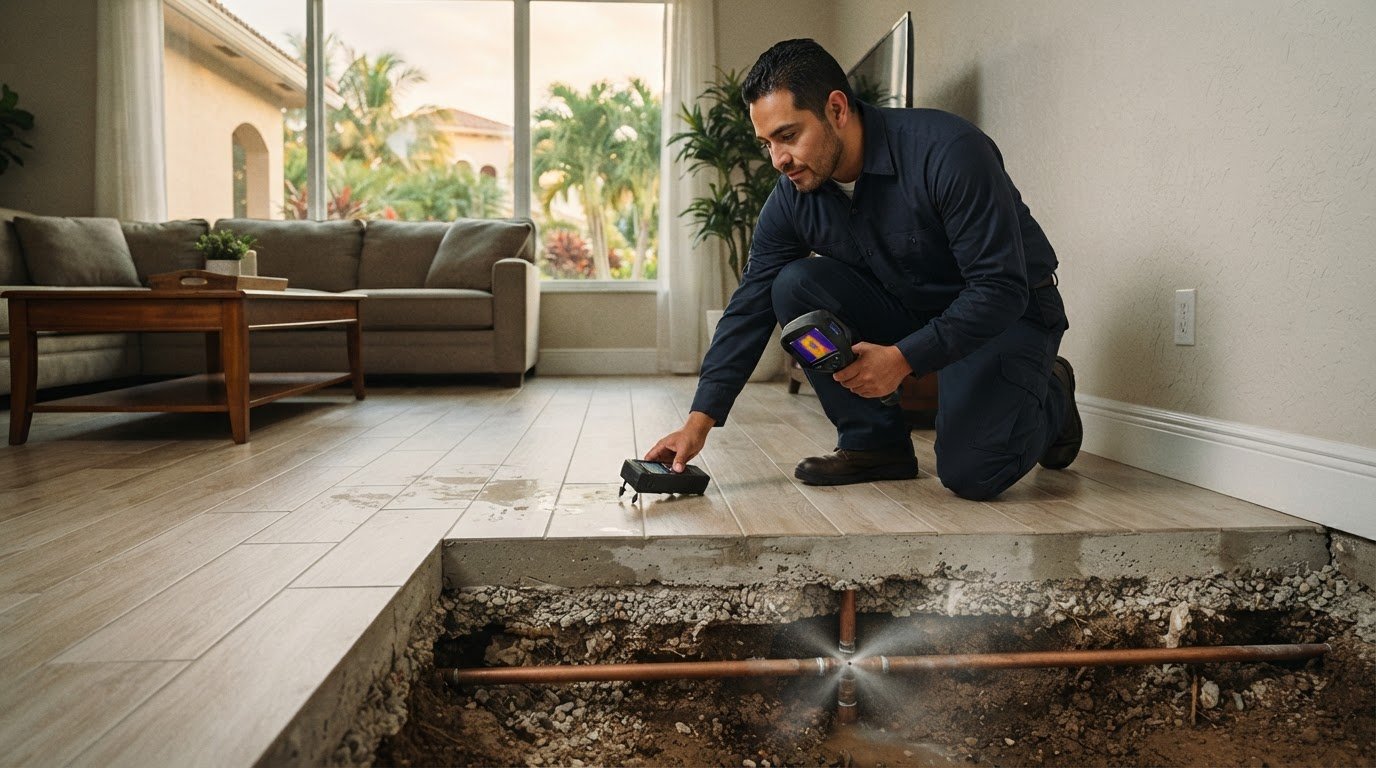
Could a warm patch on the floor or an unexplained jump in your water bill point to a leak beneath your home? For Broward County homeowners, the signs of a slab leak can be unsettling because the source may stay hidden, and similar symptoms can come from other plumbing or moisture problems. One clue alone isn’t proof, but a pattern deserves attention.
It’s understandable to worry that a small change could lead to damage if it goes unchecked. Knowing what to observe can help you decide when to ask a plumbing professional to investigate, without jumping to conclusions or overlooking a developing issue.
This guide covers seven common warning signs, what they may mean, and what details to share with a professional, such as when symptoms started and where you’ve noticed moisture, warmth, or changes in water use. You’ll also learn when prompt leak detection and a damage assessment may be appropriate.
Key Takeaways
- One unusual sound, damp patch, or warm floor spot doesn’t confirm a leak; look for recurring clues and changes over time.
- Learn how the signs of a slab leak may overlap with appliance leaks, plumbing fixtures, and other sources of moisture.
- Record where and when you notice changes, and reduce water use if appropriate while you decide on next steps.
- Avoid cutting into flooring or concrete to search for a leak; professional leak detection can help investigate the source.
- An evaluation can help determine whether slab-leak repair or water remediation may be relevant, but the findings guide the next step.
What Are the Early Signs of a Slab Leak in a Broward County Home?
One unusual sound or damp patch doesn’t confirm a slab leak. Look for clues that recur, persist, or appear alongside a change in water use. A hidden leak may be present even when there’s no visible puddle, because water can remain beneath flooring or travel through building materials before reaching the surface.
A slab leak is a leak in a water line running beneath a building’s concrete slab. The slab is the ground-level concrete base of a home, often part of a slab-on-grade foundation. Because the pipe is concealed, homeowners may notice indirect changes before they see water.
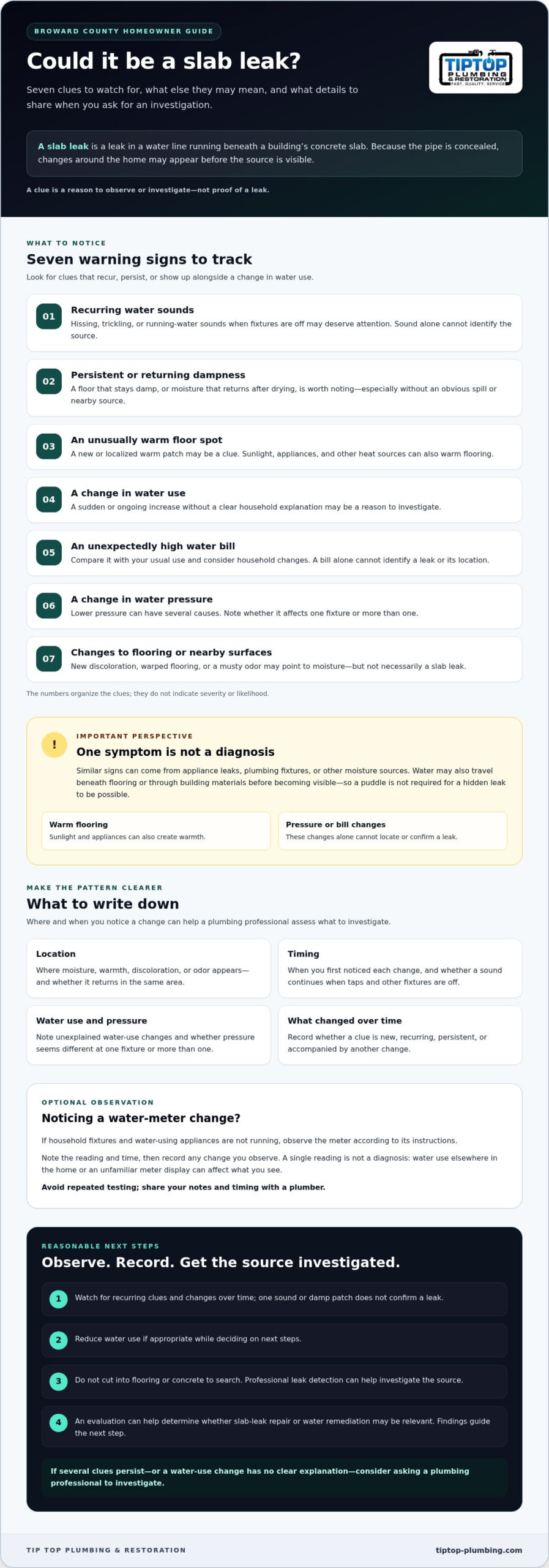
These seven clues can be worth tracking. Each can have other explanations, so treat them as reasons to observe or investigate, not as proof of a slab leak:
- Recurring water sounds: Hissing, trickling, or running-water sounds when fixtures are off may warrant attention, but sound alone can’t identify the source.
- Persistent dampness: A floor that stays damp or moisture that returns after drying deserves a closer look, especially if there’s no obvious spill or nearby source.
- Unusual floor warmth: A warm spot may be a clue, particularly if it’s new or localized. Sunlight, appliances, and other heat sources can also warm flooring.
- A change in water use: A sudden or ongoing increase without a clear household explanation may be a reason to investigate.
- An unexpectedly high water bill: Compare it with your usual use and consider whether household water use has changed. A bill alone can’t identify a leak or its location.
- A change in water pressure: Lower pressure may have several causes. Note whether it affects one fixture or more than one, and share that detail with a plumber.
- Changes to flooring or nearby surfaces: New discoloration, warped flooring, or a musty odor may point to moisture, but not necessarily a slab leak.
Which changes around the home may point to a hidden leak?
Pay attention to where a sign appears and whether it returns. For example, note if a damp area stays near the same stretch of floor, or if a water sound continues after taps and other fixtures are off. Record whether warmth is localized, whether water pressure has changed, and when you first noticed any discoloration or odor. These details can help a plumbing professional assess a pattern without treating any one clue as proof.
Can a water-meter change help you decide whether to investigate?
If household fixtures and water-using appliances aren’t running, you can observe your water meter according to its instructions. Note the reading and time, then record any change you observe. A single reading isn’t a diagnosis: water use elsewhere in the home or an unfamiliar meter display can affect what you see. Avoid repeated testing; share your notes and timing with a plumber instead.
If several clues persist, or you’ve noticed a water-use change you can’t explain, professional leak detection can help investigate the source. Tip Top Plumbing & Restoration offers leak detection in Broward County. An evaluation investigates the pattern; it doesn’t establish a diagnosis from one symptom or guarantee a particular repair method.
How Slab Leaks Affect Floors, Water Use, and Sound
A slab leak is a leak in a water line beneath a building’s concrete slab. Since the pipe is out of sight, water may affect the surrounding area before a homeowner can see the source. Depending on the leak’s location and flow, as well as the materials and conditions in the home, clues might include a change in water use, an unusual sound, floor warmth, or moisture. Some leaks may cause visible damage; others may not show an obvious surface sign right away.
A warning sign can point to a possible leak, but it isn’t a plumbing diagnosis. Household clues can help identify what to investigate, but they can’t confirm which pipe, if any, is leaking.
Why might a slab leak be difficult to spot?
The pipe and leak may be concealed by concrete and finished flooring, so water doesn’t necessarily appear directly above the damaged area. It can move through or along building materials before becoming visible, and the route can vary from home to home. As a result, a homeowner might first notice a sound, an unexpected water-use change, or a warm patch, while another might see moisture or damage. Visible water isn’t required for a hidden plumbing leak to be possible.
Consider the pattern, not just the surface. A recurring sound when fixtures are off, for example, may be worth reporting, even if there’s no puddle. The U.S. Environmental Protection Agency offers practical guidance on finding and fixing leaks, including why household leaks shouldn’t be ignored.
Why can the same sign have more than one cause?
Moisture near a floor could come from a plumbing line, a leaking appliance, a fixture, drainage, or another source. Floor warmth may relate to a hot-water line, but sunlight or a nearby heat-producing appliance could also explain it. A sound might come from a fixture, an appliance, or water moving elsewhere in the home. These overlapping possibilities make guesswork unreliable.
Write down where each clue occurs, when it began, and whether it returns or changes. A plumber can consider those observations alongside an appropriate inspection to investigate the source. Tip Top Plumbing & Restoration provides leak detection in Broward County; if you’d like to arrange an evaluation, you can book a plumbing appointment.
Slab Leak or Another Problem? Compare the Clues Before You Assume
Damp flooring, a warm patch, or an unexpected sound can have several explanations. Even a cluster of possible signs of a slab leak is a reason to investigate, not enough to confirm where water is coming from. Compare what you’ve noticed with other possible sources, then pay attention to whether the clue persists or changes.
| What you notice | Possible explanations |
|---|---|
| Persistent dampness or a recurring wet spot | A plumbing leak, an appliance or fixture leak, or another moisture source |
| A warm area on the floor | A hot-water line, sunlight, or a nearby heat-producing appliance |
| Water sounds when fixtures are off | A plumbing leak, a fixture or appliance still using water, or sound from elsewhere in the home |
| Unexpected water use | A hidden plumbing leak or water use that hasn’t been accounted for |
What else can cause damp floors or unexplained moisture?
Check whether the damp area is near an appliance, plumbing fixture, or connection, but don’t assume proximity identifies the source. Moisture may also have a non-plumbing cause, and its path may not reveal where it began. Note the location, when the area becomes damp, whether it dries and returns, and any nearby water use. A photo can help document a change, but it can’t confirm the cause.
A leak in a copper water line is another possibility a plumber may consider. Tip Top Plumbing & Restoration offers copper pipe leak repair, but a symptom alone can’t establish that a copper pipe, or a line beneath the slab, is responsible.
When does a pattern deserve professional leak detection?
Consider professional assessment if moisture keeps returning, the affected area grows, or several clues occur together. A recurring warm patch or water sound is worth reporting, but neither proves a leak. Likewise, don’t diagnose the source based on flooring material or one water-meter observation. Share what you noticed and when it happened so a plumber can investigate before repair decisions are made.
Tip Top Plumbing & Restoration provides Broward County leak detection services to investigate possible leak sources. Detection can help clarify what may be happening; it doesn’t guarantee a particular diagnosis or repair method.
What Should You Do If You Notice Signs of a Slab Leak?
Possible signs of a slab leak call for careful observation, not cutting into the home to hunt for a pipe. Take these steps to share useful information and avoid making damage worse:
- 1. Note the clues. Record where you hear a sound, feel unusual warmth, see moisture, or notice a meter change, along with when it happens and whether it returns.
- 2. Limit water use if appropriate. If you suspect a leak, avoid unnecessary water use while you arrange an assessment. If water is actively escaping and you can safely reach the main shutoff, turning it off may help limit continued flow.
- 3. Contact a plumbing professional. Explain what you’ve observed and ask about an evaluation. Avoid cutting flooring or concrete; the signs alone don’t reveal where a pipe is or whether it’s leaking.
When booking, describe the affected area, the signs you’ve noticed, when they began, and whether water is visible or spreading. Mention any relevant plumbing changes or other observations, but leave identifying the cause to an inspection.
What should you document before a plumbing assessment?
Keep a simple record of when and where sounds, warmth, moisture, or meter changes occur. If you can see water or damage, take photos without moving flooring or disturbing the area. Note recent plumbing work or changes in household water use, too. This information gives the plumber a clearer timeline without requiring you to diagnose the source.
When should you treat the situation as urgent?
A recurring clue without visible water is different from water actively spreading or damage that’s worsening quickly. If water is escaping, spreading, or affecting more of the home, prioritize safety and contact plumbing help promptly. Keep people away from water near electrical equipment, and don’t put yourself at risk trying to reach a shutoff. For an urgent plumbing concern, you can learn about emergency plumbing support in Broward County.
Even without active water, repeated or worsening signs deserve attention. Tip Top Plumbing & Restoration offers leak detection and slab-leak repair in the Broward County area. An evaluation can investigate the source and help inform next steps; it doesn’t guarantee a particular diagnosis or repair method.
How Tip Top Plumbing Can Investigate a Possible Slab Leak in Broward County
Recurring moisture, unusual water sounds, or unexplained changes in water use can leave you unsure whether a plumbing line is involved. Tip Top Plumbing & Restoration offers leak detection and slab-leak repair in the Broward County area. A professional assessment investigates the suspected source; it doesn’t confirm a slab leak based on symptoms alone or guarantee a particular repair method.
What can a professional assessment help clarify?
An evaluation can help determine whether the observations may be related to a plumbing leak and whether the suspected source could be beneath the slab. Share where the signs appear, when they began, and whether they’re changing or recurring. Those details give the plumber context to consider during the investigation. Findings can then guide a conversation about appropriate next steps, without assuming the cause or repair in advance.
If you’re looking for more detail about the service, read about leak detection in Broward County. The purpose is to investigate the source, not to promise a specific detection approach, schedule, repair outcome, or prevention of further damage.
How can Broward County homeowners take the next step?
When requesting an appointment, summarize the affected area and the clues you’ve observed. Include when each one started, whether visible water or damage is present, and any relevant changes you’ve noticed around the home. You don’t need to identify the source yourself. Clear observations help set the context for the assessment.
Tip Top Plumbing & Restoration serves homeowners and businesses in Weston, Miramar, Pembroke Pines, Davie, Sunrise, Southwest Ranches, Copper City, and Plantation. If a leak has already affected flooring, walls, or other building materials, mention that when you make contact. The company also offers water remediation and dry-out services, which may be relevant when there’s visible water or property damage. The plumbing evaluation and any restoration needs are separate considerations, and the appropriate next steps depend on what’s found.
Take the Next Step with Confidence
The signs of a slab leak can overlap with other plumbing and moisture problems, so a single clue isn’t a diagnosis. Pay attention to recurring changes, note where and when they occur, and share those observations with a plumbing professional. If water is actively spreading or damage is worsening, seek plumbing help promptly and prioritize safety.
Tip Top Plumbing & Restoration offers leak detection and slab-leak repair in the Broward County area. If a leak has affected building materials, the company also provides water remediation and dry-out services. An assessment can investigate a possible source and help inform next steps, without assuming a particular repair method in advance.
Careful observation is a useful first step. With professional guidance, you can better understand what’s happening and decide how to move forward.
Frequently Asked Questions
What are the most common signs of a slab leak?
Possible signs of a slab leak include water sounds when fixtures are off, recurring dampness, an unusually warm area of flooring, an unexplained change in water use, or changes to flooring and nearby surfaces. These clues can also have other causes, so none confirms a leak on its own. Broward County homeowners can note which signs occur, where they appear, and whether they persist, then share those observations with a plumbing professional.
Can you have a slab leak without seeing water?
Yes, a concealed leak may not produce visible water right away. A pipe beneath the concrete slab or finished flooring can be difficult to observe, and moisture may not reach the surface immediately. Track recurring clues such as sounds, warmth, or unexplained water-use changes. If the signs persist or concern you, ask a plumbing professional to assess the possible source rather than waiting for a puddle to appear.
Can a slab leak make your floor feel warm?
Yes, a warm patch on the floor can be a possible clue, particularly if it’s new or localized, but warmth alone doesn’t prove a slab leak. Sunlight, an appliance, or another nearby heat source could explain it. Note where the area feels warm and whether it changes. If warmth occurs alongside recurring moisture, unusual water sounds, or unexplained water use, consider asking a plumber to investigate.
Can a high water bill mean you have a slab leak?
An unexplained increase in your water bill may warrant investigation, but it doesn’t establish that a slab leak is present. Changes in household water use or another plumbing issue could also affect consumption. Compare the bill with your usual use and note any other clues, such as recurring sounds or dampness. Share those observations with a plumbing professional rather than using the bill alone to diagnose a leak.
How can you tell if a leak is under the slab or somewhere else?
Symptoms alone usually can’t reliably show whether a leak is beneath the slab, near an appliance, or at a fixture. Dampness, warmth, and sounds can have several causes, and appearance or one meter reading can’t confirm the source. Professional leak detection helps investigate the plumbing and possible leak location before repair decisions are made. Tip Top Plumbing & Restoration offers leak detection in the Broward County area.
Should you turn off the water if you suspect a slab leak?
If water is actively escaping, consider turning off the main water supply if you can reach it safely and know how to operate it. Don’t take risks around water near electrical equipment or attempt a shutoff that feels unsafe. Contact a plumbing professional promptly, especially if water is spreading or damage is worsening. For a persistent clue without active water, record what you’ve observed and arrange an assessment.
Can a slab leak cause damage if it is not visible?
Hidden water may affect nearby flooring or other building materials before it becomes visible, but the extent and timing of any damage depend on the circumstances. Don’t assume there’s no issue simply because you see no puddle, and don’t assume damage is certain from one clue. If signs persist or worsen, arrange a professional assessment. Tip Top Plumbing & Restoration also provides water remediation and dry-out services if building materials have been affected.
Disclaimer
The information provided in this article is for general educational and informational purposes only and should not be considered professional plumbing, restoration, mold remediation, or legal advice. Every plumbing system, property, and situation is unique, and the recommendations discussed may not apply to your specific circumstances.
While Tip Top Plumbing & Restoration strives to provide accurate and up-to-date information, we make no warranties regarding the completeness, accuracy, or reliability of the content. Any actions you take based on this information are at your own risk.
Plumbing repairs, water damage restoration, and mold remediation should be performed by qualified professionals and in accordance with applicable local building codes and regulations. If you are experiencing a plumbing emergency, water leak, or property damage, contact a licensed professional for an on-site evaluation.
Tip Top Plumbing & Restoration is licensed and insured to provide plumbing and restoration services throughout Broward County, Florida.