

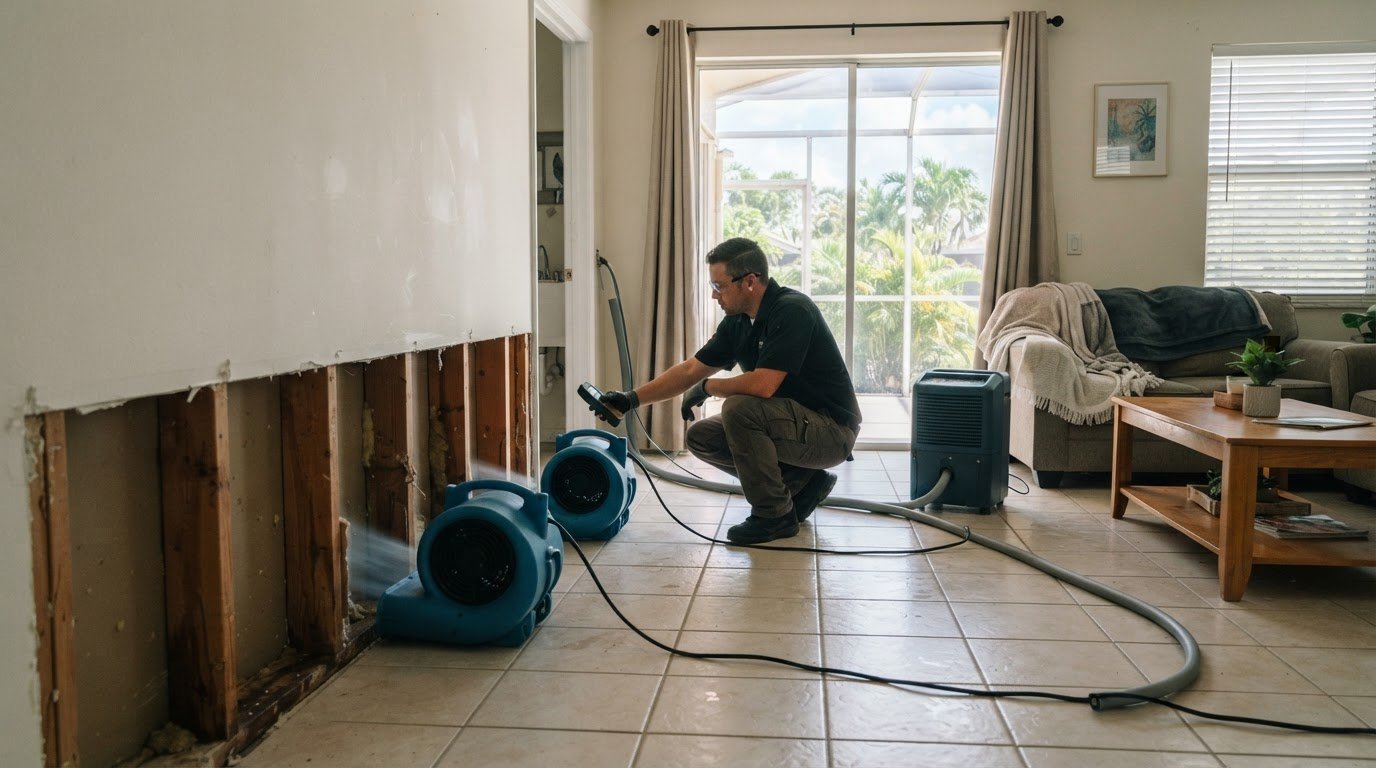
A water-damaged property in Sunrise often needs 3-5 days to dry, though the timeline depends on how far moisture has spread and how heavily materials are saturated. Structural drying services in Sunrise, FL, use controlled drying and moisture monitoring to address what may be hidden behind walls or beneath floors. If moisture remains, mold may begin developing within 24 to 48 hours, according to the U.S. Environmental Protection Agency.
It’s understandable to want a clear end date when water affects your home or business. Drying time depends on the materials involved, how deeply they’re saturated, and indoor conditions. A quick visual check alone may not reveal how much moisture remains.
This article explains what affects restoration timelines, how professionals monitor drying, and what to look for in a contractor’s credentials and documentation. You’ll also learn when water damage needs an urgent response and what you can do to limit further damage while help is on the way.
Key Takeaways
- Understand which conditions can extend drying, including how deeply moisture has spread and which building materials are affected.
- Learn what licensing, insurance, and relevant restoration credentials can tell you about a contractor’s qualifications.
- See why professional drying equipment and moisture monitoring can address dampness that household fans may not reach.
- Know the immediate steps to take after water damage and when the situation calls for emergency restoration.
- Find out what a dry-out service involves, from identifying affected areas to monitoring progress toward a dry structure.
How long does water damage restoration take in Sunrise?
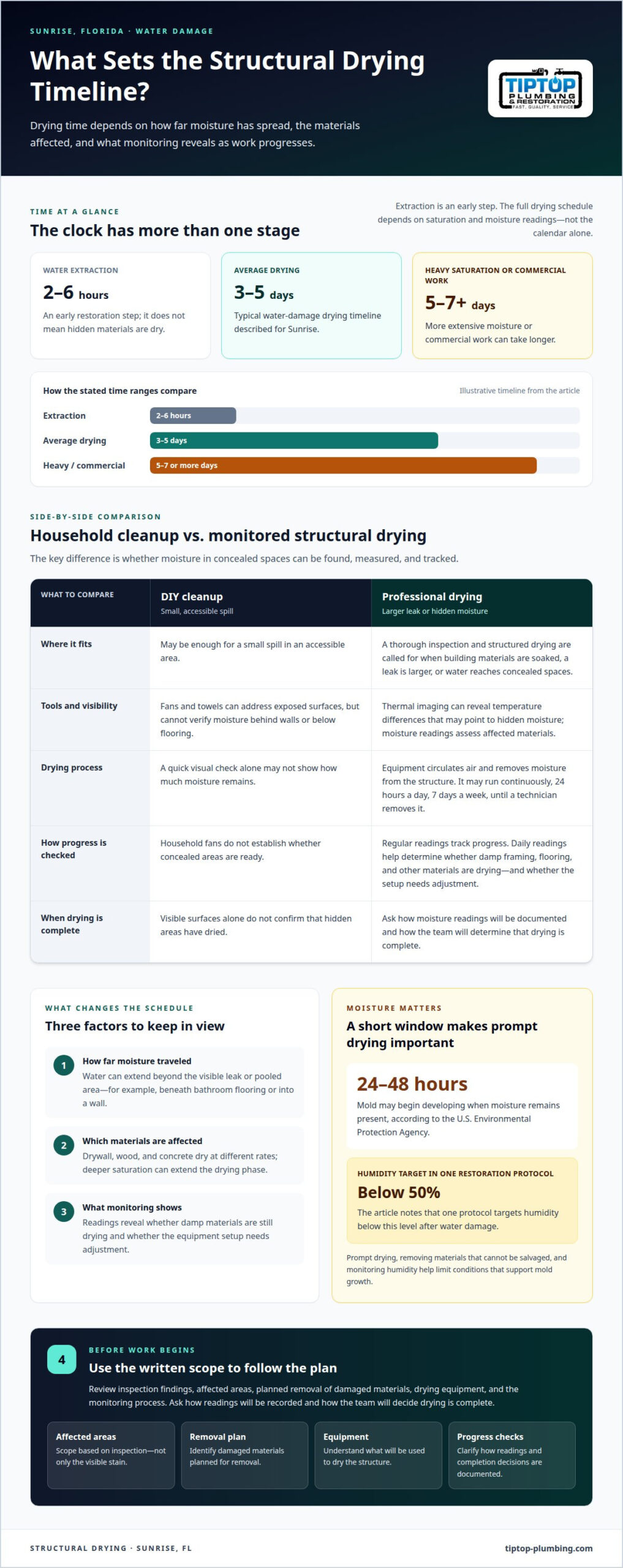
Water-damage drying in Sunrise averages 3-5 days, while heavy saturation or commercial work can take 5-7 or more days. The timeline depends on how far moisture travels, which materials absorb it, and what monitoring shows as drying progresses.
Inspection and Moisture Monitoring
A water damage inspection maps visible wet areas and checks for moisture beyond the leak or pooled water. Thermal imaging can reveal temperature differences that may point to hidden moisture, while moisture readings help assess affected materials. During structural drying, regular readings track progress and show whether the setup needs adjustment.
Ask for an estimate that describes the affected areas, planned removal of damaged materials, drying equipment, and monitoring process. For example, moisture from a wet bathroom floor may extend beneath the flooring or into a wall. The scope should reflect inspection findings, not just the visible stain.
Drying After Water Extraction
After water extraction, drying equipment circulates air and removes moisture from the structure. Professional equipment may run continuously, 24 hours a day, 7 days a week, until a technician removes it. Daily readings help determine whether damp framing, flooring, or other materials are drying; the calendar alone cannot show that hidden areas are ready.
Extraction itself may take 2-6 hours, but that is only an early step in restoration. Materials such as drywall, wood, and concrete dry at different rates, so the final schedule depends on saturation and readings. Heavy water intrusion can extend the drying phase beyond an average residential job.
Moisture control also matters for mold prevention. Mold may begin developing within 24 to 48 hours when moisture remains present, according to the U.S. Environmental Protection Agency. Drying promptly, removing materials that cannot be salvaged, and monitoring humidity help limit conditions that support growth. One restoration protocol targets humidity below 50% after water damage.
DIY cleanup may be enough for a small, accessible spill, but household fans and towels can’t verify moisture behind walls or below flooring. A larger leak, soaked building materials, or water in concealed spaces calls for a thorough inspection and structured drying. In Sunrise, moisture readings and thermal imaging can help identify where drying needs to continue.
Before work begins, review the estimate for the inspection findings, removal plan, equipment, and progress checks. Ask how moisture readings will be documented and how the team will determine that drying is complete. These details make it easier to follow the timeline and understand schedule changes if materials remain damp.
Licensing, insurance, and contractor credentials
Credentials matter because water damage work can involve distinct tasks. A contractor’s license, insurance, and training documents address different qualifications. A license relates to authorized work within its scope; insurance addresses specified risks; certification indicates completed training or assessment. These terms aren’t interchangeable. A drying credential alone, for example, doesn’t establish authorization for plumbing repairs or reconstruction.
Start by identifying the work the property needs. A supply-line leak, soaked flooring, and damp wall cavities can require different skills. The person locating a plumbing failure may need different qualifications from the technician monitoring structural moisture. A written scope should state who handles each task, what’s included, and whether separate trades are involved.
Review insurance documents carefully. A certificate of insurance identifies coverage information, but it isn’t the policy itself and doesn’t explain every limitation. Coverage depends on the policy language and the cause of damage. Homeowners insurance often covers sudden and accidental water damage, while long-term maintenance issues may not be covered.
When it’s safe, create a dated record before cleanup changes the scene. Photograph the source, affected rooms, visible damage, and damaged belongings. Keep receipts for necessary expenses and save written estimates, inspection notes, and moisture-monitoring records. These materials can help explain what happened and what work was performed. Don’t delay urgent mitigation to assemble paperwork.
Insurance claim assistance should provide organized, factual documentation, not promise coverage or claim approval. A useful file separates observed damage from suspected hidden moisture and lists removal, drying, and repair work distinctly. If a technician finds dampness behind a wall, the record should explain the finding and how it was assessed. This helps homeowners discuss the loss accurately with their insurer.
Before work proceeds, review the written scope for the property address, affected areas, planned work, and documentation process. Check whether estimates distinguish emergency mitigation from later repairs. If mold growth is a concern, inspection notes should identify moisture conditions and affected materials. Clear records connect the initial response to completed work without overstating what the evidence shows.
Keep copies of every estimate, photograph, and work record together. If you need help addressing water damage, you can request a conversation about the property and its next steps.
Need Structural Drying in Sunrise?
After water extraction, drying equipment addresses moisture remaining in building materials and indoor air. The right setup depends on the inspection findings, affected materials, airflow, and humidity.
Professional Equipment and DIY Methods
Household fans can move air across an exposed floor, but they don’t measure hidden dampness. Professional drying combines air movement with dehumidification and moisture checks. Commercial LGR dehumidifiers remove 10-20 times more moisture from the air than residential dehumidifiers. That capacity can matter when water has reached drywall, flooring, or enclosed cavities.
DIY cleanup may suit a small spill on a hard, accessible surface. Remove standing water, dry the area, and watch for returning moisture. A leak that reaches beneath flooring or behind drywall needs more than surface airflow. Without moisture readings, a room may feel dry while concealed materials remain damp.
Psychrometry guides equipment placement by considering temperature, humidity, and airflow together. A technician uses these conditions to position air movers and dehumidifiers where they support drying, rather than simply pointing fans at visible damage. For example, airflow near wet flooring may need adjustment if a wall cavity is also affected.
Drying equipment has practical tradeoffs. Air movers can be noisy, while dehumidifiers run and release heat as they remove moisture. Placement should allow air circulation without blocking safe access through the room. Keep children and pets away from cords and equipment, and don’t unplug or reposition drying machines without guidance.
Equipment and Daily Costs
A drying setup may include commercial dehumidifiers and air movers, selected based on the inspection and affected materials. The equipment lowers indoor humidity and moves air across damp surfaces. Daily costs depend on the work scope, equipment used, and operating time. Pricing varies by situation and is provided after a quote request.
Electricity use can increase a household bill during drying, especially while equipment runs continuously. Ask how the team will explain equipment use and track progress rather than switching machines off to reduce noise or power use. Interruptions can slow moisture removal and make drying less consistent.
In Sunrise, Florida’s humidity regularly exceeds 60%, increasing the need for sustained dehumidification during structural drying. This makes measured conditions more useful than judging progress by touch alone. Monitoring helps show whether the equipment is reducing moisture in the affected area or needs repositioning.
Before drying begins, the inspection should identify wet areas and materials that need attention. The equipment plan should match those findings, account for room access, and include progress checks. A fan may dry a surface, while a measured setup addresses broader moisture conditions that surface cleanup can miss.
Emergency restoration services in Sunrise and surrounding areas
In Sunrise, treat water intrusion as an emergency if a leak continues, water is spreading, or standing water reaches rooms. First, stop the source if possible. Turn off electricity in affected areas only if it’s safe. If water is near outlets, appliances, or a breaker panel, stay clear and get qualified help assessing the hazard.
Take these immediate steps while avoiding unsafe cleanup:
- Move people and pets away from wet electrical equipment and unstable areas.
- Photograph the water source and visible damage when safe.
- Keep receipts and notes about the incident for insurance records.
- Tell restoration technicians where water appeared and when it began.
These details help technicians assess the source, affected materials, and next steps. A leaking water heater, for example, requires attention to both the water and the failed appliance. A drain or sewer backup also needs its source identified before cleanup proceeds. Emergency restoration should distinguish immediate water removal from later drying and repairs.
One inch of water from stormy weather, a leak, or a broken pipe can cause up to $27,000.00 in property damage. The actual impact depends on where water travels and what it reaches. In a Sunrise home, water spreading beneath flooring may affect concealed areas beyond the visible wet patch. Prompt assessment helps identify the scope before cleanup changes the evidence.
Insurance documentation can help create a clear account of the event. Record the date, suspected source, affected rooms, and visible damage. Keep photographs, written estimates, and receipts together. Homeowners insurance often covers sudden and accidental water damage, while long-term maintenance issues may not be covered. Policy terms and the cause of damage shape how a claim is handled.
Share the timeline and photographs with the restoration team and insurer. Separate observations from assumptions: note a wet ceiling, for example, without claiming a concealed pipe caused it before it’s assessed. Request written findings and planned work, including water extraction, drying, and any material removal. This creates a useful record for the property owner and insurance discussions.
Once immediate hazards are addressed, restoration technicians can assess remaining moisture and determine the right cleanup sequence. Water limited to one hard surface is different from water that has soaked drywall or flooring. Clear information about the source, affected areas, and access helps the response focus on actual damage rather than guesswork.
What do structural drying services in Sunrise, FL include?
A structural drying project traces water from its source into affected building materials. The work typically progresses through inspection, extraction, controlled drying, moisture monitoring, and documented closeout. Each stage answers a practical question: where did the water travel, what can be dried, and what still needs attention?
First, technicians inspect the property and identify the source and visible impact. Thermal imaging can reveal temperature differences that may indicate hidden moisture, while moisture readings help assess walls, floors, and other materials. If a plumbing failure continues, the source must be addressed to prevent more water intrusion.
Next, water extraction removes accessible water before structural drying begins. The work plan can separate actions such as:
- Removing standing water from affected rooms.
- Identifying wet materials and areas requiring closer assessment.
- Positioning air movers and dehumidifiers for controlled circulation.
- Recording moisture readings as drying progresses.
Equipment placement should follow inspection findings, not just the visible puddle. Wet flooring beside a wall, for example, may require attention to both surfaces. Air movers direct airflow across affected areas, while dehumidifiers remove moisture from indoor air. Technicians adjust the setup if readings show that materials are drying unevenly.
Monitoring provides evidence of progress. Daily moisture readings track changes in materials, rather than relying on touch or appearance. The stated post-damage targets are below 15% for wood and below 1% for concrete. These figures help explain why materials need separate readings: concrete and wood do not respond identically to moisture.
Drying records can include inspection findings, equipment placement, readings, and any material removal. That documentation helps property owners understand the work completed and supports clear communication about the remaining scope. Where damage involves water categories, the supplied classification describes Category 1-3 and Classes 1-4 under IICRC S500. The classification helps characterize the water and affected area.
Structural drying doesn’t automatically mean every wet item must be discarded. The material’s condition and exposure help determine whether removal is needed. Technicians may assess wet drywall separately from a hard floor, for example, because each material responds differently. A clear scope should distinguish drying from removal and identify areas needing further work.
At completion, the team reviews final readings and the documented drying process. That closeout gives you a record of assessed areas, material decisions, and equipment use. For a water-damaged property, request help with the next drying steps.
Tip Top Plumbing & Restoration: Dry Out Service
Tip Top Plumbing & Restoration provides Dry Out Service for properties affected by water damage. Turn to the team when water has entered building materials or drying requires more than surface cleanup. If an active plumbing leak is causing the damage, Emergency Plumbing can address the plumbing issue alongside drying.
A water heater failure or recurring pipe problem may also call for Water Heater Repair & Installation or Sewer Repiping Services, depending on the source. Addressing the source helps prevent further water intrusion while the property’s drying needs are handled.
For water damage or a plumbing issue, contact Tip Top Plumbing & Restoration.
Set Up the Next Step With Confidence
Once water intrusion is under control, keep restoration decisions clear and manageable. Identify the rooms needing attention, note any access limits, and decide who should receive project updates. These preparations can help work proceed with fewer interruptions, especially when a household or business needs to keep some areas usable.
For structural drying services in Sunrise, FL, focus on the property’s actual condition rather than a rushed finish date. Clear expectations about access, progress updates, and the transition from drying to repairs can make the process easier to follow. A practical plan should respect both the building and the people who use it.
When you’re ready, contact Tip Top Plumbing & Restoration to discuss the water damage and next steps.
Frequently Asked Questions
Have a Restoration Question?
Yes. Describe the water source, affected rooms, and whether water is still entering. This helps distinguish an ongoing plumbing problem from damage that needs a drying assessment. For example, say whether a ceiling mark appeared after a fixture overflow or without an obvious cause. Tip Top Plumbing & Restoration handles restoration for homes and commercial properties in Sunrise.
How fast can you respond in Sunrise?
Tip Top Plumbing & Restoration offers 24/7 Emergency Plumbing in Sunrise, but does not state a fixed arrival time. Availability means you can request emergency plumbing help at any time; it doesn’t make travel time identical for every call. Share the property address, whether water is actively flowing, and any access limits. For a ceiling leak, identify the rooms directly above and below it.
What areas of Sunrise do you serve?
Tip Top Plumbing & Restoration serves Sunrise and provides service in Weston, Miramar, Pembroke Pines, Davie, Southwest Ranches, Cooper City, and Plantation. Its Broward County work includes residential and commercial plumbing and restoration. For a Sunrise request, provide the property’s full address and say whether it’s a house, condominium, or business. This context clarifies the location and type of property involved.
Who to call for water damage in ceiling?
For an active plumbing leak through a ceiling, contact an emergency plumber; for wet building materials, seek water damage restoration. Tip Top Plumbing & Restoration provides both Emergency Plumbing and Water Damage Restoration. Describe whether the leak is ongoing, where the ceiling is affected, and any nearby plumbing fixtures or water heater. If the leak has stopped, explain when you first noticed the stain and whether it has spread.
How much does structural drying cost in Sunrise, Florida?
Structural drying costs depend on the property and the scope of affected areas. Pricing varies by situation and is provided after a quote request. Cost factors include the number of affected rooms, material saturation, water extraction needs, and the equipment and drying time required. A contained wet area differs from multiple rooms or soaked building materials. Describe the water source and how far it spread when requesting an estimate.
Which structural drying companies serve Sunrise, FL?
Tip Top Plumbing & Restoration serves Sunrise with Dry Out Service, Water Remediation, and Water Damage Restoration. The appropriate service depends on whether the source is still active or water has already affected building materials. An ongoing plumbing leak, for example, may also need Emergency Plumbing. Share the property type and what happened so the team can understand the situation and the restoration support you need.
How quickly should structural drying begin after water damage?
Arrange an assessment promptly once the water source is controlled and the affected area is safe to access. Don’t wait for a stain to grow before describing the damage. Water can travel from a visible spill into nearby flooring, baseboards, or wall edges. Tell the technician when the incident began, which rooms were exposed, and whether water reached furnishings or stored items.
What equipment is used for structural drying and moisture detection?
Structural drying commonly uses air movers and dehumidifiers, while technicians may use thermal imaging and moisture meters during assessment. Air movers direct airflow across affected materials; dehumidifiers remove moisture from indoor air. Thermal imaging can reveal temperature patterns that prompt closer inspection, and moisture readings help assess materials directly. For example, a meter reading can help distinguish a dry surface from damp material beneath it.
Disclaimer
The information provided in this article is for general educational and informational purposes only and should not be considered professional plumbing, restoration, mold remediation, or legal advice. Every plumbing system, property, and situation is unique, and the recommendations discussed may not apply to your specific circumstances.
While Tip Top Plumbing & Restoration strives to provide accurate and up-to-date information, we make no warranties regarding the completeness, accuracy, or reliability of the content. Any actions you take based on this information are at your own risk.
Plumbing repairs, water damage restoration, and mold remediation should be performed by qualified professionals and in accordance with applicable local building codes and regulations. If you are experiencing a plumbing emergency, water leak, or property damage, contact a licensed professional for an on-site evaluation.
Tip Top Plumbing & Restoration is licensed and insured to provide plumbing and restoration services throughout Broward County, Florida.