

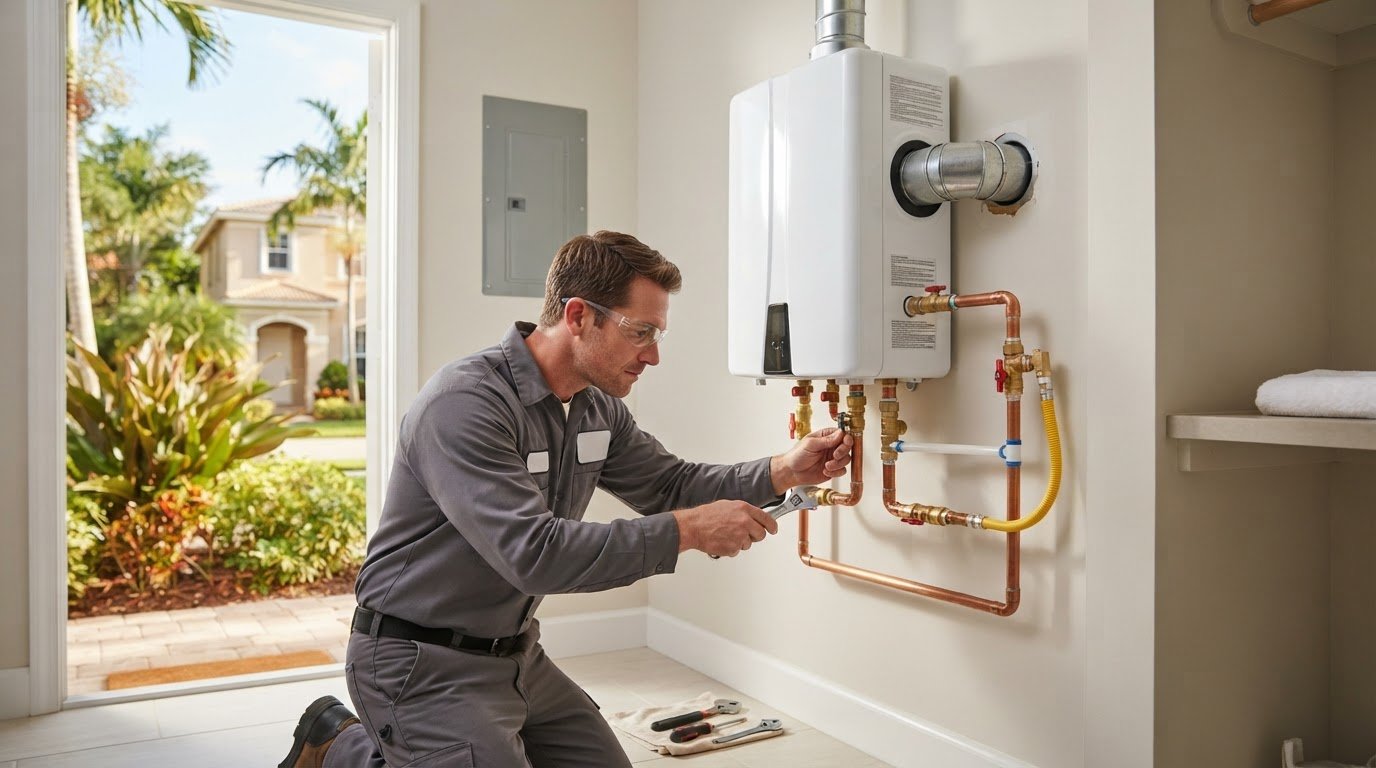
A tankless water heater isn’t a guaranteed shortcut to a higher home value. Tankless water heater installation cost in Cooper City depends on the unit’s size and system type, the home’s hot-water needs, and whether removal, permits, or installation changes add to the project. A useful estimate starts with the existing setup and expected demand.
It makes sense to weigh the upfront expense against comfort, efficiency, and potential resale appeal. A tankless system heats water on demand, but whether it suits your household depends on how much hot water you use at once and what changes the installation requires.
This guide explains how unit size, point-of-use versus whole-house systems, removal, permits, and flow rate affect installation costs. It also covers the potential connection between a tankless upgrade and home value, helping you make a practical decision for your Cooper City home.
Key Takeaways
- Match unit capacity to the hot-water demand you expect; flow rate and the number of fixtures used at once shape system size.
- Compare point-of-use and whole-house setups based on where you need hot water and how your household uses it.
- Factor in possible removal, permit, and inspection requirements alongside the heater installation.
- Check whether the home’s electrical service, gas line, or venting needs changes, since existing conditions can affect the scope of work.
- Qualifying natural gas or propane water heaters may be eligible for a tax credit of up to $600 per item if they meet the required efficiency tier, according to the Internal Revenue Service.
How Much Does Tankless Water Heater Installation Cost by Unit Size?
For a Cooper City home, tankless water heater installation cost depends on more than the heater itself. The estimate reflects the unit’s capacity, fuel type, existing connections, installation access, removal needs, and permit work. A higher-capacity unit generally costs more than a smaller one because it must heat more water at once. The price depends on the case and is given after a quote request; these project details determine the scope.
Start with peak household hot-water use, not the number of people alone. A home where showers, laundry, and dishwashing overlap needs a unit sized for that combined demand. A smaller unit may suit one fixture or a low-demand area, while a whole-house system must meet the household’s simultaneous needs. An undersized unit may struggle to keep up; an oversized one can add equipment expense without matching actual demand.
Fuel type affects the installation plan. A gas model may need compatible gas piping and venting, while an electric model depends on the home’s available electrical capacity and circuits. If the existing setup needs changes, the work goes beyond mounting and connecting the heater. Location matters, too: a cramped closet or difficult route to the installation point can require more labor than an accessible utility area.
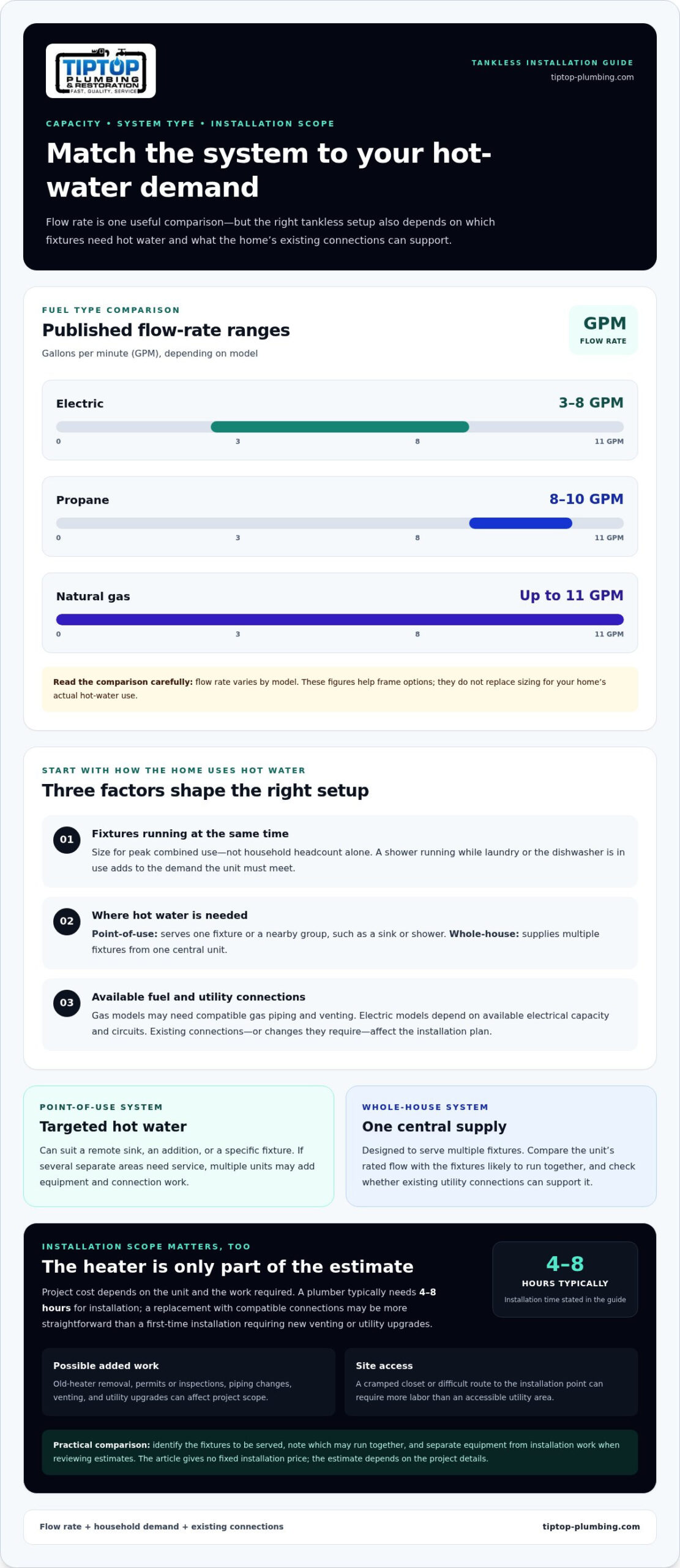
A plumber typically needs 4-8 hours for installation. The work generally involves shutting off utilities and water, removing an old heater if needed, mounting the new unit, connecting water and fuel or electrical lines, and testing operation for leaks and proper heating. A replacement with compatible connections may be more straightforward than a first-time installation requiring new venting or utility upgrades.
Operating costs depend on household use, fuel, and the heater’s efficiency. Tankless systems heat water on demand, avoiding the standby energy used to keep stored water hot. ENERGY STAR says tankless heaters use 24%-34% less energy than tank models when households use up to 41 gallons of water per day. The U.S. Department of Energy says on-demand water heating can improve energy efficiency by up to 34% compared with standard tank models. Actual household use still shapes the energy impact. If you’re also exploring ways to improve overall home energy efficiency and climate control, Happy Home HVAC Solutions provides professional heating and cooling services that complement major home mechanical upgrades.
Tankless water heaters typically last 15-20 years. Maintenance expenses depend on the unit’s service needs, water conditions, and whether cleaning or repairs are needed; routine care may include flushing mineral buildup and cleaning the inlet filter. Following the manufacturer’s maintenance instructions helps homeowners plan upkeep and spot performance changes before they become larger issues.
Common installation risks include choosing insufficient capacity, mismatching the unit with the home’s gas or electrical supply, and installing venting incorrectly. Poor water connections can also cause leaks. Before work begins, confirm the proposed unit matches household demand and that the plan accounts for existing utility connections. Correct sizing and careful testing help prevent avoidable problems after startup.
Point-of-use and whole-house system prices
A point-of-use heater serves one fixture or a nearby group, such as a shower or kitchen sink. A whole-house system supplies hot water across the home. Their installation scopes differ, so compare the setup your household needs rather than treating the systems as interchangeable. A small unit near one bathroom may avoid work across distant fixtures, while a central unit must connect to the home’s main hot-water lines.
Point-of-use systems can suit a remote sink where hot water takes time to arrive or an addition that needs a dedicated supply. They also let homeowners target a specific fixture instead of replacing the entire water-heating setup. However, separate areas may need several point-of-use heaters. Each location adds equipment and connections, so consider how many fixtures need independent hot-water service before comparing options.
A whole-house heater is designed to supply multiple fixtures from one central location. For example, if a shower may run while a dishwasher is on, the system must handle that combined demand. The unit’s fuel, capacity, and utility connections all affect the installation plan. Existing gas lines or electrical service may support the selected system, or the home may need modifications before installation. For homeowners who also want to ensure their connected dishwashers or washing machines are operating properly, Appliance Technician provides professional repair services for major home appliances.
Fuel type helps determine the equipment and connection requirements. Electric tankless heaters deliver 3-8 gallons per minute, depending on the model. Propane systems deliver 8-10 gallons per minute, while natural gas models can provide flow rates up to 11 gallons per minute. These ranges help frame the comparison, but the right option depends on how hot water is used throughout the home and which fuel connections are available.
To compare estimates, separate the unit from the work required to install it. Ask for the proposed system type, fixture coverage, necessary piping changes, and whether existing utility connections can be used. Include removal if the old heater must come out. Changes to water lines can affect the scope of a whole-house replacement; a whole-house repipe is a separate, broader plumbing project, not an automatic part of heater installation.
For a point-of-use setup, identify the exact fixture and route to its proposed location. For a whole-house system, list the fixtures likely to run together, then compare that demand with the unit’s rated flow. The price depends on the case and is given after a quote request; system type, unit capacity, access, removal, and connection changes shape the estimate. Discuss a tankless installation estimate once you know which fixtures the system must serve.
Removal, permits, and inspections
Replacing a storage-tank heater involves more than disconnecting the old unit. The work area must be cleared, water and fuel or electrical connections isolated, and the tank drained before removal. The equipment then needs a clear route out without damaging nearby walls, flooring, or pipes. A tight utility closet, narrow doorway, or heater located above finished living space can complicate access and add labor.
Removal work depends on what the existing system leaves behind. For example, replacement may require disconnecting old venting, removing unused pipe sections, or correcting connections that do not match the new heater. The installation plan should identify what equipment will be hauled away and whether the surrounding area needs repairs. If removal reveals a leak or corrosion, that condition can change the work needed before connecting the new unit.
Permit requirements depend on local rules and the work being performed. A straightforward replacement may have a different review process from an installation that changes fuel piping, electrical service, venting, or the heater’s location. For a Cooper City project, include permit responsibilities in the written scope: who determines whether a permit applies, submits the application, and arranges any required inspection. Don’t assume a replacement is automatically exempt.
When required, an inspection can review whether the completed work follows the approved scope and applicable safety requirements. The installer should leave the heater, shutoff valves, connections, and venting accessible for examination. Before closing off the work area or storing items around it, confirm the system starts correctly, heats water, and has no visible leaks at its connections. Keep project and inspection records with the home’s maintenance documents.
- Before removal: Clear the route and nearby storage, then identify the shutoff points and existing connections.
- Before installation: Record whether the new unit changes the location, venting, fuel supply, or electrical setup.
- Before closing the job: Confirm permit responsibilities, any required inspection, operating checks, and disposal of the old heater.
These details help distinguish equipment replacement from additional plumbing or utility work. If a new location requires rerouting several water lines, that may involve broader pipe work rather than a simple heater swap. A full repipe is a separate project scope. The price depends on the case and is given after a quote request; removal, access, connection changes, and any permit or inspection requirements shape the estimate.
Capacity and flow rate
Tankless sizing starts with flow rate, measured in gallons per minute (GPM). It describes how much hot water a unit can deliver while heating water, not how much it stores. For a Cooper City household, the key question is which fixtures may run together. A shower, kitchen sink, and laundry appliance operating at once create different demand from one shower used alone.
Build a realistic picture of demand before choosing a model. List the fixtures that commonly overlap, then use their rated hot-water flow to estimate the combined need. Include busy routines, such as morning showers followed by kitchen cleanup. Don’t size only for average use; the unit also needs to serve times when several hot-water needs coincide.
Fuel type affects available flow. Electric tankless water heaters deliver 3-8 GPM, depending on the model. Propane systems deliver 8-10 GPM, while natural gas units can provide flow rates up to 11 GPM. These ranges help narrow the options, but a model’s rating and the home’s actual demand matter more than fuel type alone.
Temperature rise also affects output. The unit must raise incoming water to the selected delivery temperature while supplying the required flow. If the required temperature increase is greater, the heater may deliver less hot water at once. Consider a model’s maximum GPM rating alongside the manufacturer’s performance information for the expected conditions.
An undersized unit may not keep up when several fixtures call for hot water at once. The household may notice reduced flow or water that doesn’t reach the desired temperature during overlapping use. A suitable model accounts for peak demand rather than being sized around a single fixture. For example, count a shower and kitchen sink together if both commonly run at breakfast time.
Capacity can also affect installation scope. A home with higher demand may need a different model or changes to existing gas or electrical connections. Those requirements can influence the project beyond the unit choice itself. An estimate should identify the selected model’s flow rating, the fixtures it is intended to serve, and any utility work required.
- List fixtures that may operate together during your household’s busiest routine.
- Compare the combined hot-water demand with the model’s rated GPM.
- Review the fuel source and expected temperature rise alongside the flow rating.
Use the demand list to compare options consistently. If a system is intended to serve the whole home, assess simultaneous use across bathrooms, kitchen, and laundry. If it serves one area, define that coverage clearly. This helps explain why homes with similar layouts may need different capacities and installation plans.
Are rebates or tax credits available for tankless water heaters in Florida?
Potential savings depend on the heater’s fuel and efficiency qualification, not simply its tankless design. According to the Internal Revenue Service, qualifying natural gas or propane water heaters can receive a tax credit of up to $600 per item if they meet the required efficiency tier. That makes the model’s eligibility a key part of comparing installation options in Cooper City.
A tax credit and a rebate work differently. A tax credit reduces eligible tax liability, while a rebate generally returns money through a program after a qualifying purchase. Don’t treat the two as interchangeable when estimating your project budget. The IRS tax credit is the specific federal incentive identified for qualifying natural gas or propane water heaters; eligibility depends on meeting the required efficiency tier.
Before choosing a unit, record its exact model and fuel type. Then compare the manufacturer’s efficiency documentation with the applicable eligibility criteria. The Internal Revenue Service says qualifying natural gas or propane water heaters can receive a tax credit of up to $600 per item if they meet the required efficiency tier. Keep product information and purchase records together for tax preparation.
Use a simple sequence to assess a potential credit:
- Choose the heater’s fuel type and model based on household demand.
- Review the model’s efficiency information against the required tier.
- Keep the purchase and installation records with the product details.
- Apply the qualifying tax-credit rules to the eligible item when preparing taxes.
For example, a Cooper City homeowner comparing a natural gas unit with an electric model should consider more than equipment and installation scope. The gas model may meet the efficiency tier required for the IRS credit; the stated natural gas or propane eligibility does not cover the electric model. Treat any potential credit as a separate consideration rather than automatically subtracting it from the project estimate.
Rebates may have different eligibility rules from federal tax credits, so identify the program, eligible equipment, and required documentation before counting on savings. Keep the heater’s model number, fuel type, and efficiency details available when reviewing program terms. Also compare the complete installation scope, since utility changes or removal work affect the project budget independently of any tax benefit.
For a Cooper City installation estimate, separate the heater’s upfront project cost from any incentive you may qualify to claim. The price depends on the case and is given after a quote request; system type, unit size, fuel connections, and installation work shape the estimate.
Tip Top Plumbing & Restoration: Emergency Plumbing
Tip Top Plumbing & Restoration provides Water Heater Repair & Installation for homeowners deciding whether to repair an existing heater or install a tankless system. If the heater stops working, leaks, or no longer meets household hot-water needs, the team can assess the plumbing issue and required work. Emergency Plumbing is available for urgent plumbing problems.
Share details about the current heater, fuel type, symptoms, and household hot-water demand. This helps clarify whether repair or replacement is the relevant next step. If a leak is affecting the home, Tip Top Plumbing & Restoration provides Leak Detection & Slab Leak Repair to address its source.
Contact Tip Top Plumbing & Restoration to discuss your water heater needs, or visit tiptop-plumbing.com.
Make Your Next Water Heater Decision With Confidence
The next step is to connect your household’s priorities with a practical plumbing plan. Consider whether your current heater needs repair, whether a tankless upgrade fits your daily routine, and what you want the new system to deliver. That makes tankless water heater installation cost in Cooper City a more useful planning question than a standalone figure.
Tip Top Plumbing & Restoration handles Water Heater Repair & Installation and Emergency Plumbing. If broader plumbing work is part of the decision, Sewer Repiping Services may also be relevant. Share what the current system is doing, which fixtures you use at the same time, and what changes you’re considering. This gives the conversation a clear starting point.
A clear plan can help you choose a solution that suits your home and supports dependable hot water. Take the next step when you’re ready.
Tip Top Plumbing & Restoration for Tankless Water Heater Installation
Tip Top Plumbing & Restoration provides water heater repair and installation, a practical next step after reviewing tankless water heater installation costs in Cooper City.
Contact the team when you’re ready to discuss installation or need help with a water heater issue. Tip Top Plumbing & Restoration also provides emergency plumbing, leak detection, drain cleaning, and sewer repiping.
Frequently Asked Questions
Does Installing a Tankless Water Heater Increase Home Value?
A tankless water heater may appeal to some buyers, but installation alone doesn’t guarantee a higher sale price. Buyers may consider the heater’s age, condition, maintenance records, and suitability for the home. Keep the model details and installation paperwork together, and make sure the system serves the household’s actual hot-water needs. If you plan to sell, present the upgrade as a documented feature rather than promising a specific return.
What Additional Costs Affect Tankless Water Heater Installation?
Additional work may involve removing the old heater, difficult access, connection changes, permits, or required inspections. The scope may also change if the new unit needs different venting or utility connections. Ask for an itemized estimate that separates the heater, installation labor, removal, and additional work. This makes it easier to see which requirements are essential and which depend on the home’s existing setup.
Why Go Tankless?
A tankless heater warms water on demand instead of maintaining a tank of stored hot water. This can reduce standby energy use and free the floor space occupied by a conventional storage tank. It may suit a household that values those features and can choose a unit sized for its routine. Consider ongoing maintenance and installation needs, too, so the decision reflects daily use rather than technology alone.
What Is the Average Cost to Install a Tankless Water Heater in Cooper City, FL?
Tankless water heater installation cost in Cooper City depends on the system and the work the home requires, so a single average may not reflect a particular project. Unit capacity, fuel type, removal, access, and connection changes all affect the scope. A useful estimate describes the equipment and each planned task, letting you compare the same work rather than relying on a headline figure.
How Much Does a Tankless Water Heater Unit Cost in Cooper City?
The unit’s price depends on its fuel type, capacity, and intended use. A heater serving one fixture differs from a whole-house model sized for simultaneous household demand. Compare models by their flow rating and compatibility with your home’s utilities, then consider installation requirements separately. This helps prevent equipment-only pricing from being mistaken for the cost of a complete, operating system.
What Is the Labor Cost for Tankless Water Heater Installation in Broward County?
Labor cost depends on the installation tasks, not simply mounting a heater. A replacement with compatible connections may require less work than a project involving new venting, electrical changes, or gas piping. Access to the installation location also affects the job. For a clear comparison, review the labor scope, included testing, removal work, and separately listed project tasks.
How Much Does It Cost to Convert From a Tank Water Heater to a Tankless System?
Conversion cost depends on how closely the existing setup matches the new unit’s requirements. Work may include removing the storage tank, adapting water connections, and addressing fuel supply, electrical service, or venting. The heater’s location and accessibility also shape the project. For Cooper City homes, an estimate should describe the transition from the existing system, not just the new equipment.
What Additional Costs Apply for Gas Line, Electrical, Venting, or Plumbing Upgrades?
Upgrade costs arise when existing connections can’t support the selected heater or its location. A gas model may require changes to gas piping or venting; an electric model may need suitable circuits and electrical capacity. Plumbing work may involve adapting water connections or relocating lines. In Weston, Miramar, Pembroke Pines, Davie, Sunrise, Southwest Ranches, Cooper City, and Plantation, the home’s current setup determines which tasks apply.
Disclaimer
The information provided in this article is for general educational and informational purposes only and should not be considered professional plumbing, restoration, mold remediation, or legal advice. Every plumbing system, property, and situation is unique, and the recommendations discussed may not apply to your specific circumstances.
While Tip Top Plumbing & Restoration strives to provide accurate and up-to-date information, we make no warranties regarding the completeness, accuracy, or reliability of the content. Any actions you take based on this information are at your own risk.
Plumbing repairs, water damage restoration, and mold remediation should be performed by qualified professionals and in accordance with applicable local building codes and regulations. If you are experiencing a plumbing emergency, water leak, or property damage, contact a licensed professional for an on-site evaluation.
Tip Top Plumbing & Restoration is licensed and insured to provide plumbing and restoration services throughout Broward County, Florida.