
If more than one drain is backing up, stop running water until the sewer line is inspected. A video sewer inspection in Davie is typically performed through an accessible cleanout or drain opening, without digging. The camera can reveal recurring clogs, root intrusion, cracks, offsets, low spots, or a collapsed section.
When buying a home, look beyond what is visible during a walk-through. A sewer camera inspection shows the inside of the line and can help you understand whether a problem needs attention before it leads to a disruptive backup.
Here, you’ll learn how the inspection works, what the camera can reveal, and how to interpret common findings when considering a home in Davie. You’ll also see when blockages may be cleared, when more substantial repairs may be considered, and what to expect from the inspection process, so you can make your next decision with clearer information.
Key Takeaways
- If multiple drains back up, stop running water and arrange an inspection to help locate the source.
- For a home purchase, a camera inspection can reveal sewer-line concerns that a walk-through may not show.
- The camera is typically guided through an accessible cleanout or drain opening, allowing the line to be viewed without digging.
- Look for signs such as root intrusion, cracks, offsets, low spots, recurring clogs, or collapsed sections in the inspection findings.
- Camera findings can help distinguish a blockage that may be cleared from serious deterioration that may call for sewer replacement.
Sewer Camera Inspection Near Me?
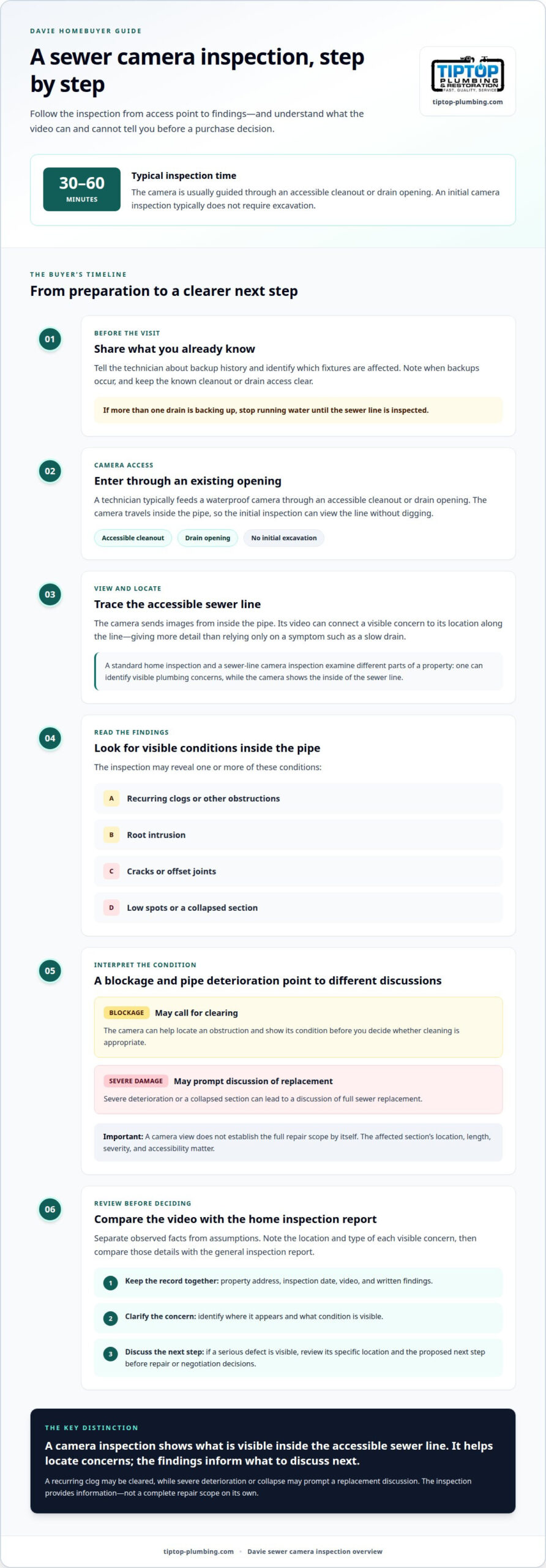
In Davie, a sewer camera inspection can help locate a problem before anyone considers digging. The camera usually enters through an accessible cleanout or drain opening, and most inspections take 30-60 minutes.
Signs That Call for Inspection
Watch for multiple drains backing up, recurring clogs, or sewage returning through a floor drain. If more than one drain backs up, stop running water until the sewer line is inspected. One slow sink may point to a local drain issue, while several affected fixtures can indicate a main-line problem.
A camera inspection can reveal cracks, root intrusion, offsets, low spots, or a collapsed section. For homebuyers, these findings help distinguish a fixture issue from a defect farther along the sewer line. CCTV can also inspect pipelines too small or hazardous for direct human entry, according to the U.S. Environmental Protection Agency.
Choosing Inspection Over Snaking
Snaking targets a blockage but may not reveal why it keeps returning. Choose a camera inspection when clogs recur, several fixtures are affected, or you need to know the line’s location and condition. For example, a cable may clear material while leaving roots, cracks, or an offset connection undiscovered.
After a repair, a post-job camera inspection can show whether the repaired section is open and whether another visible obstruction remains. It gives you a view of the line rather than relying only on whether a drain seems to flow.
Camera Access and Excavation Needs
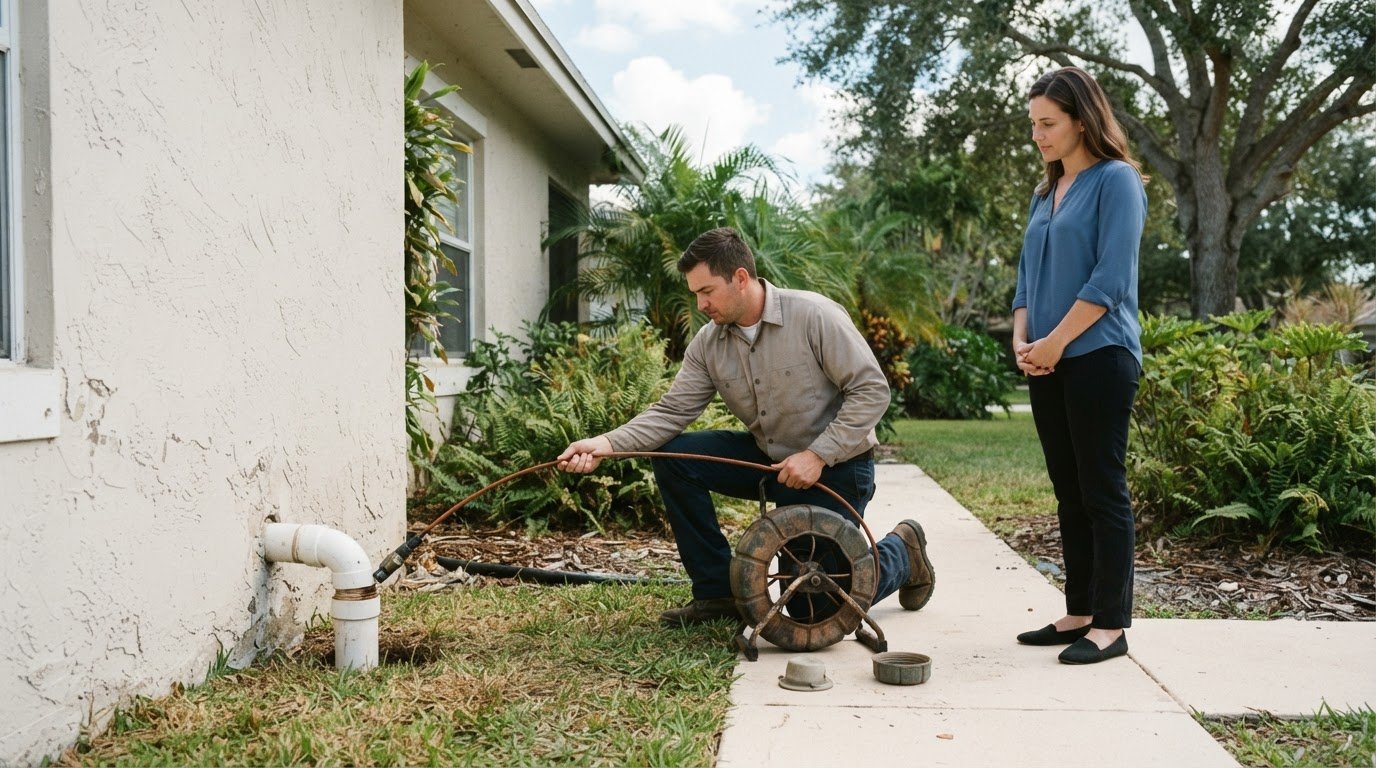
A technician typically feeds a waterproof camera through an accessible cleanout or drain opening. The camera travels inside the pipe and sends images that help locate visible damage or blockages. An initial inspection usually does not require excavation because the camera enters through an existing access point.
Before the visit, note which fixtures are affected and when backups occur. Keep the known cleanout or drain access clear, and tell the technician if sewage has entered multiple fixtures. This information helps focus the inspection on the relevant line.
Inspection Method Comparisons
A sewer camera inspection is diagnostic: it shows the inside of the pipe. Hydro jetting uses pressurized water to clear buildup or obstructions; it does not replace the camera’s visual assessment. An inspection can help locate a blockage and show its condition before you decide whether cleaning is appropriate.
Traditional inspection methods may rely on symptoms or surface observations, while a camera provides a direct view inside accessible piping. Davie homeowners can find sewer camera inspections through plumbers who perform this service, rather than drain clearing alone. Permit requirements concern the work being done: treat a camera visit separately from any proposed excavation or sewer replacement, and establish applicable Davie requirements before repair begins.
Pre-purchase sewer inspections
A standard home inspection and a sewer-line camera inspection examine different parts of a property. In Florida, a home inspection can identify visible plumbing concerns, but a camera shows the inside of the sewer line. For a buyer considering a home in Davie, that added view can uncover hidden damage before the purchase decision. It can also help pinpoint where a visible symptom begins, rather than assuming the nearest fixture is the source.
What a Pre-Purchase Camera Inspection Can Show
A camera inspection traces the accessible sewer line and records visible conditions inside it. Findings may include cracks, root intrusion, offset joints, low spots, recurring obstructions, or a collapsed section. Each finding can shape the next decision: a blockage may call for clearing, while severe deterioration or collapse can prompt discussion of replacement. The video connects a finding to its location, giving buyers clearer information than a general note that the plumbing needs attention.
Ask for the inspection findings in a form you can review alongside the home inspection report. For example, if the general report mentions a slow drain, the sewer video may show whether the issue appears in one branch or farther along the main line. Keep the property address, inspection date, and written findings together. This record helps you discuss the observed condition with the seller and understand which repair questions remain before closing.
How Buyers Can Use the Findings
Use the inspection to separate observed facts from assumptions. A camera view can show a visible crack or obstruction, but it does not establish the full repair scope by itself. The location, length, severity, and accessibility of the affected section all matter. If the findings show a serious defect, discuss its specific location and the proposed next step before making decisions about repairs or negotiations.
- Before the visit: Share known backup history and identify affected fixtures.
- During review: Note the location and type of each visible concern.
- Afterward: Compare the camera findings with the general home inspection report.
For an older Davie home, a sewer inspection can clarify whether a concern is limited or points to broader deterioration. If a line is severely deteriorated or collapsed, full sewer replacement may be considered; the camera findings help identify the issue requiring attention. An inspection is especially useful when a property has recurring backups or several fixtures showing symptoms, because problems can be hidden along the sewer route beyond the rooms buyers can see.
Schedule the inspection while you can still use its findings in your purchase planning. Arrange a sewer camera inspection to get a direct view of the line before deciding what the property needs.
CAN A CAMERA INSPECTION HELP AFTER HYDRO JETTING?
Yes. Hydro jetting clears buildup, while a camera inspection shows the pipe’s visible condition afterward. This difference helps distinguish a cleared obstruction from a remaining defect.
Inspection Process and Video Records
A technician guides a thin, waterproof camera with lighting through the sewer line. The live view can locate remaining debris, cracks, or other visible changes after cleaning. Digital sewer scanning can also capture video and still images with high-resolution, wide-angle cameras, according to the United States Environmental Protection Agency. These images make observations easier to review than a verbal description alone.
For a useful record, note the inspected line, visible finding, and camera location. A still image can highlight a specific concern, while video shows how the camera reaches it. This distinction matters when a technician explains whether jetting cleared the obstruction or revealed another condition.
Using Inspection Findings for Repair Planning
After hydro jetting, the camera view helps distinguish residue from structural concerns. For example, a remaining root mass may need further attention, while a crack or offset points to pipe damage rather than simple buildup. The finding’s location and extent guide the next discussion, including whether cleaning is sufficient or repair planning is needed.
Recommendations should connect each proposed action to an observed condition. Ask which image or segment supports the recommendation and whether the camera reached the relevant area. A clear explanation helps homeowners compare the immediate issue with longer-term concerns without treating every mark as a reason for replacement.
Video Report Details
Video and still images can document what the camera sees, but they are more useful with clear context. A recording is easier to interpret when it identifies the line inspected, the direction of travel, and where a concern appears. These details help a homeowner revisit the finding when discussing repair options with plumbing businesses serving Broward County.
Keep the written observations with the recording, if provided. Consider visible pipe findings separately from other questions, such as a business’s license; each addresses a different concern. The camera record shows pipe conditions, but does not establish credentials or guarantee a particular repair outcome.
For a post-jetting review, the technician can compare the camera view with the original concern. If a recurring clog was near a bend, for example, the recording can help locate any remaining obstruction or visible damage in that area. It also gives the repair discussion a specific starting point, rather than relying only on whether water appears to drain.
In Davie, this process is useful when cleaning alone hasn’t resolved repeated backups or when the line’s condition affects repair planning. Review the location and type of each visible finding, then weigh the recommendations against the recorded evidence. A focused video inspection helps you choose the next step based on the pipe’s observed condition.
Main sewer line problems, including root intrusions
Problems with several fixtures can point to one sewer-line issue. A camera view helps connect symptoms, such as slow drains, with visible conditions inside the pipe.
Diagnosing Sewer and Drain Problems
A technician advances a camera through the accessible line and observes its interior. The view can help locate recurring clogs, root intrusion, cracks, offsets, low spots, or collapsed sections. Location matters: a problem near one branch differs from a defect farther along the main sewer line.
Describe which drains are acting up and whether symptoms happen together. For example, a toilet backup alongside a slow shower drain gives the inspection useful context. The camera can then help distinguish a shared-line concern from a blockage limited to one fixture or branch.
Pay attention to where the camera view changes. Roots, debris, or an offset pipe may restrict the opening, while a low spot can collect material. A recording that shows the camera’s approach to a finding helps relate it to the line’s route. That context supports a focused discussion of what the image shows and which section needs attention.
Common Sewer Pipe Problems
Root intrusion can enter through an existing opening or weak point and obstruct wastewater flow. A camera can show roots inside the line and help pinpoint their location. Recurring clogs in the same stretch may indicate that the problem remains after clearing, so identifying the visible cause helps guide the next step.
Cracks and offsets are different findings. A crack is a visible break in the pipe wall; an offset is a joint or pipe section that no longer lines up smoothly. Either can catch debris and contribute to recurring blockages. A low spot or collapsed section indicates a different condition, which the inspection can document for repair planning.
Not every slow drain means the main line has failed. A single slow sink may involve its local branch, while several affected fixtures can suggest a shared sewer route. Compare the number and location of symptoms with the camera findings. This helps avoid treating every drain complaint as the same fault.
Use the recorded findings to distinguish clearing from repair decisions. A clog or root mass may be addressed through cleaning, while severe deterioration or a collapsed line can lead to discussion of replacement. The inspection shows visible conditions; the location, extent, and pipe condition help determine the appropriate response. If backups affect multiple fixtures, stop running water until the line is inspected.
For a homebuyer, a documented crack, offset, or root intrusion provides a specific issue to discuss before purchase. For a homeowner, repeated backups after clearing point to the value of locating the cause. In both cases, match the symptom, camera location, and visible finding before choosing a repair path.
Can you clear blockages you find during inspection?
A sewer camera inspection identifies visible conditions; it doesn’t clear them. After locating an obstruction, the next step depends on what the footage shows. A removable clog may respond to cleaning, while a damaged pipe calls for repair planning. Separating diagnosis from treatment helps avoid treating every blockage as the same problem.
The camera can show recurring clogs, root intrusion, cracks, offsets, low spots, and collapsed sections. A root mass inside the pipe may restrict flow, while an offset joint can repeatedly catch waste. Blockages may also sit beside buildup or an uneven section. The footage helps pinpoint the location and distinguish an obstruction from visible pipe damage.
Some findings need careful interpretation. The camera records the interior view; it cannot show the outside of a buried pipe. It can document visible buildup or corrosion inside the pipe, but the footage alone doesn’t establish the source of an exterior leak. If water appears around a joint, that observation can guide further evaluation without treating the video as a complete leak assessment.
Options after diagnosis depend on the obstruction and pipe condition. Hydro jetting may clear clogs or roots, while drain cleaning can address a blockage that does not require pipe replacement. A camera view can help locate the problem before cleaning and document the result afterward. If the inspection reveals severe deterioration or a collapsed section, full sewer pipe replacement may be considered instead of repeated clearing.
A practical decision sequence is straightforward:
- Identify: Review the footage for the blockage’s location and visible cause.
- Choose: Match cleaning to removable material, not structural damage.
- Reinspect: Use another camera pass to see whether the obstruction cleared.
- Plan: Discuss repair options if cracks, offsets, or collapse remain visible.
For example, a recurring root blockage may clear temporarily but return if roots continue entering the line. A post-cleaning camera pass helps show whether material remains and whether another visible defect needs attention. If several fixtures are backing up, stop running water until the sewer line is inspected. This reduces additional flow into a line already showing signs of restricted drainage.
A useful sewer diagnosis connects the footage with the reported symptoms. Share whether the blockage returns after cleaning, which drains are affected, and whether backups occur together. These details help interpret the camera view and shape recommendations around the observed condition, rather than an assumption based on one slow fixture.
Tip Top Plumbing & Restoration: Camera Inspections
Tip Top Plumbing & Restoration provides camera inspections to help Davie homeowners understand what’s happening inside a sewer line. If recurring backups, root intrusion, or visible pipe damage appear in the footage, the findings can guide the next step instead of leaving you to guess.
When an inspection shows severe deterioration or a collapsed section, Sewer Repiping Services may be relevant. If sewage is backing up into multiple fixtures, Emergency Plumbing can address the immediate problem while the line’s condition is assessed. The right response depends on what the camera reveals and whether the issue is a blockage or pipe damage.
Share the symptoms you’ve noticed and arrange an inspection to get a clearer view of the line. Contact Tip Top Plumbing & Restoration to discuss a camera inspection.
Make Your Next Homebuying Decision With Clarity
A video sewer inspection in Davie can turn a hidden concern into a clearer decision before you move forward with a home purchase. Use the findings to focus your next conversation on the line’s condition and the repair path that fits what the camera shows.
Tip Top Plumbing & Restoration provides Camera Inspections, Emergency Plumbing, Sewer Repiping Services, and Water Heater Repair & Installation. If inspection findings point to a sewer issue, the camera record can help frame the next discussion. For multiple-fixture backups, Emergency Plumbing addresses the immediate plumbing concern; significant sewer deterioration may call for Sewer Repiping Services.
Take the next step with a clearer view of the property’s sewer line, then use the findings to make an informed decision.
Tip Top Plumbing & Restoration for Video Sewer Inspections in Davie
Tip Top Plumbing & Restoration offers camera inspections as part of its drain and sewer services. If you’re looking into a video sewer inspection in Davie, the team can assess your drain or sewer line and discuss appropriate next steps.
Turn to Tip Top Plumbing & Restoration when you need a camera inspection or related help with drain cleaning, hydro jetting, sewer repiping, or emergency plumbing.
Frequently Asked Questions
What happens after the inspection?
After the inspection, use the recorded findings to decide whether the next step is cleaning, repair planning, or further assessment. A removable obstruction, for example, calls for a different response than a visibly collapsed section. If the inspection points to a plumbing emergency, Tip Top Plumbing & Restoration offers Emergency Plumbing; severe sewer damage may lead to discussion of Sewer Repiping Services. Keep the findings handy as you consider the property’s repair needs.
Do you inspect residential and commercial properties in Davie?
Yes, Tip Top Plumbing & Restoration provides plumbing and sewer services for residential and commercial properties, including camera inspections. For a Davie homeowner, an inspection may help assess a home’s sewer line before a purchase or after recurring drainage trouble. For a business, it can help identify a concern affecting shared plumbing or drains. The property type and reported symptoms help determine what the inspection needs to examine.
Should I get a sewer inspection before buying a home in Davie?
Yes, a sewer camera inspection can give homebuyers a closer view of the line before they commit to a purchase. It may reveal a concern that a room-by-room inspection cannot see, such as a damaged section beyond the home’s visible fixtures. If the seller reports prior backups or several drains have shown problems, include the sewer-line condition in your property discussions and purchase planning.
When should I get a camera inspection instead of just snaking?
Choose a camera inspection when a clog returns, multiple fixtures show symptoms, or you need to identify the cause of a restriction. Snaking can target an obstruction, but it doesn’t provide the same visual diagnosis of the pipe. Recurring clogs, for example, may involve roots or a damaged joint rather than material that can simply be cleared. Camera findings help determine whether cleaning or repair is the more relevant next step.
What is a video sewer inspection and how does it work?
A video sewer inspection uses a camera on a flexible cable to view the inside of an accessible sewer line. A technician guides it through an entry point and watches the images as the camera moves through the pipe. In Davie, a video sewer inspection can help locate a visible obstruction or pipe defect. The camera provides an interior view, helping distinguish an observed issue from symptoms at a fixture.
How much does a sewer camera inspection cost in Davie, Florida?
The price depends on the case and is provided after a quote request. Relevant factors include access to the line, the section requiring inspection, and any condition or obstruction affecting the camera’s progress. A clear cleanout and accessible route differ from restricted entry or a difficult-to-view section. Share the symptoms and property details when requesting a quote so the scope can be understood.
What does a sewer camera inspection include, and do customers receive the video?
A camera inspection views the accessible pipe interior to identify visible conditions. Digital sewer scanning can capture video and still images, according to the United States Environmental Protection Agency. These images help document observations, but the inspection itself does not establish that a customer receives a video copy. Use the written findings and any images provided to understand the observed condition and discuss possible next steps.
Can a video sewer inspection locate pipe damage, roots, or blockages?
Yes, the camera can help locate visible cracks, root intrusion, offsets, low spots, recurring clogs, and collapsed sections. If several fixtures back up, for example, the inspection can show whether an obstruction or defect appears along the shared sewer route. These observations help distinguish a blockage that may be cleared from visible pipe damage that needs a repair discussion. Camera findings describe what the equipment can see inside the line.
Disclaimer
The information provided in this article is for general educational and informational purposes only and should not be considered professional plumbing, restoration, mold remediation, or legal advice. Every plumbing system, property, and situation is unique, and the recommendations discussed may not apply to your specific circumstances.
While Tip Top Plumbing & Restoration strives to provide accurate and up-to-date information, we make no warranties regarding the completeness, accuracy, or reliability of the content. Any actions you take based on this information are at your own risk.
Plumbing repairs, water damage restoration, and mold remediation should be performed by qualified professionals and in accordance with applicable local building codes and regulations. If you are experiencing a plumbing emergency, water leak, or property damage, contact a licensed professional for an on-site evaluation.
Tip Top Plumbing & Restoration is licensed and insured to provide plumbing and restoration services throughout Broward County, Florida.