


What if the very foundation meant to protect your home is actually the silent catalyst for its most expensive repair? It’s a stressful realization for any homeowner to find a warm spot on the tile or hear the phantom sound of rushing water when all the taps are closed. You likely feel a sense of urgency to protect your property from catastrophic foundation failure while worrying about the high costs associated with hidden plumbing breaks. Understanding exactly what causes a slab leak is the first step in regaining control over your home’s integrity.
In Florida’s unique environment, the ground beneath your feet isn’t as stable as it looks. Shifting sandy soil and high water tables create a volatile setting where even a small pipe vibration can lead to a major disaster. Filing just one insurance claim for water damage in this state can spike your annual premiums by an average of $1,653, making early detection a financial necessity rather than just a maintenance task. These leaks are often the result of complex environmental reactions and high pressure demands rather than simple age.
This guide will help you identify the hidden factors that trigger these leaks and confirm if your symptoms match a genuine underground emergency. We’ll explore the root causes of pipe failure and preview the professional, non-invasive repair options that can save your foundation without the need for destructive trenching through your living room.
Key Takeaways
- Learn about the environmental triggers, such as soil shifting and chemical reactions, that explain what causes a slab leak in the unique Florida landscape.
- Identify the seven critical warning signs, ranging from unexplained spikes in your water bill to the sound of rushing water behind your walls.
- Discover the immediate triage steps you must take to stop foundation saturation and prepare your documentation for insurance claims.
- Understand how advanced acoustic sensors and thermal imaging allow professionals to pinpoint underground breaks without destroying your flooring.
- Explore the long-term benefits of precise spot repairs and the necessity of mold testing to ensure your home remains safe after a leak.
Understanding the Foundation: What Exactly is a Slab Leak?
A slab leak isn’t your typical household plumbing issue. It’s a structural failure involving the plumbing pipes installed deep beneath your home’s concrete foundation. In South Florida, the vast majority of residential properties utilize a “slab-on-grade” design. This means your house sits directly on a thick layer of concrete poured over a prepared base of sand and gravel. While this construction is efficient, it buries your critical infrastructure where you can’t see it. This invisibility is exactly what makes these situations so dangerous. A leak can persist for weeks or even months before the first visible sign appears on your floor. Understanding what causes a slab leak begins with recognizing that your foundation is a living environment subject to constant pressure.
Pressure Side vs. Drainage Side Leaks
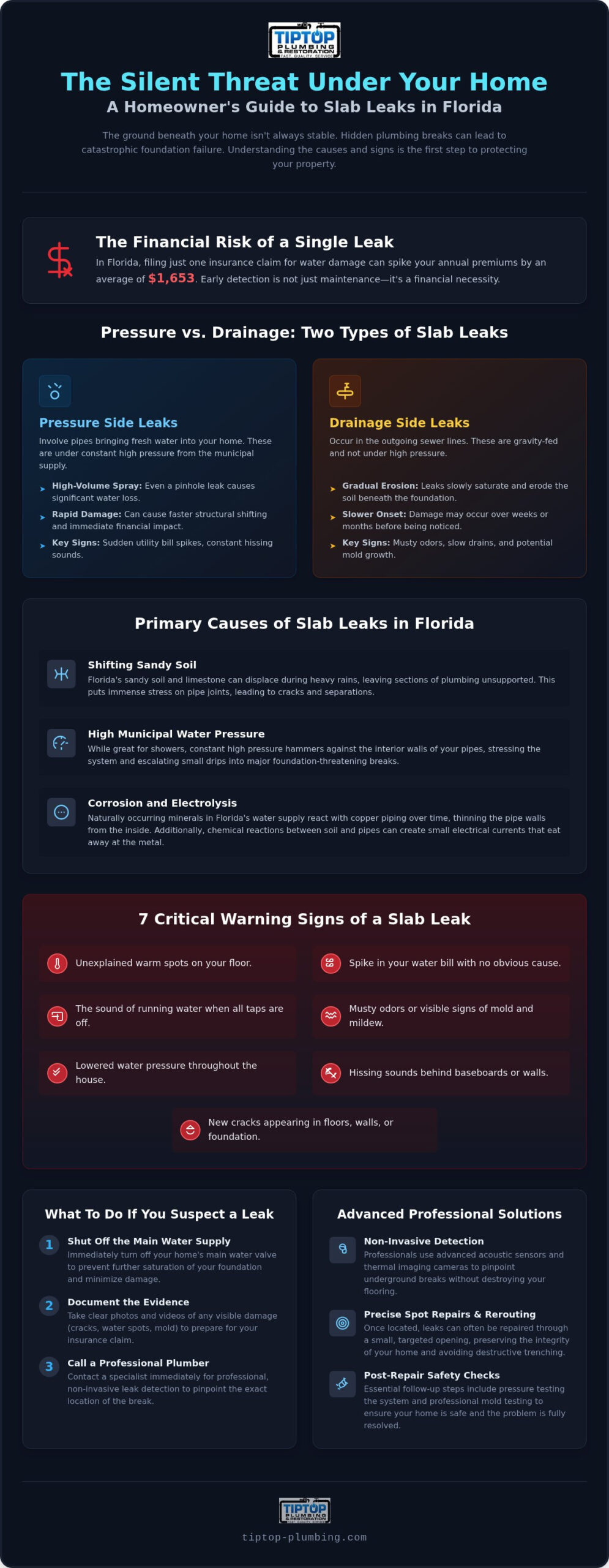
Homeowners often ask what causes a slab leak, but they first need to distinguish between the two types of systems running under their feet. Pressure leaks involve the lines bringing fresh water into your home. Because these pipes are under constant stress from the municipal water supply, even a small pinhole can quickly turn into a high-volume spray. You’ll likely notice a sudden spike in your monthly utility costs or hear a constant hissing sound behind the baseboards. On the other hand, drainage leaks occur in the outgoing sewer lines. These are gravity-fed and lack the high pressure of supply lines. Instead of a sudden flood, they cause gradual soil erosion and can lead to musty odors or mold growth. Both types threaten your foundation, but pressure leaks tend to cause faster structural shifting and more immediate financial loss.
The Anatomy of a Florida Home Foundation
In our areas served, specifically throughout Broward County, the foundation is a complex sandwich of materials. Your plumbing pipes are typically encased in or buried just beneath a layer of gravel and compacted sand. This environment is highly susceptible to the region’s high water table. When the water table rises during heavy rain, it exerts external hydrostatic pressure on the buried pipes. This creates a “squeeze” effect between the internal water pressure and the external groundwater. Additionally, most homes feature a plastic vapor barrier between the soil and the concrete. While this keeps ground moisture out, it also traps water from a leaking pipe. This trapped moisture has nowhere to go but up into your flooring or out into the surrounding soil, eventually causing the concrete to crack or heave. This structural movement often becomes the primary answer to what causes a slab leak as the house settles unevenly.
The 5 Primary Causes of Slab Leaks in Florida Homes
Florida’s unique geology is a silent but major factor in what causes a slab leak. While other states struggle with heavy, expansive clay, our foundation issues often stem from shifting sandy soil and porous limestone. When heavy tropical rains saturate the ground, the sand beneath your slab can displace, leaving sections of your plumbing unsupported. This lack of support puts immense stress on pipe joints that were never designed to carry the structural weight of the house. Over time, this movement leads to cracks and separations that allow water to escape directly into your foundation.
High water pressure from municipal lines also plays a significant role in compromising aging systems. While high pressure feels great in the shower, it constantly hammers against the interior walls of your pipes. This stress is a leading contributor to household leaks that start as small drips and escalate into foundation-threatening events. Modern plumbing standards, including those in the upcoming 9th Edition of the Florida Building Code, emphasize the use of pressure-reducing valves to mitigate this specific risk.
Corrosion and Electrolysis in Copper Piping
Many older homes in Broward County rely on copper for their underground water supply. Over time, the naturally occurring minerals in Florida’s water supply react with the metal, thinning the pipe walls from the inside out. Electrolysis is the chemical reaction between soil minerals and metal pipes. This process creates a small electrical current that eats away at the copper, eventually resulting in pinhole leaks. If you suspect your home’s original metal lines are failing, reviewing a guide on Copper Pipe Leak Repair in Broward County can help you understand the restoration process.
Thermal Expansion and Abrasion
Your hot water lines are in a constant state of movement. Every time you run a faucet or appliance, the pipes expand as they heat up and contract as they cool. If the original builder failed to install protective sleeving, these pipes rub directly against the abrasive concrete slab. This friction acts like sandpaper. Over several years, the movement wears a hole through the pipe wall. This specific issue is often why homeowners report “warm spots” on their tile or laminate floors. If you notice localized heat underfoot, it’s time to schedule a professional diagnostic check before the moisture triggers mold growth.
Poor installation practices remain a common culprit in newer homes as well. When pipes pass through concrete without proper wrapping, the chemical alkalinity of the concrete can corrode the exterior of the pipe. Combined with the lack of “room to breathe” during thermal cycles, these installation shortcuts create a ticking time bomb beneath your home. Identifying these vulnerabilities early is the only way to prevent a catastrophic foundation failure.
The Definitive Checklist: 7 Warning Signs of a Slab Leak
Detecting a problem beneath a concrete foundation requires a vigilant eye and a quiet home. Because the source is buried, you must rely on secondary indicators that signal your plumbing has been compromised. If you’ve been wondering what causes a slab leak in your specific home, these signs often point toward the environmental and technical failures discussed earlier. Use this checklist to inspect your property today. Early detection is your best defense against catastrophic foundation damage and the associated financial stress.
- Unexpected spikes in water bills: If your monthly statement shows a sharp increase in usage despite no changes in your household habits, a pressurized line is likely bleeding water into the soil.
- The sound of rushing water: Listen closely when all faucets and appliances are off. A persistent hissing or trickling sound behind walls or under floors is a primary red flag for a supply-side breach.
- Localized warm spots: Hot water line leaks transfer heat directly into your flooring. If a specific patch of tile or laminate feels unusually warm underfoot, it’s a clear indicator of a hot water slab leak.
- Unexplained moisture or damp carpets: Water eventually finds a path upward. Look for damp spots on rugs or discoloration in hardwood that cannot be attributed to a surface spill.
- Floor “doming” or heaving: When soil absorbs excessive water, it expands and pushes against the concrete. This can cause your floor to rise or create a visible hump in a previously flat area.
- Sudden drops in water pressure: A significant leak diverts volume away from your fixtures. If your shower pressure has plummeted without a neighborhood-wide outage, the water is likely escaping under your house.
- Cracks in baseboards or flooring: While some settling is normal, new cracks in your foundation or separated baseboards often signal that a leak is actively shifting your home’s structure.
Visual and Auditory Red Flags
You don’t need professional gear to perform a preliminary check. Use a simple glass or a mechanic’s stethoscope pressed against the floor to listen for underground rushing water in quiet areas of the house. Pay special attention to “hot spots” in bathrooms or kitchens. These often indicate a failure in the copper hot water lines, a common issue in South Florida’s older inventory. If you notice cracks appearing in your baseboards or tile grout, the foundation may already be heaving due to soil saturation. These visual cues are urgent calls to action. For a more thorough walkthrough of the detection process, our step-by-step guide on how to find a slab leak covers each method in detail so you can verify your suspicions with confidence.
Utility and Structural Indicators
The “15-minute test” is a reliable way to confirm your suspicions. Locate your water meter and record the reading, then ensure no water is used for 15 minutes. If the dial moves, you have an active leak. Beyond the meter, trust your sense of smell. Musty, earthy odors in lower levels often suggest a drainage-side leak where sewer water is saturating the ground. Because these repairs can be complex, you should check the Slab Leak Repair Cost in Florida to understand how to plan your budget for professional restoration.
Immediate Action: What to Do if You Suspect an Underground Leak
Discovering evidence of a foundation failure is overwhelming. While you may still be investigating what causes a slab leak in your specific home, the priority must shift to damage control. Taking decisive steps in the first hour can mean the difference between a routine pipe repair and a total foundation restoration. Treat this situation with the urgency it deserves. Follow these triage steps to stabilize your property before the professional diagnostics team arrives.
- Step 1: Shut off the main water valve. Locate your main shut-off valve, usually found near the water meter or where the main line enters the home. Turn it clockwise to stop the flow. This immediately halts the pressurized saturation of your foundation.
- Step 2: Document the area. Take clear, high-resolution photos and videos of the symptoms. Record any warm spots, damp carpets, or floor heaving. This evidence is critical for insurance adjusters and helps technicians understand the leak’s behavior.
- Step 3: Clear the area. Move furniture, electronics, and valuables away from the suspected leak site. Water travels through porous concrete and can wick into drywall or wooden furniture legs, creating secondary damage.
- Step 4: Contact a local expert. Do not attempt to jackhammer your own floors. Professional leak detection is required to pinpoint the breach without turning your home into a construction zone.
The Water Meter Verification Test
Your water meter is a precision instrument that can confirm your suspicions with high accuracy. Open the meter box and look for a small, rotating triangle or star known as the leak indicator. If this dial is spinning while all faucets are off, water is leaving the system somewhere. To rule out a simple toilet leak, shut off the individual valves behind every toilet and sink in the house. A moving meter with all valves closed is a 99% confirmation of a leak. This simple test provides the technical proof needed to move forward with professional electronic detection. If you want to perform a more comprehensive self-assessment before calling a technician, follow the homeowner’s step-by-step process for how to find a slab leak accurately and without causing additional damage.
Preventing Mold and Structural Loss
In South Florida’s humid climate, time is your greatest enemy. When water saturates the sand and gravel beneath your slab, it creates a perfect breeding ground for fungi. Mold growth can begin within 24 to 48 hours of initial exposure. This is why immediate dry-out services are just as important as the plumbing repair itself. If you live in Broward County, our Emergency Plumber Weston FL team provides rapid response to stop the water and begin the remediation process. Delaying action allows moisture to travel up your walls, leading to expensive structural loss and health risks for your family.
Professional intervention is the only way to address the root of the problem. While understanding what causes a slab leak helps with future prevention, current symptoms require technical expertise. A disciplined approach to these first steps ensures your home remains a safe, stable environment while we work to restore your plumbing infrastructure.
Professional Slab Leak Detection and Repair Solutions
Modern technology has fundamentally changed how we address underground plumbing failures. In the past, homeowners faced the nightmare of “exploratory demolition,” where plumbers would jackhammer through tile and concrete based on a best guess. Today, we utilize non-invasive precision tools to identify the exact location of a breach before a single floor is touched. Understanding what causes a slab leak is the first step, but resolving it requires a technical approach that preserves your home’s structural integrity.
Once we pinpoint the leak, we evaluate the best path forward based on the age and condition of your plumbing system. For newer homes with a single point of failure, a “spot repair” is often the most efficient choice. This involves a localized excavation to replace the damaged section of pipe. However, if your home is older and the primary answer to what causes a slab leak is systemic corrosion, we may recommend a whole house repipe. This process bypasses the failing underground lines entirely by running new, high-quality piping through your walls and attic, providing a permanent solution to foundation-related plumbing issues.
Non-Invasive Detection Technology
Our diagnostic process relies on a suite of advanced instruments designed to “see” through concrete. Electronic acoustic sensors allow our technicians to listen for the specific high-frequency sound of water escaping a pressurized pipe. We also employ thermal imaging cameras to map the heat signatures of hot water leaks, which often appear as bright blooms beneath your flooring. For more complex cases, we use nitrogen tracing, where a safe, non-toxic gas is introduced into the lines to bubble up at the site of the break. When dealing with drainage-side issues, Sewer Camera Inspections in Weston provide a high-definition view of the interior pipe walls to find cracks or root intrusions. Precision prevents unnecessary destruction.
Why Choose Tip Top Plumbing & Restoration?
We believe that a plumbing repair is only half the job. Because water trapped under a slab leads to mold and structural rot, we provide a comprehensive restoration lifecycle. Unlike many contractors who leave you to find a second company for the cleanup, we handle the technical repair, the subsequent mold testing, and the professional dry-out services. This integrated approach ensures your home is not just dry, but safe for your family. We are proud to serve our neighbors in the following areas:
- Miramar: Rapid response for residential slab emergencies.
- Pembroke Pines: Expert leak detection and full-service restoration.
- Davie: Specialized solutions for unique soil-related pipe failures.
Our commitment to transparency and precision makes us a stabilizing force during a household crisis. If you are ready to secure your home’s foundation, visit our Areas Served page to connect with a local technician who understands the specific challenges of South Florida plumbing. We don’t just fix pipes; we restore your peace of mind through disciplined, high-quality workmanship.
Protecting Your Home’s Structural Integrity
A slab leak is more than a plumbing failure; it’s a direct threat to the very foundation of your property. By identifying early warning signs and understanding exactly what causes a slab leak in Florida’s unique environment, you’ve taken the first step toward safeguarding your investment. Whether dealing with shifting sandy soil or the chemical process of electrolysis, these issues require immediate, professional attention to prevent foundation heaving and long-term structural loss.
Our team provides the steady, professional reassurance required to navigate these high-stakes crises. We utilize advanced non-invasive leak detection technology to pinpoint breaches with surgical precision, ensuring we never cause unnecessary damage to your flooring. As certified mold and water restoration experts, we handle the entire recovery process so you don’t have to manage multiple contractors during a stressful emergency.
You don’t have to face foundation repairs alone. Trust a local authority to restore your plumbing and your peace of mind with honesty, transparency, and technical excellence.
Frequently Asked Questions
How long does it take for a slab leak to cause damage?
Structural damage can begin the moment water starts saturating the soil, but visible flooring issues usually appear within a few days. Florida’s high humidity means mold colonies can establish themselves within 24 to 48 hours of initial moisture exposure. If left unaddressed for weeks, the constant water flow creates voids in the soil that lead to foundation cracking and permanent structural shifting.
Will my homeowners insurance cover a slab leak in Florida?
Most standard Florida policies cover the cost of accessing the leak and the subsequent water damage restoration, but they rarely pay for the actual pipe repair. You should review your specific policy for water backup or seepage exclusions. Filing a claim in Florida can increase your annual premiums by an average of $1,653, so it’s often wise to get a professional repair estimate before contacting your provider.
Can I live in my house while a slab leak is being repaired?
You can typically remain in your home during the diagnostic and repair process. Our technicians usually only need to shut off your water for a few hours while performing a spot repair or connecting new lines. If a whole house repipe is required, the work is more extensive, but we work in sections to ensure you have access to essential plumbing facilities throughout the project.
What is the most common cause of slab leaks in Broward County?
The combination of shifting sandy soil and electrolysis in aging copper pipes is the leading answer to what causes a slab leak in our local area. Broward County’s high water table creates external pressure that, when combined with internal mineral corrosion, causes metal pipes to thin and fail. These environmental factors are unique to South Florida and require specialized detection methods to identify correctly.
Is a slab leak an emergency that requires immediate attention?
A slab leak is a plumbing emergency because it actively undermines the stability of your home’s foundation. Unlike a leaky faucet, an underground breach allows hundreds of gallons of water to saturate the ground beneath your feet every day. This creates an immediate risk of mold growth and structural failure, making rapid intervention essential to prevent the repair costs from escalating into a total foundation loss.
Can a slab leak cause a sinkhole under my house?
While a slab leak won’t cause a massive geological sinkhole, it can create a washout or a significant void in the soil beneath your foundation. This happens when the escaping water carries away sand and sediment, leaving the concrete slab unsupported. Without the earth to hold it up, the concrete will eventually crack or collapse under the weight of the house, leading to catastrophic structural damage.
How do plumbers find a leak under two feet of concrete?
We use advanced electronic acoustic sensors and thermal imaging to pinpoint the exact location of the breach without drilling. Acoustic equipment amplifies the sound of water spraying from a pipe, while thermal cameras detect the heat signature of hot water saturating the slab. These non-invasive methods allow us to find the leak with surgical precision, saving you from unnecessary demolition and high restoration costs.
What is the difference between a slab leak and a pinhole leak?
The primary difference is the location rather than the type of breach. A slab leak refers specifically to any pipe failure located beneath the concrete foundation. A pinhole leak is a type of failure caused by internal corrosion that creates a tiny, needle sized hole in copper piping. Many slab leaks are actually pinhole leaks that occur in the sections of pipe buried deep under your home’s floor.
Disclaimer
The information provided in this article is for general educational and informational purposes only and should not be considered professional plumbing, restoration, mold remediation, or legal advice. Every plumbing system, property, and situation is unique, and the recommendations discussed may not apply to your specific circumstances.
While Tip Top Plumbing & Restoration strives to provide accurate and up-to-date information, we make no warranties regarding the completeness, accuracy, or reliability of the content. Any actions you take based on this information are at your own risk.
Plumbing repairs, water damage restoration, and mold remediation should be performed by qualified professionals and in accordance with applicable local building codes and regulations. If you are experiencing a plumbing emergency, water leak, or property damage, contact a licensed professional for an on-site evaluation.
Tip Top Plumbing & Restoration is licensed and insured to provide plumbing and restoration services throughout Broward County, Florida.