

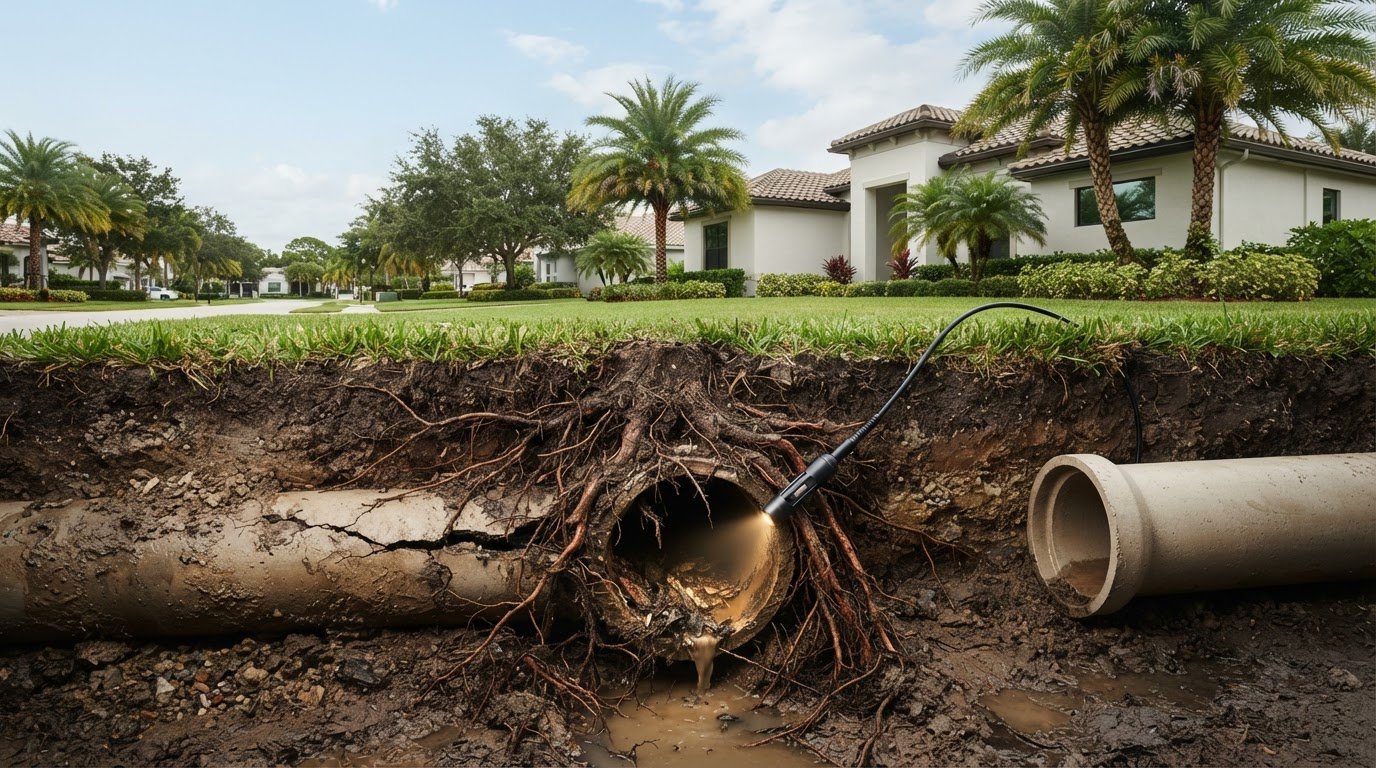
Recurring clogs can feel like more than a drain problem, especially when they keep coming back. But a clog alone doesn’t prove the sewer line is broken. Understanding what causes sewer line breaks can help you consider the possibilities without jumping to a diagnosis.
Many breaks begin when an existing weakness worsens over time. Tree roots can enter small openings, older pipes may become brittle or corroded, and shifting soil, severe blockages, or poor installation can put added stress on a line. The cause isn’t always obvious from inside the home. Recurring clogs or soggy patches in the yard are reasons to investigate, not proof of a break.
This article covers seven common causes, signs that may warrant a professional assessment, and steps to take if you suspect damage. A sewer camera inspection can show the condition of accessible sections of pipe and help distinguish a blockage from visible structural damage. That information can guide the next step and help protect your home and yard.
Key Takeaways
- What causes sewer line breaks often starts with a weakness, such as a crack or loose joint, that worsens under ongoing stress.
- Roots often enter through existing openings, so their presence doesn’t automatically mean they broke an otherwise sound pipe.
- Recurring backups, odors, or unusual wet spots can point to a sewer issue, but symptoms alone can’t confirm the cause.
- Reduce water use if you suspect a break, keep people away from sewage, and avoid digging or using chemical drain products.
- A camera inspection can help locate and distinguish a blockage from visible structural damage, guiding the next step.
What causes sewer line breaks, and how are they different from clogs?
A sewer line break is physical damage to the pipe, such as a crack, a separated joint, a collapse, or another loss of pipe integrity. A clog restricts wastewater flow, even though the pipe may remain structurally intact. The difference matters: clearing an obstruction may restore flow, but it won’t repair a damaged section. A backup or slow drain by itself can’t tell you which problem is present.
Roots and debris can be involved in either situation. Debris can obstruct flow, while roots may grow into an existing crack or loose joint, worsening the weakness and sometimes contributing to a blockage. A Sanitary sewer overflow can result from blockages or broken lines, which is why an overflow alone doesn’t identify the cause. A sewer camera inspection lets a plumber view the inside of accessible sections of the line, helping distinguish an obstruction from visible structural damage and locate the area of concern.
What is the difference between a sewer line break and a sewer clog?
A clog is a flow problem; a break is a pipe-integrity problem. A localized clog may affect one fixture, while an obstruction farther along a shared sewer line can affect several drains. A crack or separation can allow wastewater to escape or soil and roots to enter, even if water still passes through part of the pipe. Symptoms can overlap, so one slow drain or backup doesn’t confirm either condition.
Which warning signs can point to a damaged sewer line?
Look for patterns rather than focusing on a single symptom. Recurring backups, several drains acting up at once, persistent sewage odors, or unexplained soggy areas in the yard can warrant a closer look. Each may have another plumbing or drainage explanation, so symptoms alone can’t confirm a break or pinpoint its location.
If wastewater is entering your home, take it seriously. Limit contact with sewage and arrange prompt professional assessment. If symptoms are less urgent but keep returning, note which fixtures are affected, when problems occur, and whether you’ve noticed changes outside. These details can help guide an inspection. A camera inspection can show whether accessible sections of the line have a blockage, visible crack, separation, or another condition, so next steps are based on what’s in the pipe rather than guesswork.
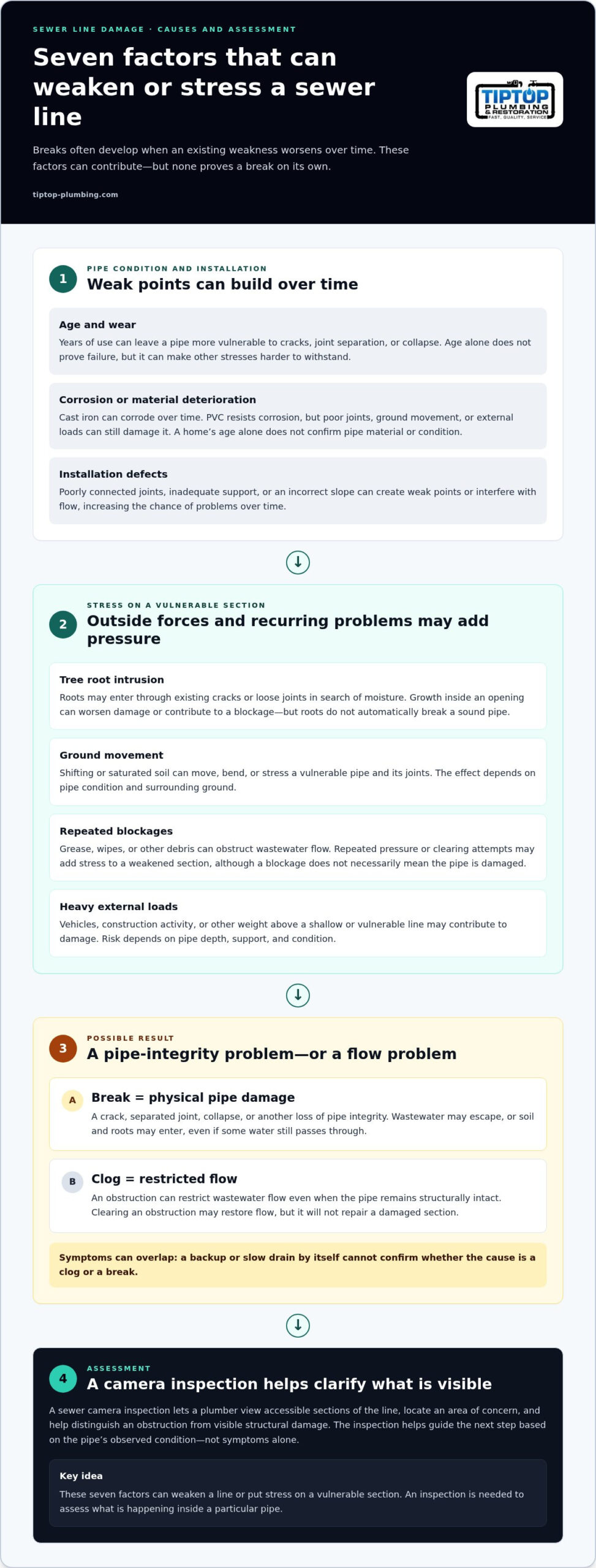
Seven common causes of sewer line breaks, from aging pipes to shifting ground
What causes sewer line breaks is often a combination of pipe condition and stress, rather than one symptom or a single event. These seven factors can weaken a line or put pressure on a vulnerable section. An inspection is needed to assess what’s happening inside a particular pipe.
- Age and wear: Years of use can leave a pipe more vulnerable to cracks, joint separation, or collapse. Age alone doesn’t prove failure, but it can make other stresses harder to withstand.
- Corrosion or material deterioration: Cast iron can corrode over time. PVC resists corrosion, but it can still be damaged by poor joints, ground movement, or external loads. A home’s age alone doesn’t confirm the pipe material or its condition.
- Tree root intrusion: Roots may enter through existing cracks or loose joints in search of moisture. They don’t automatically break a sound pipe, but growth inside an opening can worsen damage or contribute to a blockage.
- Ground movement: Shifting or saturated soil can move, bend, or stress a vulnerable pipe and its joints. The effect depends on the pipe’s condition and the surrounding ground, so local conditions shouldn’t be assumed without an assessment.
- Installation defects: Poorly connected joints, inadequate support, or an incorrect slope can create weak points or interfere with flow, increasing the chance of problems over time.
- Repeated blockages: Grease, wipes, or other debris can obstruct wastewater flow. Repeated pressure or clearing attempts may add stress to a weakened section, although a blockage doesn’t necessarily mean the pipe is damaged.
- Heavy external loads: Vehicles, construction activity, or other weight above a shallow or vulnerable line may contribute to damage. The risk depends on pipe depth, support, and condition.
How do pipe age, corrosion, and material contribute to breaks?
Material is only one part of the picture. Installation history, maintenance, and exposure to stress also affect how a line holds up. Cast iron can corrode, while PVC doesn’t corrode in the same way but may still crack or separate under strain. A weakened pipe may be affected by cumulative stress from age, corrosion, roots entering openings, soil movement, recurring blockages, and external loads. Inspection can help identify the material and visible condition instead of relying on assumptions.
Can tree roots, soil movement, or South Florida weather damage sewer pipes?
Roots commonly take advantage of openings that are already present, while shifting or water-saturated ground can put extra strain on vulnerable pipes. Weather may affect ground conditions, but it doesn’t establish the cause of a break at a particular home in Weston, Miramar, Pembroke Pines, Davie, Sunrise, Southwest Ranches, Copper City, or Plantation. A sewer camera inspection can help locate visible damage and distinguish it from a blockage. Schedule a sewer camera inspection to investigate a suspected line problem.
How to tell which sewer line break cause may fit your symptoms
Symptoms can help show how urgently a sewer line needs attention, but they can’t confirm what caused the problem or pinpoint its location. Recurring backups, odors, and yard changes may come from a blockage, a damaged pipe, or another plumbing or drainage issue. Use the clues below to decide what to observe and when to arrange an assessment, not to diagnose the line yourself.
| What you notice | Possible explanations | What the clue can’t tell you | Sensible next step |
|---|---|---|---|
| One fixture clogs or drains slowly | A localized buildup or obstruction is possible. | It doesn’t rule out a larger line issue or prove that one exists. | Note which fixture is affected and whether the problem returns. |
| Recurring backups or several drains affected | A blockage farther along the shared line, root intrusion, or a damaged section may be involved. | Several problems can cause similar symptoms; the pipe’s condition and trouble spot aren’t clear from the backup alone. | Record which drains back up and when, then arrange a professional assessment. |
| Sewage odors indoors or outdoors | A drain, vent, blockage, or sewer-line concern may need investigation. | Odor alone can’t identify the source or confirm a break. | Note where and when the odor appears. Seek prompt help if wastewater is entering the home. |
| Unexplained soggy or unusually green yard areas | A leaking line or another source of excess moisture may be contributing. | Rain, irrigation, and other drainage issues can create similar patches. | Track the area and any changes, and have the cause assessed before digging. |
Do recurring clogs mean the sewer line is broken?
No. Buildup, roots, a damaged pipe section, or other issues can all contribute to repeat clogs. A problem limited to one fixture may be closer to that drain, while multiple affected fixtures can suggest a shared line issue, but neither pattern confirms the cause. Keep a simple record of which drains are affected, when symptoms happen, and whether they return after clearing.
What can a sewer camera inspection reveal?
A camera inspection lets a plumber view accessible sections of the line and look for visible trouble spots, such as an obstruction, root intrusion, crack, or separation. It can help locate concerns and assess pipe condition, though findings apply to the areas the camera can reach and view. The results guide the next diagnostic or repair discussion rather than relying on symptoms alone. For broader plumbing concerns, Broward County leak detection services can support professional diagnosis.
What should you do if you suspect a broken sewer line?
If drains are backing up or wastewater is appearing where it shouldn’t, focus first on limiting exposure and avoiding actions that could make the situation harder to assess. Knowing what causes sewer line breaks can help explain the possibilities, but symptoms alone can’t establish whether your line is damaged. Take these practical steps while arranging an assessment:
- Reduce water use. If several drains are backing up, avoid running water or flushing unless necessary, since additional wastewater may worsen the backup.
- Keep people away from sewage. Keep children and pets clear of wastewater, and avoid direct contact with it.
- Record what you notice. Note which fixtures are affected, when the problem occurs, and where you see odors, wet areas, or wastewater.
- Arrange professional assessment. Don’t dig to find the pipe or apply chemical drain products to an unknown underground problem. A professional assessment can help determine whether the issue is a blockage, a break, or another drainage concern.
What can you safely do before the sewer line is inspected?
Keep water use low if multiple drains are affected, and avoid using fixtures that trigger another backup. Don’t enter or try to clean up sewage without appropriate precautions. Your notes can help: record when the symptoms began, which drains are involved, and whether the issue comes and goes or persists. These details help explain the situation without guessing at the cause.
When is professional sewer line assessment important?
Arrange an assessment for repeated backups, suspected sewage leaks, or persistent unexplained wet areas. If sewage or wastewater is actively entering the home, treat it as urgent and seek prompt plumbing assistance through emergency plumbing in Broward County. An inspection can help distinguish a damaged sewer line from a blockage or another drainage problem. If the assessment finds widespread pipe deterioration, sewer repiping may be one possible next step, depending on the line’s condition.
How a sewer camera inspection helps identify the cause and next step
Symptoms can raise concern, but they don’t show what’s happening inside a buried pipe. A sewer camera inspection gives a plumber a view of accessible sections of the line, helping connect your description of backups or slow drains with visible pipe conditions. It can help distinguish a blockage from a crack, separation, root intrusion, or another issue, and may show where a concern appears along the inspected section.
What happens during a sewer camera inspection?
The process starts with a conversation about what you’ve noticed: which drains are affected, how often the problem occurs, and whether there are odors or changes in the yard. The camera is then guided through an accessible point into the sewer line. As it moves through the pipe, the plumber observes the interior and notes visible concerns, such as debris restricting flow or damage to the pipe wall.
Those observations provide evidence, not a diagnosis based on symptoms alone. The camera can show conditions in the portions it reaches and can view, but it doesn’t guarantee every section is accessible or reveal every issue outside the pipe. Findings help clarify whether the concern looks more like a blockage or structural damage and where further attention may be needed.
What happens after the cause of a sewer line break is identified?
The next step depends on the location and extent of the concern, as well as the condition of the affected pipe. A visible obstruction may call for a different response than a crack, separated joint, or broader deterioration. Inspection findings help guide a discussion of suitable options, which may include addressing a localized problem or considering sewer repiping if the line is extensively damaged. No single repair method fits every situation, and an inspection doesn’t guarantee a particular outcome.
If you’re still asking what causes sewer line breaks in your home, an inspection can replace guesswork with a closer look at the pipe itself. Tip Top Plumbing & Restoration provides sewer camera inspections to help homeowners understand line conditions and discuss appropriate next steps.
Get a Clearer Picture of Your Sewer Line
Age, corrosion, roots, ground movement, installation issues, repeated blockages, and heavy loads can all contribute to sewer line damage. Often, a weakness worsens under ongoing stress. But recurring clogs, odors, backups, or soggy areas aren’t proof of a break, and symptoms alone can’t pinpoint the cause.
If you’re wondering what causes sewer line breaks at your home, a camera inspection can replace assumptions with a view of accessible sections of the pipe. It can reveal visible concerns, such as an obstruction, root intrusion, crack, or separation, and help guide a discussion about next steps. The right response depends on the line’s actual condition.
Tip Top Plumbing & Restoration provides sewer camera inspections and plumbing and sewer services in Weston, Miramar, Pembroke Pines, Davie, Sunrise, Southwest Ranches, Copper City, and Plantation. Schedule an inspection to understand what’s happening in your line and decide on the next step.
Book a sewer camera inspection with Tip Top Plumbing & Restoration for a clearer understanding of your sewer line.
Frequently Asked Questions
What is the most common cause of a sewer line break?
Tree root intrusion is often cited as a leading cause of residential sewer damage, while aging pipes are a major concern in older homes. Roots typically enter through an existing crack or loose joint, then may worsen the opening or obstruct flow. Corrosion, shifting ground, installation defects, and repeated stress can also contribute. Understanding what causes sewer line breaks helps frame the possibilities, but a camera inspection is needed to assess a particular line.
Can tree roots break a sewer line?
Tree roots can worsen damage to a sewer line, but they don’t automatically break a sound pipe. They’re drawn to moisture and may enter through an existing crack or loose joint. As roots grow inside the pipe, they can obstruct wastewater flow and put added stress on the weak spot. A camera inspection can help show whether roots are present and whether the pipe also has visible damage.
Can heavy rain cause a sewer line to break?
Heavy rain may contribute to ground saturation or movement, which can place added stress on a vulnerable pipe or its joints. Rain alone doesn’t prove that a sewer line has broken, and the effect depends on the pipe and surrounding ground. If backups or new wet areas appear after a storm, note where and when they occur. A professional assessment can help distinguish a sewer concern from other drainage issues.
How can I tell if my sewer line is broken or just clogged?
You usually can’t tell from symptoms alone. A clog restricts flow without necessarily damaging the pipe, while a break affects the pipe’s structure. One slow or blocked fixture may indicate a localized drain issue; recurring backups across several fixtures may warrant checking the shared sewer line. Odors or wet areas can have other causes, too. A sewer camera inspection can help distinguish an obstruction from visible structural damage.
Can a broken sewer line cause a wet spot in the yard?
Yes, a damaged sewer line may contribute to an unexplained soggy area or unusually green patch if wastewater escapes into the surrounding soil. But irrigation, rain, or another drainage issue can create similar signs, so the spot alone doesn’t confirm a break or show where the pipe is damaged. Note whether the area persists or changes, and arrange an assessment if it remains unexplained. Avoid digging to locate the line yourself.
What should I do if sewage is backing up into my home?
Reduce water use and avoid flushing or running fixtures that may add to the backup. Keep children and pets away from wastewater, and avoid direct contact. If sewage is entering the home, seek prompt plumbing assistance rather than waiting to see if it clears. Note which fixtures are affected and when the backup began. Tip Top Plumbing & Restoration provides emergency plumbing in Weston, Miramar, Pembroke Pines, Davie, Sunrise, Southwest Ranches, Copper City, and Plantation.
Can a sewer camera inspection find the cause of a broken line?
A sewer camera inspection can show visible conditions in accessible sections of the line and help locate concerns. Findings may include a blockage, root intrusion, crack, separation, or another visible issue. The camera helps assess the pipe, but it may not show every condition beyond the sections it can reach and view. Tip Top Plumbing & Restoration provides camera inspections in Weston, Miramar, Pembroke Pines, Davie, Sunrise, Southwest Ranches, Copper City, and Plantation.
Disclaimer
The information provided in this article is for general educational and informational purposes only and should not be considered professional plumbing, restoration, mold remediation, or legal advice. Every plumbing system, property, and situation is unique, and the recommendations discussed may not apply to your specific circumstances.
While Tip Top Plumbing & Restoration strives to provide accurate and up-to-date information, we make no warranties regarding the completeness, accuracy, or reliability of the content. Any actions you take based on this information are at your own risk.
Plumbing repairs, water damage restoration, and mold remediation should be performed by qualified professionals and in accordance with applicable local building codes and regulations. If you are experiencing a plumbing emergency, water leak, or property damage, contact a licensed professional for an on-site evaluation.
Tip Top Plumbing & Restoration is licensed and insured to provide plumbing and restoration services throughout Broward County, Florida.