

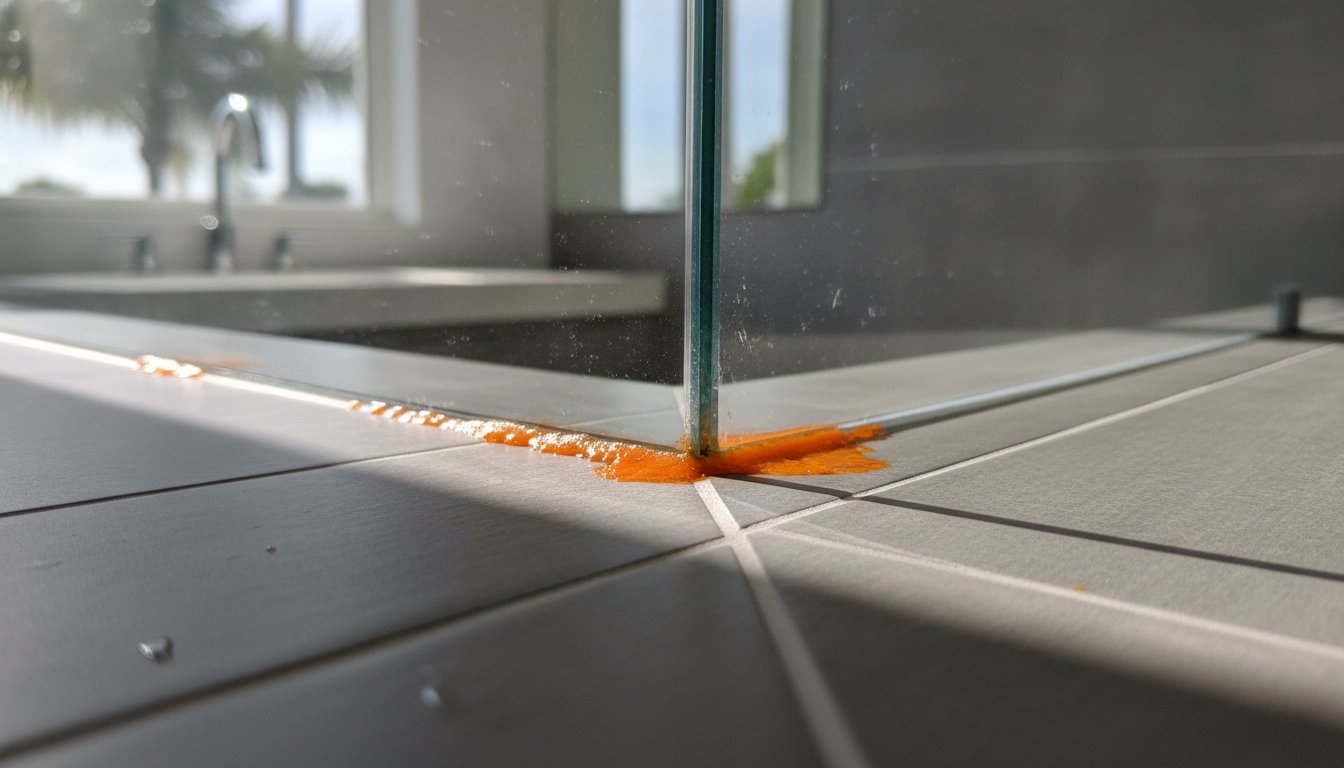
What if that slimy, neon-orange buildup in your grout isn’t actually mold at all? You’ve likely spent hours scrubbing those stubborn stains only to watch them reappear within days; it’s a frustrating cycle that leaves many Florida homeowners anxious about toxic exposure. While the orange film is often a surface-level nuisance, it can also act as a red flag for deeper moisture issues like the subtle signs of water leak behind shower wall. Our local humidity makes these problems escalate quickly, so understanding the source of the moisture is your first line of defense.
In this guide, you’ll discover the truth about this common bathroom intruder, which is usually an airborne bacterium called Serratia marcescens that feeds on fatty soap residues. We’ll provide you with a clear path to accurate identification and professional removal instructions. You’ll learn how to distinguish between a simple cleaning task and a serious plumbing emergency, giving you the peace of mind that comes with knowing when to call for professional leak detection and water remediation.
Key Takeaways
- Identify that the orange slime in your shower is typically Serratia marcescens bacteria rather than true mold. Understanding this distinction is vital for choosing the correct cleaning and remediation methods.
- Learn why Florida’s high humidity and soap scum create a buffet for these bacteria. This environment requires specific preventative maintenance to keep surfaces clean and dry.
- Master the visual and scent checks to differentiate between slimy bacteria and fuzzy, earthy-smelling fungi. These simple tests help you assess the severity of the situation quickly.
- Discover safe cleaning techniques using household staples like baking soda and vinegar. These methods protect your grout while effectively removing stubborn discoloration.
- Recognize when recurring stains are actually signs of water leak behind shower wall. If the slime returns immediately after cleaning, it often points to a hidden moisture source that requires professional leak detection.
Is It Really Mold? Debunking the Orange Mold Mystery
You step into your shower in Weston or Davie and notice a vibrant, slimy orange streak along the grout lines. Your first instinct is likely panic, assuming a toxic mold colony has claimed your bathroom. However, most “orange mold” found in South Florida isn’t actually mold. It is a common airborne bacterium known as Serratia marcescens. This distinction is critical because treating bacteria requires a completely different strategy than treating fungal growth. While mold spreads through spores and digests organic material like drywall, these bacteria are looking for a buffet of fatty substances found in your soap scum and shampoo residue.
Many homeowners reach for bleach as a reflex. This is often a mistake. Bleach can “ghost” the color by oxidizing the pigment, but it rarely penetrates porous grout deeply enough to eliminate the colony. If the underlying moisture isn’t addressed, the orange tint will return within days. Understanding the biological nature of the stain is the first step toward a permanent fix for your Broward County home.
Myth vs. Reality: The Science of Pink and Orange Slime
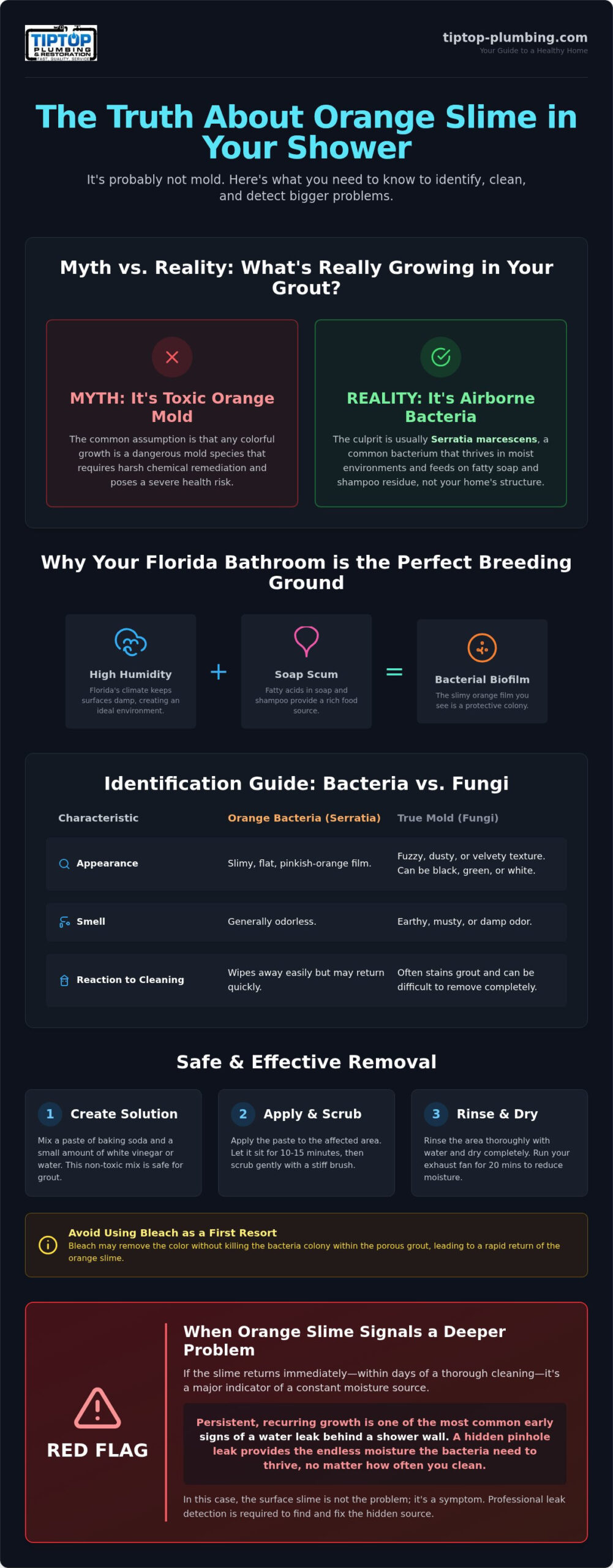
The bright hue that alarms residents comes from a pigment called prodigiosin, which the bacteria produce under specific environmental conditions. These organisms thrive in the moist, warm environments typical of our local climate. They don’t just sit on the surface; they create a protective habitat for themselves. In 2026, we define a biofilm as a complex, slimy layer of microorganisms that sticks to surfaces and shields bacteria from standard cleaning agents. This protective barrier is why a quick wipe-down rarely solves the problem. The bacteria are essentially building a fortress in your shower, waiting for the next splash of water to reactivate.
Is Orange Mold Dangerous to Your Family?
For most healthy adults, this pinkish-orange film is more of an aesthetic nightmare than a medical emergency. It causes significant psychological stress, making a clean home feel unsanitary. However, the risk changes for immunocompromised individuals, the elderly, or anyone with an open wound. In these cases, exposure can lead to urinary tract infections or respiratory issues. You should never ignore recurring growth. Persistent bacteria are frequently among the first visible signs of water leak behind shower wall, as the constant supply of moisture from a pinhole leak keeps the biofilm hydrated and thriving regardless of how often you dry the area. If cleaning doesn’t stop the spread, the problem is likely structural rather than environmental.
Why Your Florida Bathroom is the Perfect Breeding Ground
Living in Broward County means battling a persistent, invisible enemy: relentless humidity. In South Florida, your bathroom isn’t just a place to get clean; it’s a high-stakes environment where moisture management determines the health of your home’s structure. When indoor humidity levels consistently hover above 60%, surfaces like grout and tile stay damp long after you’ve finished your morning routine. This lack of evaporation creates a permanent laboratory for bacterial growth. If you notice that orange film returning despite your best efforts, it’s often one of the early signs of water leak behind shower wall, as a hidden moisture source provides the constant hydration these organisms need to survive.
The Florida Humidity Factor
Our local climate presents unique challenges for standard HVAC systems. If your air conditioner isn’t properly sized or maintained, it may fail to pull enough moisture from the air, leaving your bathroom in a tropical state. Effective moisture control is the primary method for controlling moisture to prevent mold and bacterial colonization. In older homes throughout Weston and Davie, bathroom fans are often underpowered or vented incorrectly, which traps steam within the room. You should run your exhaust fan for at least 20 minutes after every shower to ensure the space reaches a safe equilibrium. Without this discipline, the ambient moisture provides exactly what airborne bacteria need to anchor themselves to your walls.
Soap Scum: The Invisible Fuel
Bacteria like Serratia marcescens don’t just need water; they need a consistent food source. Traditional bar soaps and many shampoos contain fatty acids and phosphorus, which act as a high-calorie buffet for microbial colonies. Florida’s mineral-rich water makes this problem worse. The “hard” water common in Weston and Davie reacts with soap to form a stubborn, sticky film known as soap scum. This film provides a textured, porous surface that traps body oils and skin cells, giving bacteria a secure place to grow. Textured tiles and deep grout lines are the primary targets because they are the hardest areas to dry completely. A simple “dry-down” routine with a squeegee or microfiber cloth can significantly reduce the available fuel for these colonies.
When cleaning and ventilation aren’t enough to stop the orange slime, the cause is usually structural. A pinhole leak in a copper pipe or a failing shower valve can keep the backside of your tile saturated, creating a moisture loop you can’t see. If you suspect your bathroom’s issues go deeper than surface grime, you can schedule a professional leak detection to find the invisible source. Ignoring these signs of water leak behind shower wall can lead to expensive restoration costs that far exceed a simple plumbing repair.
Identifying the Culprit: Orange Bacteria vs. Dangerous Fungi
Accurate identification is the first step toward effective remediation. To the untrained eye, any orange discoloration in a bathroom looks like a health hazard, but the texture and behavior of the growth provide vital clues. Most bacterial colonies, specifically the Serratia marcescens we discussed earlier, present as a slick, gelatinous film that feels slimy to the touch. In contrast, true fungal mold typically has a fuzzy, velvety, or “hairy” appearance. While bacteria sit on top of your tile or grout, mold often roots itself deep into the substrate, making it much harder to remove without professional intervention.
The “smell test” is another reliable diagnostic tool for homeowners in Weston and Davie. Fungal mold produces a distinct, earthy, or musty odor that persists even when the bathroom is dry. Bacteria, however, tend to have a more neutral scent, though a large colony might produce a slightly putrid or metallic smell. Timing also matters. If you perform a deep clean and the orange tint reappears within 48 hours, you aren’t just dealing with surface grime. Rapidly recurring growth is one of the most common signs of water leak behind shower wall, as the constant supply of fresh moisture allows the colony to rebuild its biofilm almost immediately.
When It’s Actually Mold (and Not Bacteria)
While rare, certain species of mold like Aspergillus or Fusarium can exhibit orange or reddish hues. Unlike common bacteria, these fungi are aggressive and can compromise the structural integrity of your home. In our humid South Florida climate, mold can begin to grow on damp materials within 24 to 48 hours of exposure. If the growth appears “dusty” or seems to be emerging from behind the tile rather than sitting on it, you must act quickly. Understanding how to prevent mold after water damage is essential for protecting your family from respiratory irritants and preventing long-term property devaluation. If you’ve recently experienced any flooding or pipe failure, understanding when to test for mold after water damage Broward County professionals recommend can help you act within that critical 48-hour window before a minor moisture problem becomes a full-scale environmental crisis.
Is It Just Rust? Checking Your Florida Water
Sometimes the orange culprit isn’t biological at all. Broward County’s water can be high in iron, which oxidizes and leaves behind rust-colored stains. You can test this by applying a small amount of vinegar to a cloth and wiping the area. If the stain disappears easily but doesn’t feel slimy, it’s likely iron. However, if your home was built several decades ago, these stains might indicate that older galvanized pipes are corroding from the inside out. This internal corrosion often leads to pinhole leaks, which eventually manifest as signs of water leak behind shower wall. If you notice a drop in water pressure alongside the orange staining, the issue is likely your plumbing rather than your cleaning habits.
How to Safely Remove and Prevent Shower Discoloration
Removing orange bacterial buildup requires a methodical approach that prioritizes the integrity of your bathroom’s surfaces. While it’s tempting to reach for the strongest chemicals available, harsh cleaners can often do more harm than good in the long run. If your cleaning routine fails to keep the stains at bay, you may be looking at the signs of water leak behind shower wall rather than a simple hygiene issue. In these cases, constant moisture from a failing pipe provides a non-stop water source that no amount of scrubbing can permanently resolve.
The Safe Removal Protocol
The most effective way to eliminate the Serratia marcescens biofilm is by using a specialized paste. Mix two parts baking soda with one part water to create a thick consistency, then apply it directly to the orange stains. Spray the area with white vinegar to create a foaming reaction that lifts the bacteria from the porous grout. Let this sit for at least 15 minutes before rinsing with warm water. This method breaks down the fatty acids the bacteria feed on without eroding your grout lines.
The current 2026 industry recommendation suggests using 3% hydrogen peroxide instead of traditional chlorine bleach. Hydrogen peroxide is an effective oxidizer that kills bacteria at the root but is far less corrosive to the waterproof membranes used in Weston and Davie homes. Applying a high-quality grout sealer once a year serves as your primary defense against deep-rooted bacterial stains. Avoid the urge to scrub with wire brushes or abrasive pads. Aggressive scrubbing creates micro-scratches in your tile and grout, which essentially provides a larger surface area for future bacterial colonies to take hold.
Ventilation and Maintenance Hacks
Prevention in Broward County starts with air movement. Most standard bathroom fans are underpowered for our local humidity levels; you should consider upgrading to a high-CFM (Cubic Feet per Minute) fan that can fully cycle the air in your bathroom every few minutes. A fan that runs for 20 to 30 minutes after your shower is essential for drying out the hidden corners where bacteria thrive. Additionally, implementing the “Squeegee Method” after every use removes the standing water and soap scum that acts as fuel for growth.
Your accessories also play a role in the microbial ecosystem of your bathroom. Loofahs, sponges, and bath mats trap moisture and skin cells, making them secondary breeding grounds. You should wash these items weekly in hot water or replace them every 30 days. Switching to an antimicrobial shower curtain liner can also reduce the overall bacterial load in the room. If you follow these maintenance steps and the orange tint still returns within 48 hours, it’s a strong indicator that you have one of the primary signs of water leak behind shower wall, and the moisture is coming from inside the structure. In that case, professional mold testing Weston FL homeowners rely on can provide the definitive diagnostic proof you need to identify the hidden moisture source and protect your property.
When ‘Orange Mold’ Signals a Deeper Plumbing Leak
When you’ve followed every cleaning and ventilation protocol but that orange film returns within 48 hours, the problem isn’t your cleaning habits. In South Florida, persistent microbial growth is frequently one of the most reliable signs of water leak behind shower wall. While the stain itself is a surface nuisance, the constant supply of moisture indicates a structural failure that requires immediate attention to prevent a full-scale water damage restoration project. Ignoring these indicators is risky; water damage and freezing account for nearly 24% of all homeowners’ insurance claims, with the average claim costing approximately $11,098 according to 2026 industry data.
Tip Top Plumbing & Restoration utilizes advanced leak detection technology to pinpoint these “invisible” moisture sources. We use thermal imaging cameras and ultrasonic sensors to see through your tile without causing unnecessary damage to your bathroom. Our team acts as a stabilizing force in these stressful moments, providing the technical precision needed to stop the damage before it compromises your home’s integrity. We focus on permanence and adherence to the latest Florida Building Codes to ensure your repairs stand up to our local environmental challenges.
The Hidden Danger: Leaks Behind the Tile
Pinhole leaks in copper pipes are a common culprit for recurring bacterial colonies in Weston and Davie. These tiny failures provide a non-stop mist of water that keeps the backside of your drywall saturated, creating a perfect incubation chamber. If you notice tile popping, grout cracking, or drywall that feels slightly soft to the touch, you’re looking at major red flags. These structural changes suggest the waterproofing has failed. You can learn more about the specifics of Copper Pipe Leak Repair in Broward County to understand how we address these hidden threats before they lead to wood rot.
While internal plumbing is often the primary suspect, moisture can also enter through the building’s exterior. To ensure your home is fully protected from all angles, you can explore Roof Leak Detection and Repairs options to see how professionals like Hop To It Roof Repairs address overhead leaks before they impact your interior walls.
Professional Solutions for Peace of Mind
If the discoloration has spread beyond the tile or you detect a persistent musty odor, it’s time to move beyond standard cleaning. We provide certified mold testing in Broward County to determine if your orange problem has invited more dangerous fungal guests into your home. Once a leak is identified and repaired, our dry-out services use industrial-grade dehumidifiers to extract deep-seated moisture from your wall studs. This methodical “triage” approach ensures the environment is no longer hospitable to bacteria or mold. Don’t let a simple stain hide a looming disaster. Contact Tip Top Plumbing & Restoration today to secure your home with professional leak detection and remediation services.
Protect Your Home from Hidden Moisture Damage
Differentiating between surface-level bacteria and structural damage is the key to maintaining a healthy bathroom. You’ve learned that orange slime is often a biological indicator of high humidity or poor ventilation, but cleaning alone isn’t always the answer. When these stains reappear despite your best scrubbing efforts, they frequently serve as the first visible signs of water leak behind shower wall. Persistent moisture is a diagnostic tool that shouldn’t be ignored in our tropical climate.
Our certified water damage restoration specialists utilize expert leak detection technology to find invisible moisture sources before they lead to wood rot or fungal growth. We provide 24/7 emergency service throughout Broward County to ensure your home remains a safe, dry sanctuary for your family. By addressing the root cause of the moisture, you protect your property’s value and your family’s health from the long-term effects of hidden plumbing failures. Weston homeowners who want definitive answers about potential spore growth can benefit from professional mold testing in Weston, FL to stop the guesswork and establish a clear remediation plan.
Take control of your home’s health today. We’re ready to provide the professional reassurance and technical expertise you need to resolve your plumbing concerns for good.
Frequently Asked Questions
Is orange mold in the shower dangerous to breathe?
No, the orange substance in your shower is typically not a fungus and does not release airborne spores like black mold. It is actually a bacterium called Serratia marcescens that thrives on soap residue. While it isn’t a respiratory threat to healthy adults, it can cause infections in immunocompromised individuals or those with open wounds. You should still address it promptly to maintain a sanitary environment in your home.
Can I use bleach to get rid of orange shower stains permanently?
Bleach is generally ineffective for permanent removal because it only oxidizes the surface pigment without killing the entire colony. Because grout is porous, the bacteria remain protected deep within the material and will return as soon as the bleach dissipates. We recommend using hydrogen peroxide or a baking soda paste. These solutions penetrate deeper into the substrate to disrupt the biofilm fortress that these bacteria build over time.
How often should I clean my shower to prevent orange bacteria?
You should perform a deep cleaning once a week to prevent the bacteria from establishing a thick biofilm. In our humid Broward County climate, a weekly scrub with a vinegar-based solution is essential to remove the fatty acid residues that serve as a food source. Additionally, using a squeegee after every shower significantly reduces the standing water that allows these colonies to anchor themselves to your grout lines.
What happens if I ignore the orange slime in my bathroom?
Ignoring the buildup allows the bacterial colony to expand and harden, which can lead to permanent staining of your grout and tile. Over time, the thick biofilm can also trap other contaminants, including actual fungal mold. Most importantly, persistent orange growth often masks more serious structural issues. By dismissing the stains as simple grime, you might overlook the early signs of water leak behind shower wall that require professional intervention.
Does orange mold mean I have a water leak?
Not necessarily, but rapid regrowth is one of the primary signs of water leak behind shower wall. If the orange tint returns within 48 hours of a deep clean, it indicates that the backside of the tile is likely saturated. In Florida’s high humidity, a pinhole leak in a copper pipe provides a constant water source that keeps the colony hydrated. This level of persistence usually requires a professional leak detection and moisture assessment.
Why does the orange stuff keep coming back even after I scrub it?
The bacteria return because the underlying moisture problem or food source has not been eliminated. If you use abrasive brushes, you might be creating micro-scratches in the tile that give the bacteria more surface area to cling to. However, if your cleaning technique is sound and the stains still reappear, the moisture is likely coming from inside the wall. This recurring growth suggests a failure in the waterproof membrane or a plumbing leak.
Is the orange slime related to the hard water in Florida?
Yes, Florida’s mineral-rich hard water contributes to the problem by accelerating the buildup of soap scum. The minerals in the water react with your soap to create a sticky, textured film that traps skin cells and body oils. This film acts as a high-calorie buffet for Serratia marcescens. Homes in Weston and Davie often struggle with this more than other areas due to specific local water conditions that favor bacterial colonization.
Should I call a plumber or a cleaning service for orange shower stains?
You should start with a thorough cleaning, but call a professional plumber if the stains return despite your best efforts. A cleaning service can only address surface-level hygiene, whereas a plumber can identify structural failures. If the orange growth is accompanied by soft drywall, musty odors, or loose tiles, you need expert leak detection. Our team specializes in finding these hidden moisture sources to stop the cycle of bacterial growth for good.
Disclaimer
The information provided in this article is for general educational and informational purposes only and should not be considered professional plumbing, restoration, mold remediation, or legal advice. Every plumbing system, property, and situation is unique, and the recommendations discussed may not apply to your specific circumstances.
While Tip Top Plumbing & Restoration strives to provide accurate and up-to-date information, we make no warranties regarding the completeness, accuracy, or reliability of the content. Any actions you take based on this information are at your own risk.
Plumbing repairs, water damage restoration, and mold remediation should be performed by qualified professionals and in accordance with applicable local building codes and regulations. If you are experiencing a plumbing emergency, water leak, or property damage, contact a licensed professional for an on-site evaluation.
Tip Top Plumbing & Restoration is licensed and insured to provide plumbing and restoration services throughout Broward County, Florida.