01 / A practical approach
Address hardness with the right system and upkeep.
- Water softener installation
- Salt replenishment
- Routine maintenance

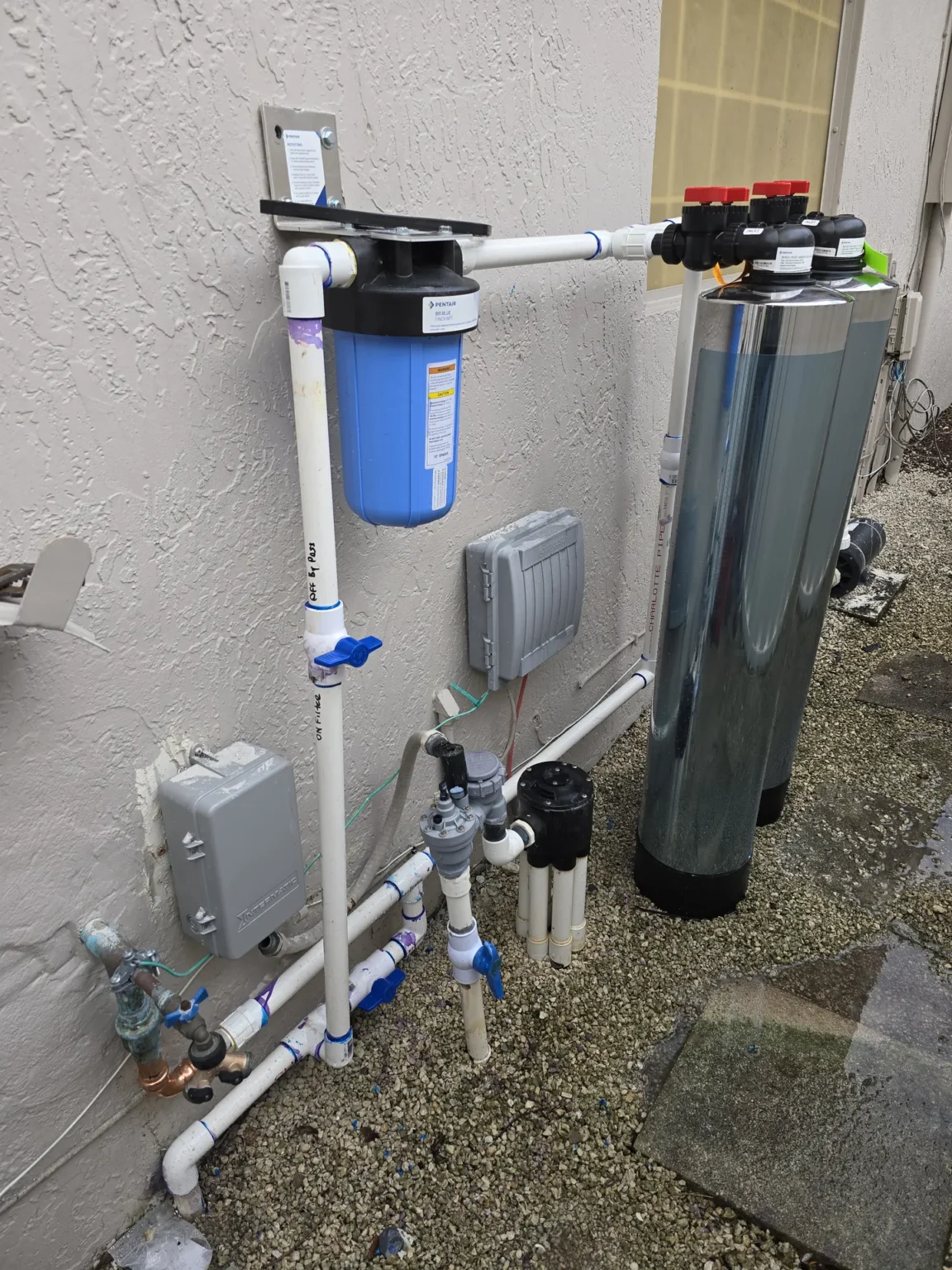
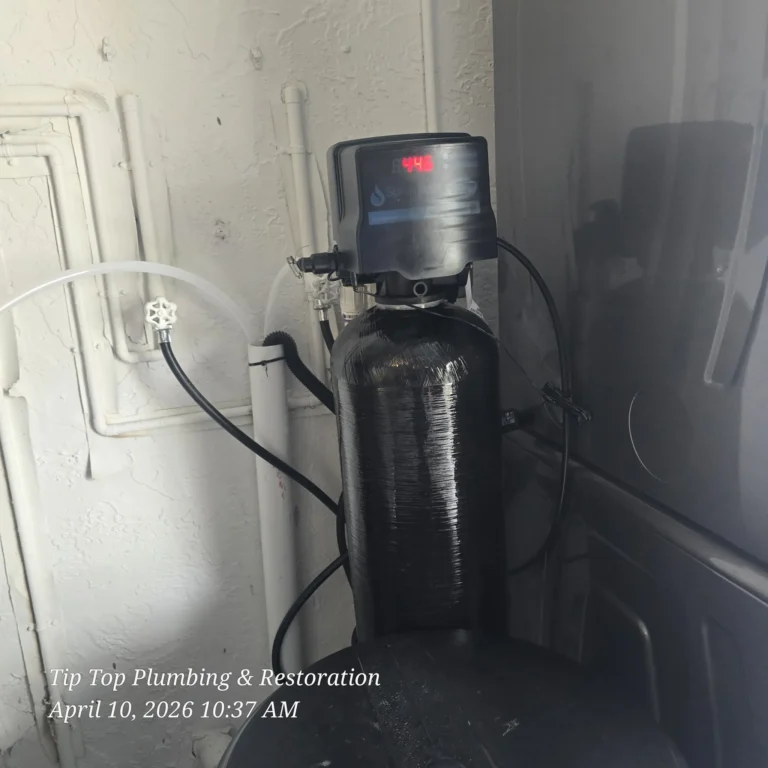
Mineral buildup and the upkeep of a softener call for a different conversation from drinking-water filtration. Tip Top Plumbing & Restoration installs water softeners, replenishes salt and provides routine maintenance within our Broward County service area.

“Jose gave all the information details on the project. Was professional and friendly.”Wagner Dona · Google customer review · August 31, 2026
Hardness refers mainly to dissolved calcium and magnesium. Deposits around fixtures, residue after water dries and difficulty getting soap to lather can lead homeowners to ask about softening. These observations alone do not establish the hardness level or identify every reason for a plumbing symptom.
Review information for your actual supply and existing equipment. Do not assume every Broward County property has the same water characteristics. A hardness result and the household’s use help inform the equipment discussion; this page does not offer laboratory testing or diagnose a specific water supply.
A conventional ion-exchange softener exchanges hardness ions through a treatment bed. A brine process regenerates that bed so it can continue softening. The salt supply is part of that process; salt is not simply a cartridge that filters debris from the water.
Softening and filtration address different goals. A softener should not be presented as a universal contaminant-removal device, a disinfectant or a repair for damaged pipes. Claims about a specific product must come from its verified documentation.
The proposed location needs room for the equipment and safe access to add salt and perform routine maintenance. Review incoming supply piping, shutoffs, bypass arrangements and the outlets intended to receive softened water. Outdoor conditions and protection requirements depend on the model and location.
Regeneration needs a suitable drain arrangement under the manufacturer’s instructions and applicable requirements. Some controls need electricity. Drain distance, routing, electrical access where required and equipment servicing clearances should be considered before a unit is purchased or positioned.
Discuss the number of occupants, typical water demand, existing treatment stages and the hardness information available. Equipment capacity and operating settings should be appropriate to the system and actual conditions, rather than copied from an unrelated home.
For a replacement installation, identify what is being removed, which connections can appropriately be retained and what access is available. Ask how to use the bypass, where to keep the instructions and what to check between visits. Our water softener services are installation, salt replenishment and routine maintenance.
Keep the model, installation date, instructions, salt type and service history together. Follow the specified inspection and cleaning guidance, keep access clear and look for visible water around connections. Discuss any change in use, salt consumption or the system’s usual operation.
If hardness symptoms return, do not assume the equipment needs a specialized internal repair. Describe what you see, and we’ll tell you whether it’s part of routine maintenance. Resin replacement, control-valve repair and other specialized repairs are not included in the services described here.
A leaking supply connection, pressure change or repeatedly failing pipe may require a separate plumbing diagnosis. Softening will not seal a leak or replace a damaged line. Tell us about all symptoms so that maintenance is not mistaken for a repair of the broader plumbing system.
Whole-house filtration, under-sink RO and softening can serve different goals. If more than one system is present, review their arrangement and access before adding another unit. We can discuss the confirmed installation and maintenance work without promising outcomes that are not documented for the selected equipment.
A usable location, clear service scope and straightforward maintenance guidance help homeowners manage a softener over time. Tip Top can discuss those requirements alongside the home’s plumbing and explain when a separate repair assessment is appropriate.
We serve Cooper City, Davie, Hollywood, Miramar, Pembroke Pines, Plantation, Southwest Ranches, Sunrise and Weston. Confirm coverage and availability for your address when arranging service. Tell us the equipment model, the work requested and any immediate leak or access concern.
Review the proposed equipment and work with us before installation. Keep the manufacturer’s instructions and a record of parts and maintenance dates for future visits.
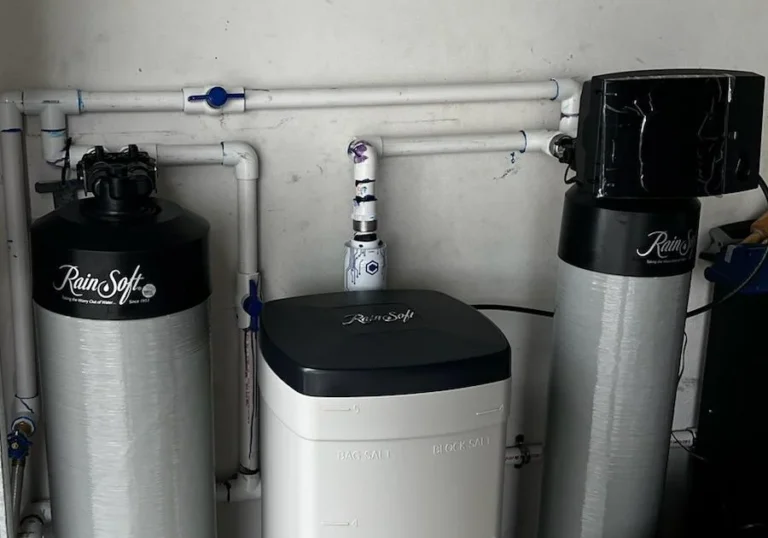
Use the type and grade of salt specified for the installed model. Check the level as directed and replenish before the supply becomes inadequate for its regeneration needs. Usage and the system’s operation affect how often salt is needed; there is no single schedule for every household.
A hard crust or salt bridge can make a tank appear full while interfering with normal operation. Do not strike the tank or force tools into the equipment. Describe what you observe and arrange a routine maintenance discussion. Adding salt does not resolve every softening or control problem.
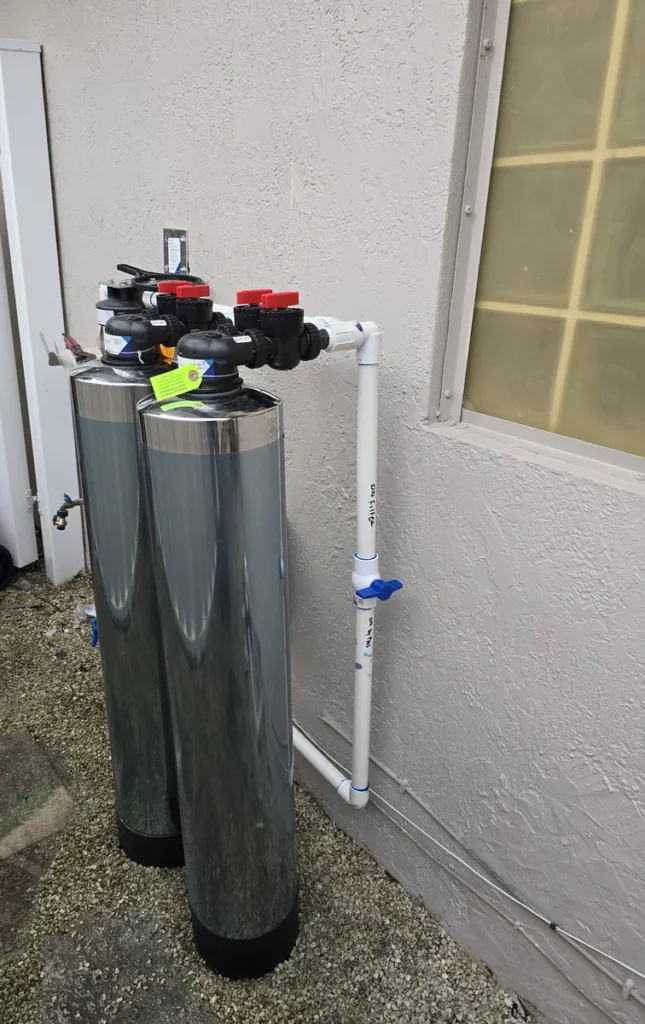
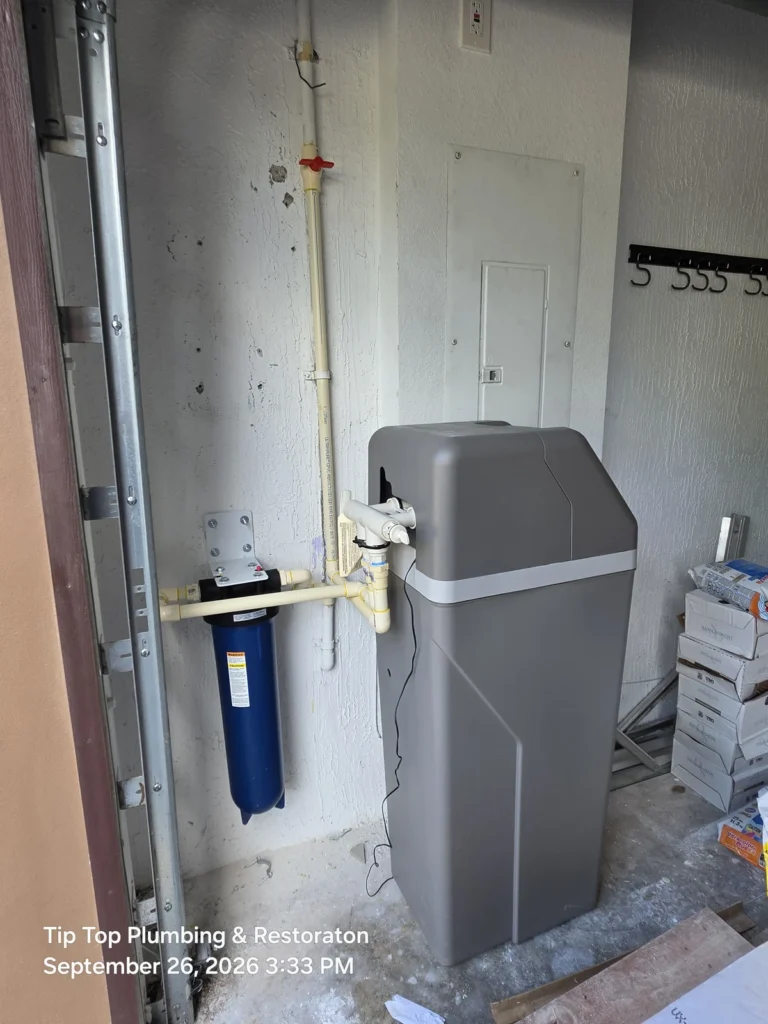
No. Conventional softening targets hardness through ion exchange. Filtration and RO have other purposes and product-specific capabilities. Choose equipment for the issue you actually want to address.
That depends on use, supply hardness, the installed system and its operation. Follow its instructions, check the level as directed and keep a replenishment record instead of assuming a fixed monthly amount.
Yes. Salt replenishment is one of our water softener services, along with installation and routine maintenance. Confirm the compatible salt type and site access when arranging service.
We don’t offer resin or control-valve repairs. Describe the concern and we’ll tell you what we can help with.
No. Leaks, damaged piping and drain obstructions need their own plumbing assessment. A treatment installation is not a substitute for those repairs.
Have the equipment model, any instructions or service history, the symptoms, salt type and information about access, drainage and power. Tell us whether you need a new installation, replenishment or routine maintenance.
For further reading: NSF guide to water-treatment standards ↗. Product selection and maintenance must follow the specific equipment documentation.
For hidden water loss or a pressure concern, explore leak detection. For aging supply piping with recurring failures, discuss whole-house repiping as a separate plumbing project.
For water softeners, explain your system, the service you need and your property’s location. Call Tip Top Plumbing & Restoration.