

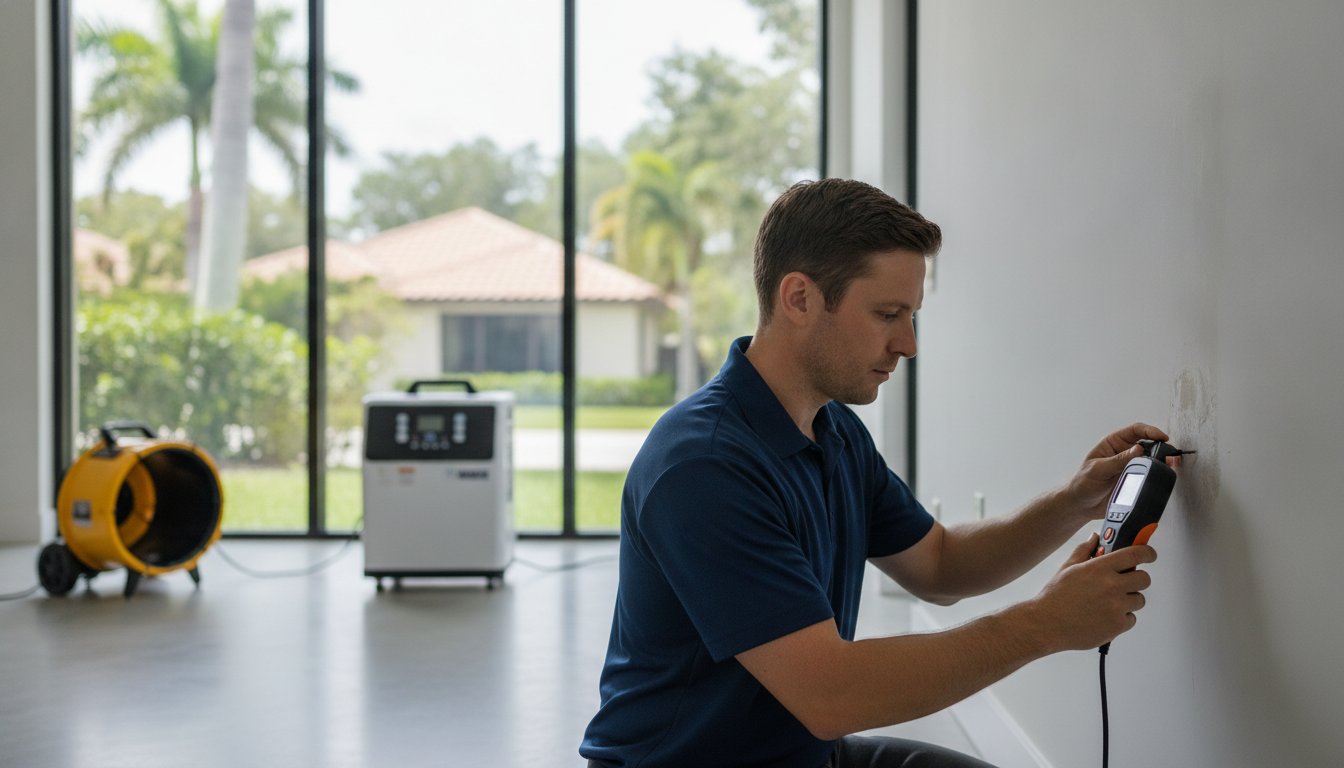
In the humid climate of South Florida, a “surface dry” floor is often a dangerous illusion that hides a looming mold crisis. You’re likely feeling the crushing weight of sudden flooding right now, wondering if your home will ever feel safe again or if the insurance company will actually cover the repairs. It’s a high-stakes race against the clock. Because the relative humidity in our area rarely drops below the 60% threshold required for fungal growth, professional water damage restoration Fort Lauderdale services must begin within 24 to 48 hours to prevent permanent structural loss.
We understand the intense anxiety that comes with structural repairs and the fear of hidden mold. This guide provides the expert clarity you need to stabilize your property and navigate the restoration process with total confidence. You’ll learn the essential steps to mitigate damage, prevent mold under the latest 2026 Florida building codes, and manage your insurance claim effectively. We will walk through the critical triage window and explain how to restore your home to its pre-loss condition using methodical, professional techniques that leave no room for error.
Key Takeaways
- Act immediately in the first 60 minutes by prioritizing electrical safety and locating your main water shut-off valve to stop the source.
- Understand why local humidity levels above 70% make professional water damage restoration Fort Lauderdale essential for thorough moisture removal.
- Avoid the “surface dry” trap by learning how hidden moisture in sill plates can trigger mold growth in as little as 24 hours.
- Discover the science of psychrometry and how industrial-grade dehumidifiers control your indoor environment to prevent permanent structural decay.
- Learn the advantages of a full-circle restoration process that identifies the leak, repairs the plumbing, and dries the structure in one seamless operation.
The Reality of Water Damage Restoration in Fort Lauderdale
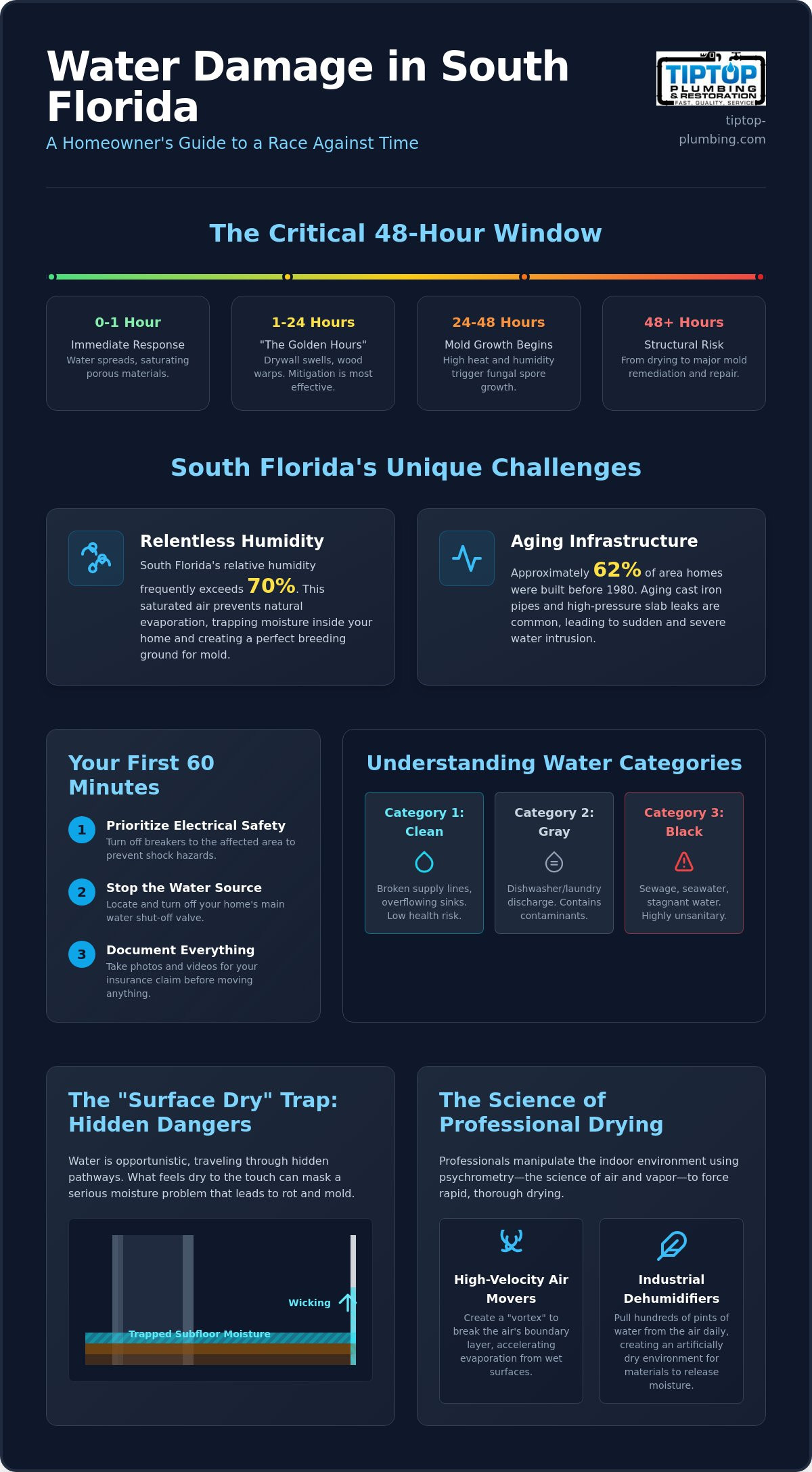
Restoration is far more than a simple cleanup effort; it is the scientific process of removing intrusive water and moisture to prevent permanent structural decay. In South Florida, The Reality of Water Damage is dictated by our unique environment. While a homeowner in a drier climate might rely on natural evaporation, Fort Lauderdale’s relative humidity frequently exceeds 70%. This high moisture content in the air creates a vapor pressure stalemate where wet materials cannot release their water into the already saturated atmosphere. Without professional intervention, your home stays wet indefinitely.
Our local infrastructure presents specific challenges that every resident should recognize. Approximately 62% of homes in our area were built before 1980, which means aging cast iron pipes are a primary culprit for sudden failures. Beyond tropical storms, we frequently see high-pressure slab leaks that push water upward through the foundation. These events require specialized water damage restoration Fort Lauderdale expertise to ensure the source is contained before the structure is compromised. We serve homeowners throughout the region who face these exact issues every day.
The first 24 hours are the “Golden Hours” of mitigation. During this window, the damage is often limited to the materials directly touched by water. Once you cross the 48-hour mark, the high Florida heat triggers fungal spores, and the scope of work shifts from simple drying to expensive mold remediation. Prompt action during this first day is the single most effective way to control your total restoration costs. It’s the difference between a minor drying project and a major structural overhaul.
Understanding Water Categories: Clean vs. Black Water
Professionals classify water based on its contamination level to determine the safety protocols and equipment required for the job.
- Category 1: Clean water from broken supply lines, overflowing sinks, or rainwater that hasn’t touched soil or contaminants.
- Category 2: Often called “gray water,” this contains significant chemical or biological contamination, such as dishwasher or washing machine discharge.
- Category 3: Known as “black water,” this comes from sewage backups, rising seawater, or stagnant water that has supported microbial growth. This category is highly unsanitary and requires specialized PPE and rigorous disinfection to make the home habitable again.
Hidden Risks: Beyond What the Eye Can See
Water is opportunistic. It travels through drywall via “wicking,” where moisture climbs up the wall like a sponge, often reaching several feet above the visible flood line. It also moves through floorboard capillaries, trapping pockets of liquid beneath your subfloor. This leads to “secondary damage,” such as warped wood, rusted electrical components, and compromised structural integrity. A surface that feels dry to the touch can still register high moisture levels on a professional meter. If these pockets aren’t addressed, they will eventually cause the subfloor to fail or create a breeding ground for hidden mold. Many of these hidden failures originate from copper pipe leak repair Broward County situations where pinhole leaks go undetected behind walls for weeks before the visible damage appears. Homeowners who notice discoloration or unusual staining in their bathrooms should also be aware of the signs of water leak behind shower wall, as what appears to be a surface mold problem can often signal a deeper plumbing failure.
The Science of Structural Drying & Remediation
Professional drying is a calculated race against biology. While the First 60 Minutes of a crisis are focused on immediate safety and containment, the subsequent hours require a deep understanding of psychrometry to save the structure. Psychrometry is the study of air-vapor mixtures in restoration. In a high-humidity environment like ours, the air is often already saturated. If the air in your home is “full,” it cannot absorb any more moisture from your wet floors or walls. We manipulate the indoor environment by controlling temperature and airflow to force the evaporation process even when the outdoor weather is against us.
Household fans won’t cut it here. We utilize high-velocity air movers that create a targeted “vortex” of air across wet surfaces. This high-speed movement breaks the boundary layer of saturated air sitting directly on top of wet materials, allowing moisture to escape into the air much faster. This is coupled with industrial-grade dehumidifiers that pull hundreds of pints of water from the air daily. Without this mechanical intervention, water damage restoration Fort Lauderdale projects would stall, leading to the permanent structural decay mentioned earlier.
Moisture Mapping: Tracking the Water Path
Water often hides behind the tiled walls common in Fort Lauderdale bathrooms. We use non-invasive thermal imaging cameras to detect temperature differences that indicate moisture pockets trapped behind solid surfaces. Our technicians then use penetrating and non-penetrating moisture meters to create a digital “map” of the affected area. We establish “drying goals” by measuring unaffected materials in your home to determine the exact “dry standard” we need to reach. This ensures we don’t stop until your home is truly back to its original state.
The Dehumidification Process
In Florida, we primarily use LGR (Low Grain Refrigerant) dehumidifiers. These machines are designed to operate efficiently even in the high-heat, high-humidity conditions of Broward County. We monitor “Grains Per Pound” (GPP), which is a precise measurement of the weight of water vapor in the air. By lowering the GPP, we create a “thirsty” environment that aggressively pulls water out of deep structural members like sill plates and studs. Success requires daily monitoring and equipment adjustments. If you suspect water is lingering where you can’t see it, you can schedule a professional moisture inspection to verify your home’s safety and prevent hidden mold growth.
DIY Cleanup vs. Professional Restoration: The Cost of Mistakes
Many homeowners reach for a shop-vac and towels the moment they see standing water. It’s a natural reaction to a crisis. However, this often leads to the “surface dry” trap. While the tile may look clean and the grout feels dry, significant moisture remains trapped in the sill plates and behind baseboards. In our tropical climate, this trapped water is a ticking time bomb. Professional water damage restoration Fort Lauderdale involves far more than just removing visible liquid; it requires a methodical approach to deep-tissue structural drying.
The financial risks of DIY efforts extend beyond the physical damage. Insurance carriers typically require documented proof of professional drying to approve a claim. If you lack moisture logs and atmospheric data, your insurer might argue that you failed to properly mitigate the loss, leading to a denied claim. This oversight also impacts your home’s long term property value. Unresolved moisture eventually leads to structural rot and warped subfloors that a home inspector will inevitably flag during a future sale. Doing it right the first time protects your largest investment from hidden decay.
The 48-Hour Mold Window
In Fort Lauderdale, the relative humidity rarely drops below the 60% threshold required for mold to thrive. High indoor temperatures accelerate this biological process. Spores can begin to colonize in as little as 24 hours. Because of this rapid timeline, professional mold testing Broward County is vital after any leak, and understanding exactly when to test for mold after water damage Broward County experts recommend can mean the difference between a simple dry-out and a full-scale remediation project. We frequently encounter species like Stachybotrys and Aspergillus in local homes that weren’t dried properly. Unlike household bleach, which only addresses surface spores, professional antimicrobial treatments are designed to penetrate porous materials. Following The Science of Structural Drying & Remediation is the only way to ensure your family’s health isn’t at risk from hidden microbial growth. Florida homeowners should also be aware that unusual bathroom staining can sometimes indicate signs of water leak behind shower wall rather than a simple surface mold issue, making accurate identification critical before choosing a treatment approach.
Navigating Insurance Claims in Broward County
Don’t wait for an insurance adjuster to arrive before you start the dry-out process. Florida law requires homeowners to take immediate action to prevent further damage. We provide a comprehensive “Loss Assessment” that includes detailed moisture maps and daily drying logs. These documents are the backbone of a successful “Proof of Loss” filing. We coordinate directly with carriers to provide the transparency they need for claim processing. By providing professional data from the start, we help you navigate the complexities of restoration with total confidence. Our goal is to stabilize the property and ensure the insurance company sees the full scope of the technical work required for a complete recovery.
The Homeowner’s Triage Guide: First 60 Minutes
When a pipe bursts or a slab leak erupts, the first hour is a triage phase where your decisions determine the severity of the loss. It’s a high-pressure moment. You must act with precision to stabilize the environment before the water damage restoration Fort Lauderdale professionals arrive. Follow these five steps immediately to protect your home and your insurance claim eligibility.
- Step 1: Safety first. If water has reached electrical outlets or appliances, shut off the power at the main breaker. Never step into standing water if the electricity is still on.
- Step 2: Stop the flow. You must quickly find your main water shut off valve to prevent thousands of gallons from entering your living space.
- Step 3: Document the scene. Use your phone to take clear photos and videos of the standing water and the specific source of the leak. This evidence is critical for your adjuster.
- Step 4: Protect your assets. Lift furniture legs onto aluminum foil or wood blocks and move area rugs to a dry location. It’s also vital to move seasonal belongings like sports gear to higher ground; for those who need to replace damaged winter equipment, calasport.hu provides a wide range of specialty items.
- Step 5: Call for professional help. Contact a specialist for water damage dry out in Weston FL or your local area to begin the mechanical drying process; for property protection during the cleanup, check out Indemnity Security & Investigations, Inc..
- Step 6: Address vehicle safety. If your driveway or garage is prone to flooding, ensuring your cars are moved is vital; for those looking for professional benchmarks in emergency vehicle handling, Done Wright Towing & Transport offers specialized transport and towing services to protect automotive assets from rising water.
What NOT to Do During a Flood
Avoid common mistakes that can lead to injury or increased damage. Never use a standard household vacuum to suck up water. These machines aren’t grounded for liquid and pose a severe electrocution risk. Don’t leave wet fabrics, such as towels or drapes, in place. They act as moisture reservoirs that keep the humidity levels high. Finally, avoid turning on your HVAC system. If water has entered the ducts, the blower will spread moisture and potential mold spores throughout the entire house.
Protecting Your Health
Your safety isn’t just about electricity; it’s about the water quality itself. If you suspect the intrusion is “black water” from a sewer backup or rising floodwaters, evacuate the area immediately. These sources contain pathogens that can cause serious illness. Even clean water becomes a health risk as the humidity rises, leading to respiratory irritation and rapid spore release. You should review our guide on how to prevent mold after water damage to understand the long-term biological risks. If you’re currently facing a flood, request an emergency restoration team now to begin immediate stabilization and structural drying.
Comprehensive Restoration with Tip Top Plumbing
Choosing a partner for recovery requires more than just finding someone with a vacuum and a fan. We provide the “Full-Circle” advantage that national franchises often lack. Most restoration companies only focus on the drying process, leaving you to find a separate contractor to fix the underlying plumbing failure. We bridge that gap. We find the leak, repair the pipe, and then execute the structural dry-out in one seamless, professional operation. This unified approach reduces the time your home spends in a state of chaos and ensures that no part of the repair is overlooked.
Our commitment to water damage restoration Fort Lauderdale is built on local reliability and technical precision. We utilize advanced technology, including high-speed air movers and LGR dehumidifiers, to achieve rapid recovery even in South Florida’s most humid months. Our teams possess deep expertise in areas across Broward County, including Davie, Sunrise, and Plantation. We understand the specific construction styles of our neighborhoods, from mid-century slab homes to modern coastal high-rises, allowing us to tailor our drying protocols to your property’s unique needs.
From Leak Detection to Total Dry Out
The restoration process is only as good as the initial diagnosis. Our specialized approach to leak detection services Broward County allows us to pinpoint hidden failures behind walls or under slabs without unnecessary demolition. Because our technicians come from a disciplined plumbing background, they understand exactly how water moves through a home’s infrastructure. This insight makes us better restoration technicians; we don’t just guess where the moisture is hiding. Every project we touch is IICRC-compliant, meaning we adhere to the highest industry standards for cleanliness, safety, and thoroughness. You receive documented proof that your home has reached the “dry standard” required for long-term structural integrity.
Ready to Restore Your Peace of Mind?
Transparency is the cornerstone of our service. From the initial emergency dry-out to the final mold test, we maintain clear communication regarding costs, timelines, and insurance requirements. We operate a 24/7 emergency dispatch for Fort Lauderdale and the surrounding communities because we know that water damage doesn’t wait for business hours. We don’t just clean up the mess; we restore the integrity of your home so you can sleep soundly again. Don’t let a leak turn into a permanent loss. Contact Tip Top Plumbing & Restoration for immediate water damage assistance and let our local experts take command of the crisis.
Take Command of Your Home’s Recovery
Your home is your most significant investment, and protecting it from the long-term effects of water intrusion requires decisive action. We’ve explored how the first 24 hours determine the path of your recovery and why the “surface dry” trap leads to expensive structural rot. Because Fort Lauderdale’s humidity creates an environment where mold thrives in as little as two days, professional water damage restoration Fort Lauderdale services are a necessity rather than a luxury. Our IICRC-certified technicians bring deep local expertise to every crisis, combining comprehensive leak detection with advanced structural drying to restore your property’s integrity. Once your home is back to its prime condition, you can focus on the more celebratory aspects of South Florida living, like planning events with MintFloralStudio.
Don’t let a sudden flood or hidden pipe failure compromise your family’s safety or your property value. We act as your stabilizing force, providing the clear communication and technical precision needed to navigate insurance claims and structural repairs. When every minute counts, you need a reliable local authority who can stop the leak and dry the structure in one seamless process. Get 24/7 Emergency Water Damage Restoration in Fort Lauderdale and secure the peace of mind you deserve. Your home can be whole again; we are ready to do the work.
Frequently Asked Questions
How long does the water damage restoration process typically take?
The drying phase of the restoration process typically takes between three and five days to complete. This timeline depends on the volume of water and the porosity of the affected materials. While surface moisture might evaporate quickly, structural members like wall studs and subfloors require industrial dehumidification to reach a safe dry standard. Once the structure is certified dry, any necessary reconstruction or cosmetic repairs can begin.
Will my homeowners insurance cover water damage restoration in Fort Lauderdale?
Most standard Florida homeowners insurance policies cover water damage restoration Fort Lauderdale if the cause is sudden and accidental, such as a pipe burst. However, damage from rising groundwater or storm surges typically requires a separate flood insurance policy through the NFIP. It’s also important to note that gradual leaks or maintenance issues are often excluded from coverage. Always document the damage immediately to support your claim’s validity. While reviewing your policies, you may also want to consult with SI Insurance to find affordable auto insurance Sunrise FL for your vehicles.
Can I stay in my home during the water damage dry-out process?
You can often stay in your home during a minor dry-out, but large-scale projects or “black water” events usually require evacuation. Industrial air movers and dehumidifiers are loud and can significantly increase the indoor temperature, making the environment uncomfortable. If the water contains sewage or if significant mold is present, staying on-site poses a respiratory health risk. We will assess the safety of your living conditions during the initial triage.
How do I know if I need professional mold testing after a leak?
Professional mold testing is necessary if water has remained untreated for more than 48 hours or if you notice a persistent musty odor. Because Fort Lauderdale’s humidity rarely drops below 60 percent, fungal growth happens rapidly in hidden cavities. Testing provides a scientific baseline to ensure your air quality is safe. We recommend an assessment after any significant slab leak or pipe failure to confirm that the remediation was successful. Our comprehensive guide on when to test for mold after water damage Broward County homeowners face walks you through the 2026 Florida licensing requirements and how to choose a certified expert who prioritizes your family’s health.
What is the difference between water mitigation and water restoration?
Water mitigation is the immediate process of stopping the leak and drying the structure to prevent further loss. This involves extraction, dehumidification, and stabilization. In contrast, restoration refers to the permanent repairs made after the home is dry, such as replacing drywall, refinishing floors, or restoring cabinetry; if you’re looking for professional inspiration, click here to see how Cabinet Painting Denver transforms home interiors. Mitigation is the urgent first step that controls the total cost of the project by preventing secondary damage like mold or structural rot.
How much does water damage restoration cost in Broward County?
The cost of restoration in Broward County is determined by the category of water and the total square footage of the affected area. Clean water from a supply line is less expensive to treat than contaminated sewage or rising floodwater. Other factors include the age of the home and whether structural materials like hardwood or cabinetry need replacement. We provide a detailed assessment that outlines the specific technical steps required for your property. Homeowners in older properties should also be aware that aging plumbing systems may require copper pipe leak repair in Broward County to address the pinhole leaks that are a leading cause of recurring water damage in the region.
What happens if water damage is left untreated for more than 48 hours?
Untreated water damage triggers active mold growth and significant structural decay within 48 hours. Once moisture penetrates porous materials like drywall and insulation, it creates an ideal environment for fungal spores to colonize. Beyond biological risks, prolonged exposure to moisture weakens the adhesives in flooring and causes wood studs to warp. Ignoring a leak for even two days can double the total cost of the eventual repair and remediation.
Is it possible to dry out a wet carpet, or does it always need to be replaced?
Wet carpet can often be saved if the intrusion involved clean water and the drying process began immediately. We use professional sub-surface extraction tools to pull moisture from the padding without removing the carpet. However, if the carpet was soaked by sewage or contaminated floodwater, it must be replaced for health reasons. The padding is highly absorbent and acts as a reservoir for bacteria that cannot be fully sanitized; for insight into professional cleaning and sanitization standards, read more.
Disclaimer
The information provided in this article is for general educational and informational purposes only and should not be considered professional plumbing, restoration, mold remediation, or legal advice. Every plumbing system, property, and situation is unique, and the recommendations discussed may not apply to your specific circumstances.
While Tip Top Plumbing & Restoration strives to provide accurate and up-to-date information, we make no warranties regarding the completeness, accuracy, or reliability of the content. Any actions you take based on this information are at your own risk.
Plumbing repairs, water damage restoration, and mold remediation should be performed by qualified professionals and in accordance with applicable local building codes and regulations. If you are experiencing a plumbing emergency, water leak, or property damage, contact a licensed professional for an on-site evaluation.
Tip Top Plumbing & Restoration is licensed and insured to provide plumbing and restoration services throughout Broward County, Florida.