01 / A practical approach
Drinking-water treatment, planned for your kitchen.
- Residential RO installation
- Filter & membrane replacement
- Routine system maintenance

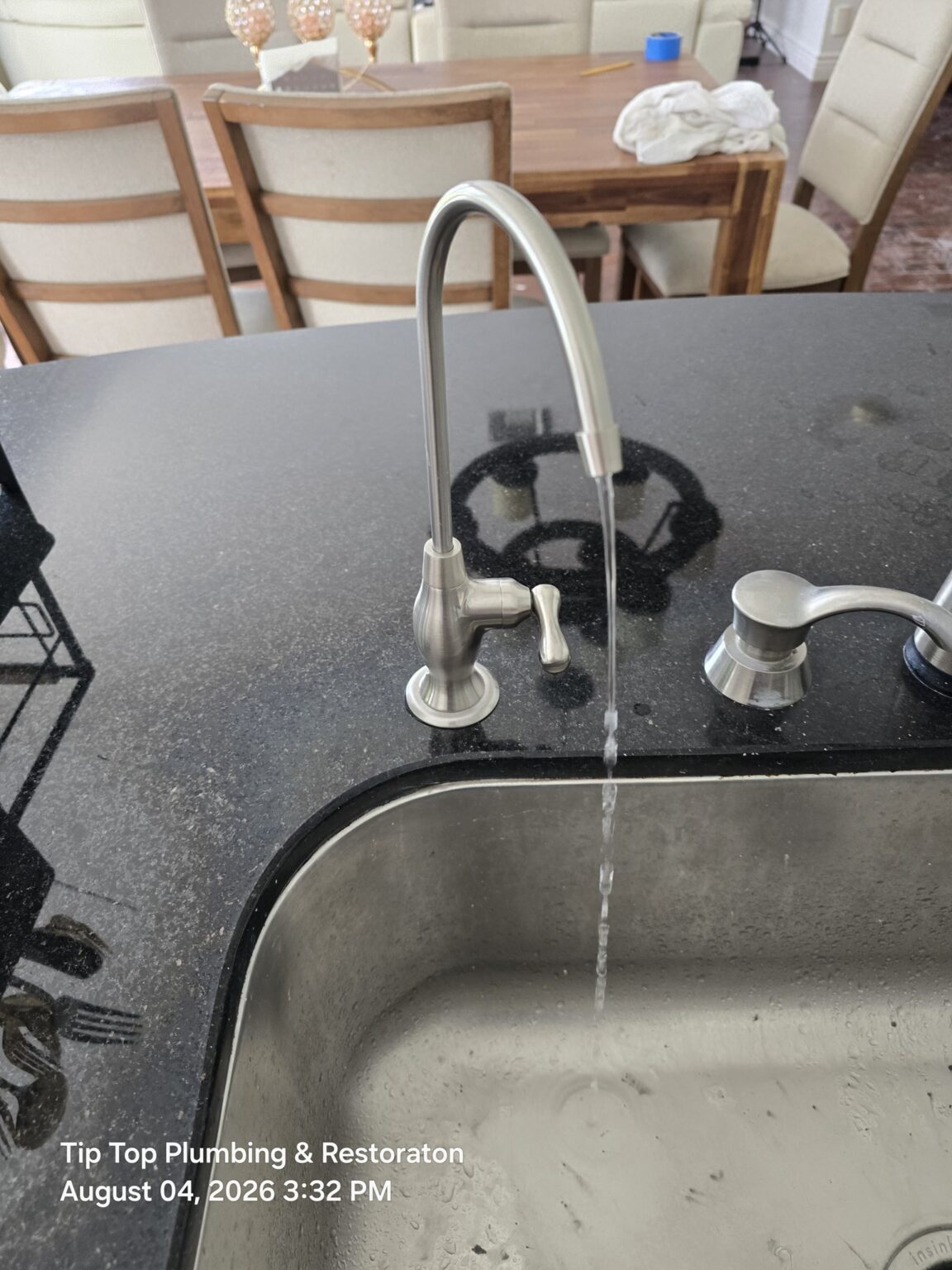
Make space for a drinking-water system that can be installed, accessed and maintained properly. Tip Top Plumbing & Restoration provides residential reverse osmosis installation, filter and membrane replacement, and routine maintenance in our Broward County service area.
“Jose gave all the information details on the project. Was professional and friendly.”Wagner Dona · Google customer review · August 31, 2026
Check cabinet dimensions, usable access, the cold-water supply route and a suitable drain connection. Where the design uses a storage tank, leave room for the tank and future servicing. Tankless and electrically powered designs have different space, pressure and power requirements.
A dedicated faucet may require an existing suitable opening or an approved new opening in the sink or countertop. Discuss the material and any restrictions before work is planned. Drain connections must follow the equipment instructions and applicable plumbing requirements; an improvised hose arrangement is not an installation plan.
Tell us whether you are replacing an existing RO unit or adding one for the first time. Identify garbage-disposal equipment, pull-out storage, other under-sink devices and anything that could interfere with safe access. Also explain whether the supply comes from a utility or private system.
Confirm what equipment, faucet, replacement stages and connection work are included in the proposed scope. Review how to isolate the system, what initial flushing is required and where to keep the maintenance information. Some units produce reject water; compare documented efficiency for the exact model rather than assuming all RO units behave alike.
A manufacturer service interval, reduced delivery, unusually slow tank refill or a change in the usual taste can prompt a check. These symptoms do not identify a particular contaminant or prove membrane failure. Supply pressure, a closed valve, a loaded prefilter or a tank-related condition may also affect delivery.
If you see a leak, safely stop the water supply to the affected equipment if you know how and arrange service. Do not continue using a visibly leaking connection while waiting for a scheduled filter change. Describe where the water appears and which stage was last serviced.
Follow the instructions for the installed system. Filter and membrane intervals can differ and depend on usage and supply conditions. Keep the model, approved part numbers and dates for each stage; a single “last serviced” date can obscure which components were actually replaced.
Routine work may include changing the specified parts, cleaning or sanitizing where directed, flushing and checking accessible connections. Membrane replacement may have its own start-up steps. Ask what water to discard before use and how to recognize the next scheduled maintenance point.
An under-sink RO system usually supplies a single drinking-water faucet. Whole-house filtration serves the outlets connected downstream of the point-of-entry equipment. A softener addresses hardness. These systems can have different purposes and maintenance needs; one should not be described as a universal replacement for the others.
Choose a defined goal and review the product documentation for it. Any claimed contaminant reduction must be supported for that exact system and its operating conditions. We do not promise specific purity, health benefits or universal removal.
We focus on the complete plumbing connection, practical cabinet access and a maintenance plan you can follow. Discuss the installation and replacement scope with Tip Top before purchasing equipment or assuming existing parts will fit.
We serve Cooper City, Davie, Hollywood, Miramar, Pembroke Pines, Plantation, Southwest Ranches, Sunrise and Weston. Confirm coverage and availability for your address when arranging service. Tell us the equipment model, the work requested and any immediate leak or access concern.
Review the proposed equipment and work with us before installation. Keep the manufacturer’s instructions and a record of parts and maintenance dates for future visits.
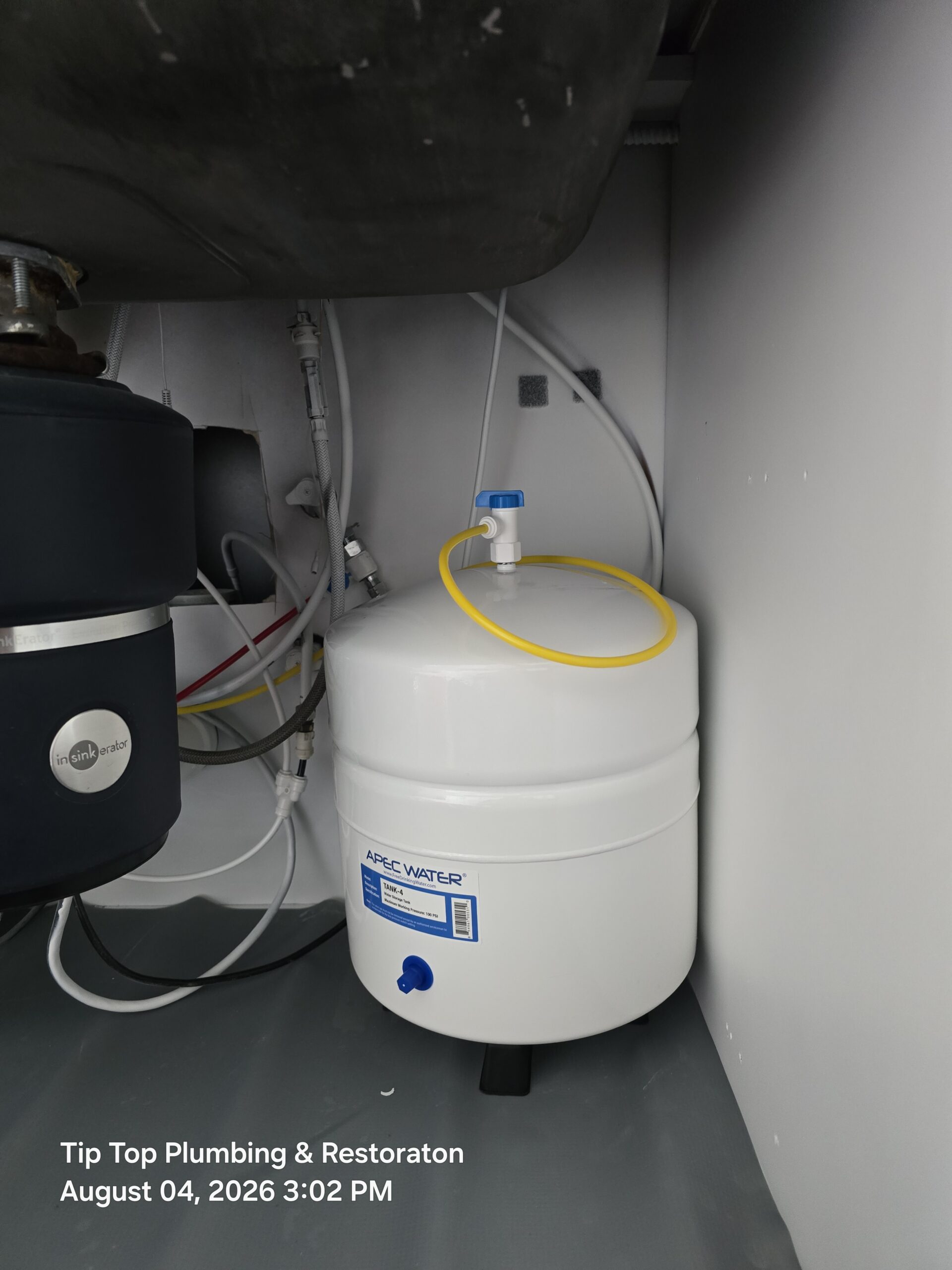
RO uses water pressure to move water through a membrane. The system produces treated water and a separate reject-water stream. Its actual performance depends on the model, operating conditions and maintenance; “reverse osmosis” is not a promise of completely pure water or a particular health outcome.
Many residential systems sit under the kitchen sink and supply one drinking-water outlet. This point-of-use approach differs from treating the home’s incoming supply. Consider the amount of drinking water you need and the practical installation space before choosing a system.
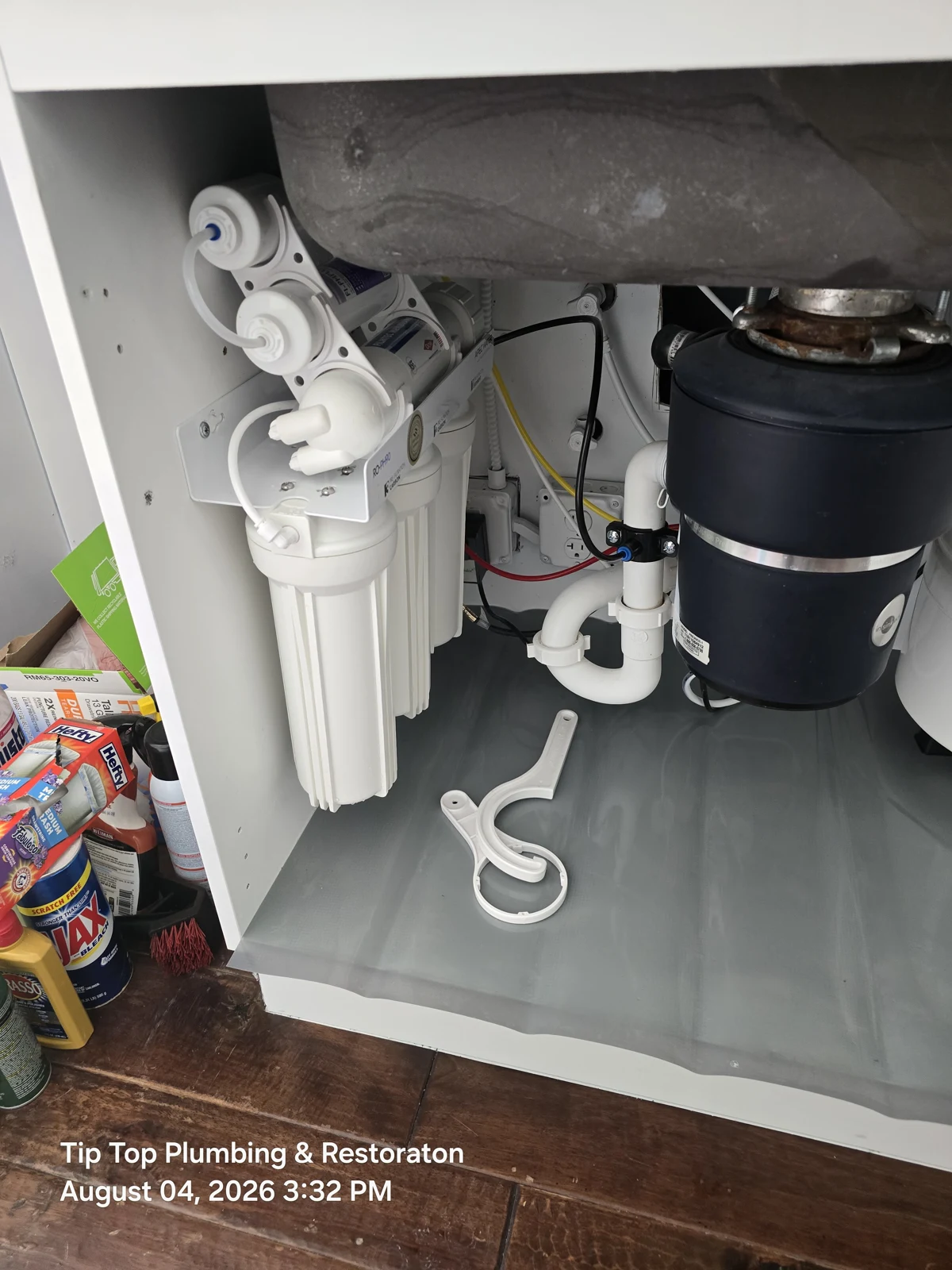
A system may combine sediment or carbon prefilters, an RO membrane and a finishing postfilter. These stages are not interchangeable, and replacing one does not automatically renew the others. Use the exact model and approved part information rather than selecting a cartridge by appearance alone.
Bring the system label and any existing service record to the discussion. Tip Top’s scope includes filter and membrane replacement and routine maintenance of compatible residential equipment. Additional faults or specialized repairs require a separate scope review.
Yes. Our RO services include residential RO installation, filter replacement, membrane replacement and routine maintenance. We first need the equipment model, site access and the work requested.
The residential under-sink setup described here normally serves a dedicated drinking-water outlet. Whole-house treatment is a different installation discussion.
Not necessarily. The supply, filters, valves, tank arrangement and other conditions can affect flow. Explain whether the change was sudden, whether it occurs after heavy use and when each stage was serviced.
Only if it is approved and compatible with the installed system. Matching dimensions alone does not establish compatibility or preserve the system’s documented performance.
RO separates a reject stream from treated water. The amount varies by system and operating conditions. Check the model’s documented efficiency and any independently verified performance claims.
No general guarantee is appropriate. Verify the exact product’s certification and performance documentation for your concern, and keep the system operated and maintained within those conditions.
For further reading: EPA guide to point-of-use RO systems ↗. Product selection and maintenance must follow the specific equipment documentation.
If the kitchen faucet itself is leaking or needs replacement, our Faucet Services page explains that separate service. A whole-house pressure or supply concern may need plumbing investigation rather than an RO component change.
For reverse osmosis systems, explain your system, the service you need and your property’s location. Call Tip Top Plumbing & Restoration.