Whole-House Repiping. Plan Your Whole-House Repipe.
Whole-house repiping replaces aging water supply lines throughout a home. If leaks keep returning, Tip Top helps you compare targeted repairs with a wider replacement plan. We carefully plan access, materials and connections to limit unnecessary disruption.
“Jose gave all the information details on the project. Was professional and friendly.”
Wagner Dona · Google customer review · August 31, 2026
Plumbing & restorationEveryday repairs, specialized piping projects and in-house drying equipment. Read more customer feedback ↗
01 / Planning your project
When should you consider whole-house repiping?
Recurring leaks in different parts of the home deserve a wider look. The repair history and accessible piping can help distinguish one failed connection from a broader water-distribution problem.
One isolated leak does not automatically justify replacing every line. Bring details of previous repairs so the recommendation reflects your home.
02 / Planning your project
What does whole-house repiping include?
A repipe concerns the water lines supplying fixtures. It is different from replacing drain or sewer piping. The proposal should identify the hot and cold lines, fixture supplies and connections included.
Compare the proposed material, routing and any fixture changes. A defined scope makes it easier to understand what the project will accomplish.
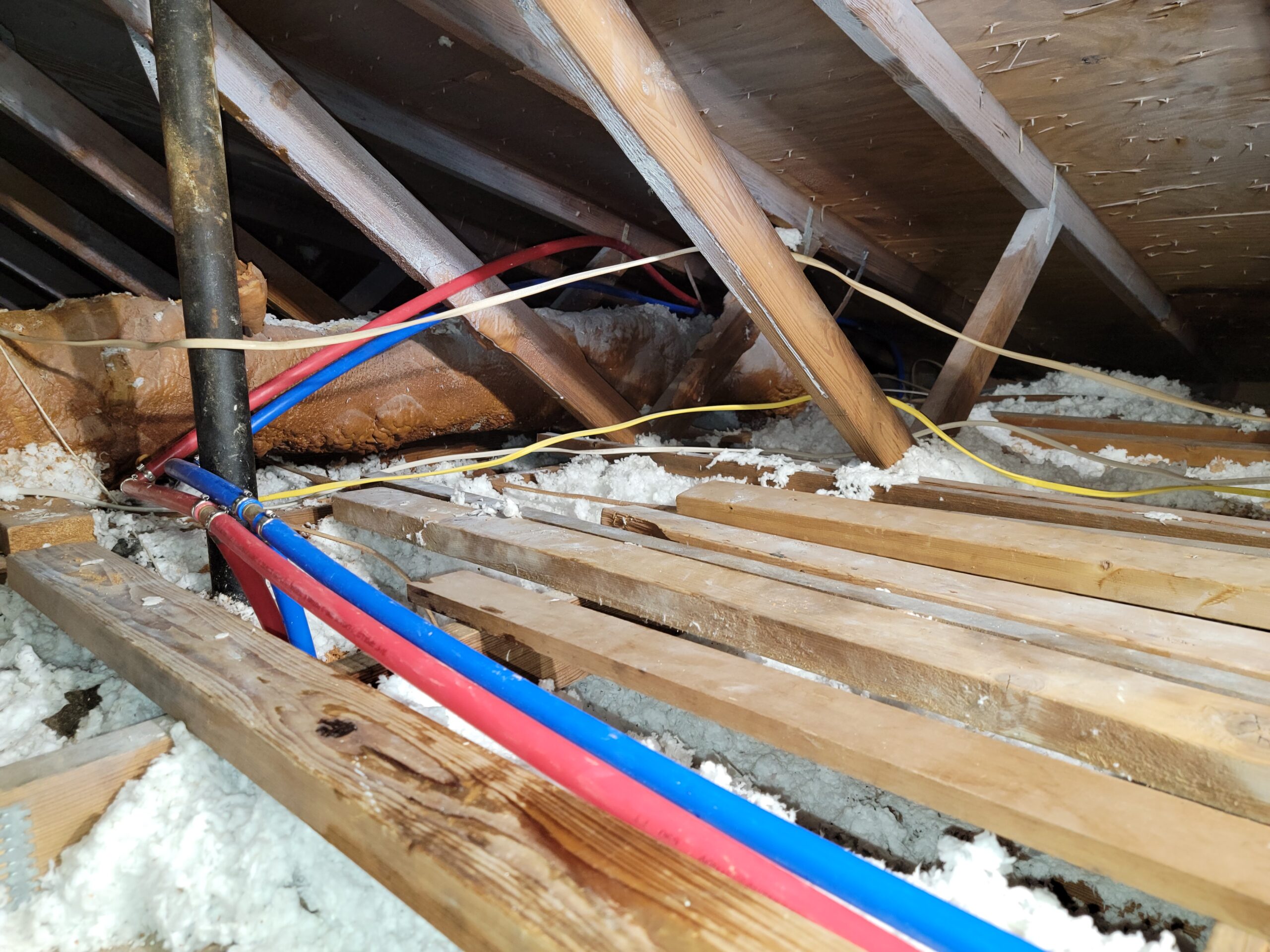
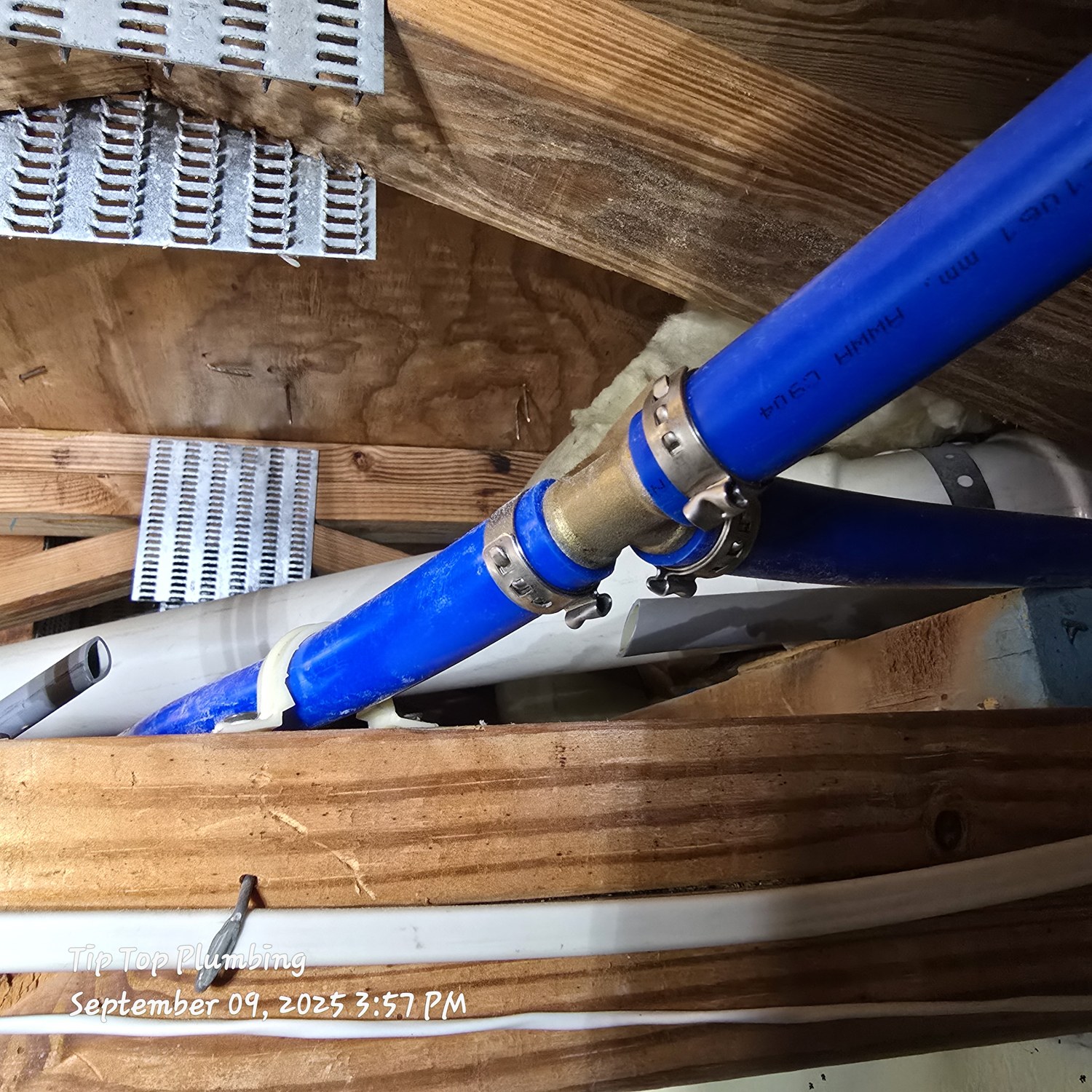
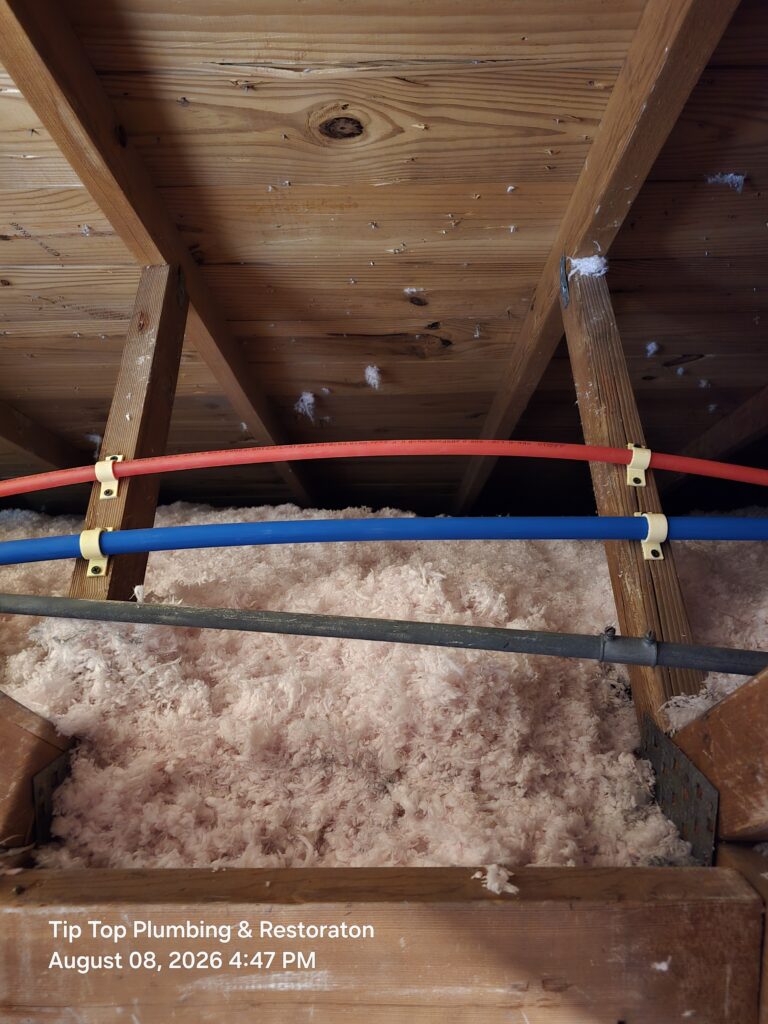
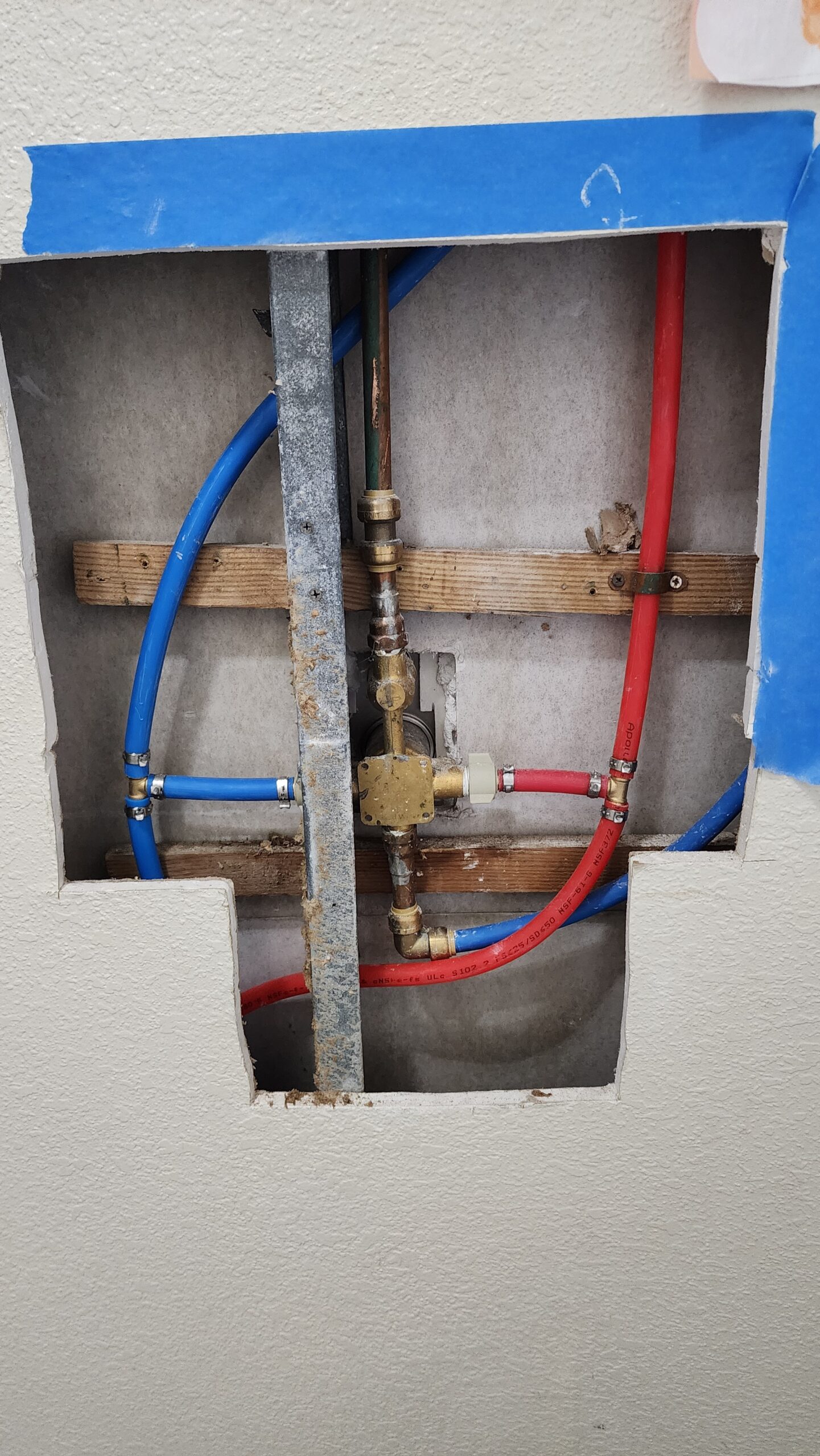
See the piping behind the finish.Actual Tip Top project photography shows the water lines and access involved. The route and opening sizes for your home will depend on its layout.
03 / Planning your project
Living at home during the work
Ask about planned water interruptions, fixture access and how work areas will be separated from occupied rooms. Discuss pets, furniture and any association access rules before scheduling.
Confirm who handles opening and restoring walls or ceilings. Finish restoration should be stated clearly in the proposal.
04 / Planning your project
When leak damage needs separate attention
A new water line addresses the plumbing source; it does not establish that wet building materials have dried. If moisture has spread, discuss a separate assessment of affected areas.
Tip Top has in-house drying equipment. Leak detection, piping replacement and structural dry-out can be coordinated while keeping each service scope clear.
What happens when you book
Your whole-house repiping process.
01
Assess the existing lines.
First, review the leak history, affected fixtures and accessible piping. If the source remains uncertain, discuss investigation before choosing the replacement scope.
02
Agree on access and materials.
Next, compare the proposed routes, connections and materials. Also discuss water interruptions and who will restore the finishes, so you can plan around the work.
03
Install and review the work.
Finally, complete the agreed piping work and review the checks included in the scope. Discuss applicable permit and inspection requirements as part of the plan.
Actual Tip Top workmanship
Water lines behind the finished surfaces.
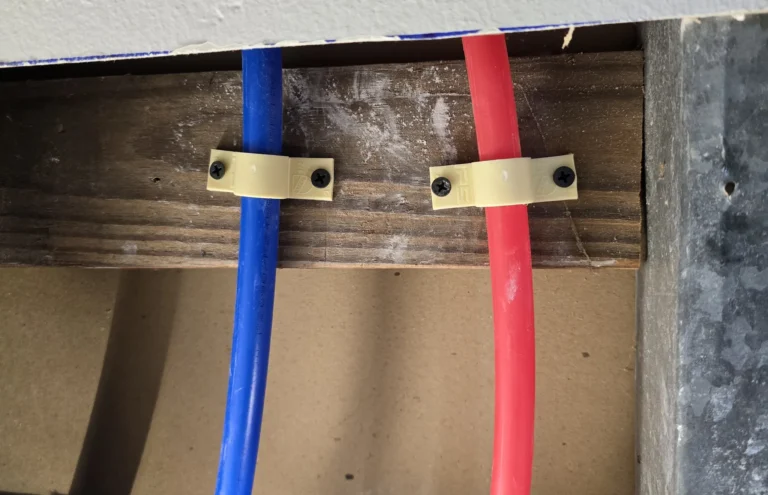
Red and blue PEX supply lines run through the attic framing in this Tip Top project photograph. Planning a repipe includes discussing the proposed routes, access and connections for your home.
These photographs document actual work. The installation plan for another property should reflect its own piping, layout and applicable requirements.
PEX is flexible, resists the pinhole corrosion that affects many copper systems, and can be routed with fewer openings. Copper is durable and familiar, and some owners prefer it. We explain the pros and cons of each for your home and water, and what the choice means for cost and access.
Polybutylene replacement
Gray pipes with a history.
Polybutylene is a gray plastic supply pipe installed in many South Florida homes in the 1980s and 1990s. It is known for failing without warning, and some insurers ask about it. Replacing polybutylene with PEX or copper is one of the most common reasons for a whole-house repipe in Broward County.
Signs it is time
When repiping beats another repair.
Pinhole leaks that keep appearing in different places.
Polybutylene or galvanized supply lines.
Low water pressure throughout the house.
Rusty or discolored water.
A remodel that already opens walls and ceilings.
Corrosion in Broward County
Why copper fails here.
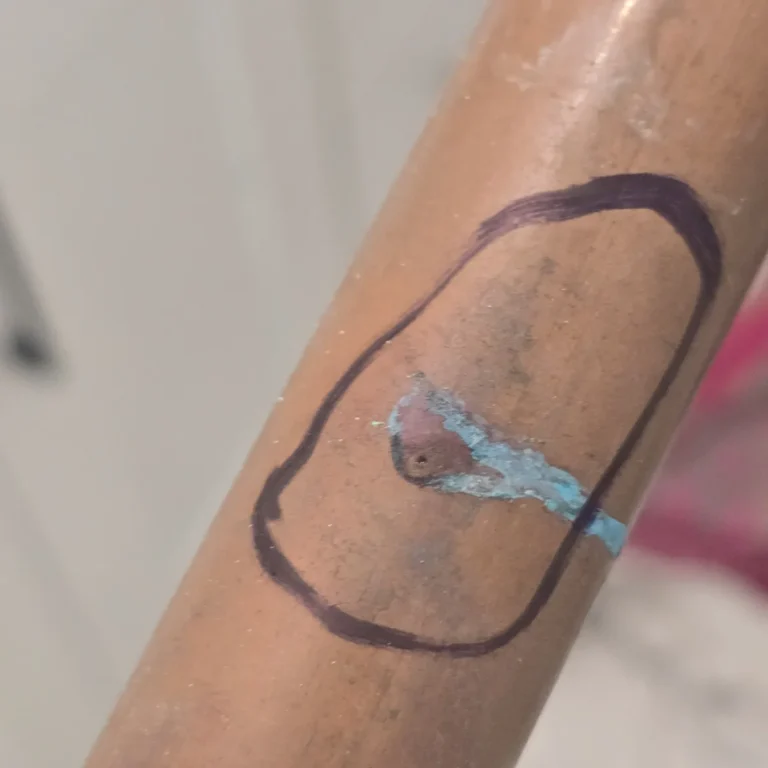
Many Broward County homes have copper supply lines that develop pinhole leaks over time. One leak can be repaired, but a pattern of leaks usually means the pipe walls are thinning throughout the system. A repipe replaces the supply lines at once instead of chasing leaks one at a time.
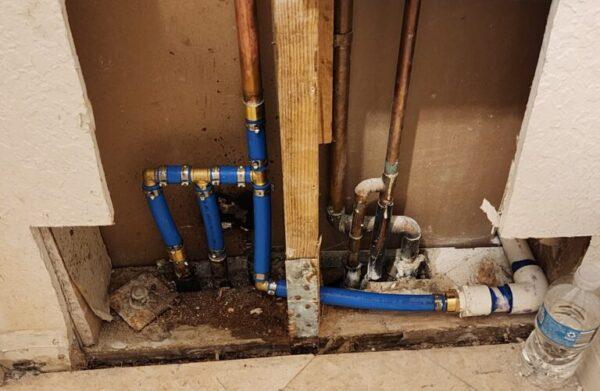
Repiping work with new water supply lines installed by Tip Top PlumbingBlue and red PEX supply lines secured in an opened wallPinhole leak circled on a section of copper water pipe
Useful answers
Whole-house repiping:
your questions answered.
Does a leak mean I need whole-house repiping?
No. An isolated problem may suit a targeted repair. Recurrence, pipe condition and the wider system should guide the discussion.
Will the project include drywall or other finish work?
Do not assume it does. Confirm access openings, protection and restoration responsibilities in the proposal.
Can you assess a hidden leak first?
Discuss leak detection if the source is uncertain. The appropriate investigation depends on access and the suspected problem.
Will I lose water during repiping?
Water interruptions may be needed to isolate and connect lines. Before work begins, discuss timing and fixture access so you can plan daily use.
How do I choose a piping material?
The choice depends on the existing system, routing and project requirements. Compare the proposed material and connections in the written scope rather than assuming every home needs the same setup.
Which areas do you serve?
Tip Top serves the nine priority Broward cities listed below and surrounding communities. Contact the team to confirm the property and scope.
How long does a whole-house repipe take?
It depends on the size of the home, the number of fixtures, access and the material. We give you an estimated schedule and explain when water will be off before work starts.
Do I need to replace polybutylene pipes?
Polybutylene is known for failing without warning, and some insurers ask about it. If your home still has it, replacing it is worth discussing even if it has not leaked yet.
Is Tip Top Plumbing & Restoration licensed?
Yes. Tip Top operates under Florida Certified Plumbing Contractor license CFC1430726, which you can verify with the Florida Department of Business and Professional Regulation.
Serving Cooper City, Davie, Hollywood, Miramar, Pembroke Pines, Plantation, Southwest Ranches, Sunrise and Weston, and surrounding Broward County communities.
Let’s talk about the work
Plan Your Whole-House Repipe.
Tired of recurring water-line leaks? Talk with Tip Top about whole-house repiping, the lines included and a practical installation plan for your Broward County home. Free whole-house repipe estimates.