

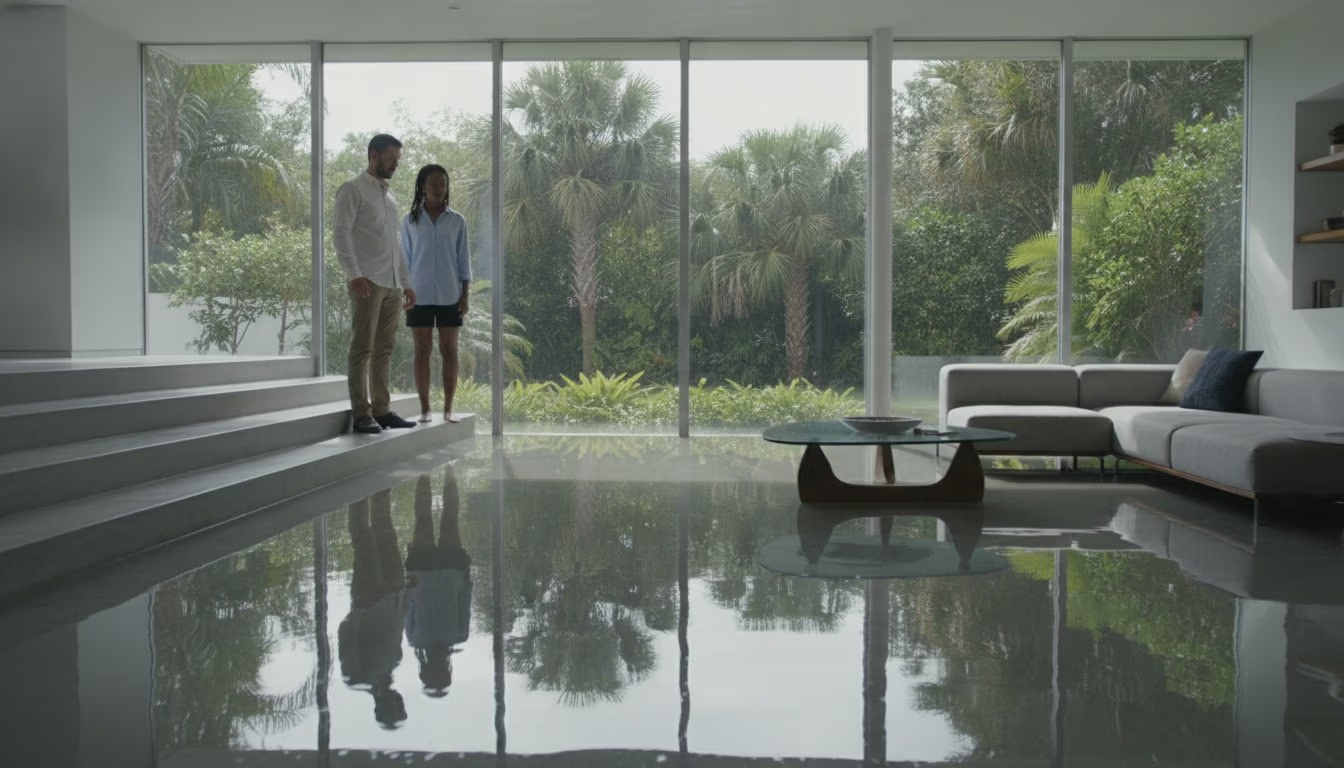
Just one inch of standing water in your home can result in up to $25,000 in structural and property damage. When you walk downstairs and feel that cold soak on your socks, your heart sinks because you know the clock is already ticking. Knowing exactly what to do when your basement is flooding is the difference between a manageable cleanup and a total property loss. In Florida’s relentless humidity, you aren’t just fighting the water. You’re racing against aggressive mold growth that can take hold in less than 24 hours.
It’s completely normal to feel overwhelmed by the threat of electrical hazards or the potential for permanent foundation issues. We understand that your home is your most significant investment, and seeing it under siege is a high-stakes crisis that requires a steady hand. This guide provides an immediate triage plan to stop the flow and protect your home’s structural integrity. You’ll learn how to secure the area safely, the technical steps required for a professional dry-out, and how to document the scene to satisfy your insurance provider’s strict requirements for a successful claim.
Key Takeaways
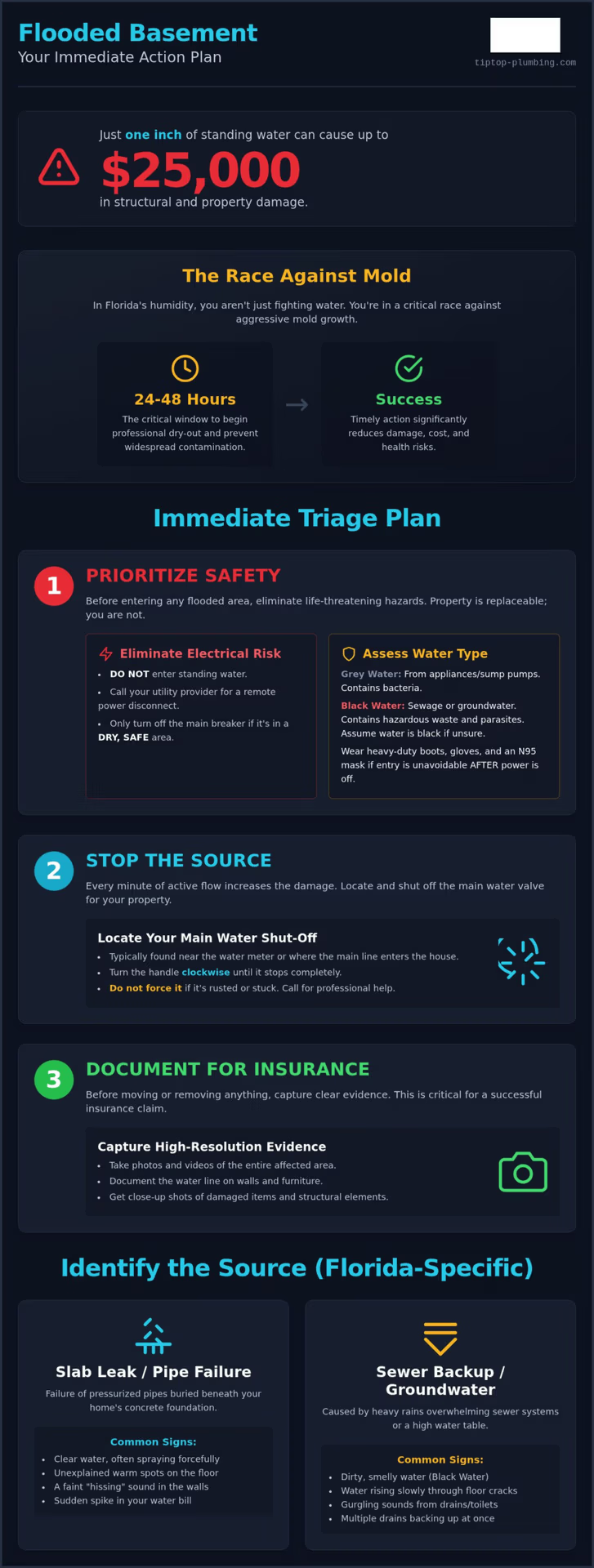
- Prioritize immediate safety by cutting electrical power and shutting off the main water valve before entering any submerged area.
- Follow a structured triage plan for what to do when your basement is flooding to stop the water source and protect your home’s foundation.
- Identify whether the intrusion is caused by a pressurized slab leak or a sewer backup to ensure the correct professional repair is implemented.
- Capture high-resolution photo documentation of all damage immediately to provide the necessary evidence for a successful insurance claim.
- Act within the critical 24-48 hour window to begin professional dry-out services and prevent Florida’s humidity from triggering rapid mold growth.
Priority One: Immediate Safety and Triage Steps
Safety is the non-negotiable first step when you discover standing water in your home. If you are wondering what to do when your basement is flooding, the answer is never to wade into the water immediately. Standing water often conceals hidden dangers that can be life-threatening if approached without a plan. You must prioritize your physical safety before attempting to save property or stop the flow of water.
Eliminating Electrical Hazards
Water and electricity are a lethal combination. Submerged outlets, extension cords, and appliances create a “kill zone” where the water itself becomes energized. This creates the risk of stray voltage, which can cause severe shock or electrocution even if you aren’t touching a specific device. If your main electrical panel is located in the basement or a flooded garage, do not attempt to reach it. Instead, contact your utility provider to request a remote power disconnect for the entire property. Turn off the main breaker only if the panel is in a dry, safe location.
Once the power is secured, you must evaluate the biological risk of the water. Grey water, which typically comes from failing sump pumps or washing machine overflows, contains fewer pathogens but can still harbor bacteria. Black water is far more dangerous. This includes sewage backups or rising groundwater from Florida storms, both of which carry hazardous waste and parasites. If you must enter the area, wear heavy-duty rubber boots, waterproof gloves, and an N95 mask to prevent contact with these contaminants.
Stopping the Water at the Source
Determining the source of the intrusion is vital for your next move. If the water is clear and spraying forcefully, you likely have a pressurized pipe failure. If the water is rising slowly through floor cracks or the base of the walls, it is often caused by hydrostatic pressure from a high water table. Understanding Basement waterproofing methods can help you identify these structural vulnerabilities, but your immediate goal is to stop the intake.
To stop a plumbing-related flood, locate your main water shut-off valve, which is typically found near the water meter or where the main line enters the house. Turn the handle clockwise until it stops completely. If the valve is already submerged or is too rusted to move, do not force it to the point of breaking. In these cases, you will need professional assistance to shut off the water at the street level. Knowing what to do when your basement is flooding starts with these mechanical interventions, as every minute of active flow increases the eventual restoration cost.
Identifying the Source: Why Florida Homes Flood
Florida’s geography presents unique challenges for property owners. Unlike homes in northern states that feature deep, traditional basements, South Florida construction often relies on slab-on-grade foundations or shallow crawlspaces. When you are deciding what to do when your basement is flooding, you must first distinguish between a localized plumbing failure and an environmental intrusion. Identifying the source quickly determines whether you need a plumber to stop a pipe burst or a restoration team to manage rising groundwater.
Slab Leaks and Foundation Intrusion
In Broward County communities like Weston and Miramar, slab leak repair is one of the most common interventions we perform. These leaks occur when pressurized copper or PEX pipes buried beneath your concrete foundation fail. Because the water is under constant pressure, it can quickly saturate the soil and force its way up through the slab, mimicking a basement flood. You might notice warm spots on your tile flooring, dampness along the baseboards, or a localized “hissing” sound. We utilize acoustic leak detection technology to pinpoint these hidden failures, allowing for precise repairs that minimize damage to your flooring.
Sewer and Drain Failures
Heavy seasonal rains in Davie and Plantation frequently overwhelm local municipal sewer systems. When the main lines reach capacity, the excess volume can push waste back into residential lateral lines, causing a backflow emergency. This is not just a plumbing issue; it is a significant health hazard. According to the CDC Flood Reentry Safety Guidelines, any water contaminated with sewage requires specialized personal protective equipment and rigorous sanitation protocols. To resolve these blockages, we perform high-definition sewer camera inspections to verify the exact location of the obstruction and determine if hydro jetting or repiping is necessary.
Florida’s high water table also plays a role through hydrostatic pressure. During tropical storms, the ground becomes so saturated that the water table rises above your floor level, forcing moisture through microscopic cracks in the foundation. This environmental flooding requires a different approach than a burst pipe, as the water will continue to enter as long as the ground remains saturated. If you aren’t sure where the water is coming from, you can request a professional leak detection to find the source before the humidity triggers a mold outbreak.
Emergency Mitigation: Minimizing Damage While Help Arrives
Mitigation is the legal requirement of the homeowner to prevent further damage. Once you have addressed the immediate safety concerns and stopped the water source, your focus must shift to preservation. When you are deciding what to do when your basement is flooding, the actions you take in the first few hours can save thousands of dollars in structural repairs. Don’t wait for an insurance adjuster to arrive before you begin moving salvageable items and documenting the scene.
Start by triaging your valuables. Move porous materials like area rugs, cardboard boxes, and upholstered furniture out of the standing water immediately. These items act as a wick, pulling moisture upward into the fibers and creating a breeding ground for bacteria. In the heavy South Florida humidity, opening windows provides only a temporary fix and can sometimes introduce more moisture into the environment. You need a controlled environment to stop the clock on property loss.
Documenting for Insurance Success
Your smartphone is your most valuable tool during the documentation phase. Capture high-resolution photos and videos of the entire area, specifically focusing on the water line visible on your drywall or baseboards. This line serves as a record of the flood’s maximum depth for your insurance claim. We recommend keeping small samples of damaged materials, such as a square of carpet or a piece of padding, to show the adjuster the quality of the original materials. Calling Tip Top Plumbing & Restoration for a professional assessment before the adjuster arrives ensures you have a technical moisture map to support your case.
The Danger of DIY Drying
It is a common mistake to assume that a few household fans will solve the problem. In reality, standard fans often lack the static pressure to pull moisture from deep within structural materials. They can also inadvertently spread mold spores throughout your home before the area is properly sanitized. According to IICRC restoration standards, professional dry-out requires industrial-grade dehumidification to lower the grains per pound of moisture in the air. This prevents secondary damage such as warped hardwood flooring, peeling paint, and structural rot in the wall studs. Even if the drywall feels dry to the touch, hidden moisture trapped behind the walls can lead to catastrophic mold growth within 48 hours. For property owners facing other types of complex restoration challenges, such as recovering from a house fire, you can check out DryFast Restoration to see how specialized teams handle professional structural recovery.
The Restoration Timeline: Why the First 24 Hours Matter
In Florida, the environment works against you from the second water touches your floors. While homeowners in drier climates might have a week to dry out a space, Broward County’s humidity accelerates biological growth at an alarming rate. If you are researching what to do when your basement is flooding, understand that the first 24 to 48 hours are the “golden window” for water damage restoration. Beyond this timeframe, the likelihood of permanent structural damage and widespread mold colonization increases exponentially. Mold remediation is the process of safely removing colonized fungi and treating surfaces to prevent regrowth.
Professional Dry-Out Services
Effective restoration isn’t just about removing standing water; it’s about managing the science of psychrometrics. This field of study focuses on the thermodynamic properties of moist air and how to manipulate humidity, temperature, and airflow to pull water out of porous materials. Performing a water damage dry out in Weston requires specialized local knowledge because our ambient humidity is often higher than the “dry standard” required for a safe home. We use industrial-grade LGR (Low Grain Refrigerant) dehumidifiers and high-velocity air movers to create a “vortex” of dry air that forces moisture out of the structure.
Professional teams also utilize moisture mapping to find hidden threats. We employ infrared cameras and penetrating moisture meters to see water trapped inside wall cavities or under subflooring that looks dry to the naked eye. We record daily readings to monitor progress, ensuring every material reaches its specific drying goal before we remove our equipment. This meticulous monitoring prevents the “rebound” effect where moisture deep inside a stud migrates back to the surface after the fans are gone.
Post-Flood Mold Testing
Once the structure is dry, mold testing becomes the final, non-negotiable step. In South Florida, we frequently encounter “Orange Mold” (Fuligo septica) and other rapid-colonizing varieties that thrive in damp, enclosed spaces. These fungi can trigger respiratory issues and allergic reactions in families and pets if left unaddressed. Professional testing provides documented proof that your indoor air quality is safe and that the restoration process was successful. This verification is crucial for your peace of mind and for maintaining the future resale value of your property. We don’t consider the job done until the air is as clean as the surfaces.
Professional Recovery: Integrated Plumbing and Restoration
Most homeowners make the mistake of treating a flood as two separate problems: a plumbing issue and a cleanup task. This fragmented approach often leads to communication gaps, delayed dry-out times, and higher overall costs. When you are determining what to do when your basement is flooding, the most efficient solution is to hire a single provider that manages both the mechanical repair and the structural restoration. An integrated team ensures that the drying equipment starts running the moment the pipe is sealed, preventing the transition from a wet house to a moldy one.
We utilize a specialized “Stop, Save, Secure” triage approach designed specifically for the South Florida climate. First, our plumbers perform the technical repair to stop the active intrusion. Second, our restoration technicians deploy industrial equipment to save the home’s structural integrity. Finally, we secure the long-term health of your environment through professional mold testing and sanitation. This seamless handoff between trades eliminates the friction of managing multiple contractors during a high-stress crisis. We also act as your professional partner during the insurance process, providing the moisture maps and technical documentation required to justify your claim.
The Tip Top Advantage in Broward County
Our deep roots in the community provide us with specialized knowledge of local plumbing codes and construction styles in Weston, Miramar, and Plantation. We understand how the high water table in these areas affects foundation drainage and slab integrity. Our 24/7 commitment to emergency response means we are always ready to deploy, regardless of the hour. We have successfully managed hundreds of flood recoveries across Broward County, ranging from pressurized slab leaks to catastrophic storm surges. This local expertise allows us to anticipate challenges that national franchises often overlook, such as the specific way Florida humidity interacts with saturated drywall.
Next Steps: Securing Your Home
Once the immediate emergency is resolved, your focus should shift toward long-term prevention. Regular maintenance of your home’s drainage systems is your best defense against a repeat incident. This includes routine sump pump testing and professional drain cleaning to ensure your lateral lines can handle the volume of a South Florida downpour. We also emphasize the importance of preventative leak detection for older homes. Identifying a pinhole leak in a copper pipe today can prevent a total basement flood tomorrow. If you are currently facing an active intrusion, you can book emergency services in Pembroke Pines or Davie to stabilize your property immediately.
Protecting Your Home’s Future After a Flood
Acting quickly is the only way to minimize property loss and health risks in South Florida’s unique environment. By prioritizing electrical safety, stopping the water source, and meticulously documenting the damage, you fulfill your legal obligation to mitigate loss while preparing for a successful insurance claim. Remember that the 24 to 48 hour window is critical. Missing this timeframe often leads to irreversible structural damage and aggressive mold colonization.
Knowing exactly what to do when your basement is flooding gives you the power to stay calm and decisive in a crisis. Our team specializes in a comprehensive triage approach that addresses both the plumbing failure and the resulting water damage simultaneously. As certified water damage and mold experts, we provide a stabilizing force for homeowners in Weston, Miramar, and Davie.
We provide 24/7 emergency response across Broward County to ensure your home is restored quickly and professionally. You don’t have to face this disaster alone; let a local authority guide you back to a safe, dry, and healthy home.
Frequently Asked Questions
Is a flooded basement considered an emergency?
Yes, any amount of standing water in a South Florida home is a critical emergency. The high humidity in cities like Miramar and Weston accelerates structural rot and mold growth within hours. If you are unsure of what to do when your basement is flooding, the priority is to call for professional water remediation immediately. Delaying even a few hours can turn a simple dry out into an expensive structural repair job.
Can I stay in my house if the basement is flooded?
It depends on the source of the water and the location of your electrical panel. If the water is contaminated with sewage or if there’s a risk of electrical shock from submerged outlets, you should evacuate immediately. Our team provides 24/7 emergency plumbing to stabilize the home, but we often recommend staying elsewhere until professional mold testing confirms the air quality is safe for your family and pets.
How much water does it take to cause permanent structural damage?
Just one inch of water can cause up to $25,000 in damages to a typical home. Water doesn’t just sit on the floor; it wicks up into drywall and insulation through capillary action. In the porous construction common in Plantation and Sunrise, this moisture can compromise the integrity of wall studs and flooring systems very quickly. Permanent structural issues often begin if the building materials remain saturated for more than 48 hours.
Does homeowners insurance cover a flooded basement in Florida?
Standard Florida homeowners insurance typically covers sudden pipe bursts or water heater failures, but it rarely covers flooding from rising groundwater or storm surges. You usually need a separate National Flood Insurance Program policy for those events. As of 2026, many Citizens policyholders are now required to carry separate flood coverage. We provide the detailed documentation and moisture mapping your adjuster will need to process a valid plumbing-related claim.
How do I know if the flood water is contaminated?
You should assume any water coming from the ground or a sewer line is contaminated. Professional plumbers categorize water into three levels: clean, grey, and black. Black water, which comes from sewage backups or storm flooding, contains dangerous pathogens and parasites. If the water has a foul odor or a dark tint, it’s a medical hazard. We use professional water damage restoration protocols to sanitize every affected surface in your home.
How long does it take to dry out a flooded basement professionally?
A professional dry out typically takes between three to five days depending on the extent of the saturation. We use industrial-grade dehumidifiers and high-velocity air movers to pull moisture from deep within the structure. Our technicians monitor the progress daily in Davie and Southwest Ranches using specialized moisture meters. We don’t remove the equipment until we verify that every material has reached the dry standard required to prevent future mold growth.
Will my basement smell like mold forever after a flood?
No, your home won’t have a permanent odor if the restoration is handled correctly. Odors are caused by active bacterial growth or mold spores trapped in porous materials. By using professional-grade antimicrobial treatments and ensuring a total dry out within the first 48 hours, we eliminate the source of the smell. If an odor persists, it’s often a sign that moisture is still trapped behind a wall or under a slab; in such cases, specialists like Subfloor Ventilation Sydney can provide professional solutions to eliminate the excess moisture and dampness that cause these issues.
The very first step is to ensure your personal safety by addressing electrical hazards. If you can reach your breaker box without stepping in water, turn off the power to the affected area. Next, shut off your main water valve to stop any potential plumbing leaks. Knowing what to do when your basement is flooding starts with these two actions, followed immediately by calling a local authority like Tip Top Plumbing & Restoration for emergency assistance.
Disclaimer
The information provided in this article is for general educational and informational purposes only and should not be considered professional plumbing, restoration, mold remediation, or legal advice. Every plumbing system, property, and situation is unique, and the recommendations discussed may not apply to your specific circumstances.
While Tip Top Plumbing & Restoration strives to provide accurate and up-to-date information, we make no warranties regarding the completeness, accuracy, or reliability of the content. Any actions you take based on this information are at your own risk.
Plumbing repairs, water damage restoration, and mold remediation should be performed by qualified professionals and in accordance with applicable local building codes and regulations. If you are experiencing a plumbing emergency, water leak, or property damage, contact a licensed professional for an on-site evaluation.
Tip Top Plumbing & Restoration is licensed and insured to provide plumbing and restoration services throughout Broward County, Florida.