01 / A practical approach
Start water damage restoration with the source
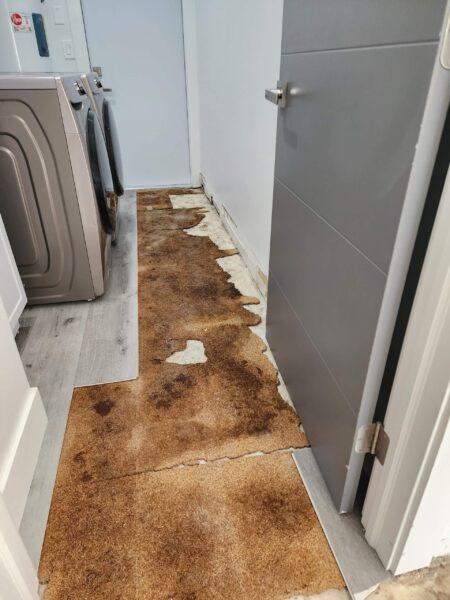
A useful plan addresses where the water came from and what materials or spaces have been affected. Plumbing repair and restoration may require related but distinct scopes.
Explain what happened, when it was noticed and which areas appear affected. The visible area alone does not establish the full extent of the problem.
02 / A practical approach
Plan moisture assessment for water damage restoration
Moisture testing and appropriate inspection help inform the discussion of affected areas and drying work. Equipment should be selected for the actual findings and project conditions.
Drying progress should be assessed against the affected materials and conditions. We discuss monitoring and the next step rather than assuming the area is dry because the surface looks better.
03 / A practical approach
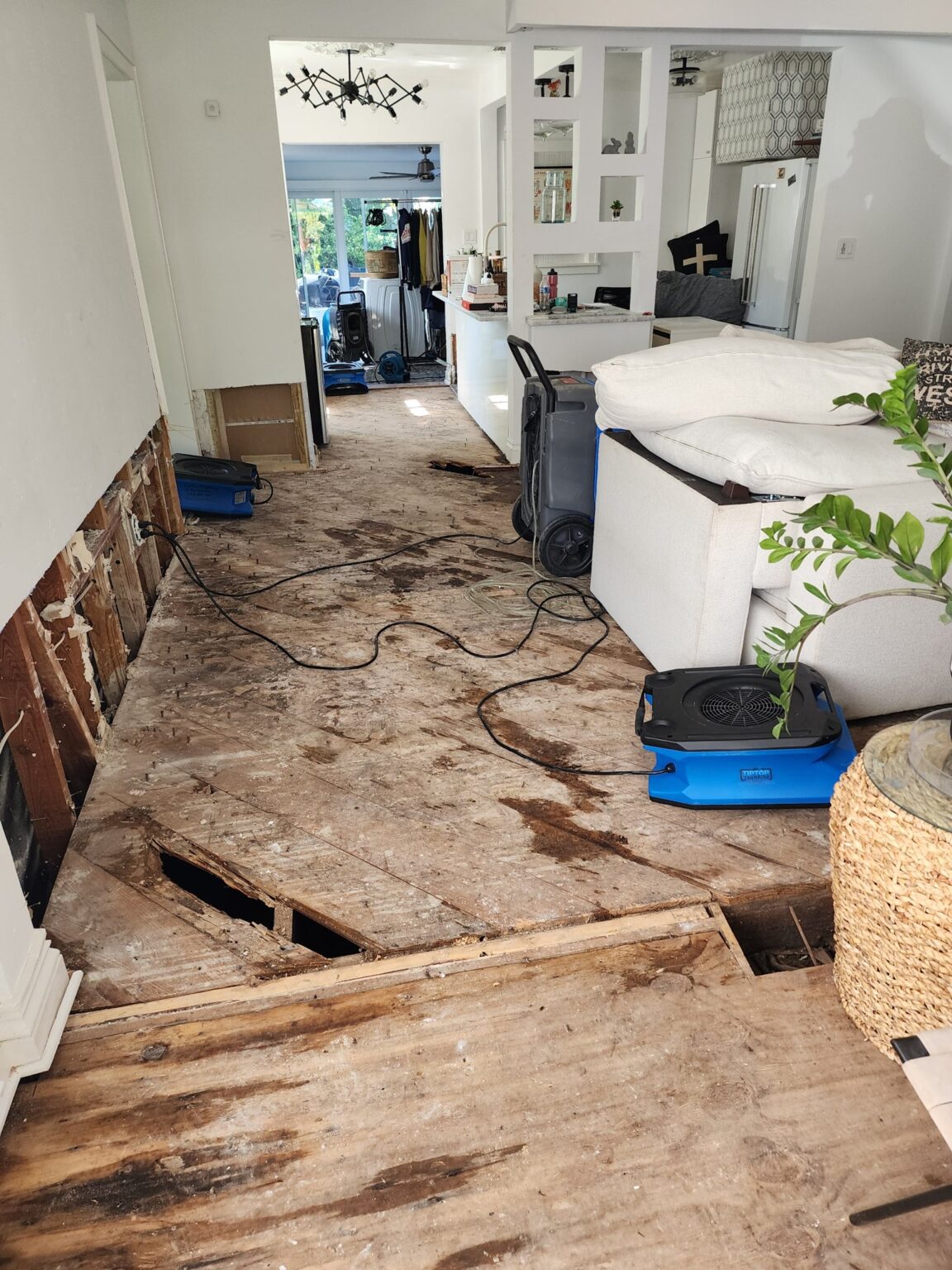
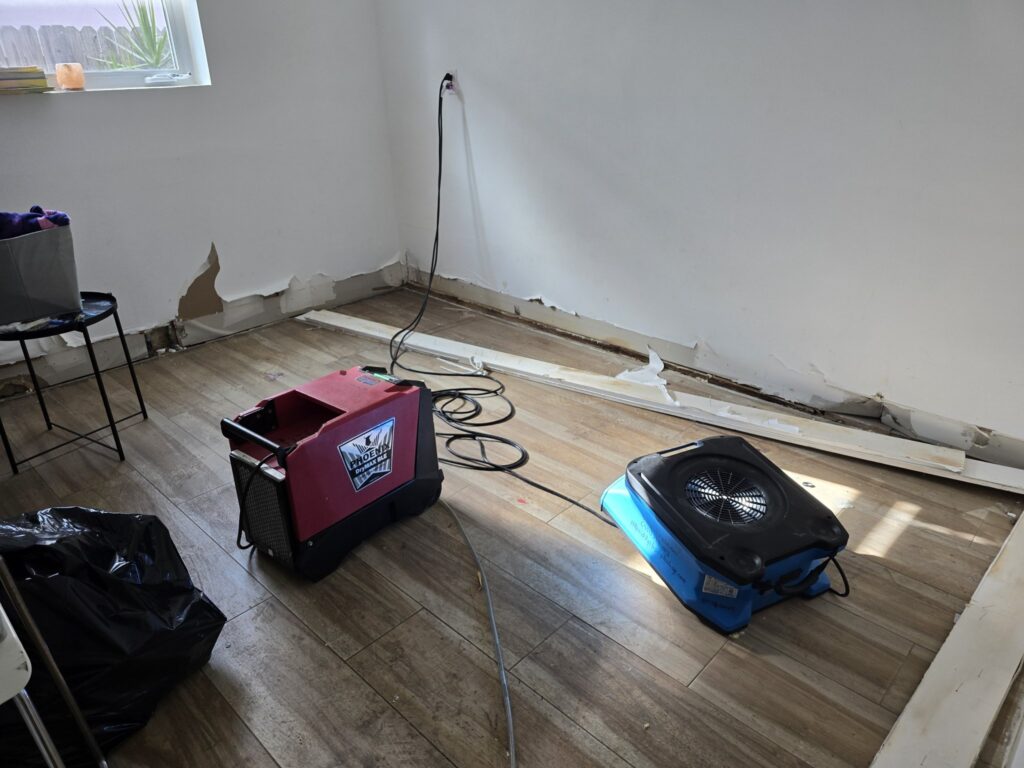
In-house structural drying equipment
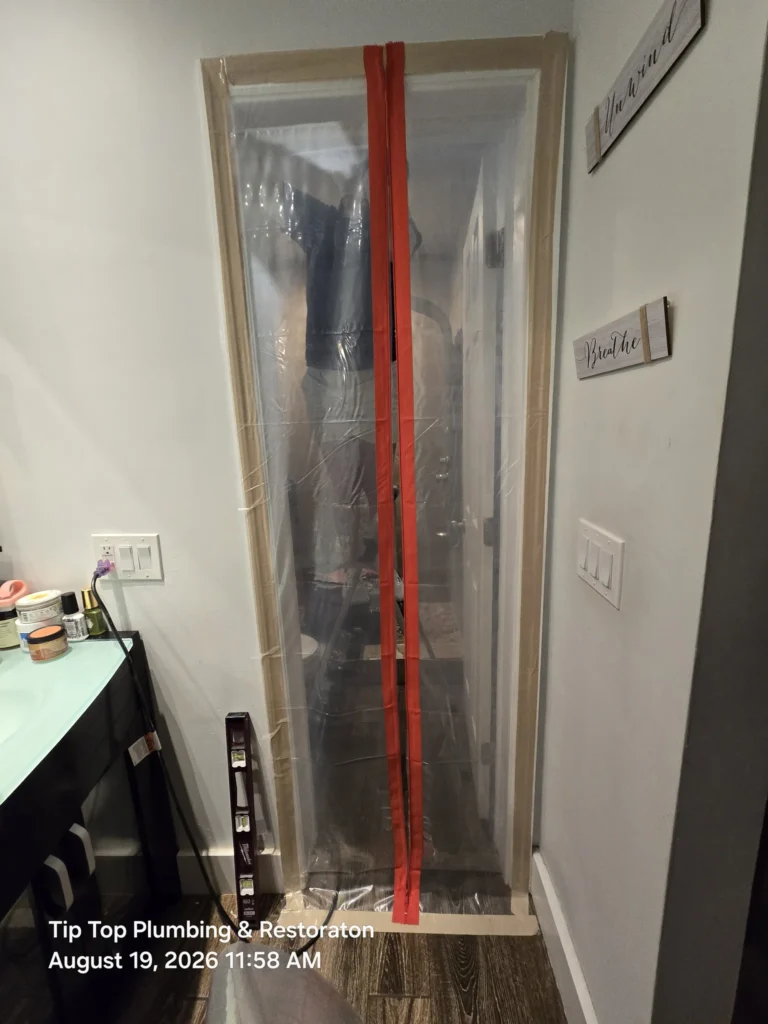
Our drying equipment supports a coordinated response to water-affected rooms and materials. The setup depends on the area, access and the moisture findings.
Discuss equipment placement, monitoring and responsibility for any material removal or finish work. These should be clear parts of the restoration scope.
04 / A practical approach
Independent mold assessment coordination
If mold testing or assessment is needed, Tip Top can coordinate with qualified independent third parties. We do not present plumbing observations as a mold diagnosis.
Tell us about visible concerns so the appropriate specialist assessment can be discussed alongside the plumbing and drying work.