

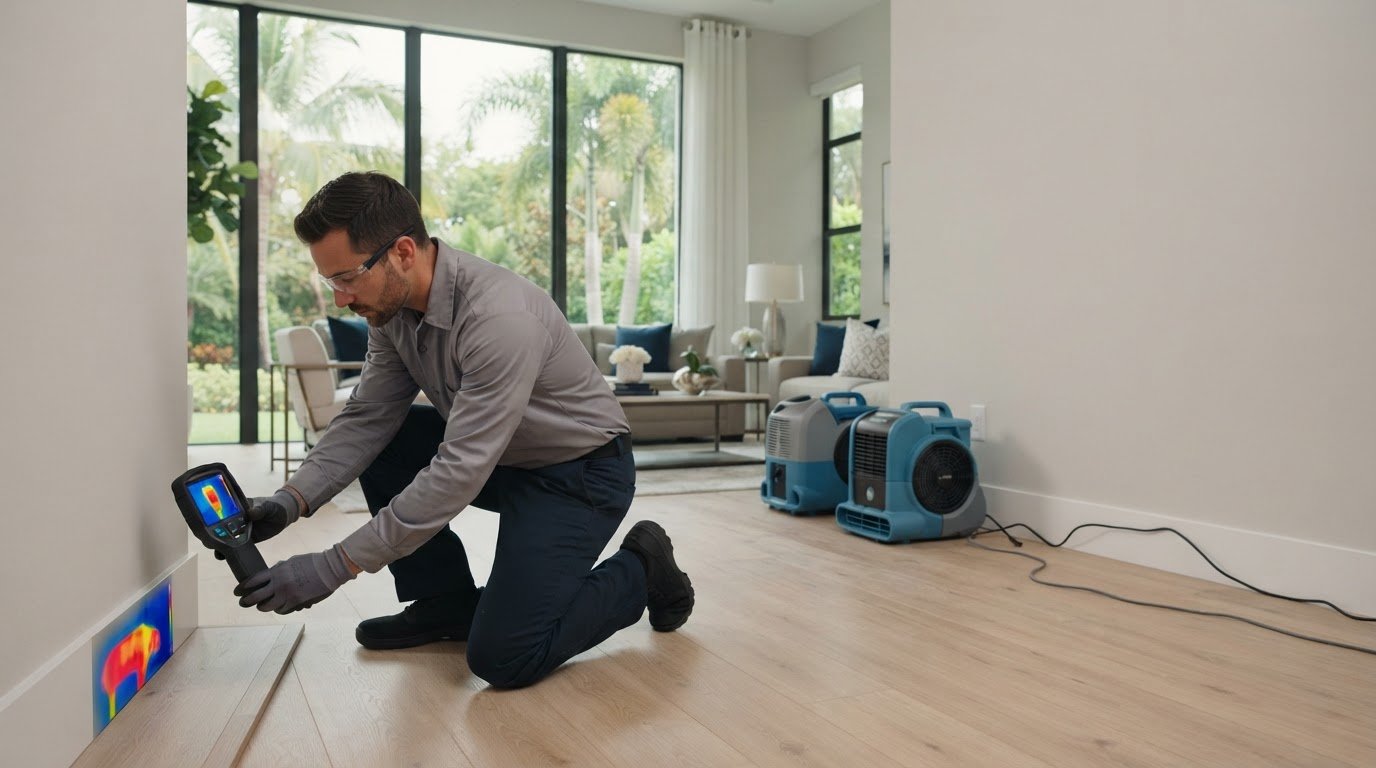
What if the visible water is gone, but moisture remains beneath the floor or inside a wall? A surface can look dry while hidden materials still need attention, which is why water damage dry out Weston FL should focus on checking affected materials, not appearances alone. Towels and fans may help with a small spill, but they can’t confirm how far water traveled or whether materials beneath the surface are dry. First, stop the source if it’s safe to do so and keep people away from hazards. Then arrange an assessment if water may have reached flooring, walls, cabinets, or other building materials.
This guide explains what professional water damage dry out can involve, what to do before help arrives, and how to arrange service in Weston. You’ll learn why an assessment matters, how drying can address affected materials beyond the visible puddle, and when mold testing may be appropriate. Tip Top Plumbing & Restoration provides water remediation, dry-out service, water damage restoration, leak detection, and professional mold testing. When requesting help, share the suspected water source, which rooms or materials are affected, whether water is still entering, and what conditions you see. Those details can help the team understand the situation and discuss next steps.
Key Takeaways
- Water damage dry out Weston FL involves more than removing puddles. An assessment can help identify moisture in walls, floors, cabinets, and other affected materials.
- Professional drying may involve inspection, source control, water extraction, drying, and reassessment. The scope depends on what was affected.
- A small, contained cleanup differs from widespread, contaminated, or hidden water damage. Consider the amount of water, materials involved, and safety hazards before deciding whether to clean up yourself.
- Before arranging service, stop the water source only if it’s safe, keep people away from hazards, and document the affected areas and when the intrusion began, if known.
- Ask how the provider will assess the damage, review drying progress, and document the work. Mold testing may be appropriate in some situations, but it isn’t automatic.
Water Damage Dry Out in Weston, FL: Why Visible Cleanup May Not Be Enough
Water damage dry out is the controlled removal of moisture from affected materials after the water source has been addressed. Mopping a puddle or extracting water from carpet is visible cleanup. It doesn’t confirm that moisture has left the layers underneath. The source, how far the water spread, and the materials involved all shape what happens next. A pipe leak in one small area may call for a different response than water that has traveled beneath flooring in several rooms.
The term Water damage covers a range of causes and impacts. The practical questions are what became wet, how far the water traveled, and whether moisture remains. Prompt assessment can clarify the affected area and help inform a suitable plan. It can’t guarantee a particular outcome, but it provides more information than surface appearance alone. For water damage dry out Weston FL, the goal is to assess affected materials rather than assume they’re dry because the visible water is gone.
What can remain wet after standing water is gone?
Water can move through seams and gaps, seep beneath flooring, and soak into porous materials such as drywall, wood, or cabinet panels. Carpet may feel dry on top while its padding or the floor below remains damp. Moisture can also persist inside a wall cavity or at the base of cabinets, out of sight and beyond the reach of ordinary cleanup.
A dry-looking surface can’t confirm that materials are dry internally. Photos and symptoms alone can’t establish the extent of concealed moisture, either. An in-person assessment can help identify materials that may be affected and whether further evaluation is appropriate.
Why Weston property owners should take water intrusion seriously
Weston’s South Florida setting brings humid conditions that can affect drying. Damp materials may not dry as readily as they would in drier air. The right response still depends on the specific property and incident. Homes and commercial buildings can differ in layout, materials, and how water travels, so one visible sign won’t reveal the full scope.
Don’t rely on appearance alone or wait for more obvious signs before asking what may be wet. Tip Top Plumbing & Restoration provides water remediation, dry-out service, water damage restoration, and leak detection in Weston. Review the company’s Weston service area information, and share the suspected source, affected areas, and current conditions when arranging help. Addressing the source as well as the affected materials helps guide a more complete assessment.
How Professional Water Damage Dry Out Works: Assessment, Extraction, and Monitoring
A professional dry out is a sequence of decisions based on the property’s condition, not a one-size-fits-all equipment setup. A leak confined to one area may need a different response than water that has spread beneath flooring or into wall materials. The water source, affected materials, and inspection findings help determine the appropriate scope.
A typical process may include these steps:
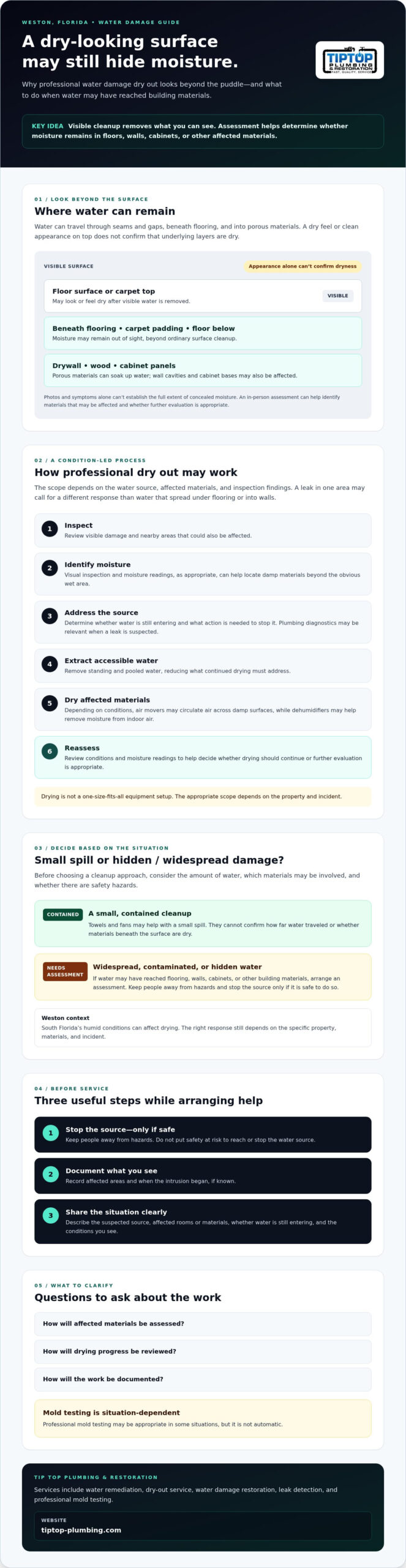
- 1. Inspect: Review visible water damage and nearby areas that could also be affected.
- 2. Identify moisture: Use visual inspection and moisture readings, as appropriate, to help locate damp materials beyond the obvious wet area.
- 3. Address the source: Determine whether water is still entering and what action is needed to stop it. Plumbing diagnostics may be relevant when a leak is suspected.
- 4. Extract water: Remove standing water and other accessible pooled water. Extraction reduces the amount of water that continued drying must address.
- 5. Dry affected materials: Depending on conditions, air movers may circulate air across damp surfaces, while dehumidifiers may help remove moisture from indoor air.
- 6. Reassess: Review conditions and moisture readings to help decide whether drying should continue or further evaluation is appropriate.
How technicians assess affected materials
Visual inspection helps identify what can be seen. Moisture readings can help check materials and areas that appear dry on the surface. These findings may guide decisions about where to focus drying and whether additional evaluation is needed. Readings inform the assessment, but don’t establish the full condition of every concealed space by themselves. Ask what was checked and how the findings affect the proposed scope.
Moisture monitoring means checking and recording moisture conditions over time so drying decisions are based on measured progress, not appearance alone. The EPA emphasizes that the key to mold control is moisture control. Its guidance supports taking wet materials seriously while recognizing that drying needs depend on the circumstances.
What extraction, drying equipment, and follow-up each do
Extraction removes pooled water. Drying addresses moisture that remains in damp materials and indoor air. Air movers and dehumidifiers serve different functions and may be used when appropriate, but the equipment and setup depend on the affected area and conditions. A follow-up assessment can help show whether moisture levels are changing and inform next steps. Ask the provider how progress will be checked and documented.
If you’re arranging water damage dry out Weston FL, share the suspected source, affected rooms or materials, and current conditions. Tip Top Plumbing & Restoration provides water remediation, dry-out service, and leak detection in Weston. You can request help with water remediation and dry-out and discuss what assessment may be appropriate.
DIY Cleanup or Professional Dry Out in Weston: How to Decide
A small, contained spill on a hard surface may be manageable with safe household cleanup. Water that keeps returning, spreads across rooms, reaches building materials, or has an uncertain source calls for more caution. Use this comparison as a starting point, not a diagnosis. If you’re unsure what’s affected, a professional assessment can help clarify the next step.
| What to consider | Household cleanup may fit | Consider professional assessment |
|---|---|---|
| Water volume | A small amount is contained and can be removed safely. | Water is widespread, continuing to enter, or difficult to remove. |
| Affected materials | Water is limited to a nonporous surface. | Carpet, flooring, drywall, cabinets, or other building materials are damp. |
| Hidden moisture | The affected area is clearly visible and limited. | Water may have traveled under flooring, behind walls, or into multiple rooms. |
| Safety | The area is accessible without electrical or other hazards. | There are electrical hazards, unsafe conditions, or uncertainty about entering. |
Fans may help move air, but airflow alone doesn’t establish that flooring, wall cavities, or other materials are dry. The U.S. Environmental Protection Agency emphasizes that the key to mold control is moisture control. Drying wet areas promptly matters, but whether fans are suitable depends on the conditions and what has been affected.
When professional assessment is the safer next step
Arrange an assessment if a leak is continuing, wetness returns, more than one room is affected, or building materials remain damp. The same applies when you can’t identify the water source or judge how far it spread. Don’t enter an area with electrical hazards or other unsafe conditions. Avoid handling water if you’re uncertain about its source or safety. Let a qualified professional assess it.
What household cleanup can and cannot establish
Removing visible water can reduce what’s on the surface, but it can’t confirm that concealed spaces or flooring are dry. Take photos and note the affected areas and when the water appeared, if known. Don’t use equipment or methods that could spread water or create a hazard. If you suspect a plumbing leak, Broward County leak detection services may help identify the source.
Small, contained cleanup differs from widespread, contaminated, or concealed water damage. For water damage dry out Weston FL, share the source if known, the affected areas, and any ongoing wetness when arranging help. Tip Top Plumbing & Restoration provides leak detection and water remediation in Weston.
Steps Before Water Damage Dry Out Service in Weston
A few careful steps can help protect people and preserve useful details for the first assessment. Don’t put yourself at risk to save belongings or investigate the source. If the area seems unsafe, stay out and explain the concern when requesting help.
- Stop the source only if it’s safe. If you can identify a safe, accessible shutoff, use it. Don’t approach electrical equipment, standing water near electrical hazards, or an unstable area.
- Keep people clear of hazards. Restrict access to areas that may be unsafe. Don’t touch wet electrical devices or enter spaces where you’re unsure of the conditions.
- Document what you see. Take photos or videos of affected rooms and materials, and note when the water intrusion began, if known. Keep these records rather than concealing wet areas or discarding relevant damage documentation.
- Move belongings only if it’s safe. Relocate undamaged items only when you can do so without entering a hazardous area or spreading water or contamination.
These steps can help communicate what happened, but no household action guarantees complete drying or prevents mold. Once people are safe, focus on sharing accurate information rather than trying to inspect concealed areas yourself.
What information helps the first assessment?
Note the suspected source, affected rooms, visible water, and any changes since you discovered the problem. Tell the provider whether water is still entering and whether utilities, blocked access, or other conditions create safety concerns. If you suspect a plumbing issue and need a local response, review emergency plumbing service in Broward County. Clear details can help the team understand the situation and discuss appropriate next steps.
What should you avoid while waiting?
Don’t touch electrical equipment or enter an area that appears unsafe. Avoid moving items through water if doing so could spread it, and don’t cover damp materials in a way that hides the affected area. Keep your photos and notes accessible. For water damage dry out Weston FL, share the water source if known, the affected areas, and current conditions when arranging service.
Choosing Water Damage Dry Out Help in Weston, FL
Choose a provider who can explain how they’ll assess affected areas, address the water source when possible, and communicate what the findings mean for the work. Clear answers help you understand the proposed scope before drying begins, especially if visible damage doesn’t show how far moisture has spread.
Questions to ask a dry-out provider before work begins
Use these questions to clarify the assessment and plan. You don’t need to know the technical answers in advance, but you should be able to understand the provider’s explanation.
- How will you assess affected areas? Ask what materials and spaces will be checked, including areas beyond the visible water when relevant.
- How will drying progress be reviewed? Ask what the provider will monitor and how those findings may inform next steps.
- What does the proposed scope include? Clarify which areas and materials are included, and what new findings could change the scope.
- How will a possible plumbing source be handled? Explain what you suspect and ask whether plumbing diagnostics or leak detection may be appropriate.
- What documentation will be provided? Ask how inspection findings and progress will be recorded and shared with you.
- Is mold testing appropriate in this situation? Testing may be relevant depending on the circumstances, but it isn’t automatic. Ask what would make it useful for your property.
How Tip Top Plumbing & Restoration can support Weston properties
Tip Top Plumbing & Restoration provides water remediation, dry-out service, water damage restoration, leak detection, and professional mold testing for residential and commercial properties. Its plumbing diagnostics and water remediation services may be useful when both the source and affected materials need attention. The company serves Weston as well as Miramar, Pembroke Pines, Davie, Sunrise, Southwest Ranches, Copper City, and Plantation. Ask which services and scope fit your situation when arranging help.
For water damage dry out Weston FL, share the suspected source, affected rooms or materials, and current conditions when you contact a provider. Review the company’s plumbing and restoration service in Weston details and ask what assessment may be appropriate for your property.
Take the Next Step Toward a Thorough Dry Out
Effective water damage dry out Weston FL means looking beyond what appears wet. Visible cleanup can remove standing water, but assessing affected materials and checking drying progress help clarify whether moisture may remain. Address the water source as well as the damage, and put safety first if the area or utilities present a hazard.
When arranging help, share what you know: the suspected source, affected rooms, current conditions, and when the water intrusion began, if known. These details can help start a clear conversation about assessment and next steps. Tip Top Plumbing & Restoration provides dry-out and water remediation services in Weston and other nearby Broward County communities.
With a clear account of what happened and a careful assessment, you can better understand what your property needs. Contact Tip Top Plumbing & Restoration to discuss water remediation and dry-out service in Weston.
Frequently Asked Questions
How long does water damage dry out take in Weston, FL?
There’s no single drying timeline for every property. The time depends on how much water entered, how far it spread, which materials are wet, and what an assessment finds. A damp surface may dry sooner than moisture trapped beneath flooring or inside a wall. Ask the provider what conditions will be checked and how progress will be reviewed before expecting a firm estimate.
Can I dry out water damage myself with fans and a dehumidifier?
You may be able to clean up a small, contained spill on a safe, nonporous surface. Fans can improve airflow, and a dehumidifier may help manage indoor moisture, but neither proves that concealed materials are dry. If water has spread into flooring, walls, cabinets, or multiple rooms, or the source is uncertain, arrange a professional assessment. Never use electrical equipment in or near unsafe standing water.
What happens if water damage is not dried completely?
Moisture left in building materials can contribute to continued deterioration and may create conditions that support mold growth. A surface that looks dry doesn’t confirm that the layers beneath it have dried. If you notice recurring dampness, staining, or a musty odor, don’t rely on those signs alone to identify the extent. Have affected areas assessed to understand whether more drying or evaluation may be needed.
How do professionals know when a property is dry?
Professionals can use visual inspection and moisture readings to check affected materials and review progress. Those readings help inform whether drying should continue or further evaluation may be appropriate. Ask which areas were checked, what the readings indicate, and how the findings relate to the proposed next steps. Equipment turning off or a surface feeling dry isn’t, by itself, proof that hidden materials are dry.
Does every water damage dry out require mold testing?
No. Mold testing isn’t automatic for every water intrusion. Whether it’s appropriate depends on the situation, affected areas, and concerns identified during assessment. Ask the provider what findings might make testing useful and what the testing would help clarify. Tip Top Plumbing & Restoration provides professional mold testing, water remediation, and dry-out service in Weston.
Should the leak be repaired before water damage drying begins?
The water source should be stopped before it continues affecting materials, but that doesn’t always mean all drying must wait until every repair is complete. The right sequence depends on the leak and site conditions. If it’s safe, shut off the source. Don’t approach electrical hazards or enter unsafe areas. A provider can discuss source control and drying needs, while plumbing diagnostics or leak detection may help investigate a suspected plumbing source.
What should I do while waiting for water damage dry out service in Weston?
Keep people away from unsafe areas and don’t touch wet electrical equipment. Stop the source only if it’s safe, photograph affected areas, and note when the water began and whether it’s still entering. Move belongings only if doing so won’t expose you to hazards or spread water. When requesting water damage dry out Weston FL, share these details. Tip Top Plumbing & Restoration serves Weston and nearby communities, including Miramar, Pembroke Pines, Davie, Sunrise, Southwest Ranches, Copper City, and Plantation.
Disclaimer
The information provided in this article is for general educational and informational purposes only and should not be considered professional plumbing, restoration, mold remediation, or legal advice. Every plumbing system, property, and situation is unique, and the recommendations discussed may not apply to your specific circumstances.
While Tip Top Plumbing & Restoration strives to provide accurate and up-to-date information, we make no warranties regarding the completeness, accuracy, or reliability of the content. Any actions you take based on this information are at your own risk.
Plumbing repairs, water damage restoration, and mold remediation should be performed by qualified professionals and in accordance with applicable local building codes and regulations. If you are experiencing a plumbing emergency, water leak, or property damage, contact a licensed professional for an on-site evaluation.
Tip Top Plumbing & Restoration is licensed and insured to provide plumbing and restoration services throughout Broward County, Florida.